


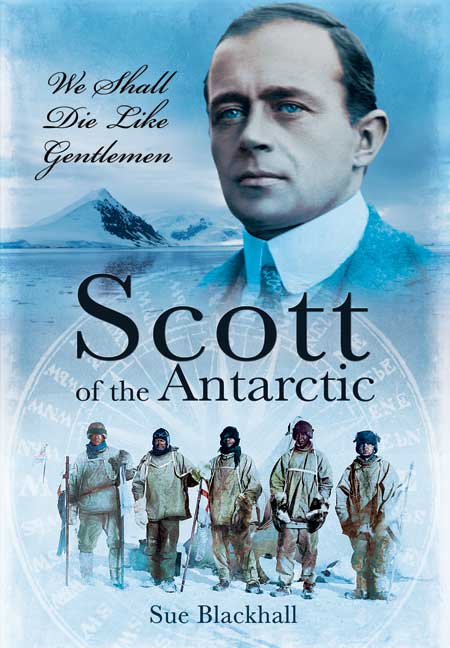
Scott of the Antarctic (Hardback)
We Shall Die Like Gentlemen
Imprint: Pen & Sword Discovery
Pages: 224
Illustrations: 32 black and white illustrations
ISBN: 9781848846647
Published: 7th March 2012
(click here for international delivery rates)
Need a currency converter? Check XE.com for live rates
| Other formats available | Price |
|---|---|
| Scott of the Antarctic Paperback Add to Basket | £12.99 |
| Scott of the Antarctic ePub (1.4 MB) Add to Basket | £4.99 |
Captain Robert Falcon Scott CVO (6 June 1868 – 29 March 1912) was a Royal Navy officer and explorer who led two expeditions to the Antarctic regions. During the second venture, Scott led a party of five which reached the South Pole on 17 January 1912, only to find that they had been preceded by Roald Amundsen's Norwegian expedition. On their return journey, Scott and his four comrades all perished from a combination of exhaustion, starvation and extreme cold.
Before his appointment to lead the Discovery Expedition, Scott had followed the conventional career of a naval officer in peacetime Victorian Britain, where opportunities for career advancement were both limited and keenly sought after by ambitious officers. It was the chance for personal distinction that led Scott to apply for the Discovery command, rather than any predilection for polar exploration. However, having taken this step, his name became inseparably associated with the Antarctic, the field of work to which he remained committed during the final twelve years of his life.
Following the news of his death, Scott became an iconic British hero, a status maintained and reflected today by the many permanent memorials erected across the nation.
Sue Blackhall reassesses his life and the causes of the disaster that ended his and his comrades' lives, and the extent of Scott's personal culpability. From a previously unassailable position, Scott has became a figure of controversy, with questions raised about his competence and character. However, more recent research has on the whole regarded Scott more positively, emphasising his personal bravery and stoicism while acknowledging his errors, but ascribing his expedition's fate primarily to misfortune.
There are no reviews for this book. Register or Login now and you can be the first to post a review!
About Sue Blackhall
SUE BLACKHALL is an ex-Fleet Street writer who co-wrote the Top Ten expos Fall of the House of Windsor, which first revealed the so-called Squidgygate tape and the infidelity of both Princess Diana and Prince Charles. She has written a number of other titles covering subjects as diverse as military history, celebrity scandals, ghosts and the paranormal.









Pen and Sword Books
About Us | Contact Us | Delivery Information | Privacy Policy | Cookies | Affiliates | Terms and Conditions | Backlist | Mailing List | Reward Scheme | Review Request
© Pen and Sword Books Limited 2024. Registered in England No. 2527258.
Registered Office: 47 Church Street, Barnsley, S70 2AS.