


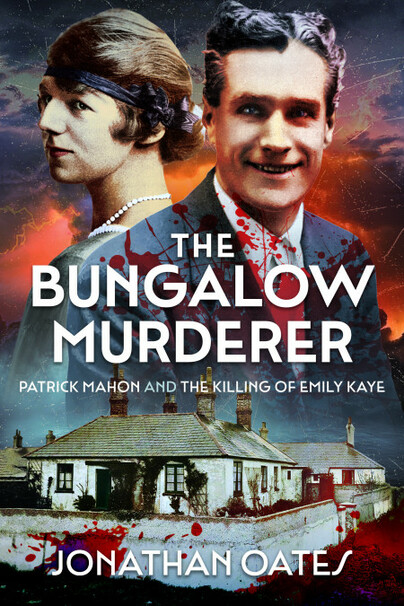
The Bungalow Murderer (Paperback)
Patrick Mahon and the Killing of Emily Kaye
Imprint: Pen & Sword True Crime
Pages: 264
Illustrations: 12 mono illustrations
ISBN: 9781036140397
Published: 26th January 2026
(click here for international delivery rates)
Order within the next 3 hours, 17 minutes to get your order processed the next working day!
Need a currency converter? Check XE.com for live rates
The murder of Emily Beilby Kaye in 1924 was a crime of shocking brutality. Her body, having been dismembered, was found scattered, and her killer’s capture and subsequent trial unraveled under the glare of public scrutiny. Despite its notoriety at the time and its role in shaping modern forensic investigation, this case has been largely overlooked in dedicated true crime accounts.
This book investigates the infamous ‘Second Crumbles Murder’ with fresh eyes, drawing on archival material, trial transcripts, memoirs of investigators, and contemporary press reports. It explores the intense human drama, involving an apparently charming male protagonist, along with the gruesome details that captivated the nation, and the forensic breakthroughs – including the introduction of the ‘Murder Bag’ – that left a lasting legacy.
For true crime enthusiasts and history buffs alike, this is the definitive account of a crime that shocked 1920s Britain and continues to fascinate today.
Register or Login now to post a review!
Rating: 5 out of 5 stars
NetGalley, Andrea Romance
The 1924 murder of Emily Beilby Kaye was a brutal crime that shaped modern forensic investigation, yet remains largely forgotten. This book re-examines the infamous case, drawing on archival materials and trial transcripts to explore the grisly details, the charming suspect, and the forensic breakthroughs. This engaging and shockingly gruesome book will be of interest to true crime afficionados and historical mystery fans.
This book, is, without doubt, the most comprehensive account of the despicable ‘Crumbles Murder’, a crime that that not only shocked the nation, but still has the ability to do so over 100 years later.
Kevin Gordon - Author
As a local, Eastbourne historian, I thought I knew the story of the Bungalow Murderer but I clearly did not and I cannot recommend this account highly enough.
This is a solid, straightforward account of the 1924 Crumbles murder case in The Bungalow Murderer.
NetGalley, Tracy Shephard
The story focuses on Patrick Mahon's brutal killing and dismemberment of Emily Kaye.
The book draws on archival sources, trial records, and contemporary reports to reconstruct the crime, investigation, and trial with clear detail and respect for the facts.
It avoids sensationalism while still conveying the shocking nature of the events and the public fascination they sparked at the time.
Well-researched and readable, it offers a balanced look at both the perpetrator and the victim in this infamous historical true crime.
A fascinating read for any true crime fan.
A deeply insightful book that is not for the faint of heart, but should be at the top of all true crime buffs TBR.
NetGalley, Sarah Aspden
A murder that is famous for apparently inspiring the creation of a 'murder bag', a forensics kit used at crime scenes. For all that its known for this, we only touched on the 'murder bag' in the first appendix, which is a shame that such a crucial piece of police procedure is relegated to a near after thought and little effort put into discussing how accurate it is, that this bloody crime inspired such improvements.
This was a gruesome tale, less so in the manner of death (which is still up for debate) but in the manner in which the murderer disposed of his victim. Emily was dismembered, burnt and boiled, with her head never being recovered. Various times were given by Mahon as to how long it took him to destroy her head, and plenty of fanciful legend evolved around it and I cannot even imagine the smell and horror such a disposal would have created.
Upon examining some fabric, it is announced that it previously held 'raw human flesh' and I don't know why exactly, but somehow that is more chilling than simply human flesh.
His wife is weirdly really hard to accept. Like many wives of murders, she stood by him, refusing, probably for her own sake as much as his, to believe that he could have willingly done such a thing and had no hesitation in blaming everything on the victim. It was deeply unsettling to read snippets of letters she wrote, insulting Emily and protecting Mahon. They added much needed context but still, as with some of the other woman in this tale I had to keep reminding myself this was a real case and these people chose to act like this.
Emily is portrayed here sympathetically but not overly so. She did willingly have an affair with a married man, apparently uncaring of the effect it would have on his wife and child, but that doesn't justify her brutal death.
This case is also noted for the involvement of Sir Spilsbury, who was often called a real life Sherlock Holmes and an important figure in the history of crime prevention.
All in all, a well researched book that referenced often to primary sources and gave voice to both killer and victim.
Rating: 5 out of 5 stars
NetGalley, Sarah Higginbottom
A really unsettling but well-researched true crime read. I already knew a bit about the case, but this book added so much detail and context that made it feel disturbingly real. I appreciated that it didn’t rely on sensationalism and that Emily Kaye was treated as more than just a footnote in her own story. It’s a slower, more thoughtful read rather than a fast-paced thriller, but I actually liked that. Grim, informative, and worth reading if you enjoy historical true crime.
About Dr Jonathan Oates
Dr Jonathan Oates is the Ealing Borough Archivist and Local History Librarian, and he has written and lectured on the Jacobite rebellions and on aspects of the history of London, including its criminal past. His best-selling books on criminal history are John Christie of Rillington Place, John George Haigh, the Acid-Bath Murderer and London Serial Killers. He is also well known as an expert on family history and has written several introductory books on the subject including Tracing Your London Ancestors and Tracing Your Ancestors From 1066 to 1837.

Pen and Sword Books
About Us | Contact Us | Delivery Information | Privacy Policy | Cookies | Affiliates | Terms and Conditions | Backlist | Mailing List | Reward Scheme | Review Request
© Pen and Sword Books Limited 2026. Registered in England No. 2527258.
Registered Office: 47 Church Street, Barnsley, S70 2AS.