Statutes and Suits: A History of Criminal Tudor England
Stephen Wade on the reason why he wrote about more than the execution block and the Tower of London
Reflections on crime and the individual in Tudor times
I had to give in, as a crime historian, and turn the spotlight on crime and law in these islands between the Battle of Bosworth and the ascent to the English throne of James I. Why do I say had to? I had become a typical popular historian, with a favourite period, because most of my crime history works up to last year had been on Victorian and Edwardian crime. But the Tudors were always there, demanding attention, and the reasons why are not hard to find.
The extreme punishment of these years extends from the aftermath of major battles to the execution of spies. Approaching the research for the book, I expected plenty of politics, but actually what happened was that I found myself visiting a strange world in which the ordinary Tudor workers and everyday managers found themselves in a whirligig world in which beliefs, allegiance, family and moral values were always unstable, always under threat.
From 1534 and the Act of Uniformity, matters really came to a crisis, when Henry VIII decided that he had to become head of the Church of England ‘ ‘Defender of the Faith.’ What was he defending it from. Your everyday brickie, alemaster, builder, sheep farmer and their mates must have lived in a forever shifting kaleidoscope of those beliefs which dictated all aspects of life. There had been the Pope in Rome. He had always been there. There was a priest within walking distance you could talk to. The law was subject to abuse, but you kept your head down and earned your daily pence. There were small consolations such as a loving family, ale at the tavern ( purer than the water) and jolly good song and dance when folk were in the mood.
But then there was the sovereign, and things changed. Then there was the Pope again, and things changed. What were you supposed to believe in order to stay out of jail and to go to heaven when your tough life ended.
My focus became tight and bright on these things called statutes. In other words, I looked at the major law-making process, along with the judges, in our culture. I saw that statutes came thick and fast, telling the Tudor folk to do certain things and not to do other things. On top of that, the King was always making ‘proclamations’ which appear to have been announced when he was in particular mood against something around him.
In plain words, my discovery was that the Tudor world was a very dangerous place, and that was because first it was unsteady, and second, it was a place that generated punishments. These were easy to become a problem because there were so many transgressions. Life was hard enough when you had to be considering all the possible sins around you, without the law changing its colour every few months.
In this milieu, crime became common as muck and law as irritating as flees around the cattle. Joe and Mary Smith had no choice but to carry on, producing offspring, food and their small part in making some kind of profit for the Lord of their manor, for the vicar, an for their sovereign. Oh, by the way, Joe had to be always ready for war, because there were the Scots, the French, the Spanish and of course the bands of robbers that made the highways very unsafe.
I have always written and research crime in various societies, and this is because I long ago discovered that this research is a fascinating and unique way to learn about that foreign country where they do things so differently from us. One of the main reasons for the excitement I feel when visiting these past places and lives is that wonderful paradox, that the people back then are like us, but not us. They are us fundamentally, but strangers in many fundamental ways.
I suppose I have to say that, as most historians would surely agree, work for each title I decide to work on always becomes an experience of the fresh and magical as a child’s first confrontation with the new world it walks into when it starts to walk and speak. The Tudor world is not welcoming; strangers produced bear and suspicion, but there was always a warm core of family and tribe around the struggling citizens who kept the world ticking over.
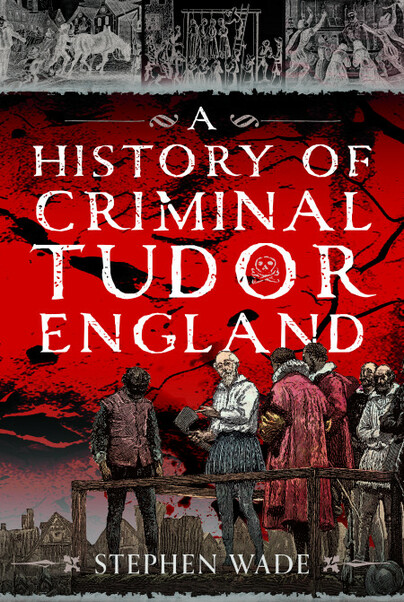
Order your copy here.