How the Bloomsbury Group Came Together
Guest post from Kathleen Dixon Donnelly
Virginia Woolf spent most of her adult life surrounded by friends and family who were also creative professionals, known as the Bloomsbury Group.
Like many friends in that era, they gathered in weekly salons held in drawing rooms, originally in the Bloomsbury neighbourhood of London. They were extraordinarily talented and had ordinary pursuits. They praised and berated each other publicly and privately. Their evenings were filled with whiskey, buns and cocoa, and, as Virginia noted, “Talking, talking, talking—as if everything could be talked.”
Collectively and individually, the Bloomsbury Group exerted a strong influence on the cultural life of Britain in the early twentieth century.
Let’s focus on Virginia and her husband, publisher Leonard Woolf; her sister, painter Vanessa Bell; Vanessa’s husband, critic Clive Bell; biographer Lytton Strachey; his cousin, painter Duncan Grant; art critic Roger Fry; and economist John Maynard Keynes.
A Victorian Childhood
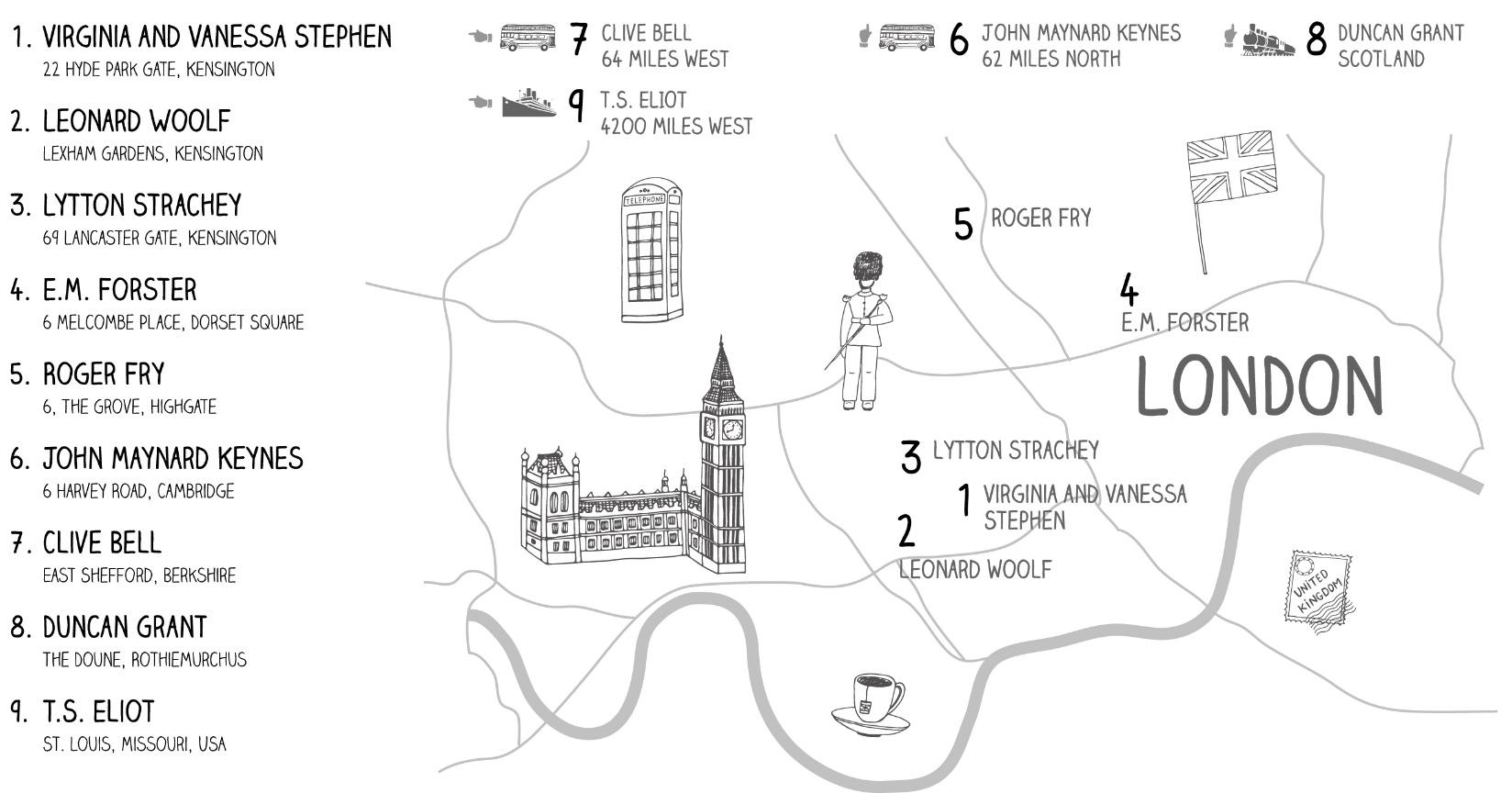
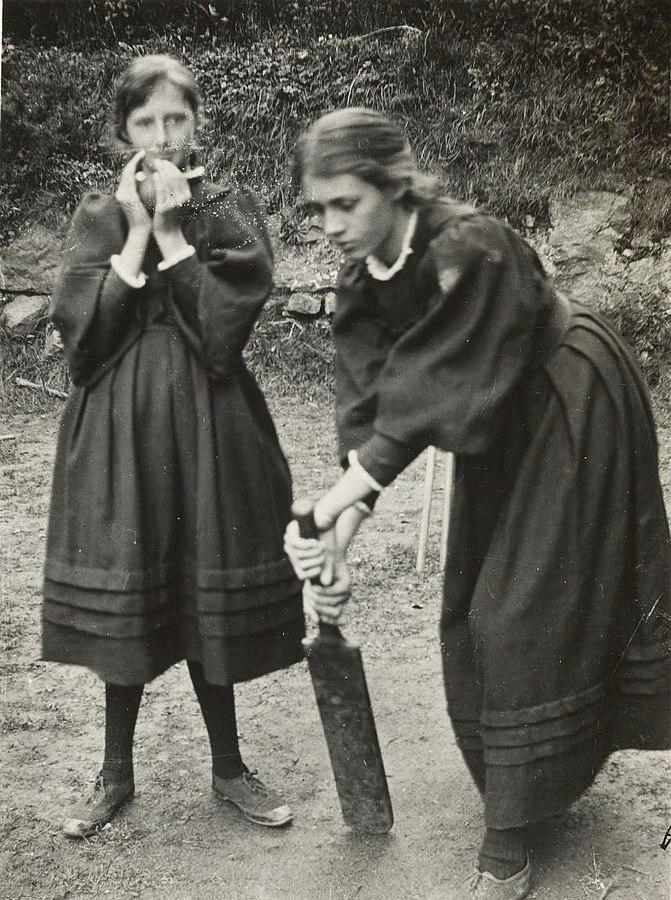
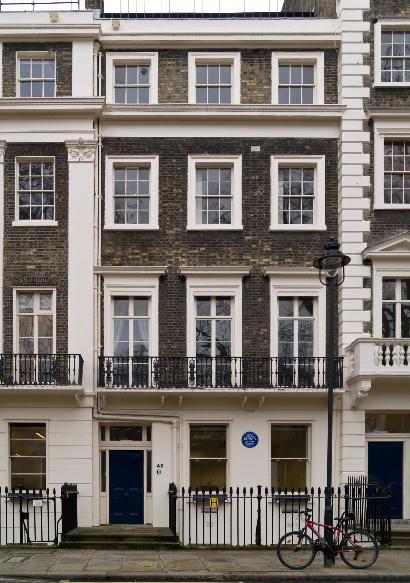
At the center were two sisters, Virginia and Vanessa Stephen, born and raised in the late Victorian era at 22 Hyde Park Gate, Kensington. Most of the other members were also born into late Victorian middle-class households, within a sixty-mile radius of the Stephen home.
As the editor of the Dictionary of National Biography. Virginia and Vanessa’s father, Leslie Stephen, came from a literary background. He married the daughter of Vanity Fair author William Makepeace Thackeray, and, after her early death, married a young widow, Julia Duckworth, who brought with her a daughter and two sons.
Julia and Leslie’s first child, Vanessa, was born in 1879; followed the next year by Thoby; two years later, Virginia; and the year after that, Adrian. Four in four years—typical for the time. The Stephen children got along well with their half-sister Stella Duckworth, but, according to letters years later between Virginia and Vanessa, their half-brothers, Gerald and George, molested both girls several times.
Also typical, Julia Stephen died of rheumatic fever when she had four children under the age of sixteen. Stella became her stepfather’s hostess, with the responsibility of running the household and putting up with his outbursts of rage—followed by apologies. When Stella decided to marry a neighbour, Jack Hills, Leslie made them promise to move across the street so she could still take care of him. They did, but upon returning from their honeymoon in April 1897, Stella was pregnant and ill with peritonitis. In July, she died.
This was a greater loss to Vanessa than her own mother’s death. Vanessa was now the oldest girl. At eighteen Vanessa had to take responsibility for her increasingly irascible father and her three younger siblings.
The Stephen brothers, Thoby and Adrian, were educated at private schools and then, like their father, went to Cambridge. The girls had no formal education, but Virginia studied Greek and Latin with private tutors, and Vanessa attended art school. Leslie home-schooled his daughters and gave them the run of his library. A quite liberal approach.
Within the family it was decided early on that Virginia was a writer and Vanessa a painter. Virginia had a stand-up desk in her room where she liked to work from late morning through lunch. She produced a family newspaper, the Hyde Park Gate News, during her teens.
A little over a mile south from this hub of creativity, Virginia’s future husband, Leonard Woolf, was born in 1880. Like many a good Victorian wife his mother produced nine children in nine years; Leonard was the third. When Leonard’s father died when he was twelve, his mother had to move the family down to Putney. He attended St Paul’s, graduating just as Duncan Grant arrived.
Also in 1880 Lytton Strachey was born in Clapham Common, five miles southeast of Hyde Park Gate. Lytton was the eleventh child of thirteen born to Lieutenant General Sir Richard Strachey, 63, and his 39-year old second wife Jane. Jane’s brother was Major Bartle Grant, Duncan’s father.
An odd and talkative child, Lytton fit right in with his loud. boisterous family. When he was four the Stracheys moved to a ridiculously large home north of Kensington Gardens. Cousin Duncan would come to stay while his Scottish family was back in India, where his Dad, the major, was stationed.
Duncan was born in 1885 at the Grant family estate in Scotland when his parents were back home from India on leave. Duncan’s younger years were spent in India, where the bright colours had an effect on his painting. His Aunt Jane, Lytton’s mother, recognized Duncan’s talent and paid for his art lessons; his parents had wanted him to study maths. Duncan was also encouraged by the art master at St Paul’s, which he attended as Leonard was graduating.
Born seven miles north and more than a decade before the others, in 1866, Roger Fry came from a large Quaker family. Growing up in Highgate, Roger was surrounded by one brother and six sisters. Roger’s lawyer father was disappointed that his son chose a career in art, not science.
Up in Cambridge, sixty miles north of Kensington, in 1883 John Maynard Keynes was born into an academic family. Above average in height and intellect, at age four Maynard explained compound interest to his father. By age ten he was producing a family newspaper.
Maynard’s mother was an active suffragist. She attended Cambridge on a limited basis and eventually became mayor of the city. Maynard received a scholarship to Eton, where he had his first sexual experience with another boy.
All these future Bloomsberries came from educated families, middle to upper-middle class. The posh one in the Group was Vanessa’s future husband, Clive Bell. The Bell family made their money from Welsh coal mines, and Clive grew up in their overstuffed mansion in Wiltshire, sixty miles west of Kensington. Whenever Vanessa visited her in-laws there, she would write to her sister Virginia describing the ghastly hunting trophies all over the place.
Cambridge and the Apostles
As the oldest of the Group, Roger Fry was the first to attend King’s College, entering in 1885. While there, Roger went to salons held in students’ rooms.
Roger received a first in science but was denied a fellowship. After taking classes at a non-traditional art school, Roger tried his hand at painting and design. He was so impressed with an exhibit by the American James MacNeill Whistler that he aligned himself with the New England Art Club, in opposition to the Royal Academy.
The others arrived at Cambridge in the last years of the century—Lytton Strachey, Leonard Woolf, and Clive Bell to Trinity, where they met Thoby Stephen. Thoby’s beautiful sisters, Vanessa and Virginia, would come from London often to visit their brother, suitably chaperoned, of course, and they met Thoby’s friends. Leonard remembered his initial meeting with the sisters: ‘Their beauty literally took one’s breath away … One stopped astonished. … It was almost impossible for a man not to fall in love with them and I think that I did at once.’
Maynard Keynes came to King’s on a scholarship in 1908. All these men formed fast friendships, and many were members of the legendary exclusive group, the Apostles. Supposedly a ‘secret’ organization, everyone knew about them. Membership was by invitation, and Clive Bell, like Leslie Stephen, was not invited. His rough-and- ready hunting background set Clive apart.
The Apostles’ Saturday nights were held in the rooms of whoever was to present the topic. The host served coffee and ‘whales’—sardines on toast. After lively conversation and debate, the evening ended with a vote on the question. The secrecy cover of the Apostles was blown in the 1950s when two former members, Surveyor of
the King’s Pictures Anthony Blunt and Foreign Office diplomat Guy Burgess, were revealed to have been recruited as undergraduates to spy for Communist Russia.
As these future Bloomsberries were finishing at Cambridge, Duncan Grant was attending Westminster School of Art. When he visited his cousin at Cambridge, he met all of Lytton’s friends.
After University
In the early 1900s, each graduated and started his life’s work. Clive Bell finished in 1902 and moved to Paris, writing letters to Thoby Stephen’s enchanting sister Vanessa.
Lytton Strachey graduated in 1903 with a second in history. Rejected for the civil service, he kept returning to Cambridge.
Maynard Keynes and Leonard Woolf both finished in 1904. Maynard earned a first in mathematics and stayed involved with the university and his hometown. When he took the Civil Service exam, although his worst marks were in economics, he secured a position in the India Office. Leonard’s marks on the Civil Service exam were not good, so he was appointed to an administrative job in the Crown Colony of Ceylon. With a four-volume set of works by Milton, and seventy volumes by Voltaire, Leonard set sail for Jaffna.
In London, Vanessa had her first exhibition, and Virginia had book reviews published in newspapers’ women’s supplements.
Roger Fry was farther along in his personal and professional life. He met a fellow artist, Helen Coombe, and they married in 1896. Fry’s parents did not approve because she was a bit older. Roger and Helen had two sons and moved to Hampstead. Roger helped start the Burlington, the first serious English art magazine. He had a one-man show and served on the New England Art Club. But Helen had serious bouts of mental illness which left her rambling incoherently.
When Roger went to New York City in November 1904, to raise money for the Burlington, he met J. Pierpont Morgan, president of the board of the Metropolitan Museum of Art. Morgan offered Roger a job traveling
around Europe, advising Morgan which paintings to buy. Rejected for the position of Slade Professor of Art at Oxford, with a sick wife and two kids, Roger took the job.
Family Changes
Back in London. Clive Bell continued his pursuit of Vanessa Stephen, and she continued her rejection of his proposals.
In February 1904, Leslie Stephen died. Virginia felt guilty that she hadn’t taken care of her father. She had one of her earliest mental breakdowns and was sent from Hyde Park Gate to stay with a family friend for three months. Vanessa felt relieved. She no longer had the responsibility for the whole family on her shoulders. She visited Clive in Paris, traveled around England, and took art classes at the Slade School.
By that autumn, Vanessa had made the decision to move her siblings out of Kensington and into London’s bohemian neighbourhood, Bloomsbury. Her relatives were aghast. How could four young people live together on their own in that neighbourhood? Quite well actually.
Vanessa shipped her unstable sister Virginia off to live with their Aunt Caroline in Cambridge until the move was complete. In October, Vanessa had everything moved to 46 Gordon Square, where the Stephens embarked on a life of freedom they hadn’t known before. By November, Virginia was well enough to visit but didn’t move in until Christmas.
Vanessa began hanging around with painters in coffee shops, knowing how shocked her relatives would be. At the beginning of 1905, Thoby Stephen began hosting ‘at-homes.’ Based on the Cambridge salons, these gatherings took place when word circulated that Thoby would be ‘at-home’ on Thursdays, usually around 9.00 pm. At first only a few showed up, fiddled with their teacups, and then left. Eventually the circle expanded. And unlike Cambridge, there were women! Vanessa, Virginia, and Lytton Strachey’s sisters. The women slowly realized that these men were not interested in them. Most were gay. And Lytton, Duncan Grant and Maynard Keynes had been sleeping with each other.
The Stephens now travelled more. In October 1906 they embarked on a trip to Greece that was a disaster. Everyone got sick. Thoby went back to London early and was diagnosed as suffering from malaria. Unfortunately, he had typhoid.
And he died. No one could believe it. Big, strapping, healthy Thoby, 26 years old—dead?! Two days later, Clive proposed to Vanessa again and she said, ‘Yes.’
The Bloomsbury Group
Vanessa Stephen and Clive Bell were married in February 1907 and left on a European honeymoon. Returning to London in the spring, everyone moved house. The married Bells established their household in Gordon Square. The single siblings, Virginia and Adrian, moved into 29 Fitzroy Square, an easy fifteen-minute walk away.
The key players in the Bloomsbury Group were now living and working a few blocks from each other and socializing every week in their drawing rooms. In Part Two we’ll look at what they were doing up until the Great War.
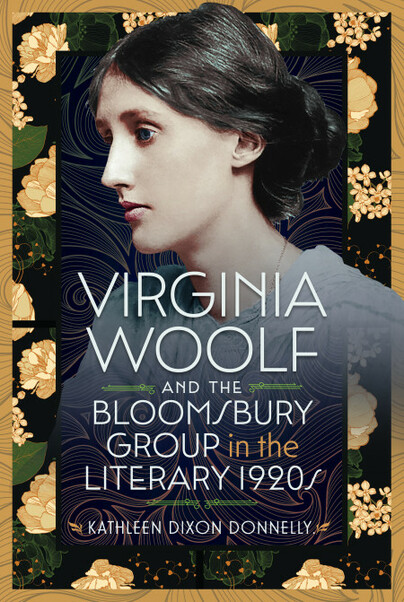
Order your copy here.