Canadians in the Royal Air Force
Author guest post from Shelly McElroy.
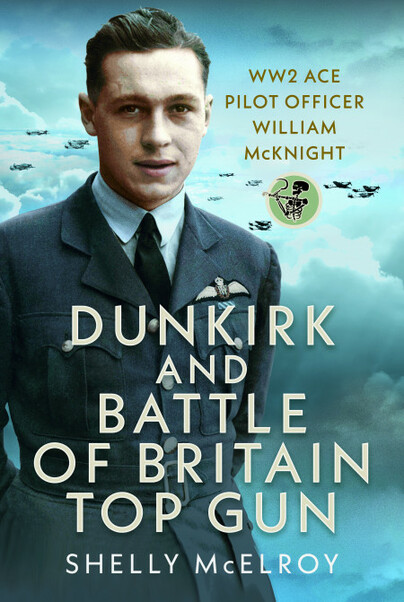
William “Willie” McKnight DFC and Bar was a Canadian Second World War ace who served in the “All Canadian” No. 242 Squadron of the Royal Air Force, commanded by the legendary Douglas Bader, KBE DSO and Bar DFC and Bar DL. McKnight would become the leading ace of Dunkirk and one of the most successful fighter pilots of the Battle of Britain. He was the pilot of LE A, the legendary Hurricane decorated with the creepy, campy image of the Grim Reaper on the fuselage. Have you ever wondered what this young pilot doing in Britain? And why he, and other Canadians, joined the Royal Air Force instead of their own?
McKnight and I (he called himself “Bill”) are both from the prairie city of Calgary, Alberta, Canada, situated right on the seam where the level land transitions into the vast and serrated blue rampart of the Rocky Mountains. Unlike British families, Canadians do not carry collective memories of bombed cities, invasion scares, or air raids. The defining crisis for western Canadians was not the First or Second World Wars but the Great Depression.
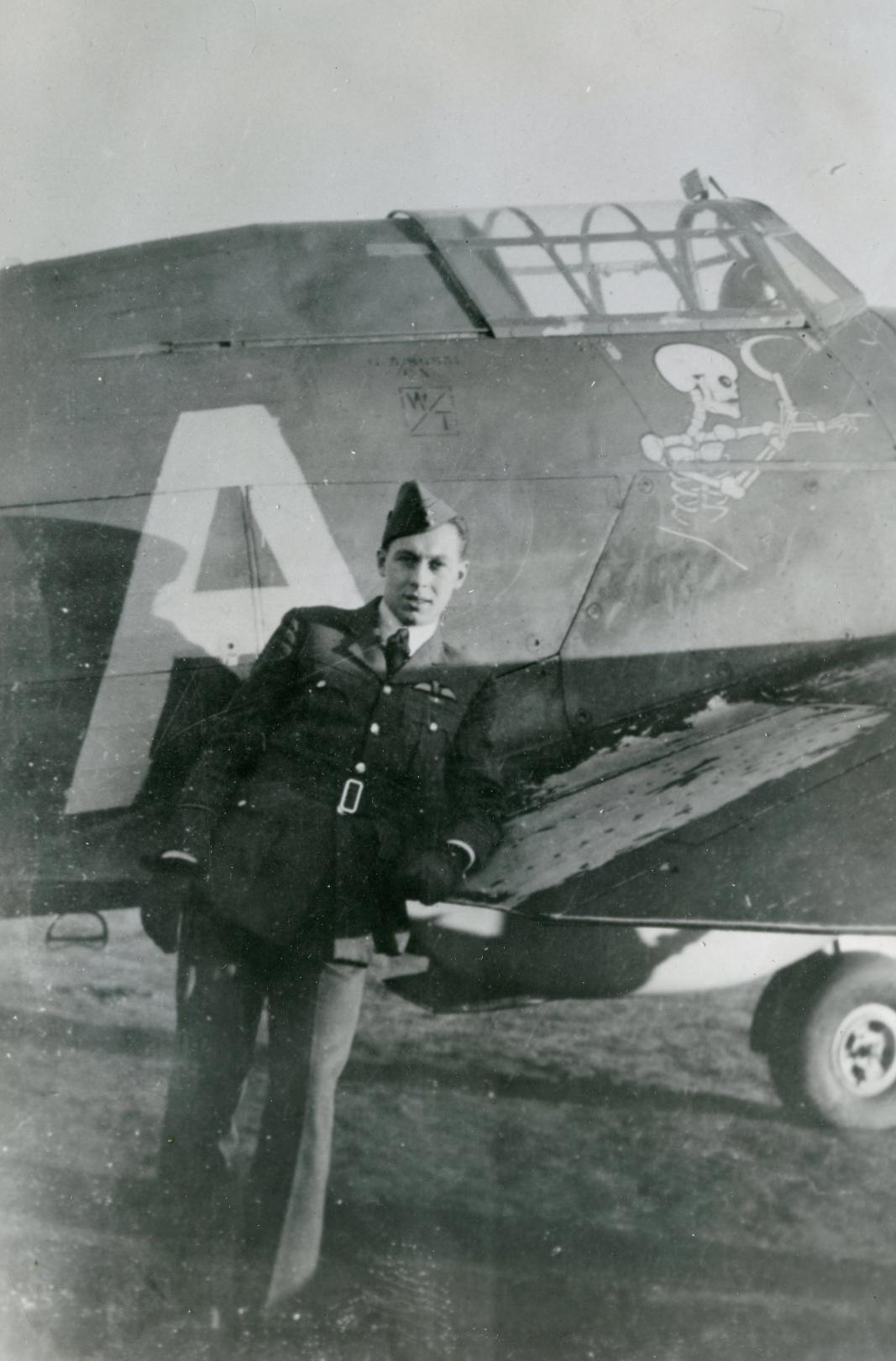
Photo courtesy of the McKnight Family Archive.
For those who experienced or witnessed the economic, environmental and humanitarian ruin of those years, it is as though they ended yesterday. Or never ended at all. Nature retaliated when traditional farming practices from Britain and the eastern half of this continent proved utterly inappropriate for the great plains. The wind seized great fistfuls of rich, black earth and flung it in terrible storm clouds across the plains, virtually unchecked. The storms were known as black blizzards, and farmers in Alberta today are still rebuilding their topsoil from the damage they caused. At the time, they caused widespread abandonment of farms and ranches. Entire families faced poverty, homelessness and unemployment.
Meanwhile, aviation was transforming Canada. Alberta aces who returned from the First World War with extensive flight experience had ideas and innovations for how aircraft could be used during times of peace. Remote Canadian communities could be more easily reached with medical supplies, mail and groceries. Aerial photography of growing communities and neighbourhoods became popular. Dangerous but crowd-pleasing aerobatics became common, with barnstorming and wing-walking stunts included at local events. Calgarians gathered by the hundreds to attend airshows.
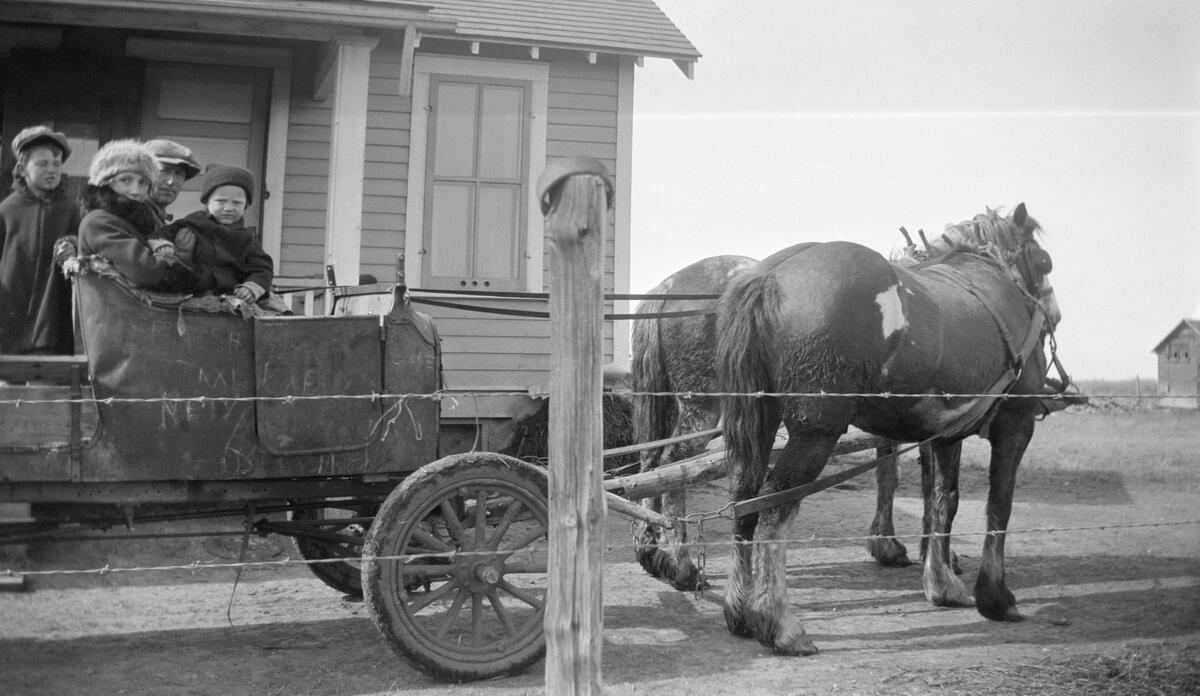
Attribution: “Bennett, Byemoor area, Alberta.”, [ca. 1930s], (CU1108201) by unknown. Courtesy of Glenbow Library and Archives, Glenbow Archives Collection, Libraries and Cultural Resources Digital Collections, University of Calgary.
Rutledge Air Service Ltd opened in 1929, one of several such companies that operated from the airport. It boasted the first complete set of runway beacons in Canada, but – no runway! Aircraft landed and took off from a large open grass airfield. In 1930, a beacon was mounted on the top of the Hudson’s Bay Company building in downtown Calgary. It had a three million-candlepower beam that guided aeroplanes through the darkness.2
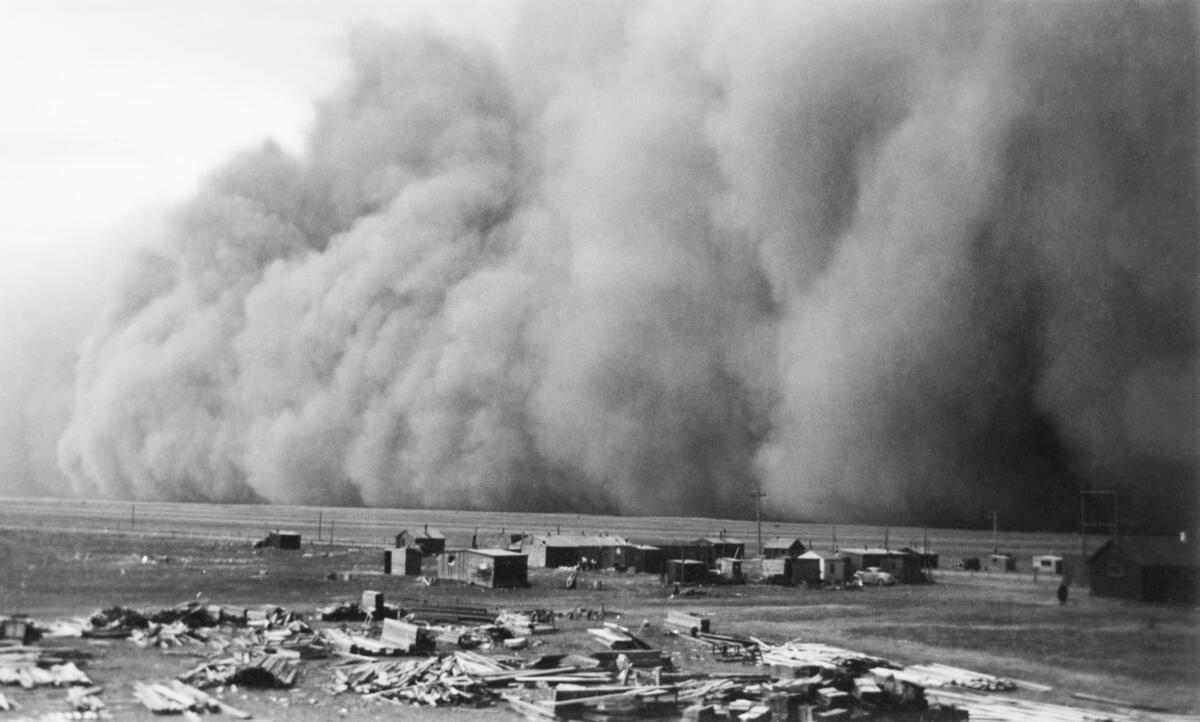
Attribution “Dust storm, Pearce Airport, Alberta.”, 1942-04, (CU1102491) by unknown. Courtesy of Glenbow Library and Archives, Glenbow Archives Collection, Libraries and Cultural Resources Digital Collections, University of Calgary.
So, Alberta in the 1920s and 30s offered considerable local inspiration for impressionable budding aces, and first-hand experiences with aeroplanes and airfields in their own communities.
The combination of depression-era hardship and the popularity of aviation at least partially explains why so many Canadians were already serving in the Royal Air Force when the war began. A young Albertan might very well have looked at a grass airfield, witnessed the antics of barnstormers and wingwalkers, survived the Depression by the skin of their teeth, and decided that Britain and the RAF represented a future.
There may have been up to 1,800 “CAN/RAFs” (Canadians in the Royal Air Force) when the war began.3 The young men must have seemed very peculiar indeed when they arrived, stereotypically on cattle boats. The new arrivals were not merely looking for adventure, although that was part of the allure. Some had never owned a new suit of clothes in their lives. Rural Canadians frequently came from homes that did not have indoor plumbing, electricity or telephones. They may have used horse drawn farm equipment and transportation exclusively if their families could not afford mechanized versions. And if the gamble they had taken to come to Britain failed, they would be stranded thousands of miles from home.
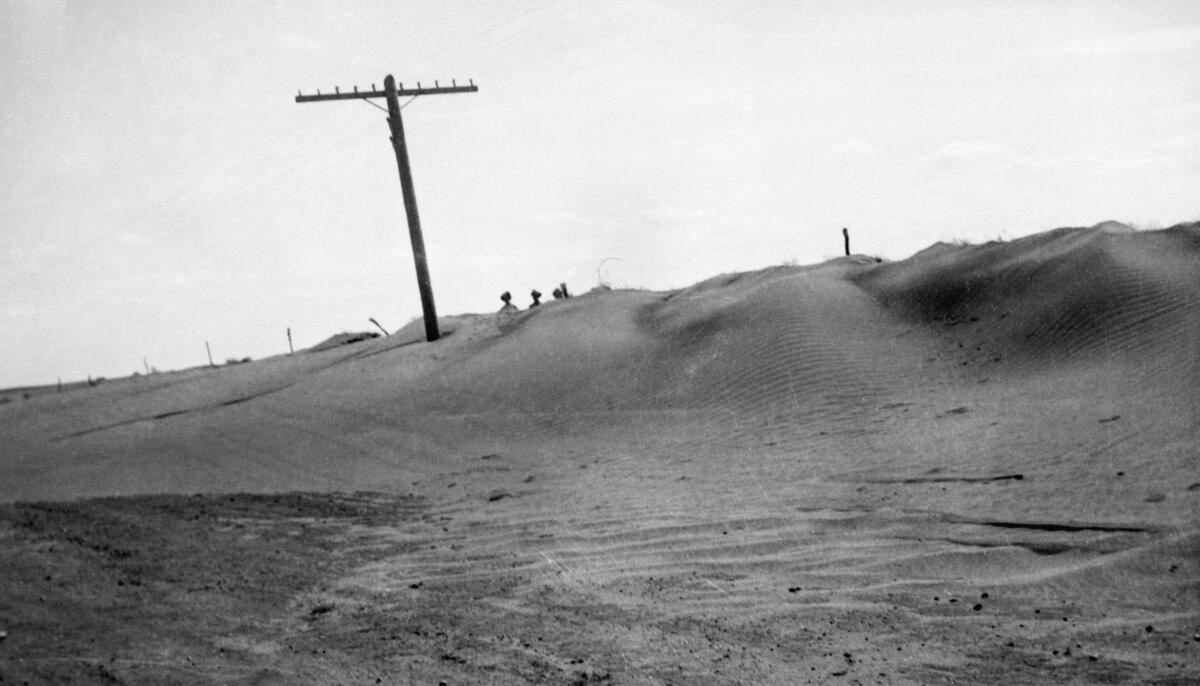
“Dust piled against fence-line, Cereal, Alberta.”, [ca. 1930-1935], (CU1128705) by unknown. Courtesy of Glenbow Library and Archives, Glenbow Archives Collection, Libraries and Cultural Resources Digital Collections, University of Calgary.
Canadians from a range of backgrounds populated the original No. 242 “All Canadian” Squadron. Alberta alone contributed three pilots – McKnight, William Waterton, and Donald MacQueen. Noel Barlow, also from Alberta, joined as groundcrew. He became Douglas Bader’s personal fitter.
Interestingly, McKnight himself was economically comfortable, and the Calgary area where he was from was spared the worst of the dust storms. McKnight had attended university and came to Britain not on a cattle boat, but aboard a CPR passenger ship. Whatever their paths, what lead McKnight and other Canadians to the Royal Air Force occurred at a crucial time. Ahead of them all loomed a worldwide conflict, the brutal firsthand realities of which their families and friends in Canada would never really be able to appreciate. Decades later as I researched the brief life of this celebrated Canadian, I faced a gap in my own perspective and knowledge.
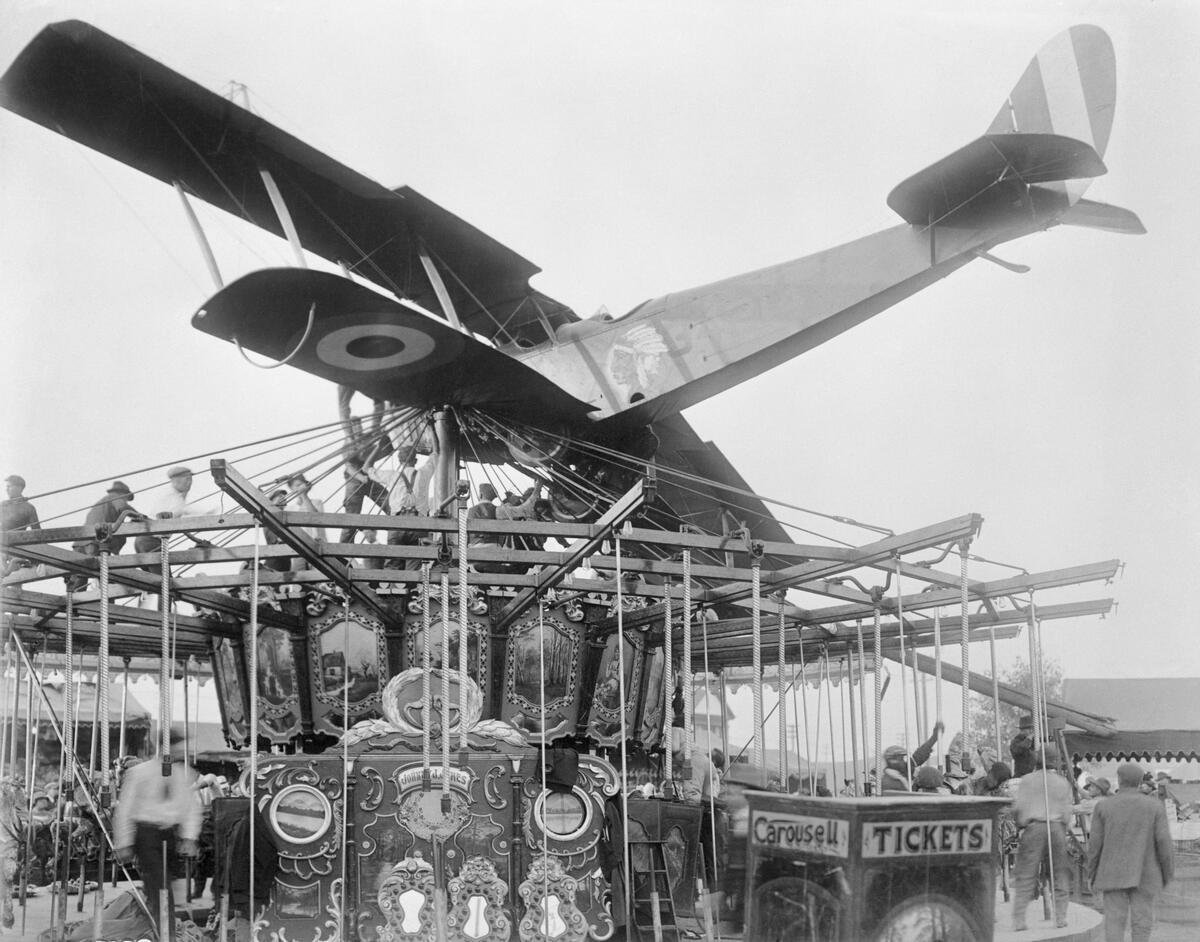
Attribution “Airplane on top of merry-go-round, Calgary Exhibition and Stampede, Calgary, Alberta.”, 1919-07-05, (CU182214) by unknown. Courtesy of Glenbow Library and Archives, Glenbow Archives Collection, Libraries and Cultural Resources Digital Collections, University of Calgary.
The men and women who had served in the armed forces returned to Canada profoundly changed. Growing up in the 1990s in Calgary, I know that I was surrounded by those veterans and their families, by people who had been prisoners of war, by people who had lost loved ones. The experiences that they had lived through were difficult to talk about.
I am from a farm, but I confess that I don’t know how the sausage is made – my family were not of sausage-making stock. But I do know where bread and milk and eggs and beef come from! What I do not truly understand is how freedom is made. The Great Depression with its toll of loss, hardship, and environmental failure has shaped my life more directly. My family had a near miss with losing our own farm when my great-grandfather died in 1935, leaving behind his wife, three young sons, and debt. People talked about those stories. But fearing for their lives during bombing raids, crouching in shelters in the middle of the night with frightened neighbours and trying resolutely to go about their work the next day were not things that my family experienced.
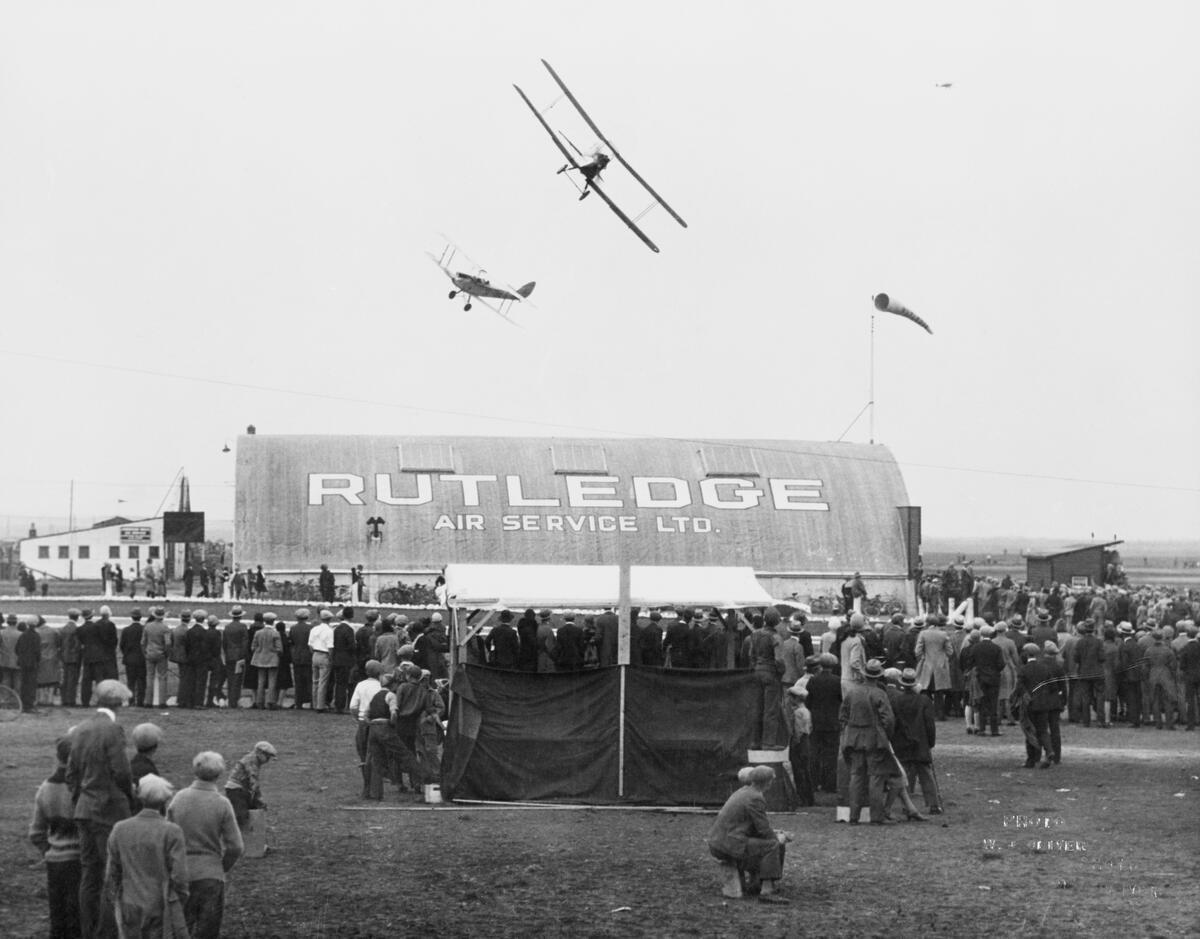
Attribution “Air show at Renfrew Airport, Calgary, Alberta.”, [ca. 1920s], (CU1100719) by Oliver, W. J.. Courtesy of Glenbow Library and Archives, Glenbow Archives Collection, Libraries and Cultural Resources Digital Collections, University of Calgary.
I have inherited something precious, and I’m trying to understand what it cost.
McKnight never returned to Canada. He survived Dunkirk, the fall of France, and the Battle of Britain. On 12 January 1941, he disappeared off the coast of France whilst flying a Mosquito patrol. There was no happy ending to his story. Unless of course the happy ending is me, and all Canadians, living in peace and freedom and safety every day of our lives.
To you from failing hands we throw.
Notes:
1. Harry Reid, ‘Ace Paid Ultimate Price,’ Calgary Herald, 1997, 11.
2. Shirlee Smith Matheson, A Western Welcome to the World (Encino: Cherbo Publishing Group, Inc., 1997), 11.
3. Hugh Halliday, 242 Squadron: The Canadian Years (Stittsville, ON: Canada’s Wings, 1981), 8.
Order your copy here.