6 Lesser Known Women Who Served Queen Elizabeth I
Women’s History Month guest post from Heather Shanette.
Many women served Queen Elizabeth I over the years – in fact, over 300! – but very few were admitted into the Queen’s inner circle. The vast majority served as Ladies of Honour, who escorted the Queen in grand public processions, or as Maids of Honour, who escorted the Queen on a daily basis around her palaces. Only Ladies and Gentlewomen of the Privy Chamber attended upon the Queen in private (although Maids of Honour may have had some assisting duties) and only highly favoured women attended upon the Queen in the royal bedchamber.
Some of the women of the Queen’s inner circle are well known, like Kathryn Carey, Lady Knollys, the Queen’s first cousin who was Chief Lady of the Bedchamber; Mary Dudley, Lady Sidney, who caught small pox from the Queen and tragically lost her looks; Kat Astley, the Queen’s childhood governess, who was Chief Gentlewomen of the Privy Chamber until her death in 1565; and Blanche Parry, a woman of Welsh heritage who ‘rocked’ Elizabeth’s cradle and lived to become her longest serving attendant.
Other women who served in the Queen’s inner sanctum are much less famous, even though they may have served for decades, and some are hardly known at all. Six of these lesser known women are:
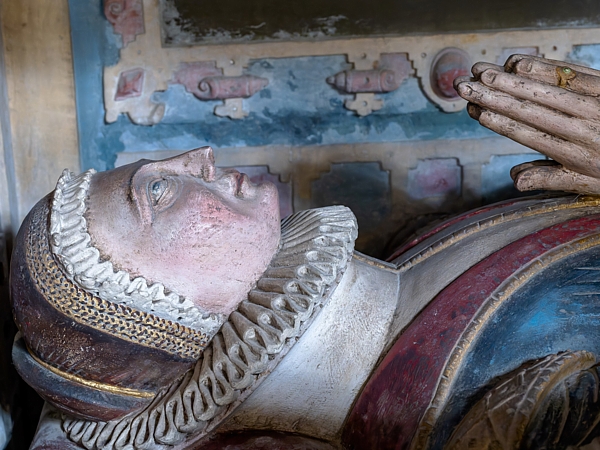
1) Elizabeth Norwich, Lady Carew (c.1530-1594) – Lady of the Bedchamber
Lady Carew was one of Queen Elizabeth’s closest friends. She was at her side for half a century, beginning her long career of service in the reign of Henry VIII when Elizabeth was still a child. In those days she was known as Mistress Norwich and was Elizabeth’s bedfellow (sleeping companion) from time to time. In the reign of Queen Mary she was temporarily removed from Elizabeth’s service when the princess was imprisoned in the Tower of London and Woodstock Manor. When Elizabeth finally became queen in the November of 1558, Mistress Norwich was one of only four women appointed to serve in the royal bedchamber as a Lady/Gentlewoman of the Bedchamber. The other three were Lady Knollys, Kat Astley and Blanche Parry. Soon after she married Kat Astley’s uncle, Sir Gawain Carew, and for the rest of her life was known as Lady Carew. She and her husband spent time in Devon, as well as at court, and it is in Exeter Cathedral that they are buried. Lady Carew was in charge of the Queen’s hoods for many years and is known to have accompanied her on her travels.
2) Elyzabeth Marbury (died .c.1591) – Chamberer
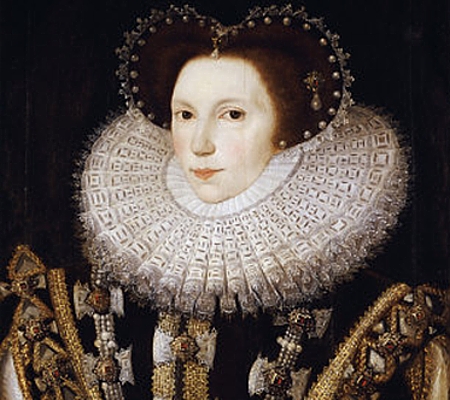
Very little is known about Elyzabeth Marbury, but she served Queen Elizabeth faithfully for over thirty years. Her time in service began in the dangerous years before Elizabeth’s accession, and although she lost her position in 1554 when Elizabeth was sent to the Tower of London, she was reinstated by Queen Mary when the princess was sent to Woodstock Manor. Initially, Elizabeth did not want Mistress Marbury, who was older than herself and married, wanting instead Elizabeth Norwich or Dorothy Broadbelt, both single girls of her own age, but in the dark and depressing days of her captivity, she clearly formed a bond with Mistress Marbury that lasted a lifetime. When she became queen, Elizabeth appointed Mistress Marbury to the Privy Chamber as a Chamberer, a role that many considered ‘of the bedchamber’ as it involved dressing the Queen and taking care of her clothes, and her husband, Thomas, was made Sergeant of the Queen’s Pantry. Elyzabeth remained a Chamberer until the 1580s and, being one of the Queen’s less wealthy women, was regularly gifted beautiful items of clothes by the Queen from her own wardrobe.
3) Dorothee Stafford, Lady Stafford (c.1526-1604) – Lady of the Privy Chamber
Lady Stafford was the widow of Mary Boleyn’s second husband, Sir William Stafford. This made her Elizabeth’s aunt, of sorts, as Mary Boleyn was Anne Boleyn’s only sister. Dorothee was about seven years older than Elizabeth, a devout Protestant, and for most of Queen Mary’s reign lived in exile abroad with her husband and young children. A widow by 1558, she returned to England with her children following Elizabeth’s accession, and upon her arrival was invited to serve as a Lady of the Privy Chamber. Dorothee accepted and quickly became one of the Queen’s most loved and most trusted ladies. Quiet, considerate and discreet, she was often the Queen’s choice of companion when dining with diplomats, and by the late 1560s had become the Queen’s principal bedfellow. In 1568 her daughter, Elizabeth, joined her in the Privy Chamber, and later on her younger daughter, Ursula, was admitted into the Queen’s service. Loyal and hardworking, Lady Stafford served Elizabeth for the entire reign, but once had to leave court temporarily when her son, William, was accused of conspiring to kill the Queen. Lady Stafford outlived Elizabeth and is buried in St Margaret’s Church, Westminster Abbey.
4) Frances Howard, Countess of Hertford (c.1554-1598) – Lady of the Privy Chamber
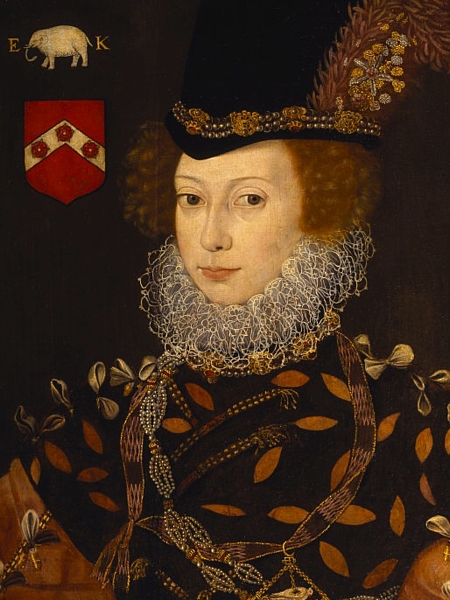
Frances was one of the many daughters of Queen Elizabeth’s maternal great uncle, William Howard, Baron Howard of Effingham. Called ‘good Frank’ by the Queen, she was admitted into the Privy Chamber in the late 1560s and remained on the payroll until her death three decades later. She was the only Effingham daughter to have a salaried position in the Privy Chamber. Her four full-sisters, Mary, Dougles, Katheryn and Martha, all served as Maids of Honour (at various times) and her half-sister, Agnes Howard, Marchioness of Winchester, served as Chief Lady of Honour for a quarter of a century. Frances, a sensitive and anxious soul, had the misfortune of falling in love with a man who was out of royal favour. This man was Edward Seymour, Earl of Hertford, the man who had secretly married Lady Katherine Grey, heir presumptive to the throne, and father of her two (illegitimate in law) sons. After much ado, Elizabeth gave Frances permission to marry Edward, which she did in a lavish court wedding, but ten years later Frances’s world came crashing down when her husband was arrested and imprisoned for attempting to restore his sons to the line of succession. In due course Lord Hertford was released, but all the stress and worry had taken a terrible toll on Frances’s health and she sadly died two years later. Frances is buried in St Benedict’s Chapel, Westminster Abbey.
5) Elyzabeth Knollys, Lady Leighton (1549-1605) – Lady of the Privy Chamber and Bedchamber
Lady Leighton was a younger daughter of Kathryn Carey, Lady Knollys. Initially overshadowed by her beautiful and charismatic older sister, Lettice Knollys, Countess of Essex (one of the most famous women in Tudor history) she lived to become the Queen’s favourite of the Knollys daughters. Elyzabeth was admitted into the Privy Chamber in her teens and served as a Gentlewoman of the Privy Chamber for 13 years before marrying Sir Thomas Leighton, Governor of Guernsey, in 1579. Upon her marriage she became a Lady of the Privy Chamber, courtesy of her husband’s knighthood, and although absent from time to time, due to the demands of pregnancy and family life, she remained an active attendant in the Privy Chamber. The dramatic fall from favour of her sister, Lettice, following her secret marriage to the Queen’s great favourite, Robert Dudley, Earl of Leicester, in no way impacted Lady Leighton’s relationship with the Queen. Although Lettice was never welcome at court again, Lady Leighton continued to ride high in the Queen’s favour, and in 1597 was made a Lady of the Bedchamber. Totally devoted to the Queen, Lady Leighton was devastated by her death and died, following a ‘tedious time of sickness’, just two years later.
6) Mary Radclyffe (c.1545-1618) – Chief Gentlewoman of the Privy Chamber
Mary began her long court career as a Maid of Honour in the early 1560s. Some history books tell us that she was given to the Queen by her father, Sir Humphrey Radclyffe, as a New Year’s gift, but in all likelihood she was suggested for the role by her first cousin, Thomas Radclyffe, Earl of Sussex, whose sister, Frances, had been invited to serve but did not want to. Pretty and witty, Mary was a natural courtier, and by the late 1560s she had seemingly been admitted into the Privy Chamber. It was very unusual for a Maid of Honour to hold more than one role – in fact, Mary’s case was quite unique – but the Queen clearly found in her a hardworking and capable woman with great potential. Like her mistress, Mary preferred the single life, and she continued to serve as a Maid of Honour into her thirties. Indeed, she was probably the longest serving Maid of Honour of the entire Tudor period, serving for an astonishing 24 years. Upon her retirement she became a Gentlewoman of the Bedchamber, then Keeper of Her Majesty’s Jewels, and finally, upon Blanche Parry’s death in 1590, Chief Gentlewoman of the Privy Chamber (even if she never officially had the title). In this role she was in charge of all the Queen’s women, whatever their position, and was so indispensable to the Queen that she lived with her in the Privy Chamber.
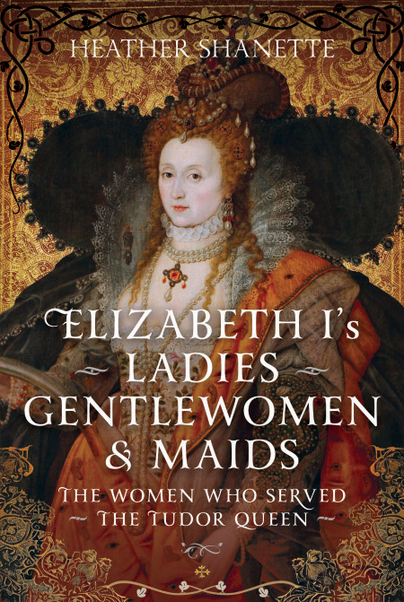
You can read more about these women, and many others who served Queen Elizabeth I, in my book Elizabeth I’s Ladies, Gentlewomen and Maids: The Women who Served the Tudor Queen (2025).
Order your copy here.