The Grey Sisters After Jane: Survival, Scandal, and Silent Erasure
Women’s History Month guest post from Neha Roy.
February 1554: The atmosphere in London is sombre as Lady Jane Grey is led to the scaffold at the Tower of London prior to her execution. Queen all for nine days, used as a pawn by men who were far older and way more ambitious than her, became a symbol of Protestant martyrdom and dynastic cruelty.
But this article isn’t about Jane. This is about her sisters: Katherine and Mary who lived long after their older sister’s death. They bore the consequences of Jane’s brief elevation to the throne of England and her catastrophic fall from grace. Although their lives weren’t as dramatic, it was constricted from fear. They endured. And, in Tudor England, survival itself can be a form of punishment.
After the Fall of the Axe
Jane’s execution did not simply extinguish her life; it tainted her entire bloodline. It established the fact that the Greys were no mere nobles but potential claimants for the throne.
The Grey sisters, through their mother, Lady Frances Brandon, were great-granddaughters of King Henry VII, placing them uncomfortably close to the line of succession. However, their proximity turned into a liability when King Henry VIII’s daughter, Mary, ascended the throne as Mary I, ending the short reign of Jane. And under Elizabeth I, it made them existential threats.
Katherine and Mary, unlike Jane, were not groomed to rule. Therefore, their very existence became a thorn on the crown’s side which needed to be managed as soon as possible. And as discreetly as possible.
Katherine Grey
If Lady Jane Grey became famous for refusing a crown, Katherine Grey would become infamous for choosing a husband.
A young and beautiful Katherine, who was keenly aware of her and her family’s status in the society, threw caution to the wind when she secretly married Edward Seymour, Earl of Hertford, the son of the former Lord Protector Somerset. It was, quite obviously, a love match. However, under Tudor law, no royal claimant can marry without the consent of the monarch. Katherine’s marriage was, therefore, treasonous. It also raised terrifying possibilities: that of legitimate heirs with a claim on Queen Elizabeth I’s throne.
Undoubtedly, Elizabeth’s reaction, on learning of their union, was swift and merciless. Katherine and Hertford were promptly arrested and imprisoned in the Tower of London; their marriage was declared invalid and their children, illegitimate.
While in confinement, Katherine gave birth to two boys – Edward and Thomas Seymour. The children who would have, in other circumstances, strengthened her position, instead sealed her fate.
Elizabeth refused to validate their marriage thus declaring the boys as bastards, and stripped them of any dynastic legitimacy. Instead of an execution, Katherine was subjected to a much subtler punishment: she was denied her identity as a lawfully wedded wife, and a mother.
Mary Grey
Mary Grey, after being a witness to the tragic fates of her two sisters, was aware that she couldn’t afford to do the same. Appearance wise, she was slightly built, and was described as a hunchback or deformed by her contemporaries. Due to this, her presence in her family was relegated to the shadows.
Despite her physical setbacks, in the year 1565, she, too, shocked everyone by marrying without royal consent. The groom in question? Thomas Keyes, a gentleman usher in the queen’s household. It was a socially unequal and politically foolish match.
Needless to say, Elizabeth was furious. And her reaction was ruthless. Mary was imprisoned in her house for life and Keyes was sent to Fleet prison where he soon died. Unlike Katherine, since her marriage was childless, she had no bargaining power. She lived the rest of her life in forced obscurity and never reconciled with Elizabeth. She simply faded away.
The Common Factor
The common factor binding the fate of Lady Jane Grey’s sisters is not theatrical cruelty but a much colder and sinister form of punishment: confinement.
Queen Elizabeth I did not see the need to execute Katherine and Mary. She simply neutralised their threat by pushing them back into the background and ensuring that they do not re-emerge. It was a policy refined through experience. Jane’s death had proven that a dead claimant to the throne could also be dangerous. Hence, Katherine and Mary were allowed to live – but not flourish.
This was Tudor statecraft at its finest.
Lady Jane Grey is remembered for her dramatic and tragic death. Katherine and Mary’s lives exposed how a woman’s life, her marriage, and her fertility could be used as political tools. They remind us that mere survival did not mean freedom.
The lives of Katherine and Mary force us to confront an uncomfortable truth: Elizabeth did not merely oust her rivals…she erased them from history.
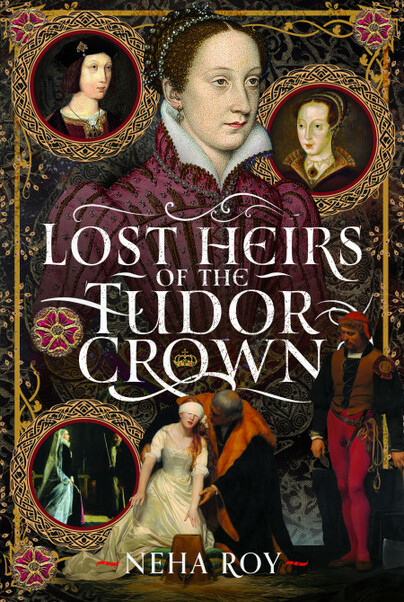
Order your copy here.