Building the Bombers in the Second World War
Author guest post from Andrew Rawson.
Studies of the Second World War focus on the campaigns on land, on the seas and in the air. They rarely consider what industry had to do to make the battles possible. While much is known about the fighting, the efforts of the men and women who built the tanks, ships and aircraft are taken for granted. Yet, the armaments industry had to employ 112 workers for every 100 servicemen.
While the book looks at all aspects of how industry kept Britain Fighting Fit, this article looks at just one. It explains how the Ministry of Aircraft Production made sure the Royal Air Force had enough aircraft to execute an effective bombing campaign against Nazi occupied Europe.
Britain’s economy was in recession at the start of the 1930s and the small aircraft industry was dependant on a few private companies. Around 60,000 workers were only building 160 aircraft a month for the Royal Air Force. The Air Ministry announced Scheme F, which increased the number to 220, when Germany reoccupied the Rhineland in March 1936. It also started building aircraft factories which would be run by experienced companies. These shadow factories were built in the west and north, to reduce the threat from air attacks, and they were sited away from existing industrial centres, so a workforce could be recruited.
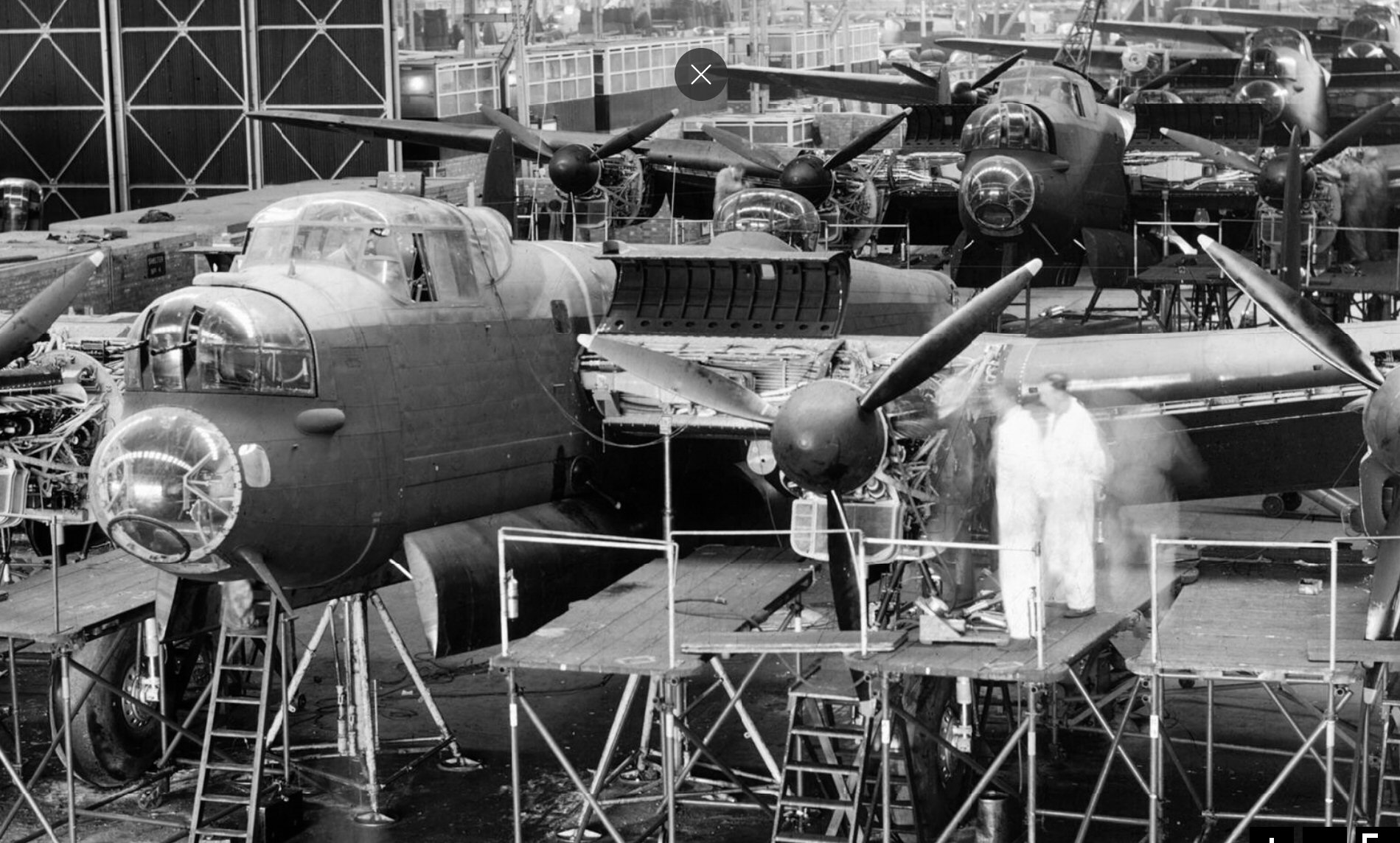
The Air Ministry announced Scheme L, an increase to 330 aircraft a month, after Germany declared a Union (Anschluss) with Austria in March 1938. Budget restrictions were finally removed in 1939 and the factories were told to build as many planes as possible. Fortunately, the nine month long Phoney War following the invasion of Poland, gave them time to build up production.
Britain had a change in government in May 1940, when Winston Churchill replaced Neville Chamberlain as Prime Minister. Churchill wanted aircraft production to reach the maximum possible, so the Royal Air Force could fight off the Luftwaffe. He appointed Max Aitken, Lord Beaverbrook, head of a new Ministry of Aircraft Production. He used unorthodox methods to meet Churchill’s wishes at the expense of the other supply departments, often leaving the Royal Navy and the British Army short of many items.
The summer of 1940 was all about building fighter aircraft, to counter the Luftwaffe’s bombers. Many aircraft factories were attacked during the Blitz which continued over the winter. Work was disrupted by air raids and dispersed when factories were destroyed. Many workers wre bombed out of their homes.
Colonel John Moore-Brabazon took over the Ministry of Aircraft Production in 1941 and he had a more formal approach to management. His Air Supply Council introduced a production programme which matched supply with demand. The Allies planned their bombing campaign at the Casablanca conference in January 1943. Bottlenecks in the German supply chain were chosen and the Ministry of Aircraft Production was told what bombers were required.
Companies had to recruit tens of thousands of women to meet the new production targets, because the armed services needed every available man. The trade unions allowed non-union labour into the factories, while complicated tasks were split into simpler ones, so the women could be trained quicker to do them.
Many women volunteered because they had lost their jobs due to the war, others were being patriotic. Over ½ million women registered but the factories had to improve their welfare facilities, to stop many leaving. Tens of thousands of young and married women were also conscripted for part time work.
The Ministry of Aircraft Production had to import many items from North America; for example, aluminium from Canada. However, a third of aircraft were eventually built from aluminium recycled from crashed planes. Half of the tools used by the Ministry of Aircraft Production were imported from the United States. The assembly factories also needed huge jigs hold the spars and fuselage, while the workers pinned them together.
There were lots of components to install once the main assembly had been completed and the undercarriage, propellors, instruments and machine guns all came from different manufacturers. For example, each Lancaster bomber was made from around 55,000 parts. Two companies were making 200 engines a month at the start of the war but the number had increased to 4,750 at its peak. Explosives and casings were a separate industry which had to produce huge numbers of bombs and bullets to arm the aircraft.
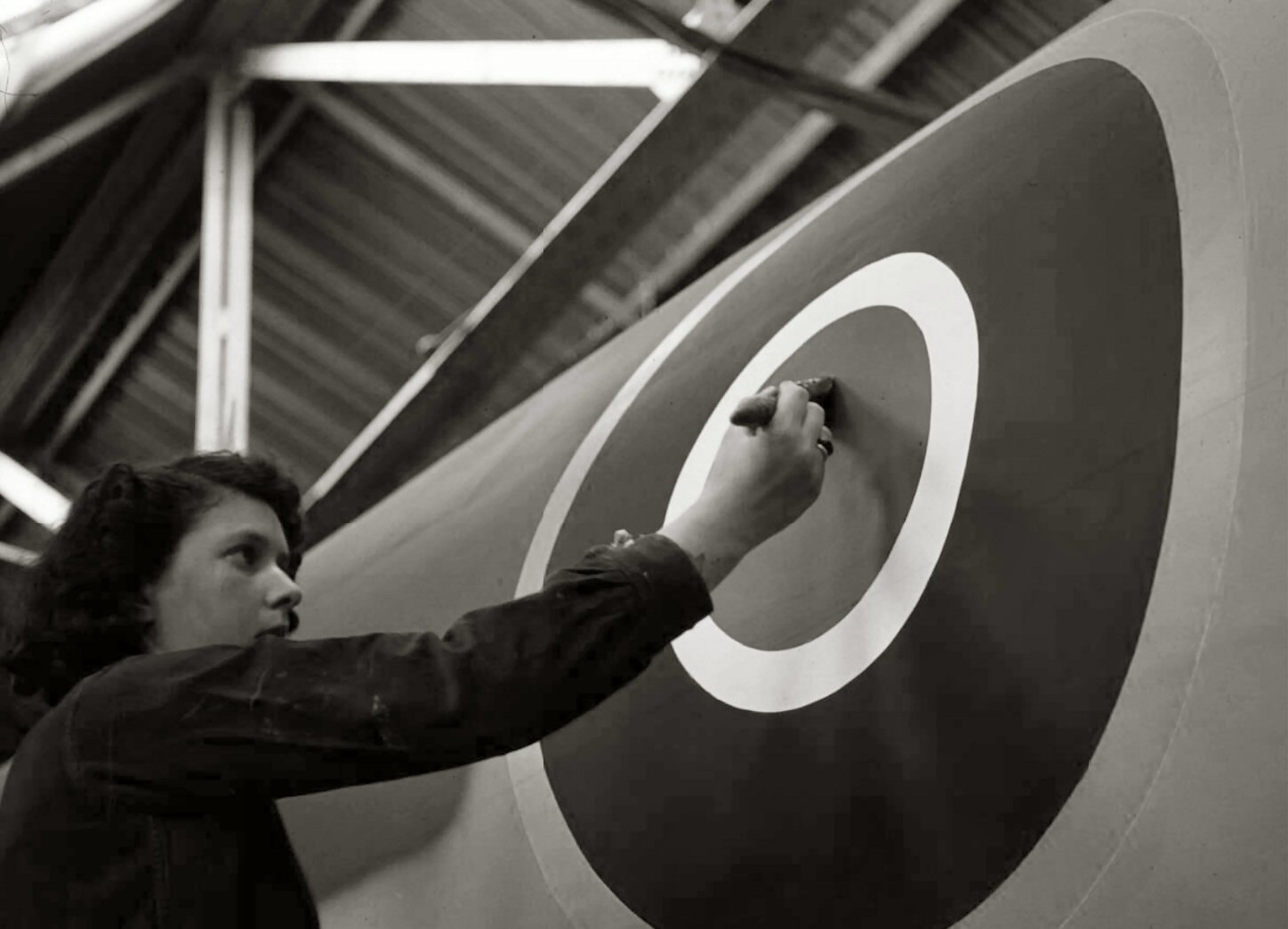
Many people were involved in taking a new aircraft design from the drawing board to production. It was a challenging process, involving rigorous testing because just one problem could cause a prototype to crash. While it took as long as seven years to get a new aircraft into production before the war, the time was reduced considerably during it. Most aircraft were designed to the Air Ministry’s specifications but there were a few private ventures, such as De Havilland’s Mosquito.
The Air Ministry preferred to modify reliable models rather than look for new ones. So, the aircraft crews would be asked how to improve their aircraft’s flying performance, while the ground crews gave feedback on how to make maintenance easier. Manufacturers also looked at ways to speed up production. Aircraft Storage Units (ASUs) had to be set up around the country to carry out modifications and repairs, to keep the operational airfields clear.
Altogether, the Ministry of Aircraft Production built over 40,000 aircraft and the top three models were the Wellington (11,400), the Lancaster (7,800) and the Mosquito (7,800). They were used for many roles including bombing, reconnaissance, mine laying and coastal surveillance. The number working in Britain’s aircraft industry had increased by nearly thirty times by 1943 (from 60,000 to 1.7 million). They were building all types of fighters, bombers, transport and training aircraft.
By 1944, the aircraft industry was scaling down, as it switched from building up an air force to maintaining one. Just as in the First World War, the women were the first to be laid off. By 1946, most of the aircraft factories had closed and production was back at peacetime levels.
The Ministry of Aircraft Production had helped Fighter Command defend Britain during its Darkest Hour, in the summer of 1940. It then made sure Bomber Command could go over to the offensive. However, the cost had been enormous, with the cost of aircraft, airfields and fuel peaking at over £35 million a month, or the equivalent of £1.5 billion today. A similar amount of money had been spent on the factories before the war.
This is the outline of how the aircraft industry supported the Royal Air Force. The book covers many aspects of industry, all of them important to keep Britain Fighting Fit until victory was achieved in 1945.
Order your copy here.