Five Princesses Who Did Their Own Thing
Women’s History Month guest post from Sharon Bennett Connolly.
We have this image of princesses as pawns, royal daughters raised to marry foreign princes and give birth to a string of children, to continue the family line through the generations. They are often stereotyped, their personalities removed or ignored. Their roles were decided from birth, and they had no say in the direction of their lives.
But can that really be the case?
Were these women always subservient, obedient daughters who never stepped out of line?
Did they never had wants and desires of their own?
Were they just pawns?
Of course not! Here are 5 royal daughters who stood up for themselves.
- Gunhild, daughter of Harold II, had a rather unorthodox relationship with Alan the Red – and his brother, Alan the Black
Sometime before 1093, Gunhild left Wilton to live with Count Alan Rufus (Alan the Red), either as his concubine, or handfast wife. Count Alan, Lord of Richmond in Yorkshire, was one of the twelve sons of Eudo, Count of Brittany. Whether or not Gunhild left the convent willingly, or was kidnapped, seems to be in question. In 1075, Alan Rufus had taken over the forfeited lands of Earl Ralph de Gael, lands that had belonged to Edith the Fair before the Norman Conquest. He now held vast lands in East Anglia – lands that had once belonged to Eadgifu the Fair and, if Eadgifu was Edith the Swanneck, it is possible that Alan ‘married’ Gunhild to strengthen his claims to her mother’s lands. According to Orderic Vitalis, Gunhild eloped with Alan the Red early in the reign of William II, who came to the throne in 1087. A letter addressed to Gunhild from Anselm, Archbishop of Canterbury, suggests that she was a runaway nun, though such an attitude may also have been adopted, even if she left the convent under duress. Whatever the reason for her leaving, Gunhild appears to have been reluctant to return to the religious life and when Alan Rufus died, possibly in 1089 but certainly by 1093, instead of returning to the convent, Gunhild became the mistress or wife of Alan’s brother and heir, Alan Niger (Alan the Black). Archbishop Anselm was not happy….
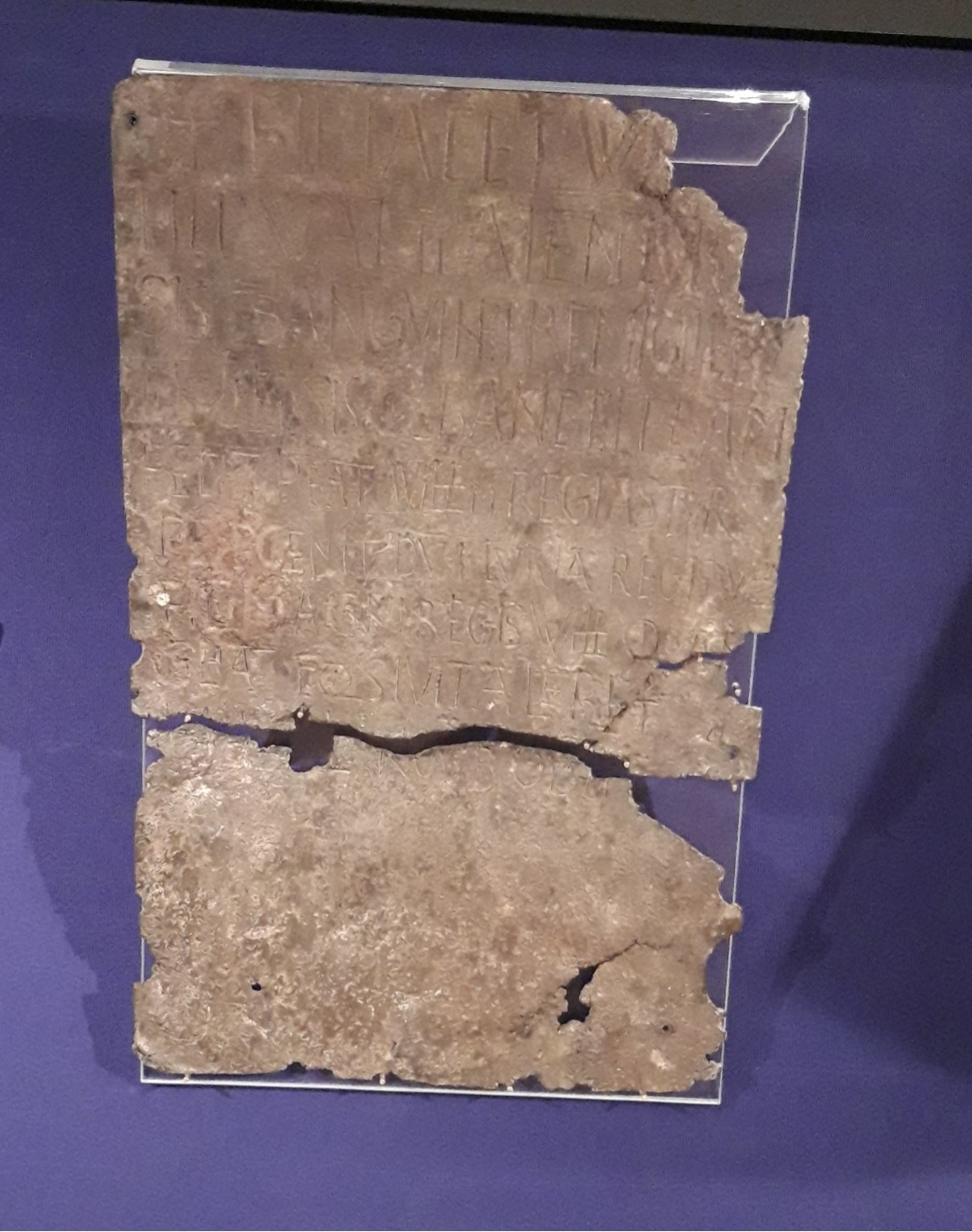
- Adela, daughter of William the Conqueror, wife of Stephen of Blois – mother of King Stephen.
The count’s return from the First Crusade in 1098 was mired in shame after his failure to relieve the force at Antioch that year. According to Orderic Vitalis, Count Stephen had been suffering from ill health and had withdrawn to Alexandretta to recover. Vitalis recorded that Stephen’s return to the front line was eagerly awaited ‘as all the chiefs looked to him as their prime leader and counsellor; for he was a man of great eloquence and singular ability’. Instead of marching to the relief of the beleaguered Crusaders, however, Count Stephen is said to have taken one look at the vast enemy camp and panicked, making his way to the coast and a ship home. During his retreat, he is said to have met the advancing army of the Emperor of Constantinople and warned him that all was lost, prompting the Emperor to withdraw. Unfortunately for Count Stephen, his predictions of doom and destruction were thwarted when the Crusaders made a successful sortie against their besiegers and turned the conflict in their favour. By the time the count made it home he was in deep disgrace, facing accusations of cowardice and oath-breaking. Count Stephen had failed to face the enemy at a crucial moment; worse still, he had failed to fulfil his Crusader oath. Adela was highly critical of her husband for this failure, and her reproach, with ‘these speeches and many more like them’ may have been a contributing factor in his return to the Holy Land in 1101.
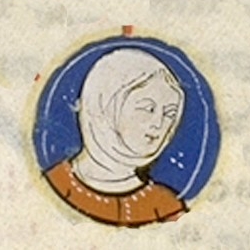
- Juliana of Fontevrault, illegitimate daughter of Henry I.
Juliana and her husband were in rebellion against her father and she had occupied the fortress of Breteuil. On hearing this Henry I immediately rode to the town, where the gates were readily opened for him. He then ‘laid siege to the castle in which his defiant daughter had shut herself up’. Apparently, Juliane appealed to her father, asking for a meeting, though, according to Orderic Vitalis, it was with evil intent, as Juliane ‘hoped to murder him. She had a crossbow ready drawn for the purpose and shot a bolt at her father’. Juliane’s relationship with her father, by this point, was at an all-time low. There must have been hurt on both sides. Juliane’s two daughters had been maimed and permanently disfigured, if not by Henry’s orders, then at least by his approval. Ralph Harenc would not have undertaken such a horrific action if he was not assured of the king’s acquiescence. Henry, on the other hand, now had his own grievance in his daughter’s attempt to kill him. A furious King Henry ‘immediately had the castle drawbridge destroyed, so that no one could enter or leave. Juliana, seeing that she was completely surrounded and that no one was at hand to help her, surrendered the castle to the king, but could find no means of persuading him to allow her to leave freely. Indeed by the king’s command she was forced to leap down from the walls, with no bridge or support, and fell shamefully, with bare buttocks, into the depths of the moat. This happened at the beginning of Lent, in the third week of February, when the castle moat was full to overflowing with winter rains, and the frozen waters naturally struck numbing cold into the tender flesh of the woman when she fell. The unlucky Amazon got out of the predicament shamefully as best she could and, withdrawing to her husband who was then at Pacy.’
- Joanna, Queen of Sicily, refused to marry Saladin’s brother:
Joanna’s time in the Holy Land was spent in Acre and Jaffa, accompanying her sister-in-law and following, at a safe distance, behind the crusading army. She spent Christmas 1191 with Richard and Berengaria at Beit-Nuba, just twelve miles from Jerusalem. However, although he re-took Acre and Jaffa, Richard fell out with his allies and was left without a force strong enough to take the Holy City.
Joanna became a pawn on the marriage market again when Richard, in attempts to reach a political settlement with the Muslim leader, Saladin, offered her as a bride for Saladin’s brother, Saphadin, also known as Malik al-Adil. His plans were scuppered, however, when a furious Joanna refused outright to even consider marrying a Muslim, despite the fact Richard’s plan would have seen Saphadin converting to Christianity and Joanna installed as queen of Jerusalem. We’ll never now how serious Richard was in making his offer; the proposal came to nought as Saladin insisted the wedding take place within six weeks, and Richard insisted it would take at least six months to obtain the papal dispensation required for the second marriage of a king’s widow.
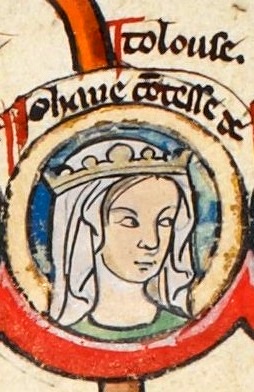
- Joanna, Lady of Wales, wife of Llywelyn the Great
Joan’s conduct in the first quarter of the thirteenth century had been exemplary; she was the ideal medieval noblewoman, a dutiful daughter and wife, whose marriage helped to broker peace, if an uneasy one, between two countries. She had fulfilled her wifely duties, both by providing a son and heir and being supportive of her husband. However, in 1230, everything changed. Joan met William de Braose. He was a wealthy Norman baron with estates along the Welsh Marches. Hated by the people of Wales, who had given him the nickname Gwilym Ddu, or Black William, he had been taken prisoner by Llywelyn in 1228, near Montgomery. Although he had been released after paying a ransom, de Braose had returned to Llywelyn’s court to arrange a marriage between his daughter, Isabella, and Llywelyn’s son and heir, Dafydd. During this stay, William de Braose was ‘caught in Llywelyn’s chamber with the King of England’s daughter, Llywelyn’s wife’.
William de Braose was publicly hanged.
Joan, however, escaped with her life and was imprisoned. We cannot say how long the affair had lasted, whether it was a brief fling in 1230, or had started when de Braose was a prisoner of Llywelyn in 1228. Joan’s position in the 1220s had appeared unassailable but this scandal rocked Wales, and England, to the core. She was no young girl struggling to come to terms with her position in life; she was about 40 years old, had been Llywelyn’s consort for twenty-five years. The most surprising thing about the whole affair, moreover, is Llywelyn’s response. His initial anger saw William de Braose hanged almost immediately, and Joan imprisoned in a tower. This rage, however vicious, was remarkably brief. Maybe it was due to the strength of the previous relationship between Llywelyn and Joan, or maybe it was the high value placed on Joan’s diplomatic skills and her links with the English court, or a combination of both, but within a year the terms of Joan’s imprisonment had been relaxed and just months after that, she was back on the political stage; her betrayal forgiven if not forgotten.
……………………………………………………………………..
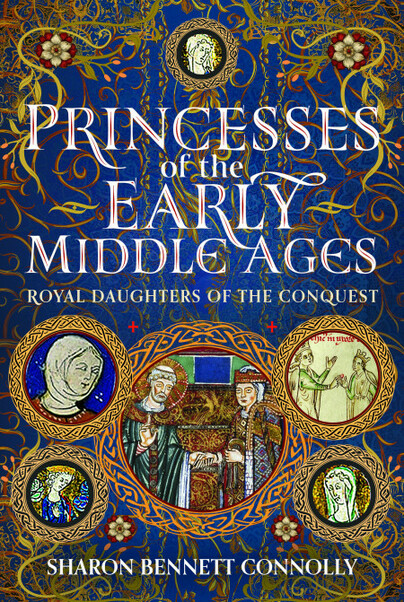
Order your copy here.
Sharon Bennett Connolly is a Fellow of the Royal Historical Society and best-selling author of 8 historical non-fiction books. As well as writing the popular history blog, www.historytheinterestingbits.com Sharon co-hosts the podcast A Slice of Medieval, alongside historical novelist Derek Birks. Sharon regularly gives talks on women’s history for historical groups, festivals and in schools; her book Silk and the Sword: The Women of the Norman Conquest is a recommended text for teaching the Norman Conquest in the National Curriculum. Sharon is a feature writer for All About History, Tudor Places and Living Medieval magazines and her radio and TV work includes the BBC and Australian Television’s Who Do You Think You Are?
Her latest book, Princesses of the Early Middle Ages: Royal Daughters of the Conquest, is book number 9.