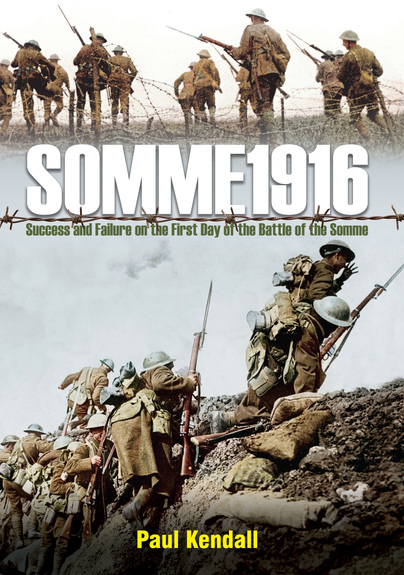
THE FIRST DAY OF THE BATTLE OF THE SOMME
1 July 1916
At 07.30 hours on 1 July 1916, the shrill blasts of hundreds of officers’ whistles pierced the air along the eighteen miles of Allied front line trenches on the Somme. This was the signal for thousands of soldiers to heave themselves up and over their parapets and to lurch forward into No Man’s Land towards the German wire. What happened next, as those men walked headlong into a flailing maelstrom of searing shell fragments and machine-gun bullets – many of them disappearing forever into clouds of swirling dust and smoke – has become the stuff of myth and legend.
The first day of the Battle of the Somme has gone down in history as the single most destructive day ever experienced by the British Army. The men had been ordered to walk across No Man’s Land, maintaining formation, and to occupy the German trenches where they would meet little opposition from the enemy who had been pounded relentlessly by artillery for the previous eight days. However, very little that day went according to plan.
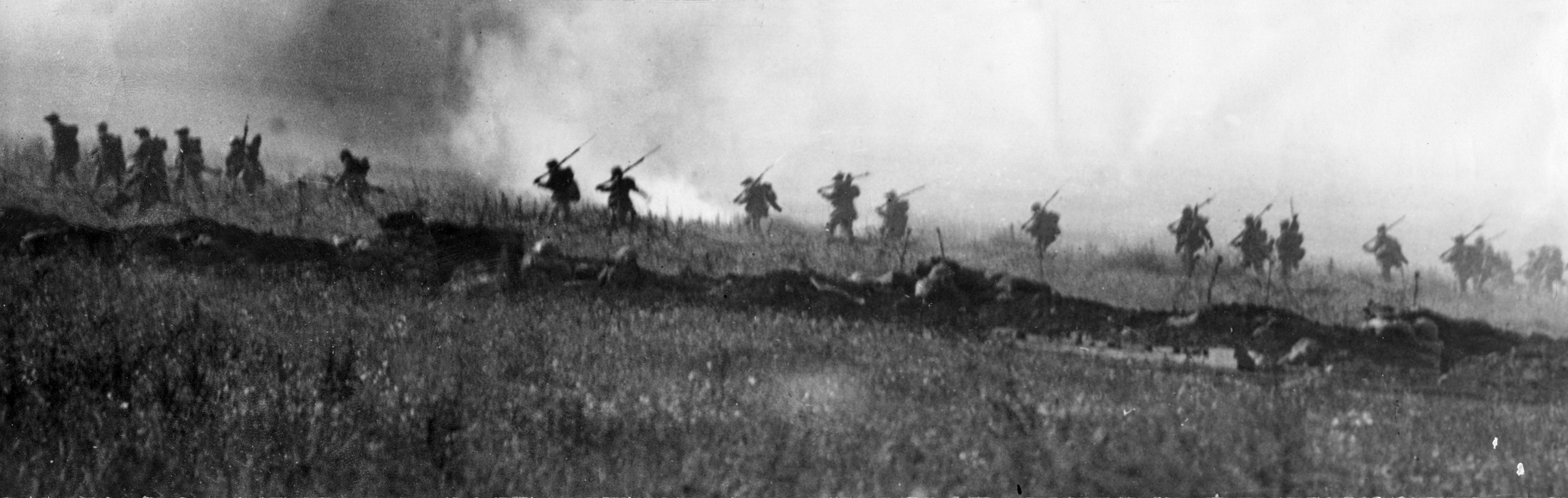
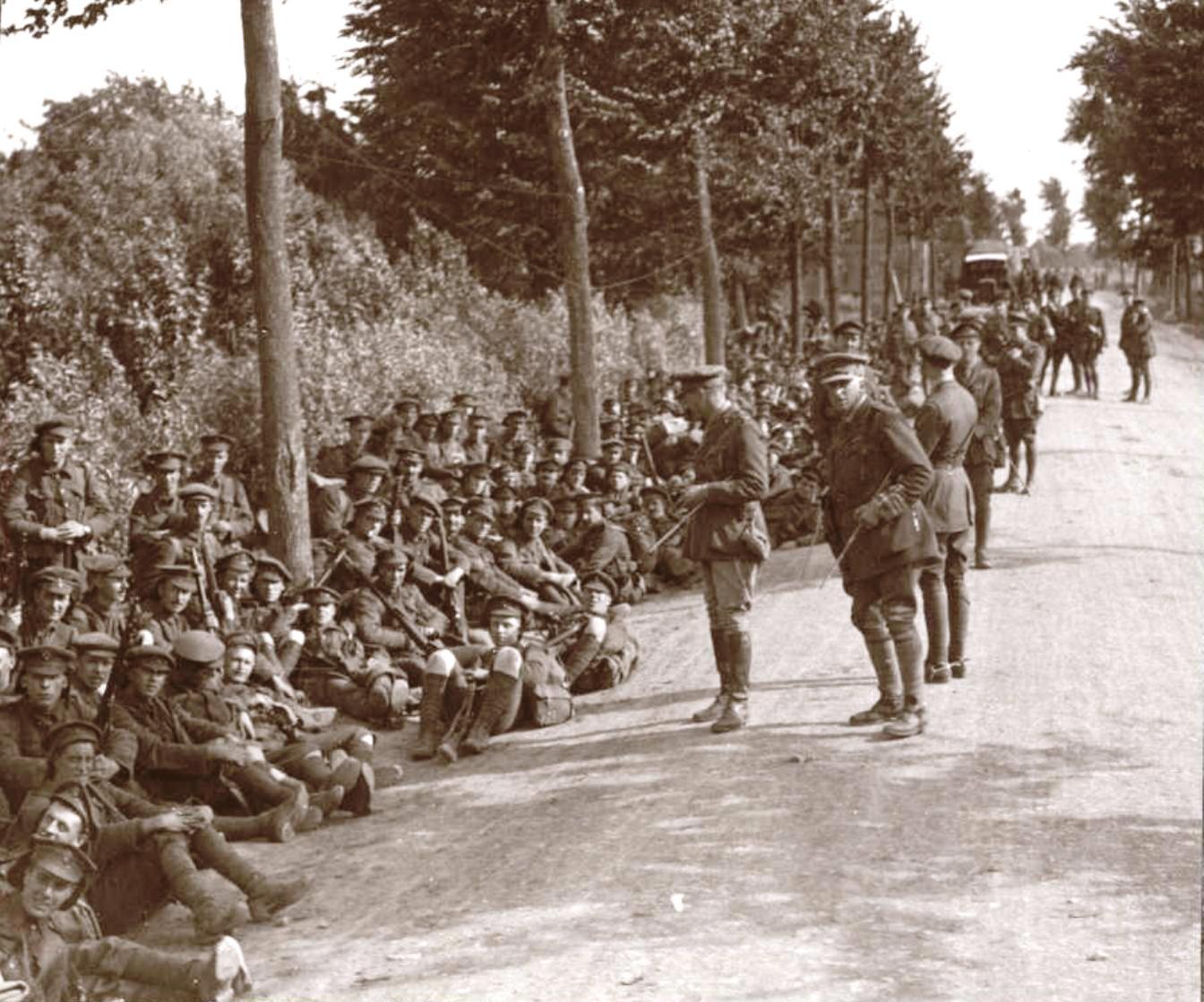
Firstly, before the attackers had even left their own forward trenches, casualties had been very high, as Lieutenant C. Ashford of the 1/7th Sherwood Foresters of the 46th (North Midland) Division explained: ‘Casualties in our own trenches were very heavy owing to the intensity of the [German] bombardment and the congestion and owing to the fact that many men who fell disappeared beneath the mud, it was difficult to help the wounded. I stumbled over many bodies which were out of sight beneath the mud. The congestion in the jumping off trenches caused still greater congestion in the rear. Men pressing forward, found themselves held up by congestion in front and made a vulnerable target. This caused heavy casualties.’
At last Zero Hour, 07.30 hours, arrived, the whistles blew and the great attack began. The War Diary of the 16th Northumberland Fusiliers (Newcastle Commercials) described what happened in their assault upon Thiepval: ‘When the barrage lifted ‘A’ and ‘B’ Coys moved forward in waves and were instantly fired upon by enemy’s M.G. and snipers. The enemy stood upon their parapet and waved to our men to come on and picked them off with rifle fire. The enemy’s fire was so intense that the advance was checked and the waves, or what was left of them, were forced to lie down.’
An un-named NCO who was with the 2nd Gordon Highlanders attacking Mametz recalled: ‘It was half past seven to the tick when we scrambled out across our trenches and went across into the shell-swept area. We pressed quickly onward, dodging shells, shell holes and traps of all kinds strewn about for the feet of the unwary.’
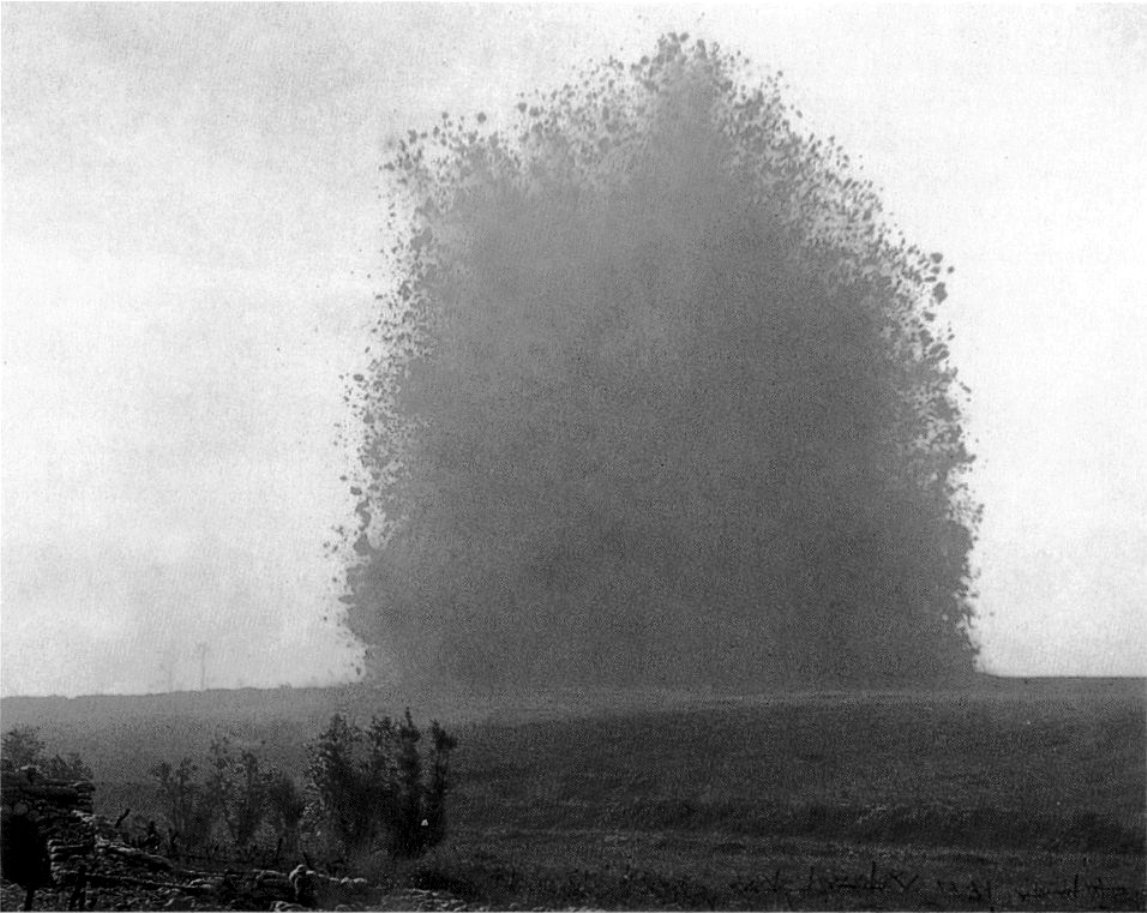
Major-General Sir Henry de Beauvoir De Lisle’s 29th Division, of VIII Corps, was ordered to capture Beaumont Hamel. ‘We had seen the battalion on our right, the Royal Fusiliers, start off across No Man’s Land, the first wave went forward,’ wrote Captain E.W. Sheppard of the 1st Lancashire Fusiliers. ‘The east bank of the lane lay in a slight dip which concealed men getting out of it from the enemy view and fire, but two steps brought them into exposure and the bulk of the first wave got no further than the edge of this dip where they were swept over in swither, and those who were still alive crawled or were dragged down into the lane which was now full of wounded.’
Such scenes were repeated across the Somme front and very few of the objectives set for 1 July were achieved. The only non-UK troops attacking on the British sector on 1 July 1916, were units from Bermuda and Newfoundland. Because Newfoundland was still a colony of Great Britain at the time – Newfoundland did not become a part of the Canadian confederation until 1949 – the Newfoundland Regiment was a part of the British Fourth Army on 1 July rather than the Canadian Corps, which was assigned to another part of the Allied line. The regiment was virtually wiped out during their failed attack at Beaumont-Hamel.
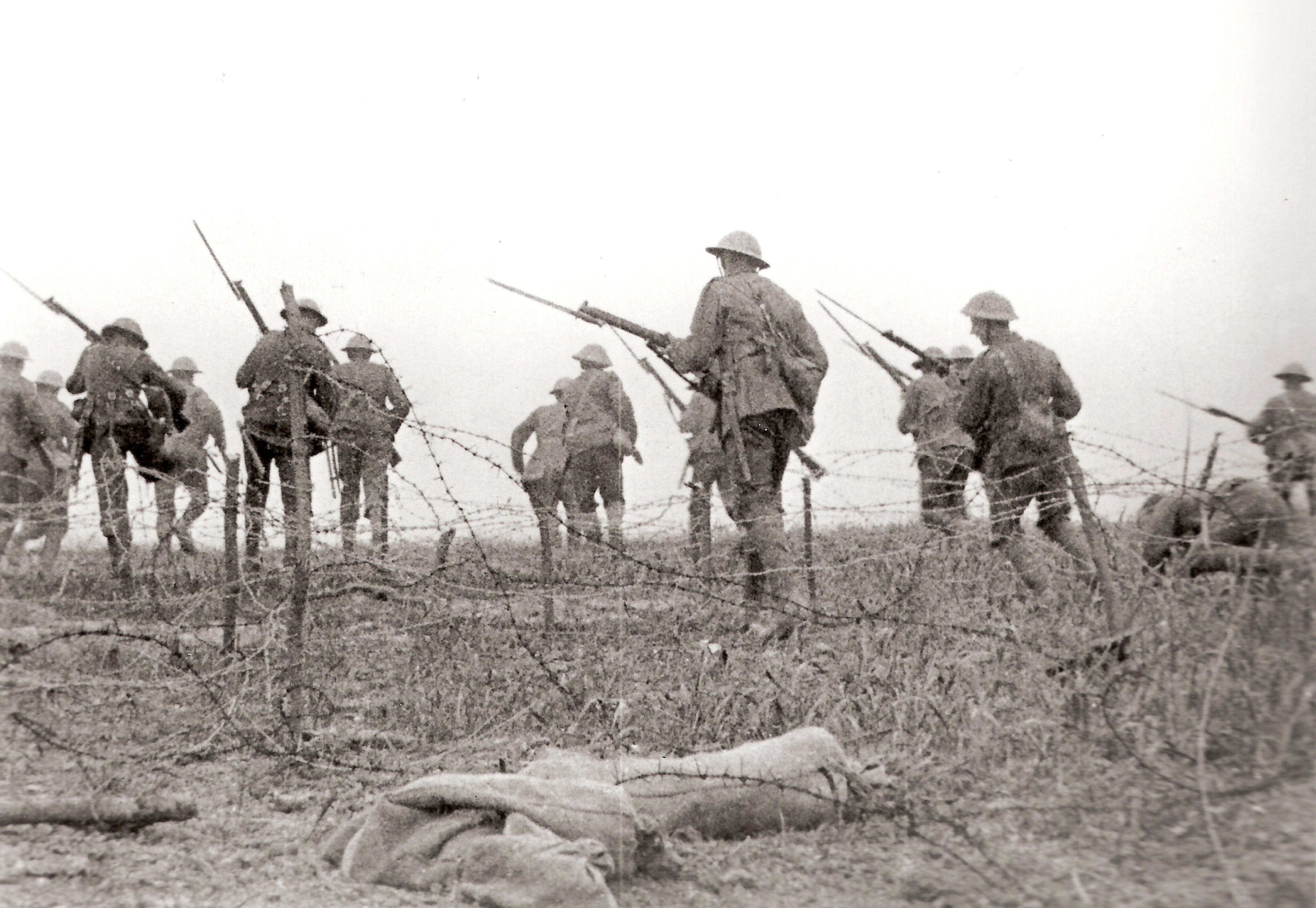
The Somme was one of the strongest German-held positions along the Western Front. Its defenders had spent eighteen months strengthening the line and had established a solid line of redoubts and fortresses. German machine-guns placed in excellent positions on high ridges dominated the battlefield and were a key factor in holding back the British infantry waves. Although British forces had a numerical advantage of fifteen divisions against six German divisions, the strength and depth of the German positions, much of which overlooked the British line of advance, was simply too formidable for them all to be taken. The artillery had not been able to destroy the German trenches, despite the intensity of the preliminary bombardment.
This was noted by Private C. Whitehead of the Royal Army Medical Corps: ‘We occupy the German trenches, and what a surprise their dugouts are. They are about 30 feet or more in depth, and are fitted with electric lights and bells. There are also proper beds, mirrors, tables, chairs and stoves, and practically impossible for shells to penetrate them.’ That was why the first day of the Somme was such a failure and cost so many young British lives.
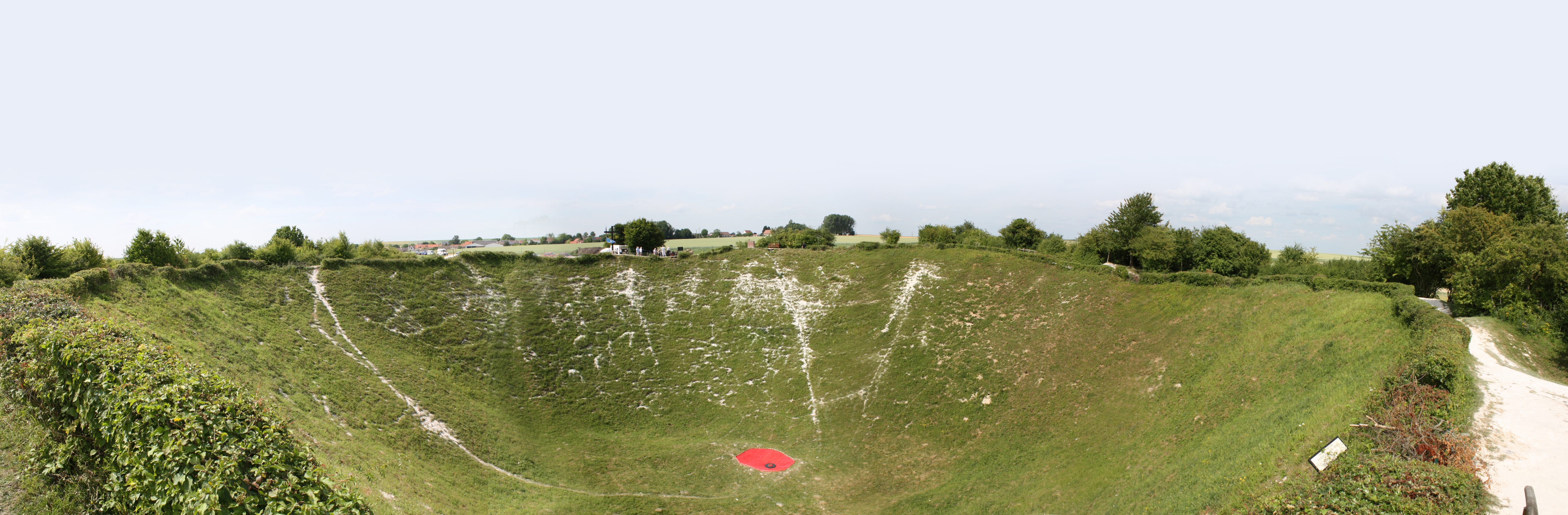
Of the 141 days that comprise the Battle of the Somme, it is the opening day of the offensive that is often seen to most represent the sacrifice of a generation of young men. Before midnight on that fateful first Saturday in July 1916 – almost the middle day of the middle year of the First World War – the British Army suffered no less than 57,470 casualties – a number that comprised 585 prisoners of war, 2,152 men missing, 35,493 wounded and a staggering 19,240 dead.
Saturday, 1 July 1916 was a day which led to changes in the ways in which the British Army would fight its future battles. It was a day which put paid, once and for all, to any lingering hopes held by the British people for an early, victorious conclusion to that Great European War. But that was for the future. As darkness descended on the battlefield after that ‘first day’ of the Somme, there had been no stunning, overwhelming British victory. Well-planned and executed operations on some southern sectors had achieved deserved success but these had been more then outweighed by almost complete annihilation and crushing defeat further north and here only chaos and confusion reigned.
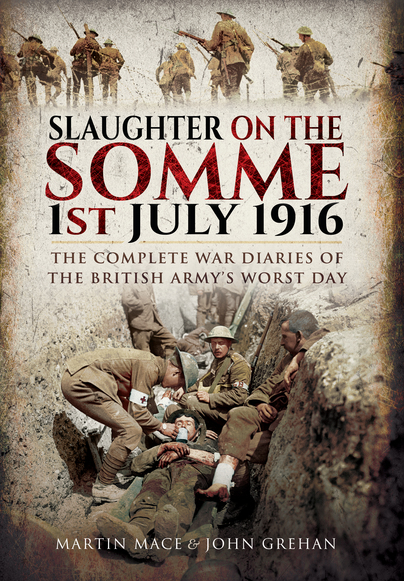
To learn more about the events of 1 July 1916, the following is highly recommended:
Slaughter on the Somme: 1 July 1916 – The Complete War Diaries of the British Army’s Worst Day
The author and historian Paul Kendall explores the Battle of the Somme as whole in the following title:
Somme 1916: Success and Failure on the First Day of the Battle of the Somme