The Romans and the Halloween-style witch
Author guest post from Alexis Prescott.
The Roman Strigae
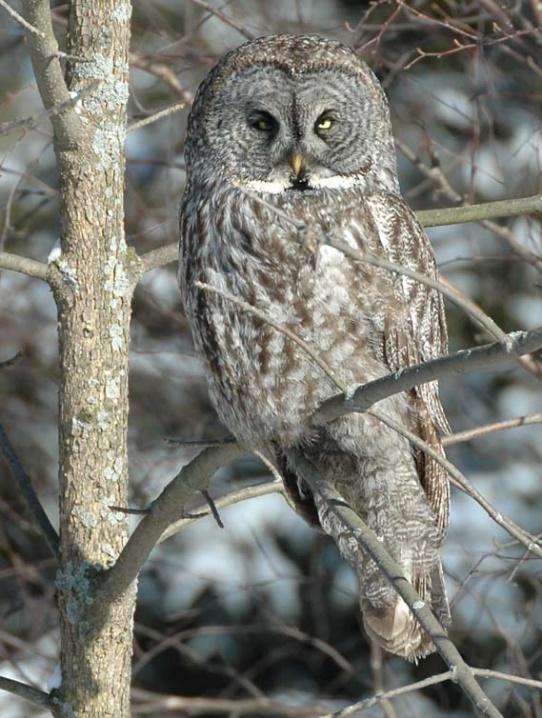
Imagine, if you will, a bleak autumnal night as you snuggle into the comfort of your bed when suddenly you hear the shrill squawk of an avian creature outside your window. Terrified, you try to dismiss such noise, blaming the darkness for playing tricks upon you, until the creature ruptures your window, enters your domain, flapping its wings unwearyingly over your bed. Petrified by the presence you try to conceal yourself but spy droplets of blood dripping from its ensanguined feathers signifying its last kill as it ravenously raises its beak to rapaciously take a peck at its next hapless victim which will be….you. In much the same way the Roman writer Ovid describes the witch-cum-owl creature known to the Romans as the strix. In his fasti Ovid explains how witches delighted in morphing into an owl at night with their ‘beaks carved for plunder’ and with their ‘huge heads’ and ‘goggling eyes’ (Ovid Fasti 6.131-139). However, this nocturnal metamorphosis had one disturbing mission which was to seek out human flesh, mainly that of an infant, as they enjoyed cramming ‘their throats with gulps of (their) blood’ (ibid). These nefarious strigae became known as ‘flying women’, a term coined by Sextus Pompeius Festus (De Verborum Significatione 314.33). Indeed, it was in fact the Roman writers themselves who set forth the development for the Halloween-style witch flying upon her broomstick in the dead of night in the pursuit of equally disturbing activities.
Roman Hag-Witches
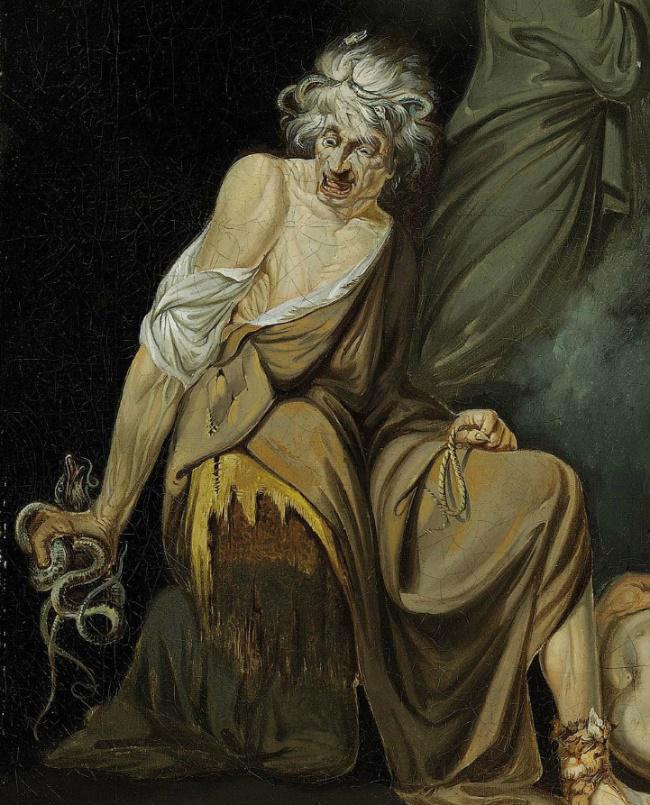
Throughout the first century BC we have an unprecedented emergence of malignant females in Roman literature that engage in all manner of evilness. They have a profound knowledge of hideous poisonous herbs and incantatory rites that can raise nocturnal entities and ghosts, sometimes for the sole purpose of destruction; they use all manner of ingredients to enact their spells and curses from venomous herbs, body parts that have been scattered in cemeteries, feathers from the screech owl –– parts of animals that have been ripped apart by the witch herself ––, and most grotesquely of all, they enjoy participating in the capturing and murdering of young children. Together with these disturbing acts, they are shown to be more potent in their ability to control nature from demonstrating a powerful sway over tempestuous forces to being able to bring about nighttime during the height of the day and even melt mountains and make the planet stationary. Moreover, the Roman witch became a hag with grey hair, had a Thessalian connection and was a capable shapeshifter, often choosing to metamorphose into nocturnal animals and ones found in the wild, such as the wolf.

Candida and Erictho
Some of the most infamous Roman hag-witches include Horace’s Canidia and Lucan’s Erictho. Canidia commits some atrocious crimes in Horace’s Epodes from kidnapping, murdering, poisoning and torturing, to ripping apart a lamb with her teeth, and horrifyingly, starving to death a child so that she can harvest his organs. The latter forms the basis of Horace’s Epode 5 in which Canidia the witch strips a boy naked and with ‘blunt vipers entangled in her head of dishevelled hair’, she performs incantations necessary to starve the boy so as to remove his bone marrow and liver for the purposes of making a love potion:
(So he) Might die staring at food, brought and taken away
Two or three times each endless day:
This so his marrow and liver, extracted, then
Dried, might form a love potion,
When his eyeballs, fixed on the meal he was denied,
Had shrivelled all to nothingness.
Horace Epode 5
Canidia is a powerful witch that warrants much loathing and fear. Her incantations are reminiscent of pure horror and her anti-social attitudes are in line with an archetypal representation of the witch that has gradually emerged in the Roman literature, and one which will have a profound impact on the modern perception of the craft.
Yet another disturbing witch is that of Lucan’s Erictho as portrayed in his De Belli Civili who is, in every sense, the wicked witch: her desired place to dwell is among graves in a dark cave, so she enjoys loitering in the boundary between life and death; the deities she holds dear are the ones of Erebus in the underworld and not the ones in the heavens and as such, she knows nothing of the religious and pious practices that most humans partake in; her appearance is filthy, ugly, unkempt and generally disgusting, combined with matted hair; she emerges from the threshold of death only when the earth is shrouded in black storms and this is when she will perform her most heinous of crimes. Most of her vile offences concern souls, dead bodies and infants. She has the power to bury good souls still trapped in their bodies when fate still owes them years; she can perform necromancy seamlessly; she can rip away the marrow from a rotting body, as well as digging out its eyes and nails, this she does through the action of gnawing. Sometimes she waits to snatch innards from the thirsty jaws of wolves. Finally, in her hunger for fresh blood, she’ll happily entrap a pregnant woman and snatch the foetus from her womb to hungrily drain it of its life force. Lucan portrays Erictho as a wild savage beast that ravenously seeks carrion, a cannibalistic, yet inhuman creature that gnaws at the marrow of the innocent.
Conclusion
Thus, it was the Romans, as we have seen, that morphed the once divine image of witchcraft into the very emblem of the hideous, malevolent hag. Due to societal pressures, misogyny or just gender power play within these centuries, the hag began to dominate Western Roman literature from the first century BC. From the strigae to Canidia and Erictho, these witches form the basis of what it means for us to perceive the witch with all her goriness. The hag became a strong stereotype lasting beyond the fall of Rome in the West, embedding herself firmly into the minds of the Christians and the modern witch hunts.
So, as you indulge yourself on All Hallow’s Eve through the consumption of candy and the watching of horror films, just remember the Roman origin of the wicked witch and her many unpleasant characteristics which has become such an iconic emblem of the spooky season.
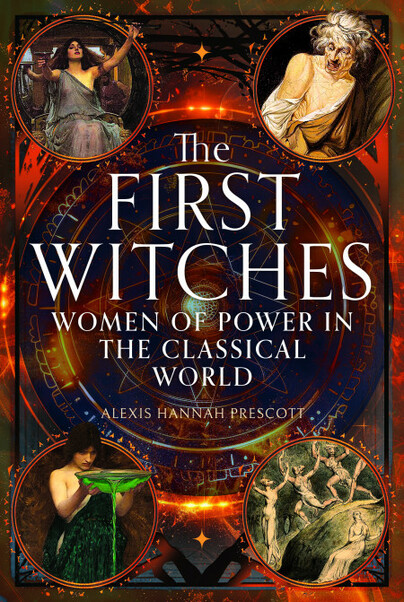
Order your copy here.