Who Was the Worst of the Cambridge Five?
Author guest post by Shawnna Morris.
In the world of Soviet espionage, there are few tales that measure up to that of the Cambridge Spy Ring. The story of five Soviet spies began in an unlikely place: The University of Cambridge, an elite institution where students of impeccable backgrounds are prepared for their futures at the highest levels of society. High achieving young men, disillusioned by the failures of the free market, were seduced by the promise of the New Experiment, and recruited by a charismatic Soviet agent named Arnold Deutsch.
What no one could have predicted is the extent of their success.
Their careers span the most tumultuous period of the twentieth century. Not only were they present for some of history’s most seismic events, but often they were intimately involved in them.
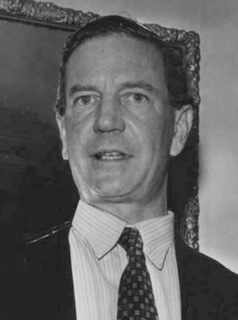
In 1936, a brutal civil war broke out in Spain, where Philby was sent to spy on the Fascist General Franco and his troops. During the Spanish Civil War, Soviet Leader Joseph Stalin orchestrated his Great Purge, a bloody attempt to liquidate his enemies, real and imagined, from his government. Gripped by paranoia over his break with Trotsky, Stalin held a particular distrust of his foreign spy network operating abroad. The Cambridge spies, unlike many foreign agents, eluded the dreaded summons to Moscow, which usually resulted in imprisonment or execution.
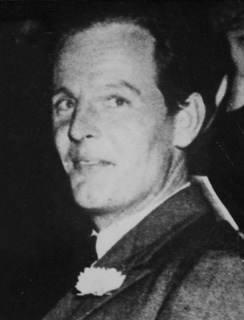
As the Spanish Civil War and the Great Purge were winding down to a close, Nazi Germany was on the march, annexing Austria, then Czechoslovakia. As the British and French scrambled in vain to prevent another war in Europe, Guy Burgess facilitated back-channel negotiations between Britain, France, and Germany, while Donald Maclean read every diplomatic communique from his posting at the British Embassy in Paris. Despite the inside knowledge gleaned from Burgess and Maclean (or perhaps because of it), Stalin entered an ill-advised alliance with Adolph Hitler, known as the Molotov-Ribbentrop Pact.
When Germany invaded Poland in 1939, triggering the Second World War, the Cambridge spies made certain to avoid combat service by working in non-combat roles. Due to his experience working for the BBC, Guy Burgess was already working in Section D of the Secret Intelligence Service (SIS) to organise propaganda operations. Anthony Blunt applied for a position with Military Intelligence and eventually secured a posting with MI5. John Cairncross worked for Cabinet Minister Maurice Hankey until 1942, then began translating decoded German messages at Bletchley Park. Donald Maclean continued working for the Foreign Office. Kim Philby was hired on at SIS, with help from a recommendation from his friend, Guy Burgess.
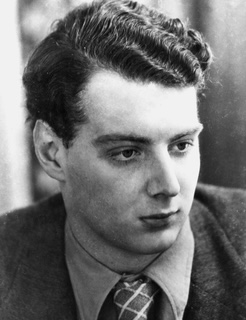
The Soviet Union was therefore kept abreast of important developments during the war. Donald Maclean alerted the Soviets of an impending German attack on Russia (though Stalin failed to heed the warning). John Cairncross passed along advance knowledge of Germany’s Operation Citadel, which aided the Red Army in their victory at the Battle of Kursk. He also may have been the first to inform the Soviets of the British atomic bomb project, still in its infancy in 1941. Anthony Blunt exposed German spy networks operating in the United Kingdom and informed the Soviets ahead of time about the D-Day invasion. Guy Burgess, having been hired on to the Foreign Office press department, gained access to privileged policy information. He informed the Soviets of postwar Allied plans before the Yalta Conference. He also leaked the details of Operation Unthinkable, a classified feasibility study on a hypothetical British war against the Soviet Union.
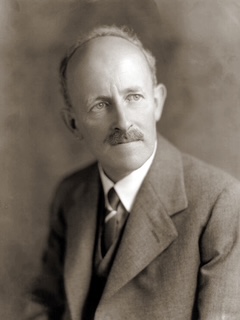
Kim Philby kept the Soviets up to date on British sabotage operations from Spain but offered more valuable intelligence in the final days of the war. He participated in the debriefing of a German defector, Erich Vermehren, who offered to help create a new German democratic government after the war. Vermehren provided a list of anti-Nazi associates willing to help create this postwar state, which Philby handed straight to his controllers. Joseph Stalin, wanting instead to install a communist puppet regime in the conquered nation, eliminated every person on Vermehren’s list.
Philby later sabotaged the attempted defection of Soviet diplomat Konstantin Volkov, likely leading to deaths of Volkov and his wife.
After the war, Cairncross and Blunt attempted to scale back their espionage activities. However, Maclean, Philby, and Burgess were just getting started.
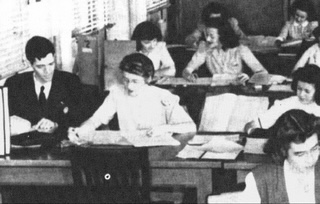
Guy Burgess was hired as private secretary to Minister of State Hector McNeil in late 1946. McNeil was appointed Vice President of the United Nations General Assembly in 1947, and attended the signing of the Brussels Treaty, a precursor to the North Atlantic Treaty (NATO). Guy Burgess, as McNeil’s secretary, had access to nearly every official diplomatic memo, telegram, and policy paper, which he copied and gave to the Soviets. His contributions may have influenced Soviet policy during the crucial post war years.
Donald Maclean, serving in the British Embassy in Washington, DC from 1944 to 1948, was ideally positioned to aid the Soviets as the United States emerged as the dominant superpower in the new bipolar world order. Maclean became the KGB’s most valuable agent.
When Maclean was tapped to assist Roger Makins, a Joint Secretary on the Combined Policy Committee, he gained almost unfettered access to the Atomic Energy Committee. He was issued a permanent pass to AEC headquarters, and was allowed to enter alone after hours, where he voraciously devoured the files, undisturbed. In a world where the atomic bomb was the ultimate tie breaker, Maclean’s access to intelligence concerning nuclear policy, the number of atomic bombs in the American stockpile, and ongoing nuclear research was a serious coup to the Soviets, who were still trying to develop their own atomic weapon.
As dangerous as Maclean had become to American security, Kim Philby was about to surpass him.
In 1949, Philby was sent to Washington to act as a liaison between the British SIS and the American CIA. Before departing London, he was briefed on the top-secret Venona project, an American program which had begun to decode Soviet KGB cables. Philby promptly informed the KGB, which abruptly discontinued communications, and changed their codes. His action robbed the United States of an intelligence gold mine.
Upon his arrival in Washington, Philby cultivated a close friendship with his American counterpart, James Angleton. Angleton and Philby worked together on a joint British American subversion operation in Albania, wherein Albanian expats were trained, armed, and sent back to their home country to overthrow communist dictator Enver Hoxha. Philby dutifully informed his Soviet controllers of the plans, right up to the date and time of their arrivals. Except for a few who escaped into Greece or Yugoslavia, most of the would-be revolutionaries were captured, tortured and killed. Many of their family members, innocent of the plot, were also arrested and killed.
For his final act of intelligence sabotage on American soil, Kim Philby revealed to Guy Burgess, his houseguest in Washington, that the FBI, assisted by Venona, was about to close in on Donald Maclean. Burgess boarded a ship back to London to arrange for Maclean’s defection to the Soviet Union. On 25 May 1951, Burgess and Maclean left for Moscow together, never to return.
Despite the cloud of suspicion cast upon him by these events, Kim Philby did not immediately defect to Moscow, nor was he ever prosecuted for his own clandestine activities. He was forced out of the SIS, however, and was questioned many times over the next several years.
The productivity of Kim Philby, Donald Maclean, Guy Burgess, Anthony Blunt, and John Cairncross is truly astounding. Collectively, they handed over between 20,000 and 25,000 documents to the Soviet Union. According to Soviet defector Vladimir Petrov, an entire room in the KGB headquarters was dedicated to files acquired by the Cambridge Five. Due to the sheer volume of material, most of the documents were never even read.
So which Cambridge spy was the worst? Anthony Blunt, the least ideological, was also the least effective, smuggling ‘only’ 1,771 documents between 1941 and 1945. John Cairncross gave 5,832 documents in the same period, nearly four times Blunt’s haul. Guy Burgess came in second during this period, with 4,605, and Donald Maclean followed closely behind with 4,593. Though Kim Philby handed over a paltry 900 documents during the war, he was invaluable in the theatre of influence due to his position as head of Section V (counterintelligence) at MI6.
These are wartime numbers, though, during the period after the Nazi invasion, while the Soviet Union was an ally of the British and the United States. An argument could be made that, while illegal, helping the Soviets to defeat Nazi Germany was ultimately a good thing.
After the war, as the uneasy alliance with the Soviet Union rapidly fell apart, the morals were much less murky.
Guy Burgess may have passed along the most documents during the post war period, but Donald Maclean’s contributions were of much greater value to the Soviet Union. The damage inflicted by a spy, though, is not limited to purloined files.
Kim Philby may have committed the most destruction to western intelligence simply by revealing the Venona Project, a potential landslide of KGB communications which could have flowed for many years without Philby’s intervention. There is also something to be said for his damage to the intelligence community’s Anglo-American ‘Special Relationship’, which has never fully recovered.
Above all, Kim Philby’s actions in the cases of Erich Vermehren and Konstantin Volkov, not to mention the lethal sabotage of the Albanian Subversion, make him the deadliest of the Cambridge Five in terms of body count.

Order your copy here.