‘THEY WILL NOT HANG ME!’: Solved at last – the abiding mystery surrounding Hermann Goering’s suicide.
Author guest post from Paul Hooley MBE.
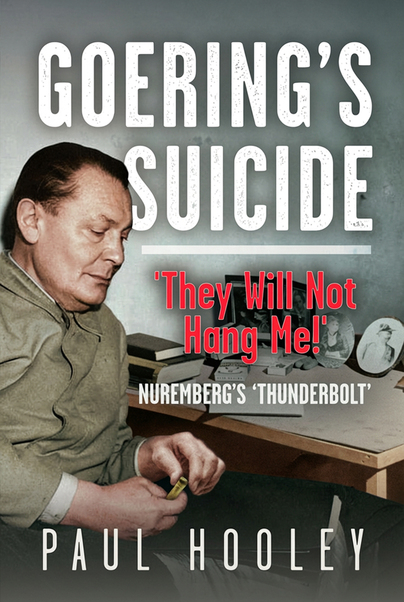
In his new book, GOERING’S SUICIDE: ‘They Will Not Hang Me!’, author and history detective* Paul Hooley, provides the definitive answer to a conundrum that has frustrated historians, commentators and the public at large for the past eighty years.
“GOERING’S SUICIDE: ‘They Will Not Hang Me!’ is a fascinating story and a brilliant piece of detective work with sound and convincing arguments that make this important historical record a thoroughly enjoyable and engrossing read” – John Grehan, (author of over sixty military history books including: Hitler’s Wolsschanze; and The Hitler Assassination Attempts).
Those who have watched the 2025 film Nuremberg will, no doubt, have been impressed with Russell Crowe’s portrayal of Hermann Goering. Many feel that Crowe’s performance was worthy of a Best Actor nomination at this year’s Oscars, and that the movie is an important additional account of what took place within the courtroom and prison complex at the Palace of Justice, Nuremberg in 1945/6 during the International Military Tribunal (IMT) – the trial of twenty-four major Nazi war criminals deemed to have been responsible for planning, carrying out or otherwise participating in the Holocaust and other war crimes.
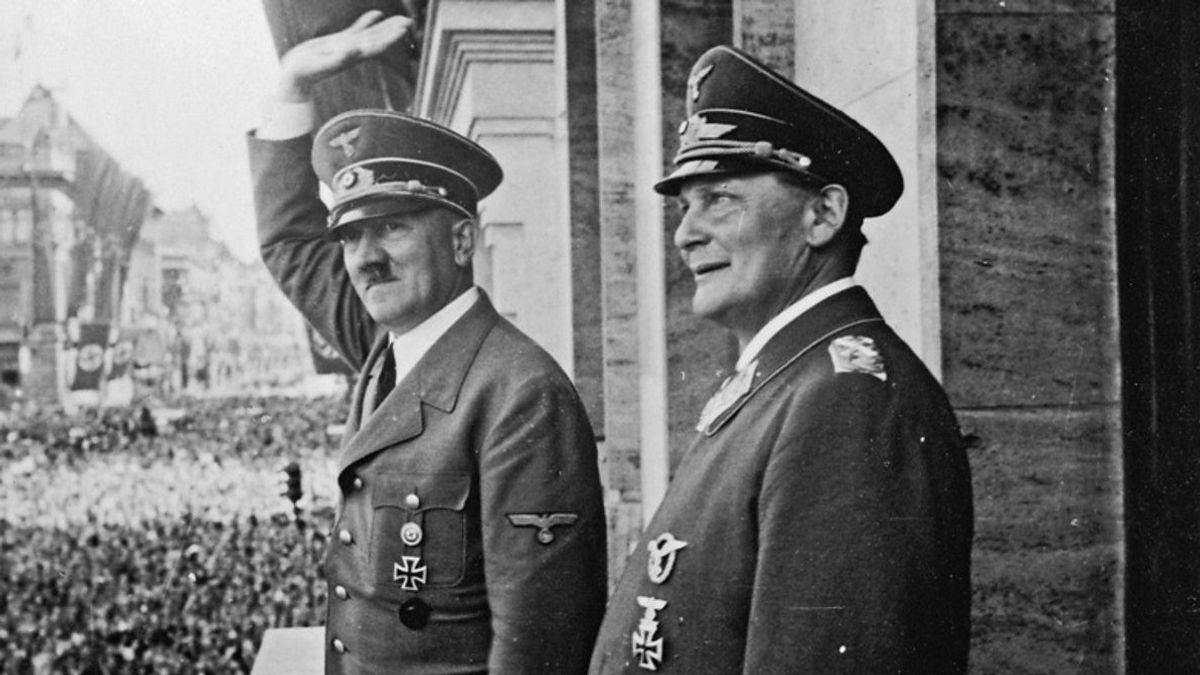
However, the film left one most important aspect hanging in the air – how did Hermann Goering, Reichsmarschall of the Greater German Realms and originator of the term ‘The Final Solution’ (a euphemism for the extermination of Jews), obtain the capsule of cyanide that enabled him to take his own life at the most dramatic point of ‘history’s greatest trial’?
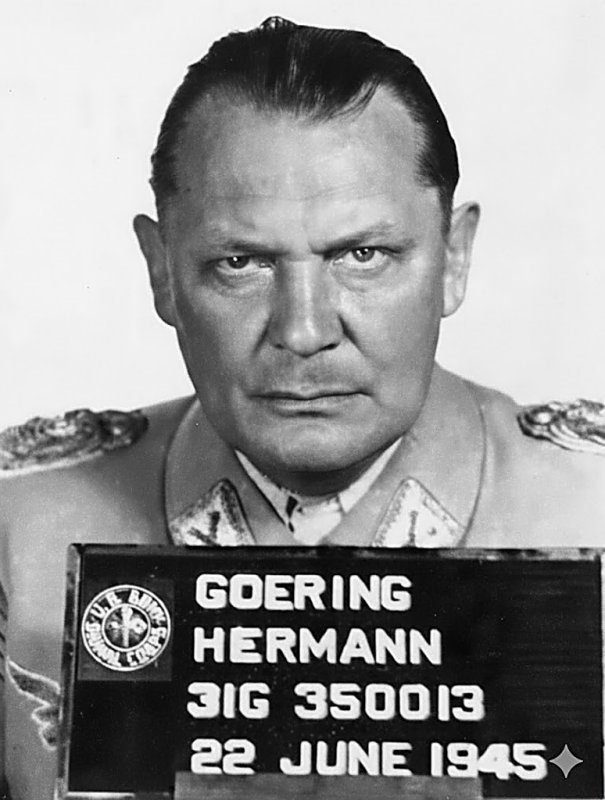
Symbolically, the IMT’s Chief Justice, Robert Jackson, had sought to hold one man responsible for the crimes of individuals, collectives, regimes and a nation, and to see that man die as a common criminal with a rope around his neck. With Hitler dead, only one defendant fitted that profile – Deputy Fuehrer Hermann Goering – head of the Luftwaffe, founder of the Gestapo and creator of concentration camps.
Found guilty on all charges, Goering was sentenced to death by hanging and designated to lead his confederates to the gallows. He accepted his fate but made several requests to be allowed to face a firing squad – all of which were refused.
To Goering – a World War One fighter ace, holder of the Pour le Mérite (Blue Max) and countless other awards for bravery – death by the rope, was the ultimate expression of humiliation and dishonour – which he was never going to allow.
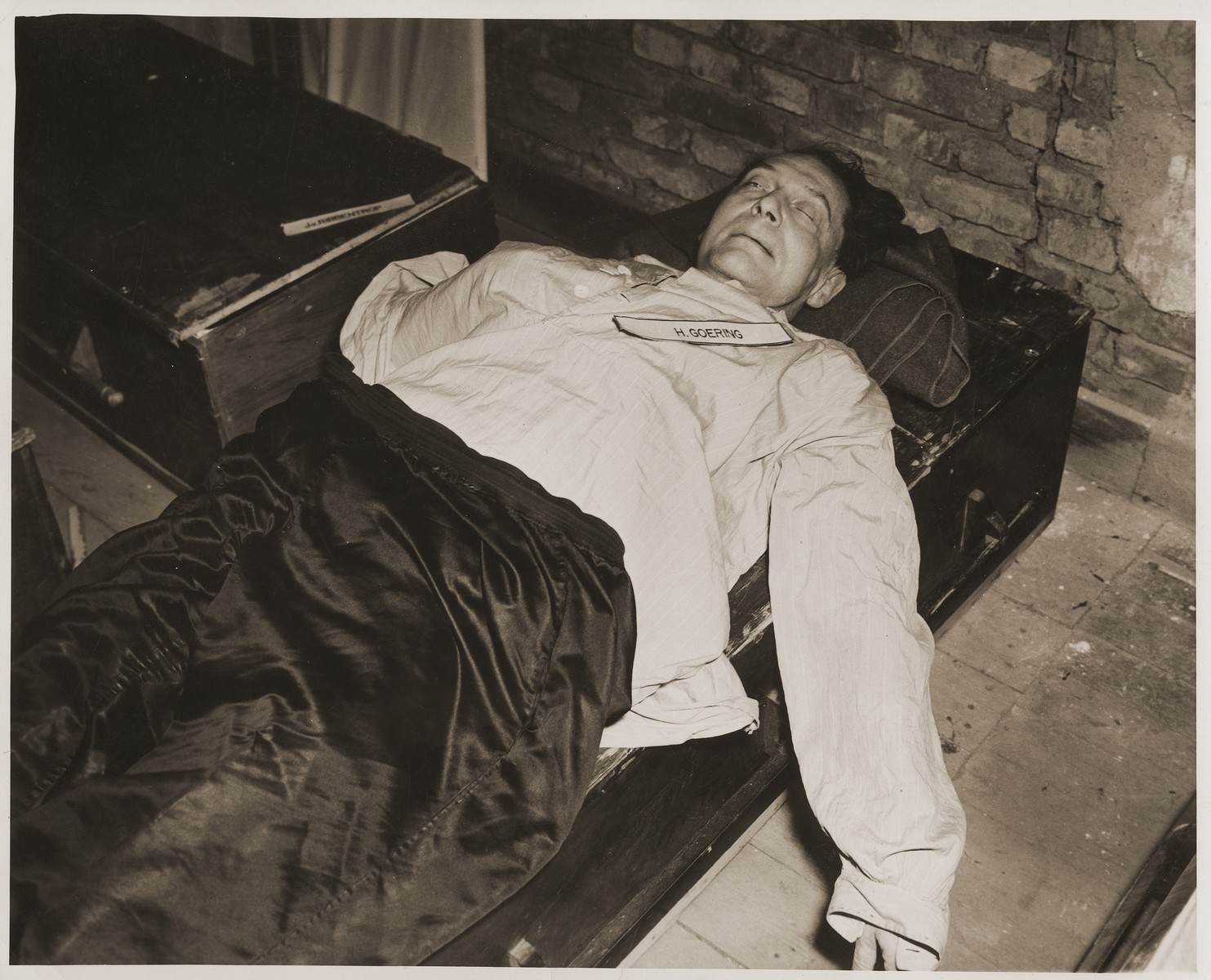
Less than two hours before he was due to be executed, having emphatically stated ‘they will not hang me!’, and at the most dramatic point in proceedings, Goering bit into the capsule of cyanide and died almost instantaneously.
Renowned journalist and photographer J. J. Heydecker, who was present throughout the trial, summed up the universal horror, disbelief and incredulity that ensued: ‘The sensational event struck the whole world like a thunderbolt, eclipsing even the news of the actual executions’.
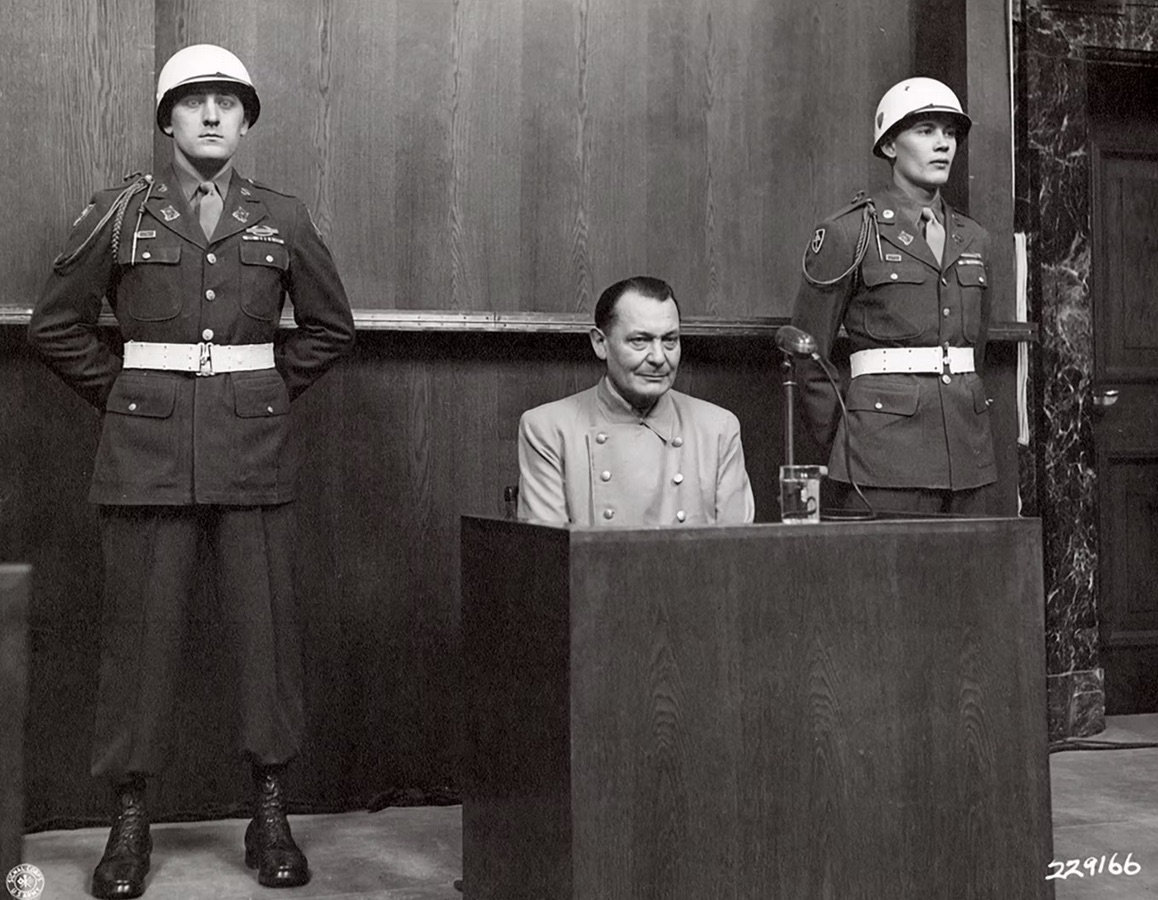
In cheating the hangman, Goering turned the showpiece finale the prosecutors had planned for him into a final triumph. To his legions of supporters, their Reichsmarschall exited this world a martyr and a hero who had wrecked the Allies plans for a ‘show piece hanging’ and lifted the spirits of a defeated nation in its darkest hours – the very departure the Allies were desperate to avoid. How Goering came to be in possession of the cyanide has remained a mystery ever since. Now, at last, the truth can be revealed.
In a narrative more gripping than fiction, the details, revelations and cross-references disclosed in my painstakingly researched findings:
• Provide the definitive answer to how Goering obtained the poison.
• Reveal the enthralling intertwined stories of: the most notorious of Nazi war criminals; America’s top spymaster; the prodigy he taught ‘the dark arts of espionage’; the Chief Prosecutor at Nuremberg; the first escapee from Colditz Castle; and the man the world’s media dubbed ‘The Voice of Doom.’
• Expose the intrigue, skulduggery and power struggles that went on behind the scenes at Nuremberg between the US military, intelligence and judicial hierarchy.
• Highlight a cocktail of wounded pride, honour, rivalry, stubbornness and duplicity that threatened to undermine the integrity of the trial but concluded, against the Prosecution’s wishes and the Tribunal’s intentions, with the showing of an extraordinary act of mercy towards one of history’s most evil men.
The question of how Goering had obtained the poison has been: a recurring subject of conjecture; an official investigation; several reviews; intense debates; a number of theories; many books and articles; and several dramatisations and documentaries. None of which have been able to provide a compelling and convincing explanation.
The answer was in fact unfathomable without the knowledge of key pieces of information contained within statements made by two military personnel who, in the final months of their lives, revealed they had been present during that history-defining moment of 1945. No more than six men knew what took place on that occasion. Four of them took the secret to their graves, and the definitive solution was only revealed by my studying in detail the admissions of the remaining two, separately and in parallel, alongside: the back stories of the six men involved; existing accepted evidence; and new information that has been uncovered.
*History Detectives are people who look at evidence from the past, and start their investigations well-knowing that the further back in time they delve the harder it becomes to find clues. History Detectives do not want to catch criminals or bring anyone to justice, but they do seek to solve any mysteries surrounding historic incidents, especially those of significance that have consistently baffled and frustrated historians and other investigators. History Detectives also seek to: provide compelling evidence and convincing explanations in support of their findings; reveal the identities of the personalities involved; and clear up subsidiary puzzles, such as any backstories and motives. The author believes all this is achieved in GOERING’S SUICIDE: ‘They Will Not Hang Me!’
‘Hermann Wilhelm Goering, on the counts of the indictment on which you have been convicted the International Military Tribunal sentences you to death by hanging.’
Chief Interpreter Wolfe Frank informing Goering of his sentence, 1 October 1946
‘They will not hang me!’
Hermann Goering, to his wife Emmy during their last meeting on 7 October 1946
‘How Goering get [sic] the poison, kept it, and took it, were mysteries the shrunken fat man perhaps took to his grave. By his manner of dying, Goering flamboyant to the last, not only took the last spotlight away from his colleagues but created a breath taking mystery which had army officers laboring in an effort to determine how he got, concealed and took the poison’.
Thomas A. Reedy, Associated Press, 16 October 1946
‘Would that I might be shot! However, executing the German Reichsmarschall by hanging cannot be countenanced. I cannot permit this for Germany’s sake. Besides, I have no more obligation to subject myself to punishment from my enemies. Therefore I elect to die as the great Hannibal did.’
Hermann Goering, in a suicide letter he left to the Allied Control Council – 15 October 1946
‘ … a dead man came in – a grotesque, self-destroyed remnant of a man who had once been destined to rule Nazi Germany. It was Hermann Wilhelm Goering … the body of what was once the great marshal of the Reich, chief of the Luftwaffe and bearer of a dozen other titles. He had succeeded in wrecking plans of the Allied Control Council to have him lead the parade of condemned chieftains to death on the gallows … The face of this 20th Century freebooting political racketeer was still contorted with the pain of his last agonising moments and his final gesture of defiance.’
Kingsbury Smith, Representing the Combined American Press, The Washington Evening Star, 16 October 1946
The old Teutonic drums were beating strong in the sunlight. There were no German tears, no German regrets or shame. On the contrary, the Germans now had the feeling of triumph which they had lacked so long. Goering’s one sharp, breath-taking act wiped away ten months of painstaking work.
John Stanton, Time Magazine 28 October 1946
Order your copy here.