A Royal Jewel Theft with Unexpected Connections to British History
Author guest post from Jenni Wiltz.
On the night of September 25, 1829, a thief broke into the Prince of Orange’s palace in Brussels and stole almost all the jewels belonging to his wife, born Grand Duchess Anna Pavlovna of Russia. When I set out to tell the story of these stolen jewels, I knew the research would involve Russia, the Netherlands, and the United States. Grand Duchess Anna Pavlovna was born in St. Petersburg, lived in Brussels and The Hague after she married Prince Willem of Orange, and was as surprised as anyone when her stolen jewels surfaced in New York City in 1831.
What I didn’t expect to find were numerous connections to major events and people in British history. Pulling these historical threads made the story even more intriguing and added unexpected depth to well-known people and events.
1. Princess Charlotte of Wales’s First Fiancé
You might be familiar with the tragic tale of Princess Charlotte of Wales, the Prince Regent’s only daughter who died after giving birth to a stillborn son in 1817. Her death created a path to the throne for her as-yet-unborn cousin, the future Queen Victoria. But did you know that, before Charlotte married the handsome but impoverished Prince Leopold of Saxe-Coburg-Saalfeld, she had a Dutch fiancé?
Born in 1792, Prince Willem of Orange came from a family that had lost nearly everything in the wars that followed the French Revolution, including their hereditary stadtholdership of the Dutch Republic. With a disgraced father publicly branded as a coward by Napoleon and a mother whose Prussian relatives were in no condition to offer any help, Prince Willem was the family’s only hope for reinvigorating their fortunes. If Willem married Charlotte – a great heiress and future queen – their prestige would rise accordingly.
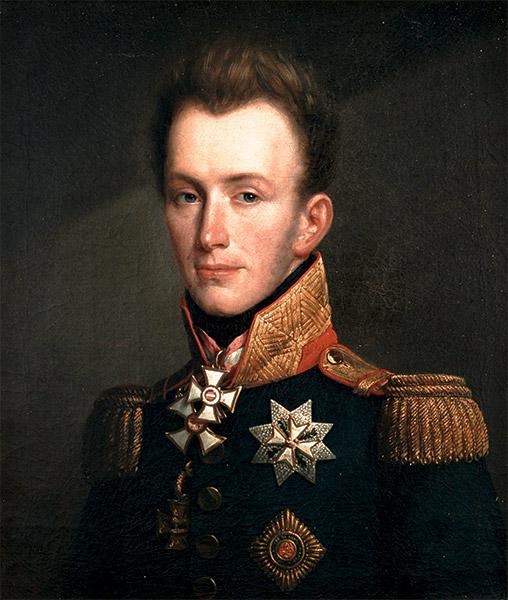
Although Willem dreamed of joining the Prussian army, his father persuaded the Prince Regent to appoint him a Lieutenant-Colonel in the British Army and packed him off to Spain to ride beside General Arthur Wellesley (then Viscount Wellington) as an aide-de-camp. There, he earned the nickname “Slender Billy” for his painfully thin frame and discovered he loved the thrill of battle.
After he took part in the battles for Ciudad Rodrigo, Badajoz, and Sorauren, Willem was sent to London in December of 1813 to try to impress Princess Charlotte with his newfound military experience. People congratulated him when he arrived, but he had no idea why – until they explained that his father had staged a peaceful revolution and was now Sovereign Prince of the United Provinces of the Netherlands. The family’s fortunes were looking up, but pressure mounted for Willem to cement their return to glory.
The Prince Regent arranged a dinner party for the evening of December 12 at Carlton House, his London residence. That night, he pulled Willem and Charlotte into a room, joined their hands, and gave the couple his blessing. After having given pleasant but noncommittal judgments of each other to the Prince Regent, Willem and Charlotte found themselves engaged.
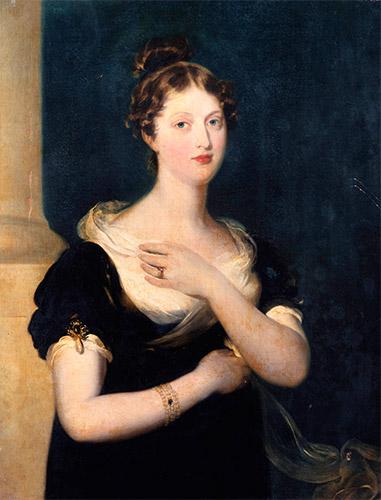
The Prince Regent had an ulterior motive, of course: as Willem’s wife, Charlotte would be expected to live at least part-time in the Netherlands, out of sight and out of mind (or so he hoped) of the Londoners who liked her more than they liked him.
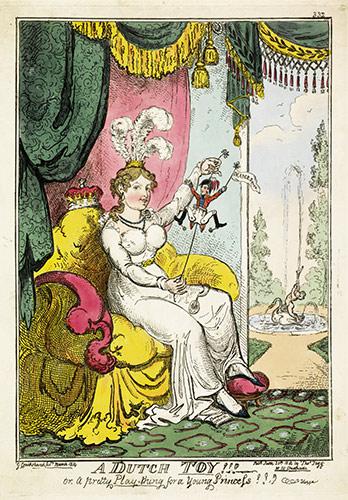
Initially, Willem and Charlotte went along with their parents’ plan. But as she realized why her father had forced her hand, Charlotte rebelled and broke the engagement on June 16, 1814. The rejected Willem became a figure of fun for the British press, lambasted in cartoons as Charlotte’s “Dutch toy.” Shortly after the breakup, Lady Emma Edgcumbe spotted him at a ball in Devonshire with tears in his eyes. There was nothing left for him to do but leave for home.
Because Charlotte set him free, Willem was eligible when Emperor Alexander I of Russia began looking for a husband for his youngest sister, Grand Duchess Anna Pavlovna, in the summer of 1815. Had Willem married Charlotte, Anna would never have come to the Netherlands and the story I tell in my book would never have happened.
2. Wellington as Mentor, Before & After Waterloo
Prince Willem of Orange did more than participate in the Peninsular War. He also fought at Quatre Bras and Waterloo, emerging with shrapnel in his shoulder and the reputation of a war hero. (The laurels would not last, for multiple reasons.)
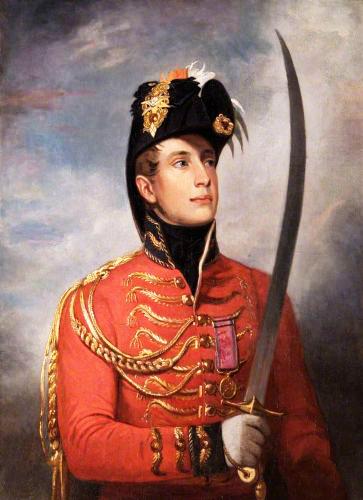
Willem considered Wellington a mentor, but without the adrenaline and sense of purpose the Napoleonic Wars had given him, he fell prey to the flattery and schemes of conspirators who hoped he would help overthrow the restored Bourbon king of France, Louis XVIII. Willem believed he was helping the French people fulfill their destiny. Wellington and Willem’s brother-in-law, Emperor Alexander I, knew better.
On February 11, 1818, someone shot at a carriage in Paris that was supposed to be carrying Wellington. He wasn’t inside, but in the investigation that followed, Willem’s name surfaced on the lips of the conspirators. Their goal was to remove Wellington as head of the Allied forces occupying Paris. Without him, the job might fall to Willem, a man more sympathetic to the anti-Bourbon movement.
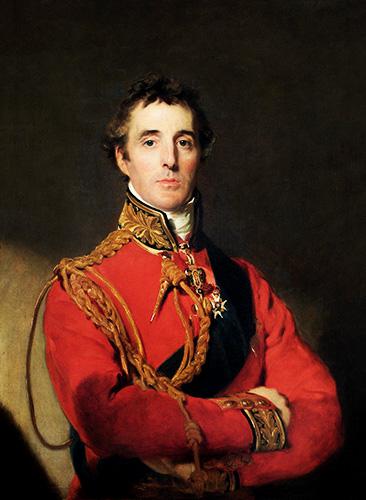
When he found out, Willem was horrified. He wrote to Wellington to protest his innocence, affirming he would never do anything to harm his mentor. Wellington accepted Willem’s apology, but warned the young prince that his taste in friends must improve if he wanted anyone to take him seriously on the world stage.
It was a lesson Willem should have taken to heart. It would have saved him (and Anna) a great deal of future heartache. But there’s more on that in chapters two and four of my book!
3. The London Conference & King Leopold’s Throne
In 1831, fourteen years after Princess Charlotte’s death, her widower, Prince Leopold of Saxe-Coburg-Saalfeld, was offered a new job: King of the Belgians. While that’s a familiar part of Britain’s story thanks to Leopold’s later role as Queen Victoria’s beloved uncle, his new role put him in direct conflict with Willem and Anna.
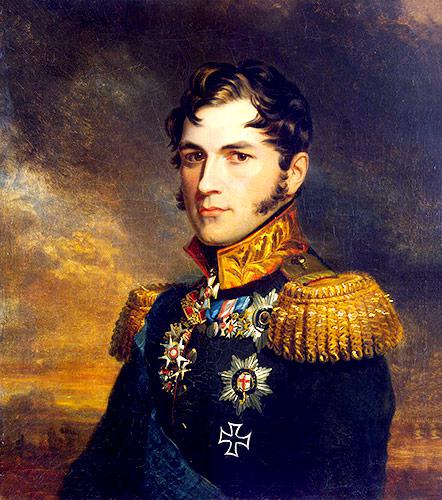
In 1815, the members of the Congress of Vienna created the new United Kingdom of the Netherlands, an arranged territorial marriage between the Netherlands and present-day Belgium (formerly the Austrian Netherlands). Despite differences in language, religion, culture, and affinity, members of the Congress wanted the new kingdom to act as a buffer state against French expansion. They promoted Prince Willem’s father from Sovereign Prince to King and charged him with maintaining order over their creation.
But King Willem I was entirely Dutch in his outlook. He decided to force his Belgian subjects to adapt to his language, his laws, and his way of doing things. Many of his French-speaking Catholic subjects began to feel like members of a conquered nation.
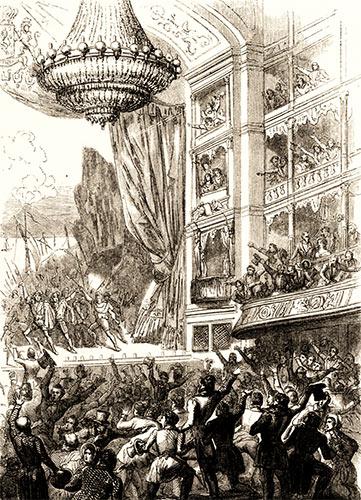
Then, in 1830, a single song sparked a revolution – “Amour Sacré de la Patrie,” from La Muette de Portici by Daniel Auber. The opera told the story of rebellion against a tyrant, and when life began to imitate art, Prince Willem urged the Belgians to remember that he’d shed his blood for them at Waterloo. Couldn’t they find a way to stay loyal to his family? But by 1830, the memory of Waterloo had worn thin and the answer was a decided “no.”
The Great Powers – Britain, Prussia, Russia, Austria, and France – held a conference in London that fall to decide the fate of the kingdom they had created. Willem went as an uninvited guest, where he crossed paths with Prince Leopold in London’s drawing rooms. Charlotte’s former fiancés mostly avoided each other, as diplomats and courtiers whispered their memories of the former “Dutch toy.”
In the end, the Belgians declared their independence and banned the Orange family from their throne. They settled on Leopold as their compromise candidate after the Powers vetoed their first choice, a son of Louis-Philippe. To try and regain his father’s lost territory, Willem would invade Belgium and come within a hair’s breadth of capturing Leopold, until a much larger French army came to Leopold’s rescue and forced Willem to retreat.
Years later, Queen Victoria knew Leopold as an established king, with his own court, a second wife, and three surviving children. But in turbulent post-Napoleonic years, he was the rival who often seemed to get the best of Prince Willem of Orange.
**
Although these events forever shaped the lives of Willem, Anna, and Leopold, there wasn’t room to do them justice in my book. I couldn’t resist mentioning them here, however, since they illuminate shades of the past so often forgotten – like the jewel theft itself.
After Anna’s jewels vanished in 1829, suspicion quickly fell on Willem, known to be deeply in debt. But it took two years for the jewels to surface in New York in the hands of a former Napoleonic deserter named Constant Polari. Dutch officials scrambled to reclaim the jewels and extradite Polari, hoping a public trial would help rehabilitate Willem’s tarnished reputation. After his involvement with anti-Bourbon conspiracists and rejection by the Belgians, Willem needed all the help he could get. Did he get it? Did the jewels and Polari ever return to the Netherlands? I’ll tell you all about it in my book.
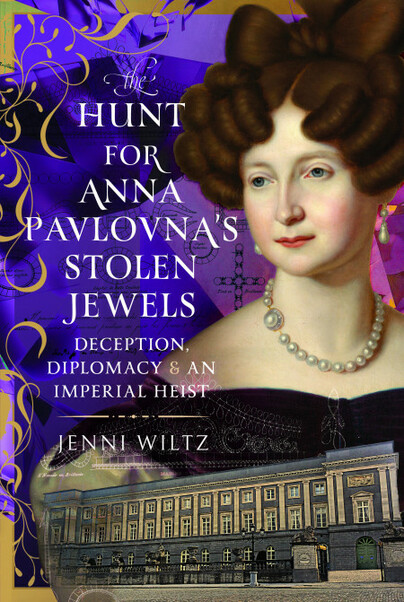
Order your copy here.