In Slow and Quick Time: The Daily Experience of British Men and Women in Wellington’s Indian Army
Author guest post from Martin R. Howard.
The Peninsular War and the wider Napoleonic Wars across Europe are subjects of such enduring interest that they have overshadowed other campaigns in what was a global war. Such is the case for the war in India which persisted for much of the French Revolutionary and Napoleonic periods, peaking in 1803 with the campaigns of Arthur Wellesley – later the Duke of Wellington – and General Gerard Lake in the Deccan and Hindustan. The existing literature tends to focus on the epic battles and sieges of the conflict. The daily experience of being a British soldier in the Indian Army has been little described. This is even more true of the women who accompanied them.
No doubt, India was near idyllic for some. John Blakiston, an engineer officer in the Madras Army, interrupted his account of his military adventures to relate the daily routine of the British servants of the famed East India Company. After rising early, a constitutional ride might be taken before dressing for a heavy breakfast, taken at eight o’clock. The morning was mostly passed with the hooka, a newspaper or book before they sauntered to the stable to take a palanquin to the Presidency fort. There they remained, taking a ‘slight tiffin’, before leaving at 4pm either to return to their family or perhaps enjoying a further ride. Dinner was taken at seven o’clock and the evening was then spent in a manner common to the ‘genteel circles in England’.
Blakiston admitted that his own days were ‘neither so rational nor so innocent’. The recollections of British soldiers, mainly officers, reveal that India was bittersweet for many, a country which regularly delivered the extremes of delight and misery.
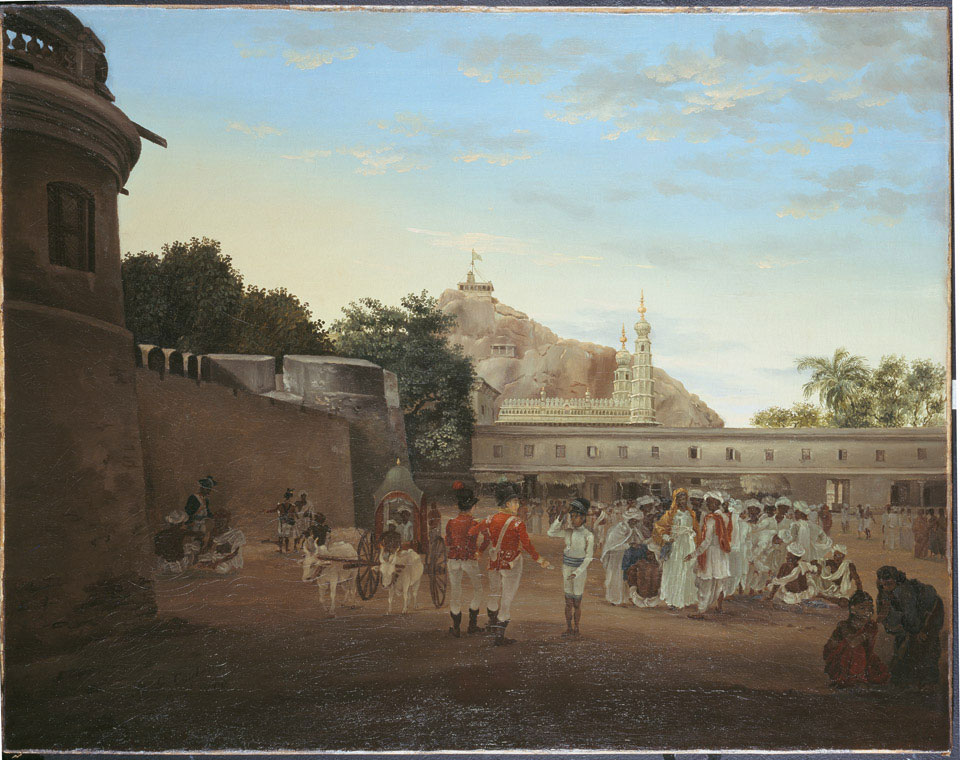
British memoirists describe periods of real enjoyment. Blakiston’s time in Madras was passed ‘gaily enough’ and he insisted that life in camp was not unpleasant providing that one remained in good health. Captain George Elers of the 12th Regiment gives an account of campaigning in Bengal in 1798.
Thus I made my debut under canvas in the East. I started with a very modest establishment: a head servant, a second ditto, a boy to carry my chair, and coolies for my cot, table, etc., a Cooderry currah and grass-cutter. These two native servants were for the purpose of attending upon one horse, the only one I had. The novelty of camp life amused me much at first…
Mountstuart Elphinstone, who acted as an aide-de-camp to Wellington, gives a similar view of the routine camp day in Mysore; ‘All this is extremely pleasant’.
This was only one side of the burnished Indian coin. Almost all diaries refer to the difficulties of daily existence on the subcontinent. John Pester, an ensign in the 2nd Bengal Native Infantry at Gwalior in 1804, slept in his clothes for five weeks. Drummer Roderick Innes served under the command of Arthur Wellesley for eighteen months, a time during which ‘we scarcely ever had our heads under the roof of a house, exposed to hunger and thirst, heat and cold, with little rest night or day’. James Young of the Bengal Horse Artillery, writing in October 1804, had been tested by two months in the field; ‘No wonder a man’s constitution so soon bears out [sic] in India’. Campaign life in any theatre was tough, but India veterans were keen to emphasise the unique challenges of the country. Blakiston again;
I venture to assert, that no hardships experienced in European warfare, except indeed during a severe winter’s campaign, which does not often occur, can be compared with those endured by an Indian army in the field.
Whether on campaign or in garrison, any novelty soon wore thin for many. James Welsh, an ensign in the Madras Army, believed an idle life to be always irksome to a soldier and Sergeant Robert Butler of the 26th agreed.
I have already said, that upon the march we endured great fatigues, and also many inconveniences; but, when in barracks, a soldier’s life in India is commonly very easy… many of them likewise keep black boys to clean their things, take their victuals upon guard, and relieve them of other labours. They had consequently much spare time which they did not know how to get rid of…
For much of the period, the garrison of one of the three Presidency cities would consist of two or three European regiments with support from the native corps. According to Blakiston, everything in the garrison in Madras in 1802 had a feeling of rigidity about it. He describes an air of apprehension among the soldiers who believed that ‘they were soon to become the objects if not the victims of its discipline’.
Drill was a vital part of the garrison routine. In the late eighteenth century, this was not well defined. Major David Price, serving in Bombay in the late 1780s, admitted that, ‘…we possessed no established code of discipline to which we could refer; our only system being that which existed separately in the breasts of the separate commanders of battalions…’ This lack of uniformity was addressed by Colonel David Dundas’s seminal drill manual, Principles of Military Movement, first published in 1788. There was an expectation that the Presidency armies would conform with the drill regulations of the wider British army. Parades of native troops were overseen by European officers and demonstrated British military strength and cohesion.
Apart from imposing discipline and preparing for manoeuvres on the battlefield, drill was vital for fitness. Ensign Richard Bayly notes that the 12th Regiment were drilled ‘without intermission’ in Madras’s Fort St. George between January and August 1797. This was not always beneficial, Bayly himself being afflicted by sunstroke. George Elers well describes his regiment ‘marching round several times both in slow and quick time, saluting etc.’ This was followed by practise of the eighteen standard manoeuvres.
Despite all attempts to discipline the Indian army, there were inevitable infractions both by European and native troops. Minor misdemeanours might result in flogging. For the worst crimes, the death sentence was usually enforced. There was a hierarchy of capital punishment, some miscreants being shot whilst those committing even more shameful acts such as mutiny were hanged or fired from cannon.
Conditions of service such as pay, leave (furlough) and pensions were subject to change during the period. Efforts to standardise pay rates between the three Presidencies were mostly abortive. Pay rates were much complicated by batta, an extra allowance given to officers, soldiers and other public servants when in the field or on other special grounds. Undoubtedly many British officers of the late eighteenth century expected to make their fortune in India, but almost all were disappointed. For officers and men serving under Wellesley and Lake, delays in pay were routine and led to much misery. Even when pay was up to date, life in an Indian garrison often proved difficult. Wellesley noted that ‘it was impossible for an ensign to live upon his pay’. There well-meaning regulations for leave and retirement. However, many ordinary soldiers were shabbily treated on their return to England. Sergeant Butler received nine pence, a sum he believed to be small recompense for his fourteen years of Indian service and the damage to his constitution.
The British soldier’s diet was dominated by meat. Soldiers rarely starved in India although there were instances of serious shortages, especially when the forces were distant from a market or town. Officers expected to eat in some style, particularly when in the regimental mess of the garrison. Fresh water could be drawn from wells but for a sizeable army on the march this was too slow and there was much reliance on the water tanks or reservoirs which punctuated the landscape. Engineer officers were given responsibility for their protection as they were liable to run dry and were also easy targets for a retreating enemy.
The native troops in British service were astonished at the Europeans’ attachment to alcohol. A Subadar saw them ‘worship liquor, give their lives for it, and often lose their lives trying to get it’. This was despite rations containing copious amounts of alcohol. In 1799, the troops received two drams daily allowance; a dram was one fifth of a pint of spirit. At first, this was arrack (a coarse spirit distilled from grain, rice or sugar cane) and later, rum. Soldiers were inclined to quickly drain their allowance and then actively seek out more. There were numerous attempts to limit supply and consumption, many documented in Wellesley’s dispatches.
In the early years, British troops were housed in barracks in forts, notably Fort William in Calcutta and Fort St. George in Madras. As the British presence and the power of the East India Company grew, barracks were increasingly purpose-built, often grouped together in military cantonments near to towns. These facilities, much preferred by the men to life under canvas, were the responsibility of the quartermaster general. Officers had their own accommodation. At Ponamalee in 1799, Captain John Budgeon was delighted to discover ‘commodious and good’ officers’ quarters.
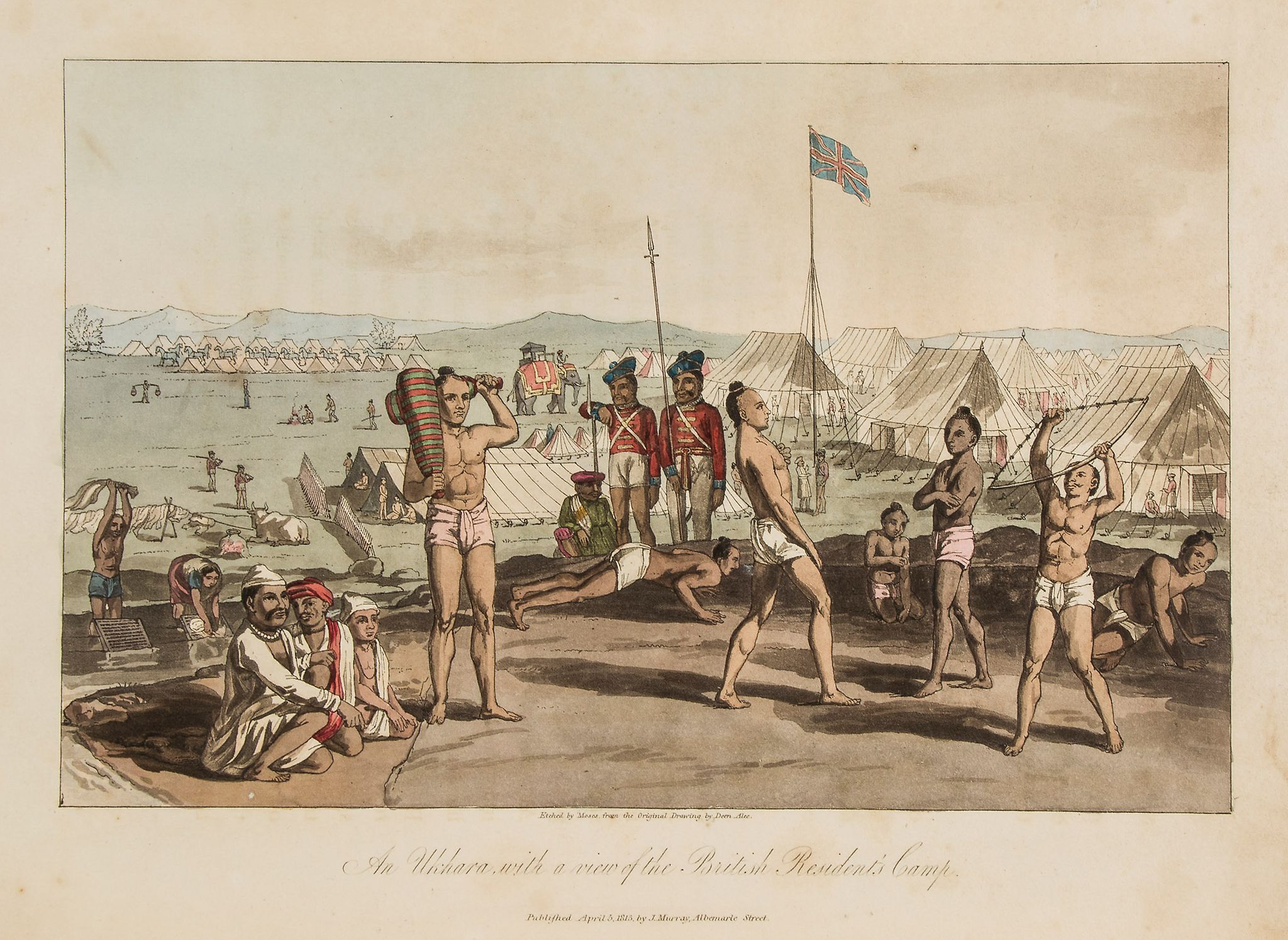
On active campaign, it was the quartermaster general’s duty to find suitable ground for an encampment at the end of the day’s march. Pester records these searches in some detail; the ground ideally had to be ‘high and dry’ to prevent all arms, and particularly the artillery, from getting bogged down. Security was a central concern. The innumerable camp followers gave this essentially military gathering a unique atmosphere, as is testified by Lieutenant William Thorn of the 29th Light Dragoons.
The power of the imagination can scarcely figure to itself the sudden transformation that takes place on these occasions, when an Indian camp exhibits with the effect of enchantment, the appearance of a lively and populous city amidst the wilds of solitude, and on a dreary plain.
There were few European women with the battalions in India. When Richard Bayly’s regiment left England in 1796, only sixty of at least 500 women were permitted to embark with their husbands. The British author of a contemporary vade mecum informs us that, following arrival in India, many European women soon succumbed to the climate. The few fragments of information we have of these women’s lives suggest a squalid existence. Roderick Innes was in Calcutta when most of his regiment departed for Egypt, leaving their wives behind.
The women were put in a bomb-proof by themselves. Our men often paid them visits; and as they loved drink and consequently were not particular as to what they did, and as our soldiers willingly gave them liquor, scenes not the most moral often were enacted.
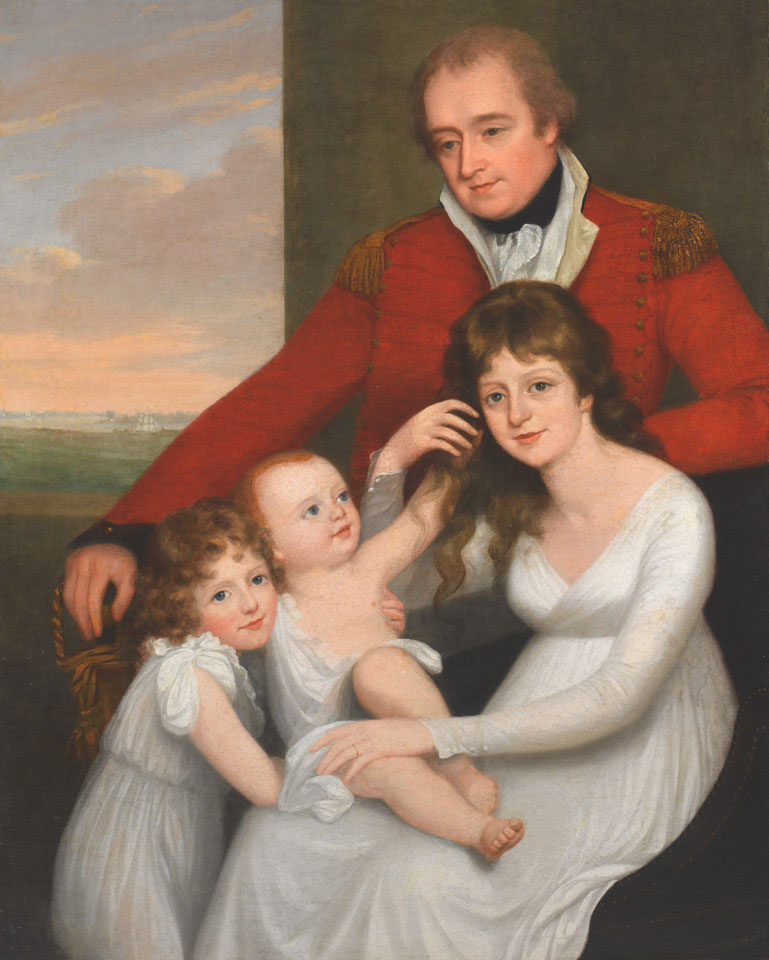
At the beginning of the nineteenth century, most British officers in India were not married, very much living the bachelor lifestyle. There were limited opportunities for those who wished to have liaisons and relationships with European women. There were women who visited India to find a husband – later to be known as the ‘fishing fleet’ – and they tended to gather in Calcutta. They were generally averse to casual relationships and were not available for sex. Where officers were married, their wives mostly enjoyed a cossetted existence in the higher reaches of Anglo-Indian society. The author of the vade mecum advises as to the optimal packaging for their musical instruments.
At this period, the relationship of the British soldier with Indian women was complex, multi-facetted and subject to a change in attitudes. The sexual needs of the ordinary soldiers were catered for by hard-working Indian prostitutes in the ‘lal bazaar’, an unofficial regimental brothel. Standing orders issued by Wellesley to the 33rd Regiment in 1797 imply a relaxed attitude towards sex, Wellesley making a distinction between prostitutes and native women who were being ‘kept’ by the soldier.
It was normal for British officers to cohabit with an Indian mistress (bibi). In 1800, a third of the Company’s servants had Indian wives or mistresses. The increasing social gulf that developed between the British and the native population in the nineteenth century meant that these Anglo-Indian relationships became less common. The moral climate was to be changed by an influx of European women and the growth of evangelical Christianity.
Officers passed much of their time playing and watching the popular games and sports of the period, everything from billiards to horseracing and hunting. Gambling was commonplace although disapproved of by the military authorities. In his regimental orders for the 33rd, Colonel Arthur Wellesley explicitly forbade it. We must presume that the ordinary soldier whiled away his spare hours in card games and other simple pursuits.
As for much of the daily experience of the wars of the period we have few voices from the ranks. Conversely, officers were commonly literate, cosmopolitan men and it is fortunate that many wrote the diaries, journals and memoirs that give us such a vivid insight into army life in India. Some of these have found their way into print but many remain unpublished, lying largely undiscovered and little consulted in the archives of libraries and museums.
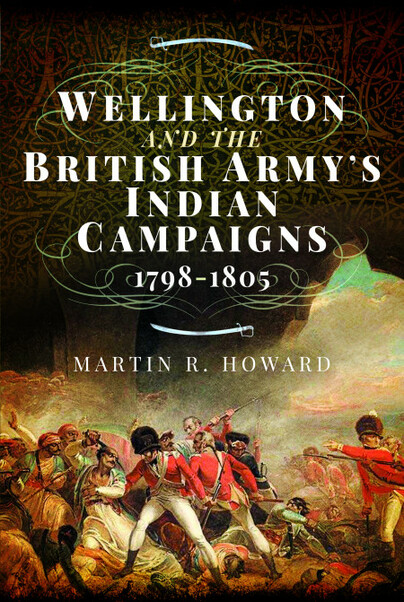
Order your copy here.