Fact-checking the Vikings series and sons of Ragnar Lothbrok legend
Author guest post from Paul Harper.
Hordes of Vikings climbing the medieval fortress of Paris faced Frankish troops pouring down boiling hot pitch and tar. Vikings had constructed elaborate wooden towers to scale the walls but met fierce resistance. Even the mighty Ragnar Lothbrok and his son Bjorn Ironside were defeated and left nursing severe injuries.
But Ragnar would have the last laugh after he later faked his death and asked for a Christian burial to gain access to the city, before jumping out of his coffin in the church and turning the tables on the Franks.
I remembered watching this episode of the Vikings’ TV series and being struck with curiosity over whether these chaotic scenes happened. A simple online search revealed yes there was in fact a Viking siege of Paris in 845 which was led by a duke called Reginherus in Latin or Ragnar in Old Norse. He is widely believed to be the inspiration for the iconic Ragnar Lothbrok, but beyond this siege there is next to no information about the historical person.
I soon discovered Ragnar’s five famous sons Ivar the Boneless, Bjorn, Ubbe, Hvitserk and Sigurd Snake in the Eye were also likely based on real life people but the truth of their legendary exploits was far from clear. As a journalist at heart who loves mysteries and history, I was instantly hooked.
In my new book Sons of Ragnar, Viking Warriors who Terrorised Britain and Ireland, which has now been published by Pen & Sword, my goal was to uncover the real story of this infamous Viking Age warrior family.
Here’s what I have found out.
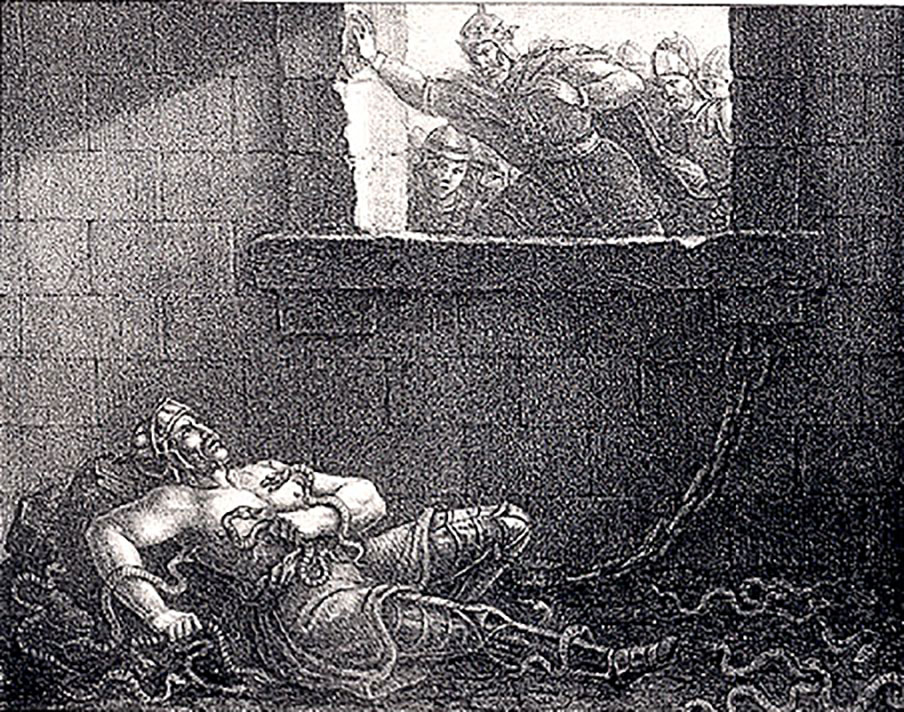
Was Ragnar Lothbrok killed by being thrown into a snake pit?
Jealous of his sons’ growing fame, Ragnar launched an ill-fated expedition to Britian but was captured by the Aella, the King of Northumbria (a kingdom covering roughly from the River Humber to modern day Edinburgh) and thrown into a snake pit. As the snakes sank their fangs into him, before his death Ragnar memorably warned ‘how the piglets (his sons) would grunt if they knew what the old boar (Ragnar) suffers’.
The tale claimed that Ragnar’s sons led an invasion of what became England, killed Aella and avenged their father’s death and conquered the land. The fascinating part is that Ragnar’s sons, principally Ivar, Ubbe and Hvitserk, did lead what was dubbed a ‘Great Heathen Army’ into Britain in 865.
Within a decade the huge Viking force was in almost complete control of modern England, barring the south west. Hvitserk which means ‘white shirt’ was known as Halfdan ie ‘half Dane’ in the contemporary sources.
There are however no references in medieval literature to Ragnar’s death in a snake pit besides the Old Norse tales. The father of Ragnar’s wife Aslaug who known as Sigurd Dragon Slayer was also killed in a snake pit in Germanic medieval legend. The oldest Skaldic poem from Scandinavia, possibly dated to the ninth century, by Bragi Boddason refers to four mythological stories on a shield which has been given to him by a Ragnarr – most likely Ragnar Lothbrok. He is described as the ‘famous son of a Sigurdr’.
Academic Rory McTurk has also plausibly suggested that Ragnar’s father was a pretender for the Danish throne ‘Sigfred’, often confused with the name ‘Sigurd’ in later Old Norse texts, who was killed in a civil war battle in 812.
Most snake-like beasts in Old Norse sagas were called ormr, which translates as
‘worm’ or ‘snake’, and the word may have come to represent all limbless creatures.
Moments before his death, Ragnar says ‘I never expected that worms would kill
me’. This implies Ragnar was reflecting on the irony because he killed snakes at
the start of the saga or how the soil with worms awaits the dead, claimed scholar Kornelia Lasota.
As Ragnar’s father was most likely called Sigurd, it appears his tale conflated with that of Sigurd Dragon Slayer and the snakes were used as a literary tool to represent his death.
Did the Sons of Ragnar kill Aella with a blood eagle?
In perhaps the most infamous part of the tradition, Aella suffered a brutal ‘blood eagle’ death at the hands of Ragnar’s sons. His body would have been slashed open with his ribcage smashed apart and his lung pulled out and sprayed across his torso in a macabre representation of an eagle.
Different versions emerged with ‘Ragnar’s Saga’ claiming Ivar directed the horrific ritual, while the thirteenth century Danish chronicler Saxo Grammaticus wrote that Bjorn and Sigurd ordered the ritual killing and afterwards salted the ‘mangled wounds’.
It is known that Ivar and Ubbe captured York and defeated the Northumbrian forces, including killing the two kings Aella and Osberht who were also likely brothers.
However there’s no mentions of this horrific act in the Anglo Saxon Chronicle or other texts beyond the Old Norse tales.
This gory death must have stemmed from a misunderstanding of a poem by Sigvat Þórðarson in honour of the Danish and English king Cnut the Great in the eleventh century. In the poem, he wrote ‘Ok Ellu bak,/at, lét, hinn’s sat,/Ívarr, ara,/ Iórvík, skorit.’, which has been translated as: ‘And Ella’s back, at had the one who dwelt, Ivarr with eagle, York cut.’
The ‘ara’ for eagle signifies a killing and represents how they are carrion beasts, a pale bird with red claws that is slashing on the back of the fallen Aella, according to the academic Roberta Frank.
Were the sons of Ragnar related?
References to a ‘Lothbrok’, ‘Ragnar Lothbrok’ and ‘Ragnall’ who had famous sons are remarkably persistent in medieval literature and it does appear the five brothers were related.
Crucially, Ivar and Halfdan are called brothers at the time in the ninth century in the Anglo Saxon Chronicle. It also refers to another brother who was killed in the Battle of Cynuit. A later Anglo Norman scholar Geoffrey Gaimar, writing in the twelfth century who clearly had access to older Old English texts, called this brother Ubba (also known as Ubbe). He used a very specific description for the battlefield site ‘Penwood’ (meaning a headland and wood) and says that Ubbe was buried in a mound at the site which I investigate extensively in my book.
Around the same time as Gaimar the Annals of St Neots told of how three sisters of Ivar and Ubbe, ‘the daughters of Lothbrok’, weave a magical raven flag banner before the Battle of Cynuit.
A key ninth century East Frankish text for Viking history called the Annals of Fulda mentions two Danish kings and brothers Sigfried and Halbden in 873 who were almost certainly Sigurd and Halfdan.
The real life Bjorn, who carried out an infamous raid of the Mediterranean, was also called a son of ‘king Lothroc (Lothbrok)’ by the Norman chronicler William of Jumièges, who was writing between 1050 and 1070.
Was Ivar the Boneless severely disabled?
When referring to five ninth century kings of the Northmen and Danes who ‘harassed’ the Franks with ‘piratical incursions’, the chronicler Adam of Bremen writing in the 1070s told of how ‘the most cruel of them all was Ingvar (Ivar), the son of Lodbrok (Lothbrok), who everywhere tortured Christians to death’.
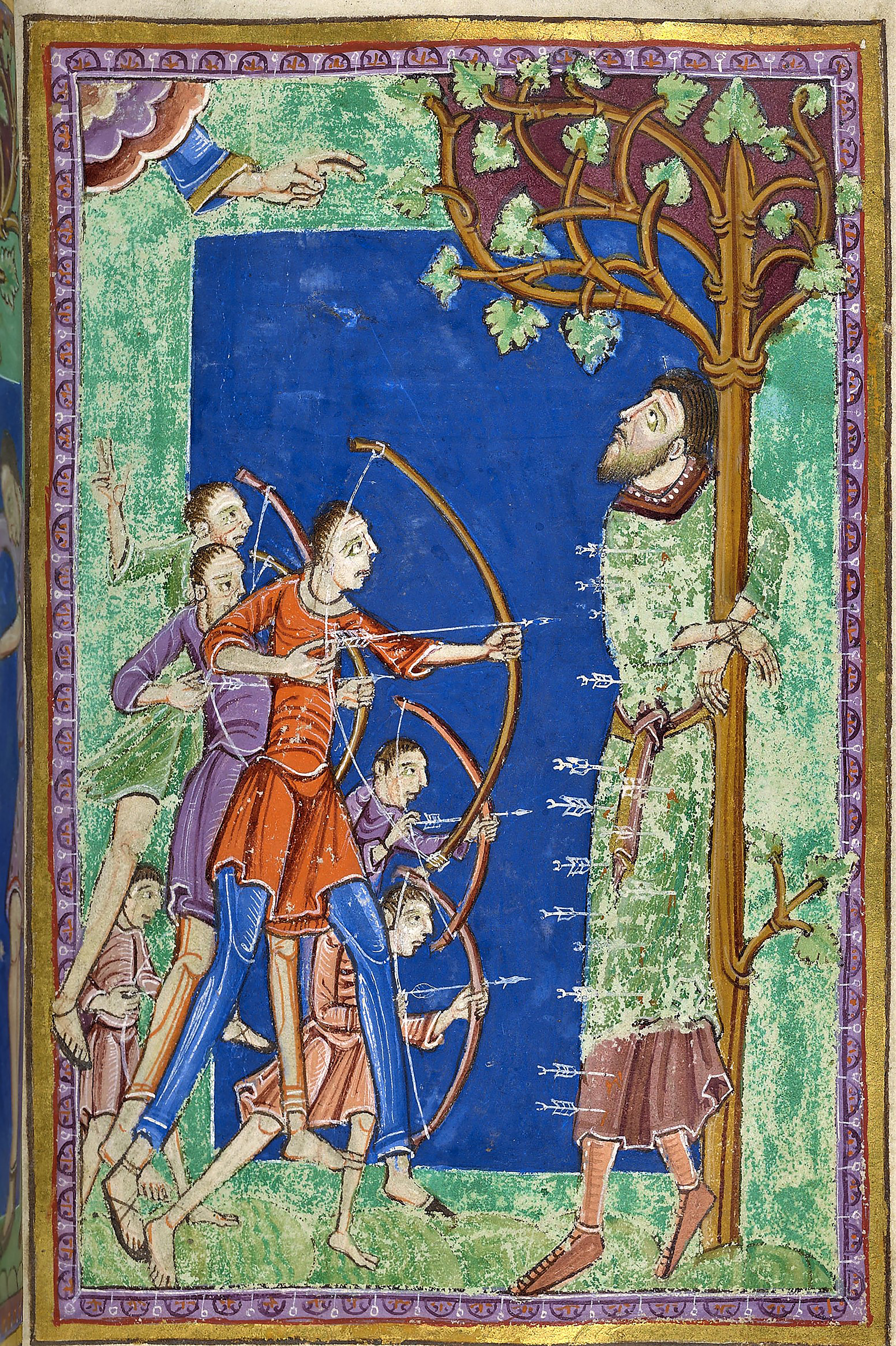
This is referring to how Ivar ordered his forces to torture and kill Edmund, the king of East Anglia, for refusing to submit to him during the Great Heathen Army invasion. Edmund’s martyrdom was covered by the monk Abbo of Fleury, writing around 115 years later. Abbo of Fleury claimed he learned of the story from Dunstan, Archbishop of Canterbury, who knew a very ‘decrepit old man’ at King Athelstan’s court, the grandson of Alfred the Great. Standing before the king, most likely at his stronghold in Winchester, this old man had ‘sworn on oath’ that he was Edmund’s arms bearer.
However it is strange that the tale which is extensive compared to other texts makes no mention of Ivar’s severe disability.
Ivar’s chief role in torturing Edmund may have given rise to his famous epithet of the beinlauss (boneless). The ‘boneless’ title is believed to result from a simple misreading of the Latin adjective exosus meaning ‘cruel’ with exos, which equals ‘boneless’. As Adam of Bremen described Ivar as ‘cruel’, there was a simple misunderstanding, which gave birth to the ‘boneless’ epitaph in later Old Norse sagas.
While the historical Ivar was most probably not disabled, the snarling and wild portrayal by Alex Høgh Andersen in the TV series was befitting because Ivar achieved infamy through his actions in East Anglia. His descendants would continue to rule in York for another 80 years and in Dublin for around 180 years after his death. Ivar had such a fearsome reputation that there was a legend he was buried on the North Yorkshire coast to scare away future invaders, which I explore in my book.
The Viking occupation left a permanent and lasting cultural legacy in Britian.
Did Ragnar really fake his own death?
There’s no record of Ragnar faking his own death, but this scene is based on a legendary tale associated with the Sons of Ragnar. According to William of Jumièges, an infamous Viking called Hastein who co-led the Mediterranean raid with Bjorn did the same thing, pretending to be dead and jumping out from a coffin on unsuspecting funeral goers, in modern day Luni, Italy.
Order your copy here.