Finding the Real Kat Astley
Author guest post by Rosemary Griggs.
I have devoted ten years to scouring the archives, looking for traces of one Devon family, the Champernownes. From their origins in Normandy, I followed their fortunes as they settled in Devon in the twelfth century during the reign of King Henry II, and expanded their landholdings throughout the west of England and into Gloucestershire and Oxfordshire. Over many generations, the men of the family married heiresses, establishing alliances with powerful families. By the early sixteenth century, the Champernownes were connected to some of the foremost families in Tudor England. Despite this, their name is not widely known, except through one remarkable woman. Anyone interested in the troubled life of the young Elizabeth I, will have come across Katherine Champernowne. John Astley later married her, and many people know her as ‘Kat Ashley,’ young Elizabeth’s governess. I prefer to call her Kate.
Attention often focuses on the unfortunate events of 1548/49 under Catherine Parr’s roof at Chelsea and Hanworth when the dowager queen’s new husband, Thomas Seymour, paid inappropriate attention to the fourteen-year-old princess. Based on this episode, historians and writers have sometimes dismissed Kate as lacking in judgement. For example, Victorian scholar Agnes Strickland suggested that ‘Elizabeth, through the imprudence of Mrs. Ashley and others in her household, was involved in much trouble on this account.’ And in 1952, Neale writes: ‘Kate Ashley, who was married to a kinsman of her mistress, was a well meaning, affectionate, but not very sensible woman.’ Kate has often been portrayed in fiction and on screen as a gossipy middle-aged ‘nanny’ figure. In the 1930s, Dame Edith Sitwell called Kate ‘a babbling brook’ who ‘like Lady Bryan, had ‘much of the nature of Juliet’s nurse’.
Yet Thomas Cromwell, King Henry VIII’s closest adviser, a man who rarely acted without purpose, recommended Kate to care for the king’s younger daughter. The astute and remarkably intelligent Elizabeth made Kate Chief Gentleman of her Privy Chamber, controlling access to the queen and acting as her eyes and ears. The traditional narrative characterising Kate as foolish didn’t add up. I was determined to discover the real Kate.
Archival records of Kate’s early life remain elusive, leading to confusion about her parentage. Over the years, commentators have identified her variously as the daughter of Sir Philip Champernowne’s father, Sir John Champernowne, as Sir Philip’s wife Katherine Carew, or as Catherine Blount, who married Kate’s brother John. Modern day repetition of these ideas compounds the confusion about Kate’s true identity.
Kate herself provides clear evidence that none of the above could be her father. In a bold letter to Thomas Cromwell in October 1536, soon after her appointment, she thanks Cromwell for recommending her for her new position. Kate then asks if he (Cromwell, the most powerful man in the land after the king himself) will ask King Henry to pay her for her services. In her letter, Kate clarifies that her father is still living, helpfully ruling out most of the candidates suggested as her father. Sir John Champernowne’s death in 1503 is well-documented in his will and Inquisitor Post Mortem. There are eyewitness accounts of the death of Katherine Carew’s father, Sir Edmund, during the siege of Therouanne in 1513, when a stray cannonball from the town felled him during a council of war in Lord Herbert’s tent. Catherine Blount’s father, Lord Mountjoy, a pupil of Erasmus and a respected scholar and courtier, made his will on 1 October 1534 and died on 8 November 1534.
While researching my novel A Woman of Noble Wit, I uncovered compelling evidence that Kate was Sir Philip’s eldest daughter. I published that research on my website in n article entitled Who was Kat Ashley. Yet five years on, the confusion continued. I needed more evidence if I was to convince sceptics of who Kate really was. A visit to Lambeth Palace Archives proved to be the pivotal moment in my research. There I viewed records kept by someone who knew Kate. Pages of handwritten documents gave me the evidence I needed. They confirmed beyond all doubt that John Astley married ‘Catharina, daughter of Sir Philip Champernowne of Devon.’
Among the Carew papers, I found an astonishingly detailed set of family trees compiled by and for Sir George Carew, 1st Earl of Totnes (1555–1629). During his period in Ireland as President of Munster, he collated details of all the major families in England and Ireland. His intention was to write the history of the island from the reign of Henry II to that of Queen Elizabeth. Sir George died before he could complete the project, but his papers, compiled between 1586 and 1595, with a few additions in 1615, remain.
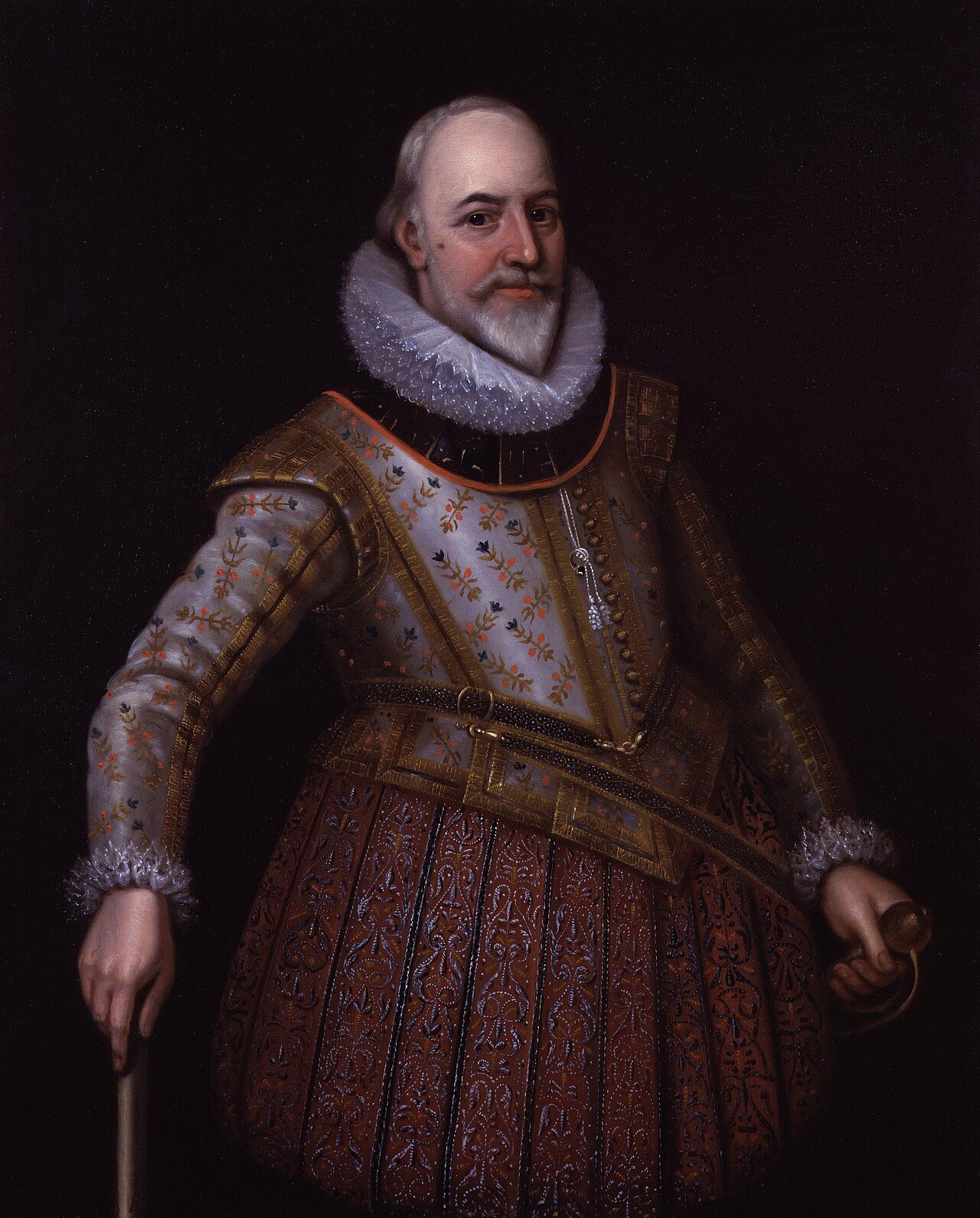
George, Earl of Totnes’s father, George Carew senior, was Kate’s uncle, although he was only a few years older than she was. Their careers overlap, and their names appear together in the historical record. For example, in 1545, Sir Philip Champernowne named Kate and George senior joint executors of his will. Fifteen years later, in 1560, Kate’s brother-in-law, Archdeacon John Pollard, also chose the pair to oversee the delivery of his last wishes.
One of Elizabeth’s first appointments was to make George senior Dean of the Chapel Royal, while Kate took the important position of Chief Gentlewoman of the Privy Chamber. They both served in the inner circle of the new queen’s court as she sought to establish herself firmly on the throne. At the time of Kate’s death, young George, the compiler of the family trees, was 10 years old. It is inconceivable that he did not meet Kate Astley in his father’s company. Some of the family trees are in George Carew, Earl of Totnes’s own hand, some written by scribes who had a long and close association with him, making them an exceptionally reliable source.
Ongoing confusion about Kate’s identity has obscured her important connections to influential figures at the centre of the Tudor court. Armed with the certainty that Philip Champernowne was her father, I have placed Kate among close friends of the king, courtiers, scholars, and supporters of religious reform. The Courtenay connection is particularly important: Henry Courtenay, Marquess of Exeter, was Philip Champernowne’s first cousin once removed. Henry Courtenay grew up with his first cousin, the young Henry VIII, and was at the centre of a close band of young courtiers who surrounded the king. Kate’s father’s close association with Courtenay brought opportunities at the royal court. Philip served as squire of the body to King Henry until 1524. Kate’s sister, Joan, was one of Anne of Cleves’ ladies. She later became a member of a close-knit group of women who served Catherine Parr and shared her interests in religious reform. Kate’s brother, John, was mentioned in Richard Carew’s Survey of Cornwall, published in 1603, as being popular with Henry VIII ‘for his quaint conceits’.
Kate’s maternal grandmother links her to the Poyntz family. They also held high-profile positions at court, as did Kate’s Carew relatives. Among them, Gawen Carew, another uncle close to Kate’s age, married Anne Brandon, sister of Charles Brandon, Henry VII I’s closest friend and brother-in-law. Another Sir George Carew — this one was captain of the ill-fated Mary Rose, — was Kate’s cousin. His brother,Sir Peter Carew, was one of the chief movers in the failed Wyatt Rebellion of 1554. These relationships have been largely overlooked.
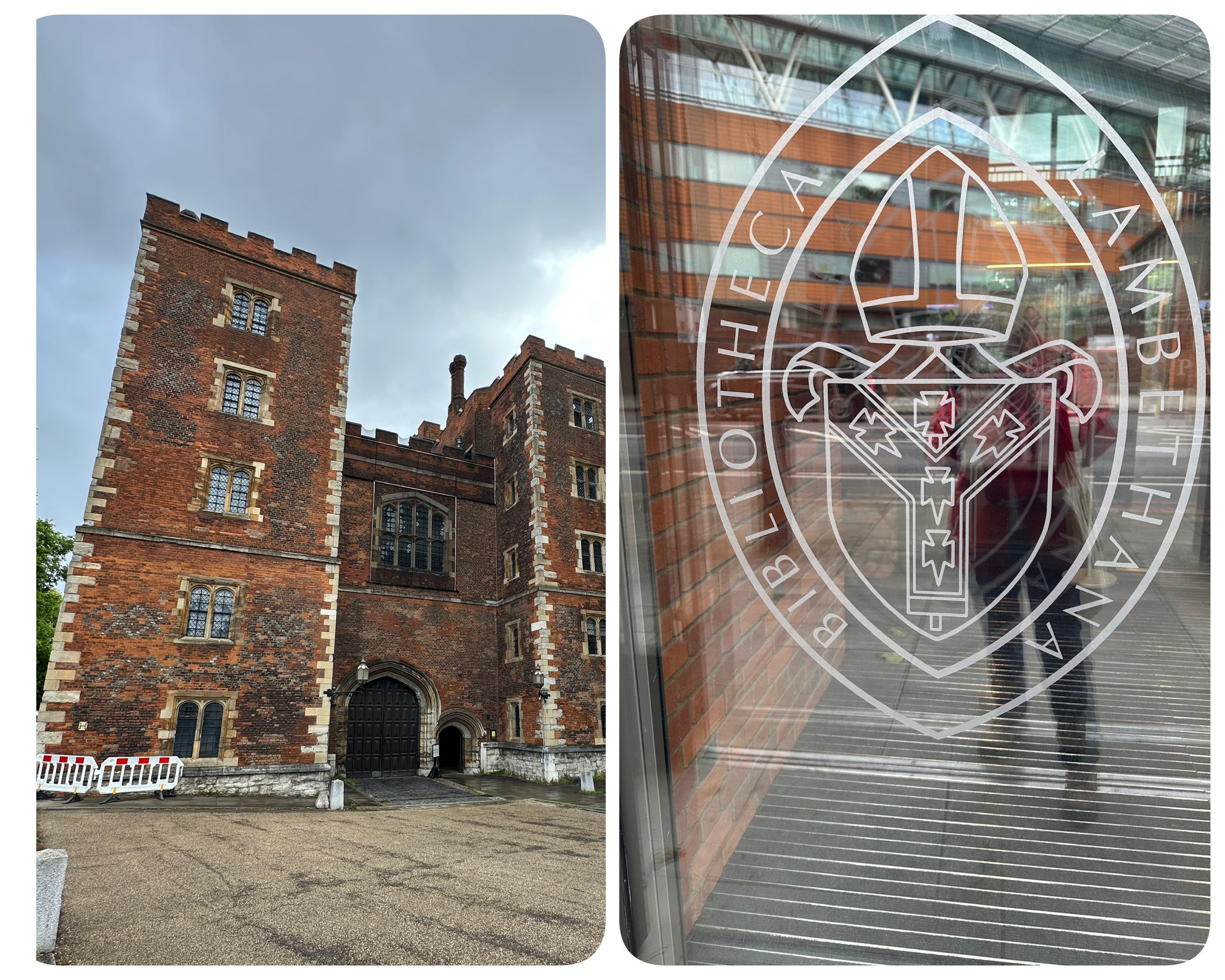
Image of Lambeth Palace and the author at the door ofhe Lambeth Palace Library a separate purpose-built building. Photo author’s own.
Kate and Lady Joan Denny are often described as aunt and niece. In fact they were sisters. Kate witnessed Joan’s will shortly before her death in 1553. Later, Kate’s husband took a keen interest in the upbringing of the Denny boys, taking them with him to Europe in 1554. Joan and Kate were clearly close. Their respective roles during the ‘Thomas Seymour Affair’ bear further scrutiny. Understanding the close relationship of these sisters also throws the role Sir Anthony Denny played during Elizabeth’s early years into sharper focus.
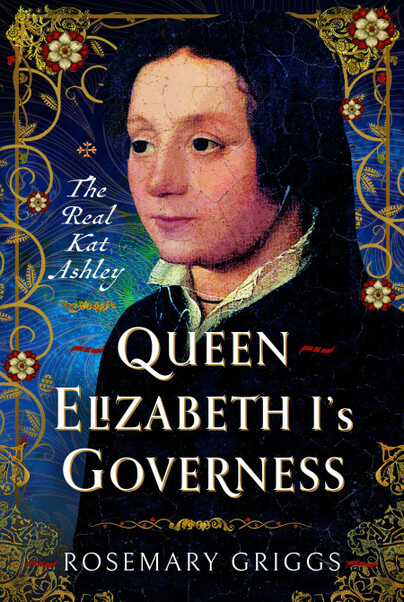
Unravelling the tangled threads that bind Kate to other key players has allowed me to find the real ‘Kat Ashley’. She emerges from Elizabeth’s shadow.as an intellectual and politically active woman who helped shape that character of one of England’s greatest monarchs. Queen Elizabeth 1’s Governess: The Real Kat Ashley is the first comprehensive, dedicated non-fiction biography to put Kate centre stage.
Order your copy here.