Why Nolan’s The Odyssey is and isn’t Homer
By Dr Jan Parker, author of:
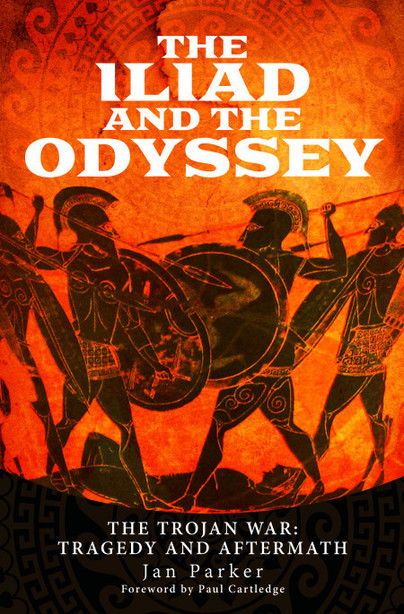
The Iliad and the Odyssey The Trojan War: Tragedy and Aftermath
“Visual feast but oh, where are the women characters?” moaned Trisha Kelly, the illustrator of my Pen and Sword The Iliad and Odyssey, as we came out of a viewing of Christopher Nolan’s spectacular film, The Odyssey.
Reviews are unanimous that Nolan’s The Odyssey, is the greatest film of the year; equally unanimous that Matt Damon’s Odysseus is less intriguing, less charismatic and Anne Hathaway’s Penelope less powerful and memorable than Homer’s. Odysseus’ rich interactions with male and female hosts is entirely cut out – even the tricking of the transgressive host, the Cyclops. And my particular favourite character, the lovely Crown Princess Nausicaa, is missed out altogether, as is her magic kingdom of Phaeacia, with automata, silver guard dogs, feasts, bardic stories and games. In book 7, she shyly offers Odysseus his third home: after the bewitching Calypso [who used feminine charms rather than a lotus to keep him enchanted] and the amazing, gracious Circe, who fascinated him for more than a year.
Why did the film miss out such wonderful scenes as Calypso complaining of male chauvinism when the gods decree she has to let Odysseus go? Or Circe’s failed enchantment of the naked Odysseus? Or the Phaeacia books, full of delicious stories and events, leaving Odysseus to extricate himself from a would be father in law? Or even the side of Odysseus that delights in tricking the Cyclops, so appreciated by Athena who sees him as cunning and tricksy as herself. Indeed the final memorable scene of Odysseus and Penelope’s coming together is of Penelope asking him to move their marriage bed…a final test, this time of not by Odysseus…. (You’ll have to read book 23 in a translation – Mendelsohn’s or perhaps that used by Shakespeare: Chapman’s, with my introduction – to see how that worked out.)
But there’s a larger answer to why so much has been left out: Nolan has a shaping idea of Odysseus that is far from the multifaceted, adventure-loving, shining, tale-telling hero of Homer. That idea is of blood guilt, which also informed Pasolini’s film The Return. But that is a subject of Homer’s Iliad: where what haunts Achilles is not killing – that’s what men in a heroic society have to do – but responsibility for the death of Patroclus.
Homer’s Odysseus is much more complicated and fascinating character, shaped not so much by the Trojan War as the near 20 years of travelling and tale telling since. But that is one to be thought about as you travel with and listen to him, perhaps with my guide, hailed by reviewers as the ‘ideal companion’: the beautifully illustrated The Iliad and Odyssey which is available at a special sale price from Pen and Sword: The Iliad and the Odyssey: The Trojan War Tragedy and Aftermath.
There is a darkness that hangs over the later books, a sense of loss of a heroic age that the carousing, drunken, beggar-baiting suitors cannot imagine. But to explore that we have, like Nolan’s film, to go back to Troy, where the flower of east and west ancient Mediterranean world came to fight for honour, fame and the spoils of war. (The Iliad and the Odyssey ‘Introduction to the Iliad’, p3-11 and ‘Heroic Values, Heroic Psychology, Heroic Bonds’ pp164-182)
Does that darkness envelope Odysseus, as he gradually reveals himself as the returning lord, returning father and returning husband? That’s a question that is raised but not answered by Homer, and, perhaps differently, by each reader since.
Contents of The Odyssey section of The Iliad and the Odyssey
Introduction: The Journey Home from War
Books 1-4 Waiting for Odysseus: Penelope, Telemachus and visiting Helen
Books 5–7 From Calypso to Princess Nausicaa
Book 8 Odysseus and the Divine Bard, Songs of Gods and Trojan War Heroes;
Books 9–12 Odysseus’ Adventures:
First raid, the Lotus Eaters, the Cyclops
The Bag of Winds, the Cannibals
Life with Circe
Return: the Underworld, the Sirens, Scylla and Charybdis
Books 13–14 Odysseus Returns to Ithaca: Disguise and Lying Tales
Book 15 Telemachus Returns: the Swineherd’s Story
Book 16 Father and Son
Book 17-18 Odysseus at the Hall; Penelope and the Suitors
Book 19-20 Odysseus in Disguise Tests the Suitors; Penelope is Intrigued
Book 20 Odysseus: Testing and Recognition
Book 21 The Trial of the Bow of Odysseus
Book 22 Odysseus’ Vengeance
Book 23 Odysseus and Penelope: Recognition and Reunion
Book 24 Completing Stories
Afterword: Others’ Stories, Women’s Stories: Circe, the Women of Troy,
Helen, Calypso … and Dido
Order your copy here.