5 ways by which previous generations of women’s rights campaigners prepared the way for the granting of women’s suffrage in 1918.
Women’s History Month guest post from Janet Smith.
Francis Soutter, in his Recollections of a Labour Pioneer (1923), lamented how modern-day feminists, who had won the vote for women over thirty in 1918, had forgotten the debt they owed to nineteenth century women’s rights campaigners. They should remember that ‘we often reap where others have sown.’ Here are five ways by which earlier generations of feminists prepared the way for women’s suffrage.
1. Feminist philosophical writing.
Feminist ideas were developed throughout the previous century by writers. They questioned if women’s nature was biological or a social construct, did the Enlightenment belief in the ‘rights of man’ include women, was it a Christian duty to include women in civic rights? Mary Wollstonecraft, an evangelical Christian, believed that women’s inferiority was a social construct. In her A Vindication of the Rights of Women (1792), she argued that women were kept inferior through laws and lack of educational opportunity, not by inherent nature. Wollstonecraft believed that women’s rights were a Christian ethical necessity. In 1825, the utopian socialists, William Thompson and Anna Doyle Wheeler, published Appeal of one half of the human race, Women, against the pretensions of the other half, Men as a refutation of the utilitarian philosopher James Mill’s claim that women did not need rights as they were protected by those of their husbands and fathers. Although admiring Wollstonecraft, they believed Christianity was enslaving women. Childcare and economic dependency on men turned women into slaves. They would be liberated in utopian socialist self-supporting communities. Children would be the responsibility of all and women would be free to work. The book makes the first explicit demand for women’s suffrage. The Christian Radical Unitarians of the 1820s onwards campaigned for women’s rights. These included Harriet Taylor, who later married the feminist utilitarian philosopher, John Stuart Mill. They worked together, writing on the domestic abuse of children and women and the inferior legal status of women. Taylor, in Enfranchisement of Women (1852), argued that that women’s true nature would only be revealed when women had equality. John Stuart Mill based his influential book, The Subjection of Women (1869) on Taylor’s earlier work. Other important feminist writers, include Frances Power Cobbe, Annie Besant, Olive Schreiner and Eleanor Marx.
2.The campaigns of first wave organised feminists of the 1860s.
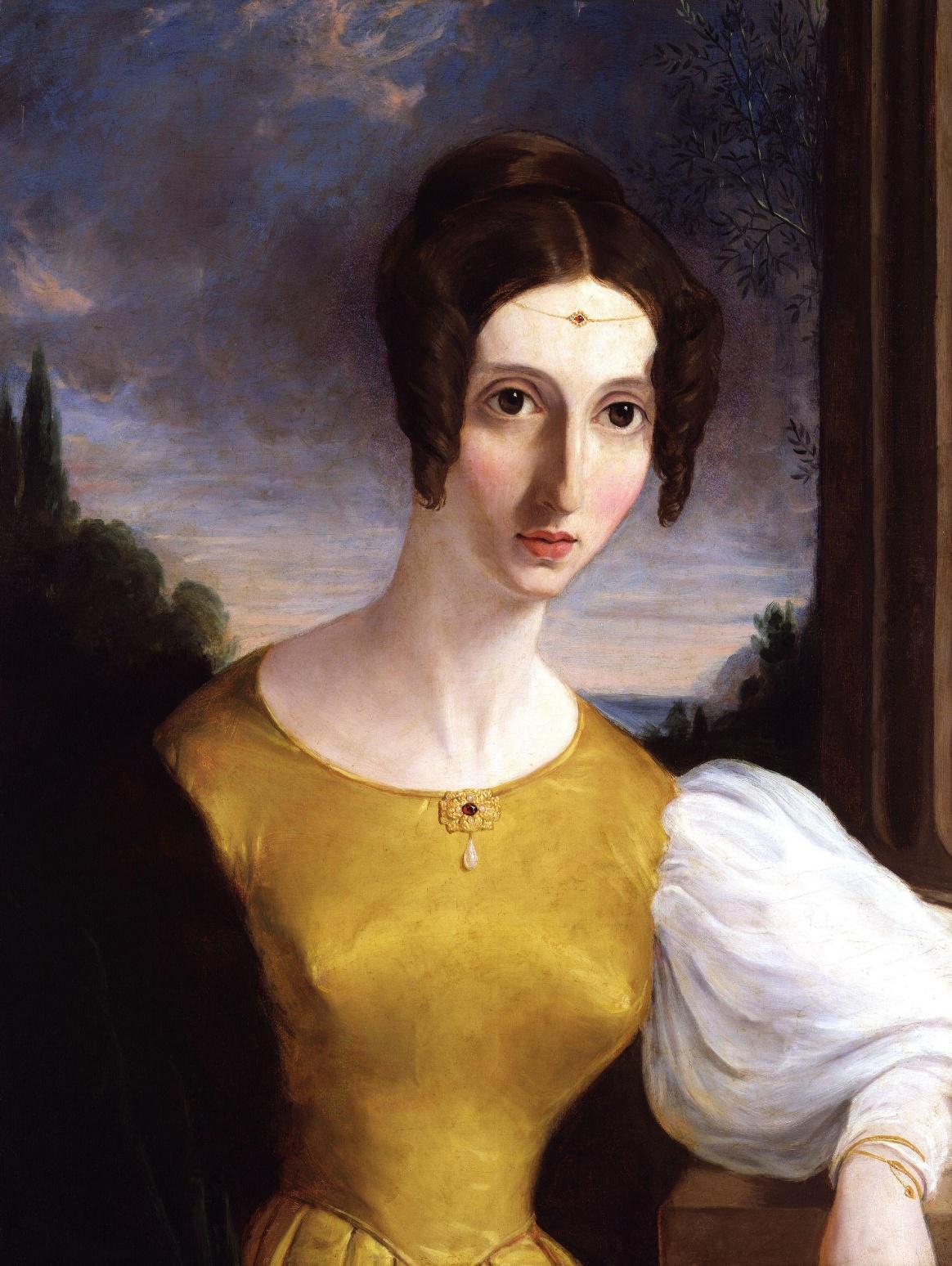
An organised women’s movement developed in the 1860s which had some success in campaigning for women’s property rights, custody of children, better education for middle class girls and entry into higher education and professions such as medicine. In 1858, a feminist journal, The English Woman’s Journal, was set up by Barbara Bodichon and Bessie Rayner Parkes. The two women established The Langham Place Circle, in London, a group of middle-class feminists which included Millicent Fawcett, Elizabeth Garrett (later Anderson), Frances Power Cobbe and John Stuart’s Mill stepdaughter, Helen Taylor. They formed the Kensington Society where feminist ideas were debated and refined. In 1867 Helen Taylor initiated the setting up of the London National Society for Women’s Suffrage following the creation, the previous year, of the Manchester Suffrage Committee by Lydia Becker. Women’s demand for suffrage was now a fully organised movement.
3. John Stuart Mill
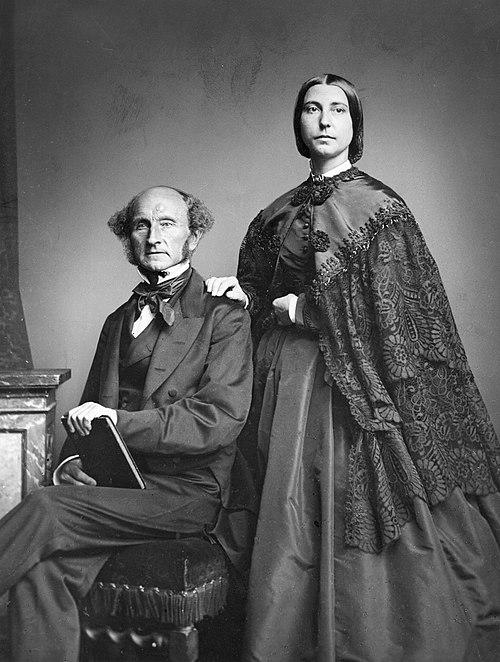
The newly formed women’s suffrage group regularly dined with John Stuart Mill and Helen Taylor. In 1865, Mill was elected as the Liberal M.P. for Westminster and took the women’s suffrage demand into parliament. Suffragists organised a petition which Mill presented in the House of Commons during the unsuccessful 1866 Reform Bill debates. The next year, when the 1867 Reform Bill was being debated in parliament, Mill proposed an amendment that the male pronouns in the bill be changed to ‘person’ and ‘persons.’ This would then include women in the enlarged suffrage. Mill’s amendment was defeated, only seventy-five M.P.s supporting it.
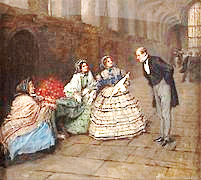
Reproduction of an oil painting by Miss Bertha Newcombe, 1911. LSE Library, Public domain, via Wikimedia Commons
4. The election of women members to the School Boards from 1870.
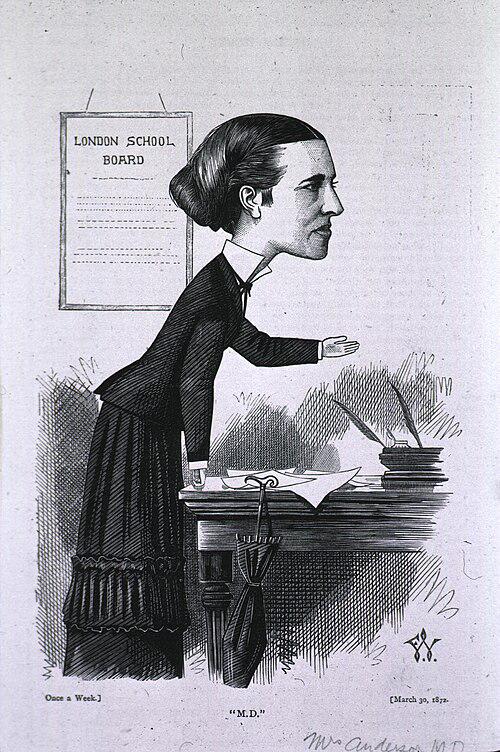
The 1870 Education Act set up compulsory state education for children aged five to eleven. State schools were built, controlled and administered by locally elected school boards and women could stand for election regardless of marital, residential or property status under the 1869 Municipal Franchise Act. This also enfranchised, for local election, unmarried women ratepayers. For the first time women were sitting in elected legislative chambers alongside men. Nominally equal, they had to fight sexism and side lining. The first women elected to the London School Board were Elizabeth Garrett Anderson and Emily Davies in 1870. In 1876, Liberals Helen Taylor, Florence Fenwick Miller, Elizabeth Surr and Alice Westlake were elected. Taylor, Miller and Surr worked closely to promote feminism and equality for girls in the classroom and women teachers. They were often at loggerheads with the liberal whip (which Westlake always obeyed). They exposed cruelty in state industrial truant schools and campaigned for girls to follow the same curriculum as boys instead of being forced to do more needlework whilst the boys did extra maths, and for married women’s teacher’s rights and equal pay. Taylor was the first woman on the LS.B. to chair a permanent standing committee, the Educational Endowments Committee. Women elected board members made women in public office a normality.
5.The First Woman Prospective Parliamentary Candidate, Helen Taylor, 1885.
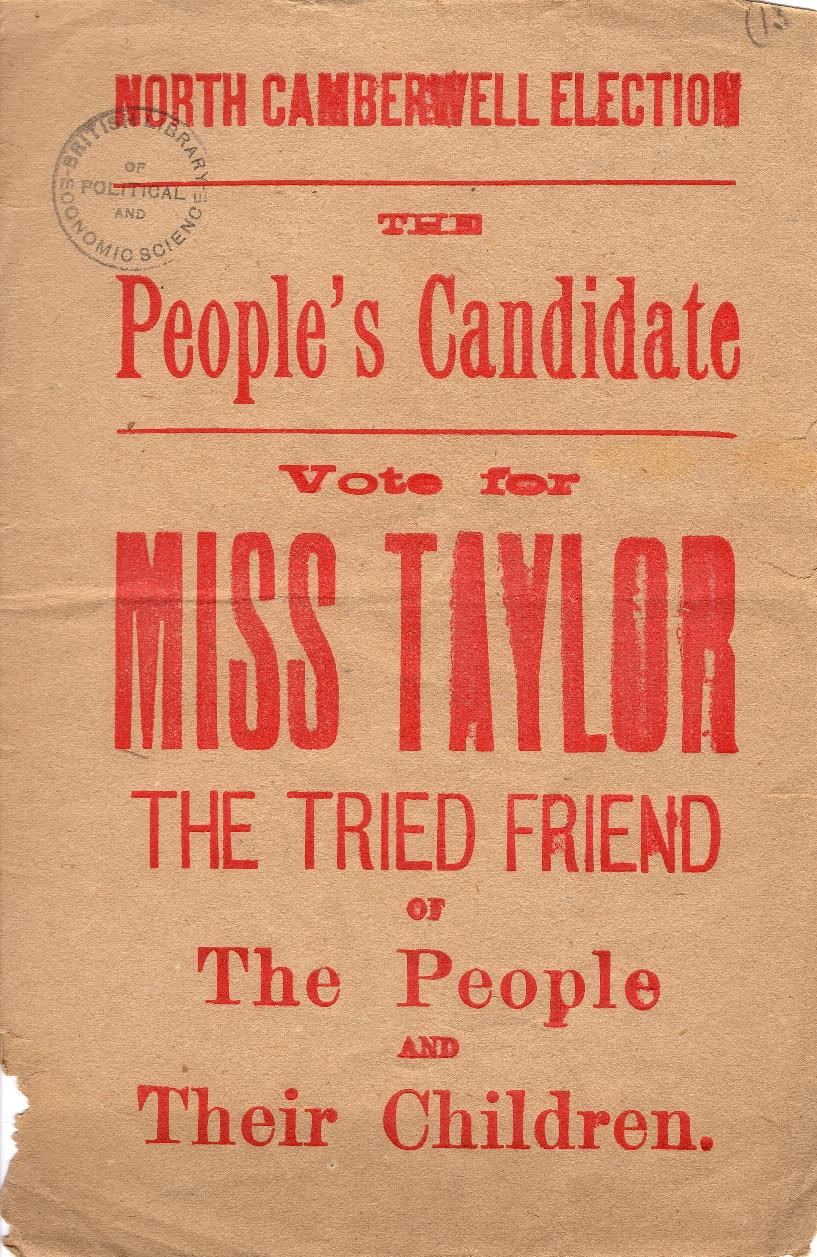
Helen Taylor’s campaign to be the first woman parliamentary candidate soon faded into obscurity but was big news in 1885. Francis Soutter was Helen’s political agent. Helen, President of the Camberwell Radical Club was chosen by them to contest the November 1885 general election for the London seat of Camberwell North. Radicals were annoyed that the official Liberal candidate had been imposed on them by the local Liberal Association. The local liberals were incensed that Helen was standing. She was popular with local voters as she represented them on the London School Board. It was feared she would take many votes off the Liberal candidate and so ensure the victory of the Conservative candidate. Taylor’s supporters claimed that the 1832 Reform Act, which had legally excluded women from voting by using male pronouns, was invalid. Previously women had not voted through custom. They argued that the Brougham Act 1850 had ruled that masculine pronouns included women and that the term ‘persons’ in the 1867 Reform Act included women as it did in other Acts. Taylor undertook a vigorous campaign, issuing election literature and holding public hustings. These meetings sometimes resulted in violence. Liberal agitators threw chairs at the public platform, on one occasion, and a fight ensued. The newspapers took up the story, and some serious commentators believed she might win the seat. However, on the first day of voting the presiding officer refused to take her nomination papers and she was disqualified. The Law Society believed, however, that if she had not presented them herself but had them taken by a man she may well have been allowed to stand. By presenting herself she had allowed the officer to reject her.
……………………………………………
Order your copy here.