Two Dambusters
Author guest post from Peter Croft.
1953. A new Elizabethan Age had just begun. Demobbed servicemen were busy rebuilding their lives and, to this six year old, all was well with the world. The 1950s were a good time to be growing up in Britain. There was a cornucopia of British war films on offer; children (this writer included) could not get enough of them. They fuelled our imagination and shaped the games we played. After all, the War had ended only eight years before and impinged strongly on the lives of us all. Many days in the summer school holidays were spent playing war, clambering around the ruins of an old fort, The Dooley, on the shore of the River Orwell, long since swallowed up by the Felixstowe Dock expansion. From the fort, as a temporary diversion from our war games, we could watch the Sunderland flying boats land on the river, to be hauled off the water by a huge crane at the RAF Station.
To return to the subject of war films. Oblivious to the propaganda inherent in some of the films or to the triumphalist nature of others, blind to the true grim nature of war which were glossed over by the film makers of the day, we lapped up the tales of daring in which stalwart Britishers always triumphed over the Jerries. Britain, we felt, was entitled to blow its own trumpet. After all we’d won the War, hadn’t we?
Most Baby Boomers could reel off the names of the stars and supporting actors who graced the screens whenever we made the trip to the pictures for the latest war offering (we didn’t yet have a television set). John Mills was ubiquitous, whether incarcerated in Colditz, leading a platoon to Dunkirk, attacking the Tirpitz in Above Us the Waves or fantasising about a glass of lager in Ice Cold in Alex. The Battle of the Atlantic was brilliantly captured in The Cruel Sea, with a superb performance from Jack Hawkins. Kenneth More gave a sterling performance as Douglas Bader in Reach for the Sky. We grew adept at spotting the character actors. If there was a British war film made in the 1950s which did not include Sam Kydd, I would like to know what it was called.
The film which made the deepest impression on my consciousness was The Dam Busters, starring Richard Todd as Guy Gibson. The grim death toll as a result of the Dams Raid, of German civilians, slave labourers and British aircrew meant nothing to an eight year old marvelling at the bombs skimming across the waves. I saw The Dam Busters at my local cinema, the Ritz, in the year of its release, 1955. My collection of Airfix models, consisting mostly of Spitfires and Hurricanes, was enhanced in 1959, when the first Airfix edition of the mighty Avro Lancaster was produced. After the relatively simple task of assembling the single-engined fighters, the Lancaster was rather more tricky. I was not to know that half a century later I would be writing about my meetings with two of the men who actually flew in the full size model. One was a pilot, the other a bomb aimer: William Reid and George ‘Johnny’ Johnson. Both flew in 617 Squadron, the Dambusters, but only Johnny took part in the Dams Raid, so, strictly speaking, Bill Reid was not a Dambuster. Actually, neither was Johnny, because the aircraft in which he flew in that famous raid failed in its mission to destroy the Sorpe Dam. But, hey, let’s not quibble over vocabulary and instead call Bill and Johnny what they were: brave men, and members of an illustrious squadron, which had acquired the soubriquet Dambusters.
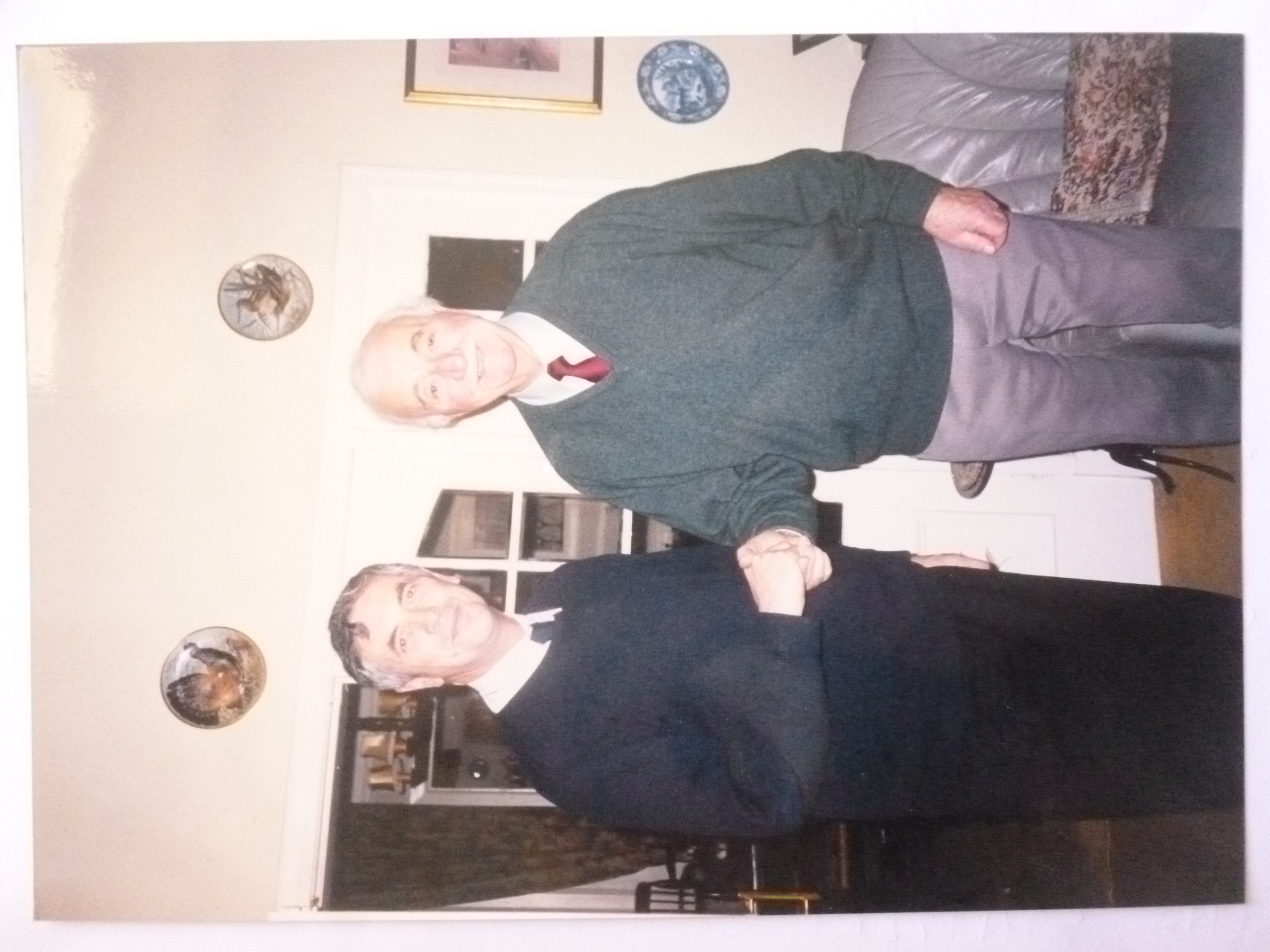
I had the privilege of meeting them both. How, you may ask? Well, let us start with Bill Reid. In 2000 I was engaged in research for my chosen Masters degree subject, morale in Bomber Command. As part of the research, I asked the Bomber Command Association, an organisation which, sadly, no longer exists, if it could send a questionnaire which I had compiled to some of its members. I had no choice in which members were selected but was happy to receive twelve responses. Their recollections helped enhance my dissertation and the contribution of one, Wing Commander A.J. (Jim) Wright, a navigator with 61 and 630 Squadrons, is used extensively in my new book Bomber Crew Morale in WW2. Another, Group Captain Dudley Burnside, has a chapter dedicated to his service. The experiences of two more respondents, Michael Allen and Reg Lewis, are recounted.
One member who had not responded was William Reid VC and I was thrilled some months later, in early 2001 (I gained my degree in December 2000), to receive a letter from him. He apologised for not replying sooner and invited me to his home in Crieff, where I had the most enjoyable afternoon with him and Mrs. Reid, talking through the questionnaire and gleaning further information from him about his service. It was with 61 Squadron that he won his VC, pressing on with a damaged Lancaster to Dusseldorf and bringing the stricken craft back. He joined 617 (Dambusters) Squadron and became a POW, one of only two survivors of his crew, when his aircraft was hit by ‘friendly’ bombs over France during a daylight raid,
He was the same diffident, unassuming man I had first seen in the landmark series The World at War in 1973, talking about the operation in which he won his VC. It was the interview with him in that programme which sparked my interest in the human element of Bomber Command; how did these men board their aircraft night after night, knowing their store of luck was only finite? When I mentioned the fact that it was his diffidence which had impressed me on watching his contribution to The World at War, he shrugged it off with an expression which could easily have been interpreted as, ‘Don’t talk rubbish.’ I suppose that is the mark of a modest man; he does not recognise this quality in himself. Anyway, the point at which I am struggling to arrive is that he epitomised for me the qualities displayed by all Bomber Command men, in fact, of that whole generation: quiet, understated, phlegmatic stoicism.
After a tea which included an enormous pile of ham sandwiches it was time to leave. I still remember, twenty-four years later, Bill Reid’s parting words as he stood at his gate: ‘Now you know where to find us.’ Yes, but I never did see Bill again. I had returned to the Gulf State of Qatar to resume teaching after my academic hiatus. Opening the foreign edition of The Daily Telegraph one day in November that same year, there was his name in the obituary columns. I went to visit his grave in Crieff as soon as I returned home. There was so much more I had wanted to ask him but I had to content myself with saying a quiet goodbye and knowing that my life had been enriched by that one magical afternoon with a holder of the Victoria Cross.

………………………………..
Ten years later. Now working near Luanda, the capital of Angola, one of my colleagues, Andrew, had a home in Portugal. In conversation one day it transpired that one of his neighbours in Portugal was the daughter of a Dambuster. Serendipity. No, that was not her name. It was Sue, with whom I made contact. With her kind permission, when I was next home from Angola, I took the train to Torquay, home of George ‘Johnny’ Johnson. Received with generosity of spirit, it was another enjoyable encounter with another man who had done extraordinary things. Johnny recounted the tale of the attack on the Sorpe Dam, with his pilot, the American Joe McCarthy, featuring heavily in the monologue. Johnny recalled, with glee, the fact that they had to do several runs up to the dam before he was satisfied that the bomb could be released. He did not win any popularity contests with the rest of the crew on that day.
I am pretty certain that Johnny was, by this stage of his life, a dab hand at telling this particular story. He must have related, in considerable detail, the events of his contribution to the Dams Raid several times in many interviews. I was aware that various celebrities had visited him. That did not matter to me. At this telling of the story I had a Dambuster all to myself and it was thrilling to hear the experiences of one man, from his own lips, who had actually been on that famous raid.
There were two more meetings with Johnny, in his new home, Bristol. On both occasions I took him a bottle of Jura single malt, received gladly. Johnny lived in sheltered accommodation in Bristol and on my second visit there we strolled to the restaurant and, despite my protestations, he insisted on buying me dinner. What can I say? Being treated to a meal by the man who was destined to be the last Dambuster, is something which will always remain with me. A hard act to follow.
……………………………
Bill Reid and Johnny Johnson do not feature prominently in my forthcoming book but my encounters with them both certainly gave impetus to my desire to get the book written. Snippets of the conversations I had with Johnny do appear. They cover his training in Florida, his hair-raising experience when his aircraft was hit by lightning, his thoughts on the vital importance of crew cohesion and the aftermath of the Dams Raid. Bill’s words are taken from the World at War interview from 1973, when he gave his reasons for joining the RAF. The operation in 1943, when he was awarded his VC, is described, as is the operation in 1944, in which his aeroplane went down.
Both men, when I met them, were exactly as I expected. Unassuming and modest, given to understatement and charming. To two Dambusters, ordinary men who did extraordinary things, thank you both.
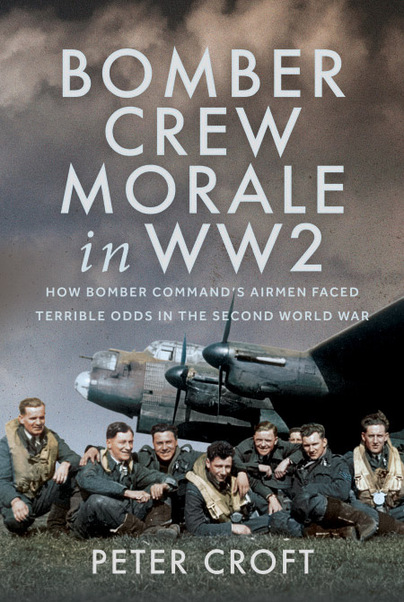
Order your copy here.