THE BACKYARD JET: HOW TWO RACING PILOTS BUILT A TINY TURBOJET
From a garden in Reading to 330mph, Sarah Chambers, the author of The Race for Speed, explores the remarkable story of the Somers-Kendall SK-1 jet.
In the early 1950s, while the world marveled at government-built jets, two British racing pilots decided to do something extraordinary: build a jet in a back garden. Not a model, not a glider – a full-scale, two-seat turbojet capable of over 330 mph!
The men behind the project were no strangers to speed Nat Somers, a Hampstead company director, had won the 1949 King’s Cup Air Race, while Hugh Kendall, a former Handley Page test pilot from Woodley, Reading, took the 1951 South Coast Air Race. Between them, they combined racing skill, aeronautical expertise, and a willingness to break convention.
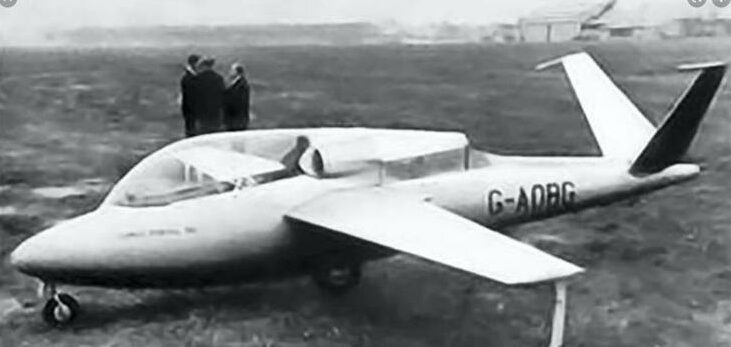
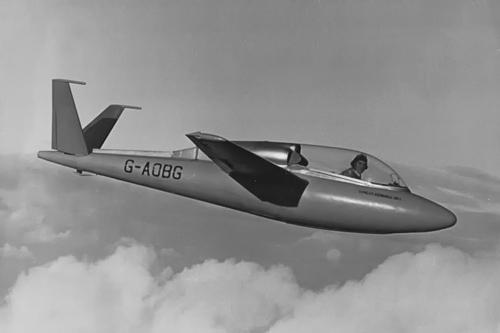
Their aircraft, the Somers-Kendall SK-1, was a marvel of ingenuity. Built largely of wood to keep it lightweight and affordable, the tiny jet measured 20 feet long with a 23-foot wingspan and carried a modest 360 lb of fuel. Its powerplant was a single Turbomeca Palas turbojet, producing 350 lb of thrust – enough to push the SK-1 to speeds rivaling much larger aircraft. Construction, sometimes literally on a backyard lawn, had taken over 15 months, with a final cost projected around £4,500.
Despite its unconventional origins, the SK-1 quickly proved itself in flight. At Woodley Airfield, the bright yellow aircraft, registered G-AOBG, completed its third flight with confidence. It took off from a bumpy grass strip, made several fast passes over the field, and landed safely, deploying a tail parachute not for braking, but to test a system designed to recover the aircraft from spins during early flight trials. The single central mainwheel, small rear nosewheel, and wingtip outriggers retracted cleanly, powered by engine bleed air, while the undercarriage extended by spring and gravity – a clever, lightweight solution.
The SK-1’s aerodynamics and controls were just as innovative. Its laminar-flow wing featured full-span, narrow-chord ailerons that could droop to act as flaps. Air brakes above and below the wing had already proven effective, while the tail surfaces were fully moving, mass-balanced, and fitted with trim tabs for stability. Oil and fuel systems permitted inverted flight, and even touch-and-go approaches were manageable at around 115 mph, with landing speeds near 90 mph – remarkable for such a tiny jet.
By the time it completed over an hour of flight, the SK-1 had encountered few issues, and full-scale testing was imminent. Observers were struck not only by its performance but also by the exceptional quality of craftsmanship, largely the work of Kendall himself.
Though built in a back garden, the SK-1 was no mere hobby project. The Air Registration Board approved the work, and Somers and Kendall were already considering putting the aircraft on the market. Some foreign governments were reportedly interested in this affordable, high-performance trainer – proof that sometimes, vision, skill, and a little backyard ingenuity can take flight where convention fears to tread.
From a patch of grass in Reading to speeds over 330 mph, the Somers-Kendall SK-1 remains a testament to post-war British inventiveness – and a reminder that even in aviation, sometimes the boldest ideas come from the most unexpected places.
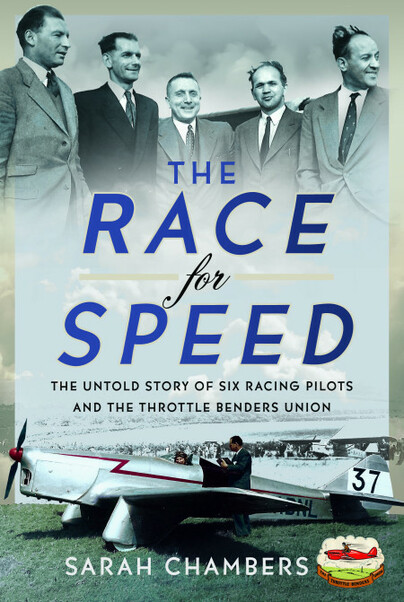
Order your copy here.