What’s in a Topic?
Author guest post from Dustin D Hyland.
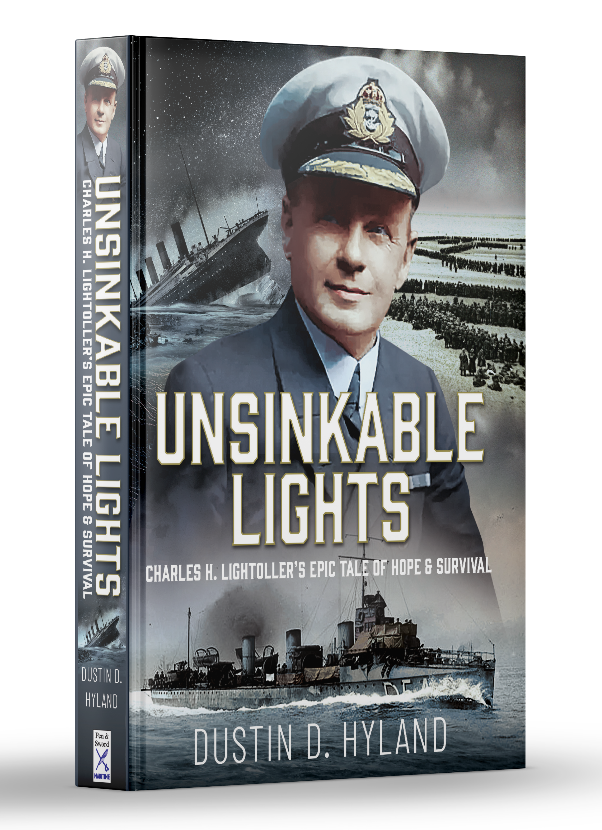
Finding the “spark” for a book is a lot like falling in love: it happens when you least expect it, but you have to be willing to follow it wherever it leads.

Recently, while speaking to middle schoolers in my hometown about my upcoming book, Unsinkable Lights, a student asked a question that every writer—from the dreamer to the veteran—eventually has to answer: “Why this story?”
For me, the answer began at sea. As I was winding down my career in the U.S. Navy, my lifelong appreciation for the ocean evolved into a fascination with shipwrecks. Naturally, I found myself pulled into the orbit of the RMS Titanic. But among the 2,200 souls aboard that “unsinkable” ship, one name stood out: Charles Lightoller.
More Than a Titanic Survivor
Most people who recognize Lightoller’s name know him as the Titanic’s second officer. What they don’t know is that the sinking was just a single chapter in a 78-year life defined by adrenaline and resilience.
Before I was through with my research, I discovered that Lightoller didn’t just survive the Titanic—he survived three other shipwrecks. He lived through a revolution in Rio, hunted for gold in the Canadian wilderness, commanded warships in WWI, and, at 66 years old, sailed his personal yacht, the Sundowner, into the fire of Dunkirk to rescue 127 soldiers.
The more I learned, the more I realized this wasn’t just a “Titanic book.” It was a story of survival and hope that had been largely left in the shadows.
Lessons for the Aspiring Author
It took five years to bring Lightoller’s story from the first notes to the bookstore shelves. If you’re looking for your own “Lightoller,” here are three pieces of advice I shared with those students:
-
Choose Passion Over Trends: Five years is a long time to spend with a topic you don’t love. If the subject doesn’t keep you motivated through the grueling cycles of research, writing, and editing, it certainly won’t keep a reader’s interest.
-
Find the “Quiet” Story: There are hundreds of books on the Titanic. If I had written a general history, it would have been just another drop in the ocean. Look for the narrative that hasn’t been told—the unknown hero or the unearthed perspective.
-
Embrace the Rabbit Holes: Writing non-fiction is an education. I didn’t expect to fall in love with the research. Still, soon I was deep-diving into the history of sailing ships, the Klondike Gold Rush, WWI naval tactics, and the Dunkirk Evacuation. Choose a topic that makes you want to be a student again.
Writing a book is a long, often lonely endeavor, but finding the right subject makes the journey a joy. Choose something you’re passionate about, something the world needs to hear, and something that makes you curious.
Happy writing!

Dustin D. Hyland is the author of Unsinkable Lights: Charles H. Lightoller’s Epic Tale of Hope and Survival. He holds several degrees, including a Master of Arts in Professional Writing and a Master of Fine Arts in Creative Writing from Liberty University.
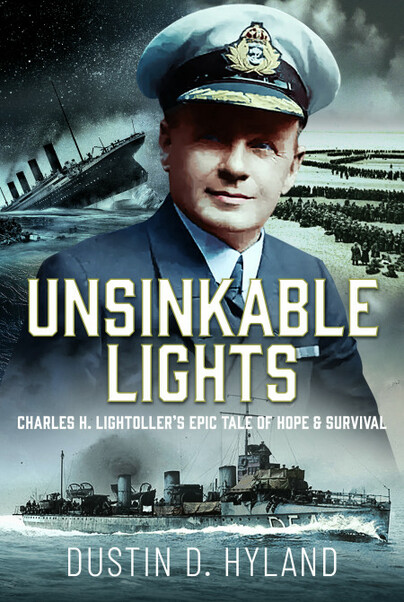
Order your copy here.