WHY RESEARCH SOURCES MATTER: A WORLD BOOK DAY REFLECTION FROM A NON-FICTION AUTHOR
Author guest post from Sarah Chambers.
When people pick up a non-fiction book, they see the finished story – the narrative arc, the photographs, the footnotes, the acknowledgements. What they don’t see is the scaffolding beneath it: the archives, the fragile documents, the dusty periodicals, the long evenings spent chasing a single confirming detail.
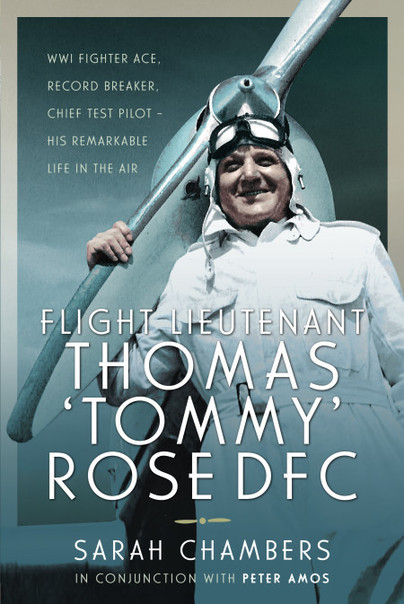
When I was researching my biography of Flight Lieutenant Tommy Rose DFC, one source became indispensable: the online archive of Flight and Flight International, hosted for years by FlightGlobal. That archive contained scanned issues of Flight magazine dating back to 1909 – a living, week-by-week chronicle of aviation history.
For an aviation historian, it was gold dust.
You could search by date, by name, by aircraft type. Within moments, you might find a contemporary report of a record attempt, a technical description of a prototype, or a brief paragraph that confirmed where a pilot was on a specific day. These weren’t second-hand interpretations written decades later. They were primary sources – written at the time, by those who were there. Without that archive, confirming many of Tommy Rose’s flying adventures would have been infinitely harder – in some cases, nearly impossible.
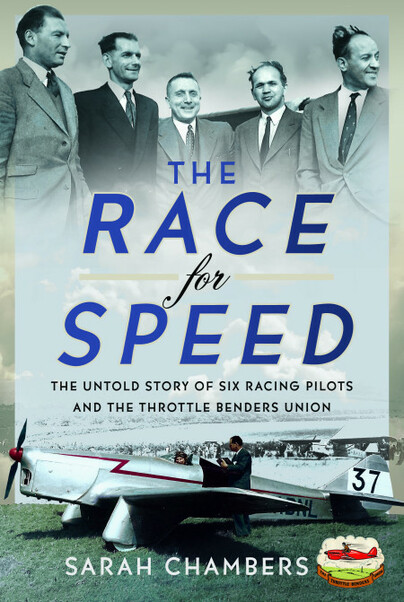
When I began researching my second book, The Race for Speed, I naturally returned to the same archive. Except this time, it wasn’t there.
During a major rebuild of the FlightGlobal website, the historic archive was removed. The explanation was technical incompatibility with the new platform. Since then, access to historic issues has remained unavailable in its former open, searchable form. Later digital editions sit behind a paywall; the early 20th-century material – the material many historians most need – is no longer freely accessible.
For researchers, this wasn’t just an inconvenience. It was the disappearance of a primary historical source.
And that raises a larger question for World Book Day: how secure is our shared history in the digital age?
Non-fiction authors rely on sources that are stable, citable, and verifiable. Archives are not luxuries; they are foundations. They allow us to check facts, challenge myths, and tell stories responsibly. When a digital archive vanishes – even temporarily – it exposes how fragile modern research can be. We assume that because something is online, it is permanent. It isn’t.
In the absence of that archive, I found myself bidding on bundles of old magazines, hoping that among forty issues I might find a single paragraph relevant to my research. University libraries hold partial runs. Private collectors share occasional scans. Enthusiasts on forums help when they can. But the comprehensive, searchable, democratic access that once existed is gone.
For a non-fiction writer, that loss is profound.
World Book Day is often about celebrating stories. But it is also worth celebrating – and protecting – the sources that make those stories possible. Behind every carefully researched biography or history book stands a network of archivists, librarians, collectors, and digital custodians who preserve the raw material of truth.
If those sources disappear, future books become thinner, less certain, more speculative.
As authors, we have a responsibility not only to tell stories, but to advocate for the preservation of the records that underpin them. Because once an archive slips quietly offline, there is no guarantee it will return – and if it does, it may not return in the open form that allowed independent researchers to work freely.
For those of us who depend on such material, the loss of the Flight archive is more than a technical issue. It is a reminder that history itself is fragile.
And that is why research sources matter.
Order your copies here.