TOMMY ROSE AND THE KING’S CUP AIR RACE IN 1935
Sarah Chambers, the author of Flight Lieutenant ‘Tommy’ Rose DFC, explores the King’s Cup air race that was held between Friday, 6 September and Saturday, 7 September 1935.
The King’s Cup Air Race occupied an important position in British civil aviation during the inter-war period. Organised by the Royal Aero Club, it functioned as both a competitive event and a practical assessment of aircraft performance, pilot skill, and operational reliability. By the mid-1930s the race had evolved beyond spectacle, becoming a structured evaluation of contemporary light aircraft. Tommy Rose’s victory in the 1935 contest provides a representative example of this development.
Former Royal Air Force pilots played a prominent role in British civil aviation during this period, frequently combining competitive flying with instructional and promotional work. Rose was typical of this group, operating within a network of private flying schools and aircraft manufacturers for whom success in the King’s Cup offered tangible commercial and reputational benefits. Sponsorship remained integral to the event, with aircraft owners and benefactors closely associated with competitive outcomes.
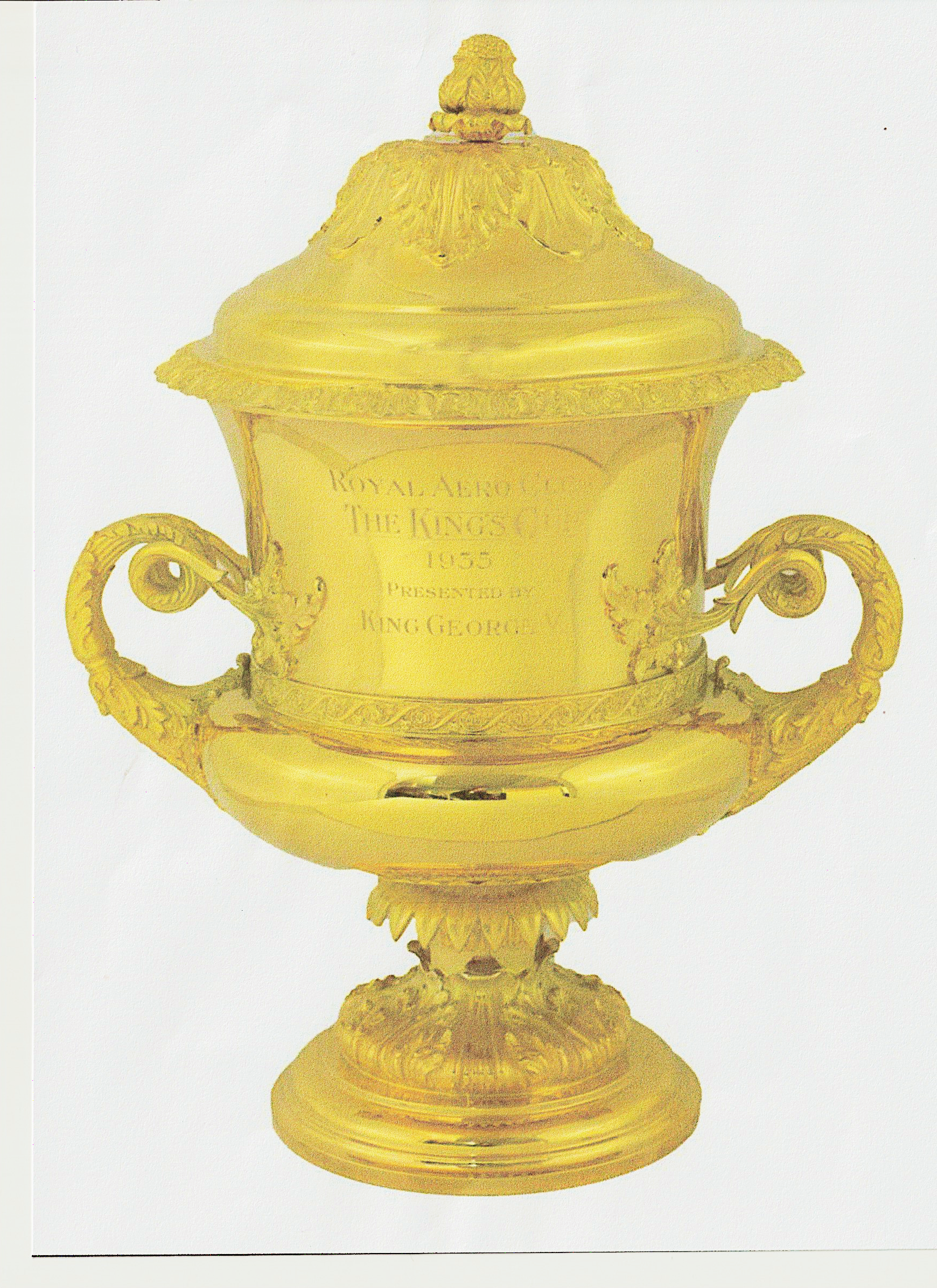
In 1935 the Royal Aero Club introduced a revised format intended to test both reliability and speed. The competition was divided into two distinct phases: a long-distance reliability and navigation trial on the first day, followed by a closed-circuit speed race on the second. This structure reflected an increasing emphasis on endurance, fuel efficiency, and disciplined operation within civil aviation.
The reliability trial took place on Friday, 6 September 1935, and consisted of a 953-mile circuit of Britain encompassing England, Scotland, Northern Ireland, and Wales. No handicaps were applied. Competitors were free to select their cruising speeds, provided they rounded the official turning points correctly and had their race cards signed at designated control aerodromes. All time spent on the ground, including refuelling and administrative delays, counted towards the total elapsed time.
Only a small number of aircraft were capable of completing the circuit without refuelling. For most competitors, efficiency during fuel stops was critical, with Renfrew, near Glasgow, serving as a principal control point. Any aircraft failing to complete the course within twelve hours of the official start time was eliminated from further competition.
Tommy Rose flew the Miles M.3B Falcon Six (registration G-ADLC), powered by a de Havilland Gipsy Six engine. The aircraft was entered by Viscountess Wakefield of Hythe, whose patronage reflected the continuing importance of private sponsorship in British air racing. The Falcon Six represented a mature stage in British light aircraft design, combining aerodynamic refinement with a powerful and reliable inline engine well suited to sustained high-speed flight.
At the conclusion of the reliability trial, the ten fastest aircraft in each of the two classes qualified for the final speed contest. No handicap allowances were applied during the qualifying phase, reinforcing the emphasis on operational performance rather than theoretical capability.
The final took place on Saturday, 7 September 1935, from Hatfield Aerodrome. Qualifying aircraft competed under estimated performance handicaps, with a minimum handicap speed of 130 mph. The course consisted of seven laps of a triangular circuit linking Hatfield, Broxbourne, and Henlow. The design of the course encouraged frequent turns and close competition, while remaining suitable for public observation.
Starting procedures were formal and clearly defined. Ten seconds before the start, the official starter raised a green flag, which was then lowered sharply to signal the commencement of the race. Each aircraft carried its allocated race number in black on a white background on both sides of the rudder, in addition to standard government registration markings on the wings and fuselage.
The finishing line at Hatfield was clearly marked by directional arrows, and competitors were required to cross it in the prescribed direction. Compliance with navigational and procedural regulations was strictly enforced, reflecting the increasingly professional nature of the event.
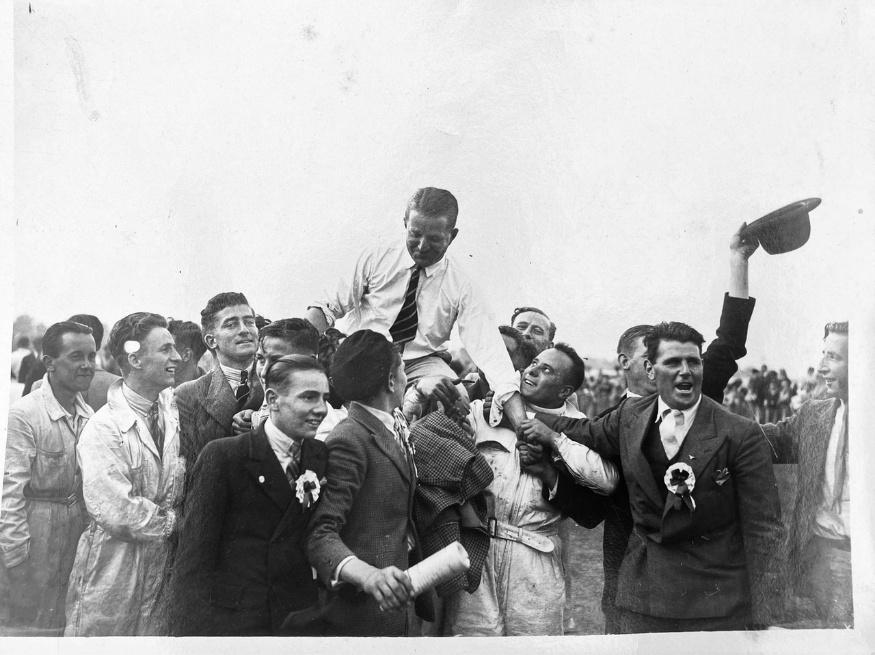
Rose completed the course at an average speed of 176.28 mph, securing outright victory in the King’s Cup Air Race. His performance demonstrated the competitive capability of the Falcon Six and confirmed the reliability of the Gipsy Six engine under sustained racing conditions. Additional prize money, including awards for performances in the elimination stages and on specific course legs, further underlined the commercial dimension of the competition.
The 1935 King’s Cup Air Race represents the mature phase of British inter-war air racing, in which competitive success was closely linked to aircraft reliability, efficiency, and disciplined operation. Tommy Rose’s victory exemplifies the integration of pilot skill, aircraft design, and sponsorship that characterised the period. The revised format adopted in 1935 also marked a transition in the role of air racing, from experimental spectacle towards a structured and technically meaningful assessment of civil aviation capability in Britain on the eve of the Second World War.
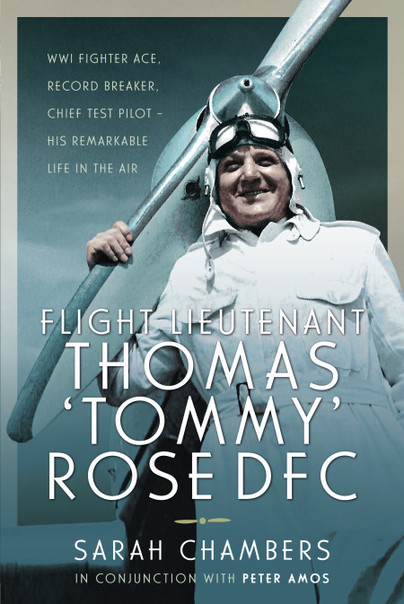 Order your copy here.