Miss Mary Eliza Porter: Pioneer of Secondary Education for Girls
Women’s History Month guest post from Gaynor Haliday.
We owe a massive thanks to various nineteenth-century women who overcame patriarchal obstacles to ensure that girls’ secondary education thrived and progressed. For me, one stands out, since she was the first head at my own secondary school.
Much has been written about Frances Mary Buss, founder of the North London Collegiate School for Girls in 1850, aged 23, and Dorothea Beale, who became Lady Principal of Cheltenham Ladies College in 1858, aged 27.
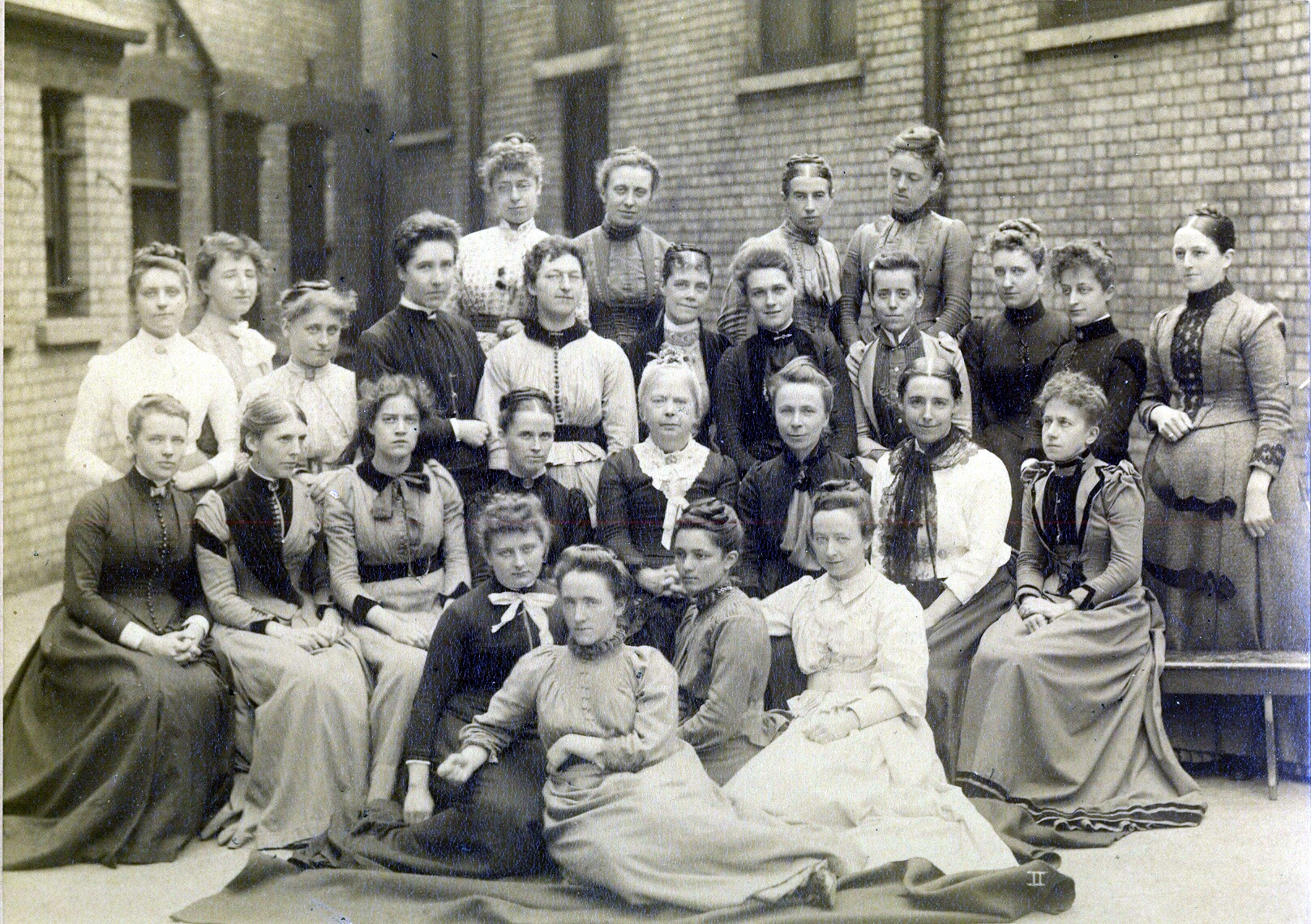
This photograph was taken in 1890 when Frances Buss (centre) was 63. Her failing health shows.
These pioneers of girls’ secondary education had both studied at Queen’s College London, the only place available for them to train for their vocation, and both stayed at the helm of their respective schools until their deaths (in 1894 and 1906 respectively).
They were so well known that there was a little ditty written about them:
Miss Buss and Miss Beale
Cupid’s darts do not feel.
How different from us,
Miss Beale and Miss Buss.
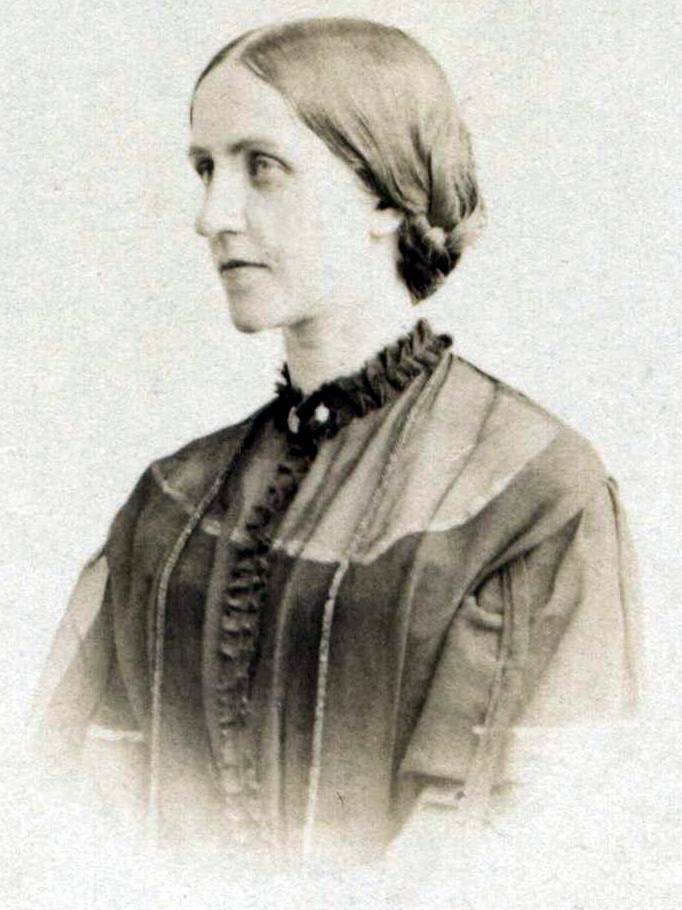
Headmistress of Cheltenham Ladies’ College from 1858 until her death in 1906, Dorothea left the school to face an operation from which she never recovered.
It is right that these two ladies are recognised for their huge contribution to the education of girls. Not only did they inspire and encourage thousands of girls to follow interesting career paths they also contributed to the future of girls’ education by giving evidence at the major royal commissions into education in the nineteenth century.
But while Miss Buss and Miss Beale were putting their lives’ work into their respective schools, another pioneer educationalist, Mary Eliza Porter, also a former student at Queen’s College, was building her career by moving from one part of the country to another, gradually gaining wider experience and skill.
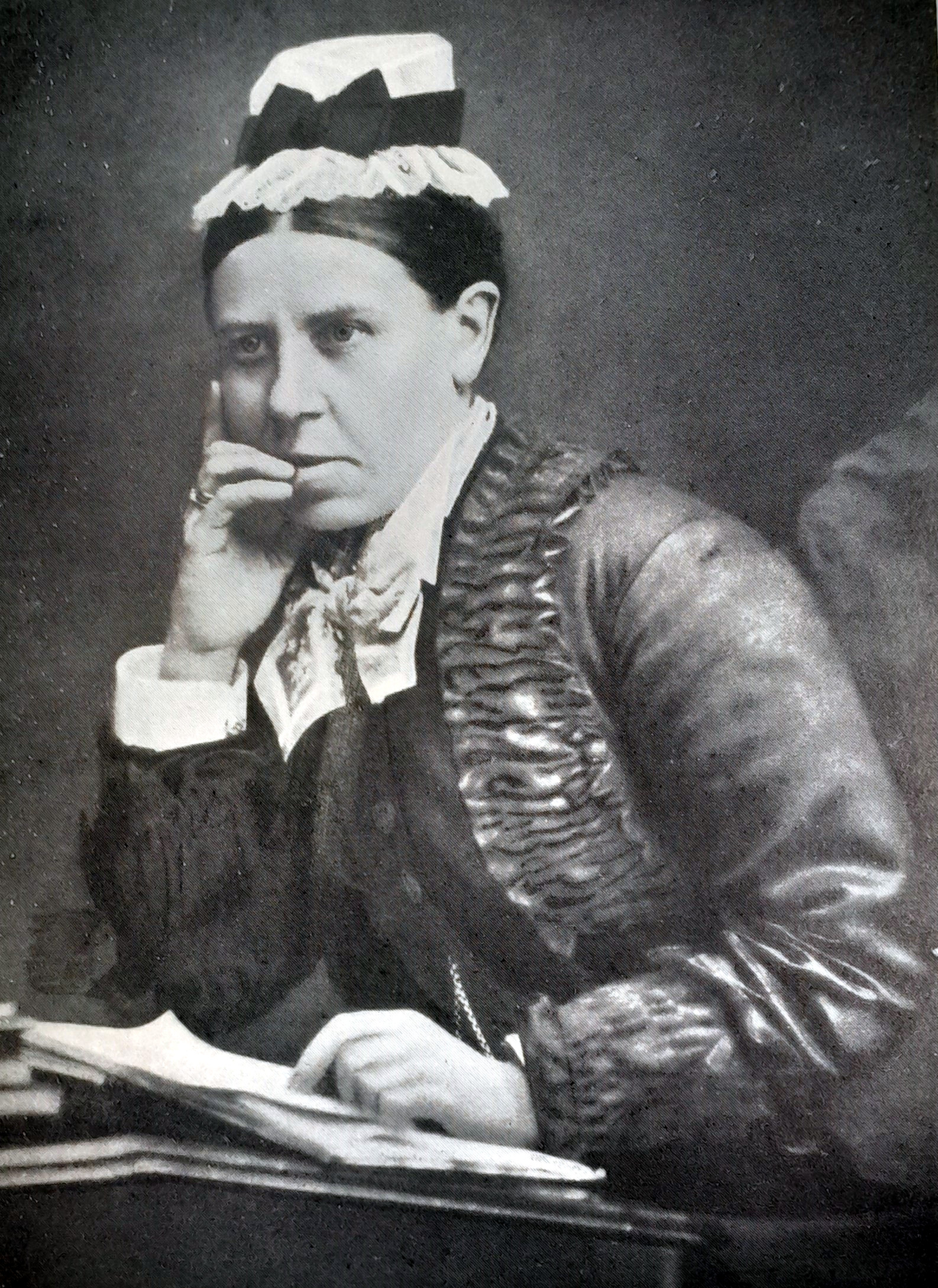
The first headmistress of the first endowed girls’ school, the first Girls’ Public Day School Company school, Bradford Girls’ Grammar School and Bedford Girls’ Modern School and founder member of the Headmistresses Association.
Her first post seems to have been at Bolham, Tiverton where, in 1861, she was head of a college where thirty-six girls were training to become governesses. On top of academic subjects, they studied the art of teaching, making Mary Porter’s school somewhat unique. Yet by the time she was asked to give evidence at the Schools’ Inquiry Commission in 1865, she already had plans to open a new girls’ school in Gateshead.
The commission resulted in the Endowed Schools Act of 1869 and, eventually, once money had been prised out of the endowments already benefiting boys’ schools for centuries, girls’ secondary schools began to come to fruition. The first one, in 1871, was in Keighley, West Yorkshire – and its first head? None other than Mary Porter. Word soon got round that she was an excellent head of start-up schools as, in January 1873, she was invited to be headmistress of the first school founded by The Girls’ Public Day School Company (GPDSC), in Chelsea. This limited liability company had been founded in 1872 by four enterprising women, Mrs Maria Grey, her sister Miss Emily Shirreff, Lady Stanley of Alderley and Miss Mary Gurney, who, sensing the wheels of girls’ education would continue to grind slowly despite the recommendations of the Endowed Schools Act, acted to expedite the process with a successful mission to establish ‘good and cheap day schools for the secondary education of girls’; within ten years, twenty-seven such schools had opened across the country.
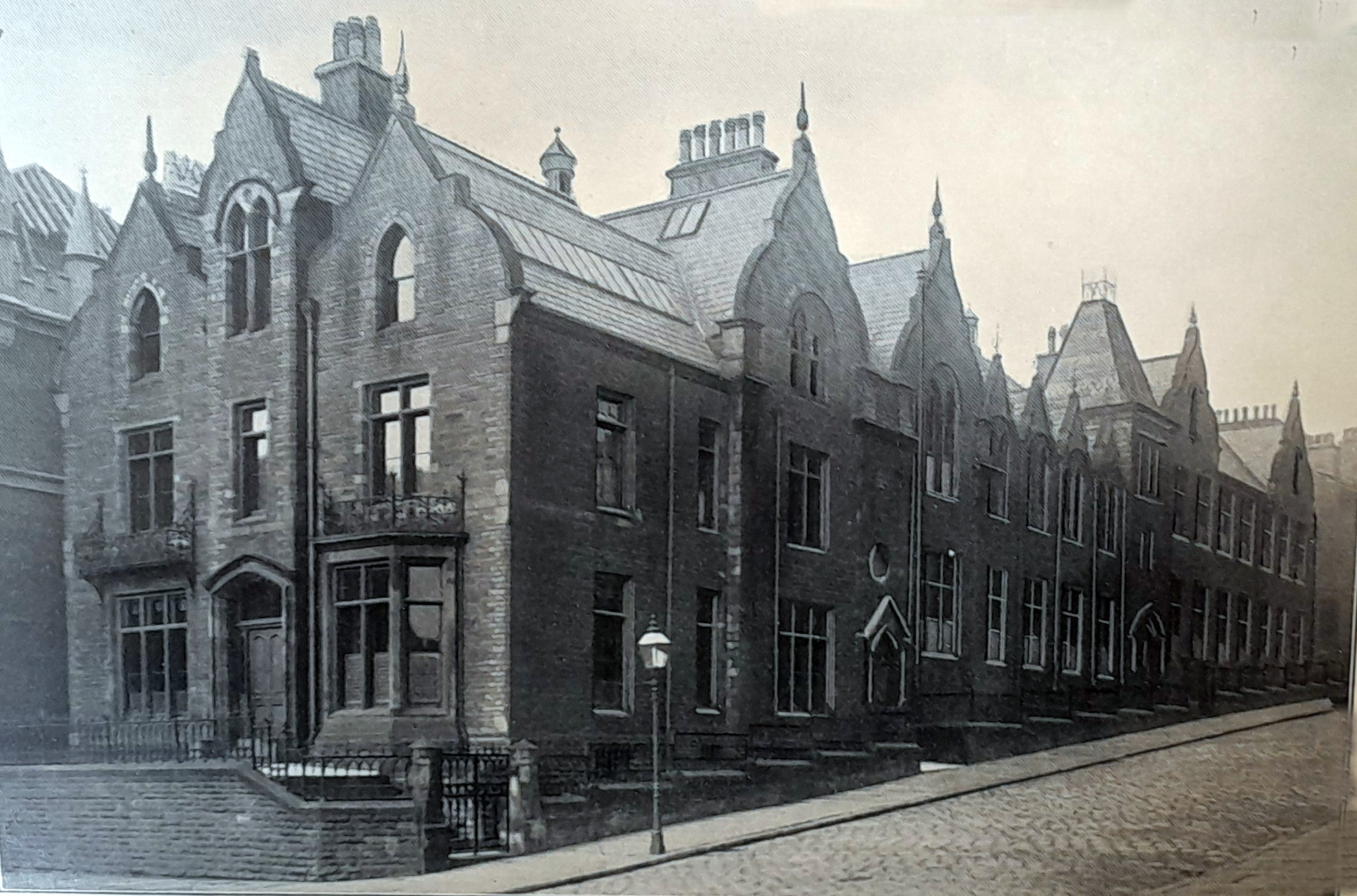
The Bradford Ladies Educational Association campaigned hard to raise £5,000 to buy this property in 1875.
Slowly, more endowed schools for girls emerged. Bradford, with its wealthy industrialists, had ambitious plans for its girls’ grammar school. Delayed due to a holdback of funds to improve standards at the boys’ grammar school, Bradford Girls’ Grammar School finally opened in September 1875. There were thirty candidates for the headmistress-ship of this first-rate school. One shone out: Mary Eliza Porter. The newspapers reported:
The Council of the Chelsea School keenly regret her loss, and they furnish brilliant testimonials, not only of Miss Porter’s enthusiasm in the work of education, but of the rare tact and ability which direct her labours. There are at present but few ladies who, however zealous in educational matters they may be, are qualified to undertake the heavy responsibilities involved in organising such a school as this in Bradford; and we feel that the Governors and the public of Bradford are alike to be congratulated in having been fortunate enough to secure the services of so distinguished a lady as Miss Porter.
All very promising. But in late 1880, local newspapers were conjecturing the reasons for her resignation after only five years. The resignation wasn’t voluntary, yet it was clear that she was respected and revered for her work by her pupils and their parents. What had gone wrong?
The younger woman appointed headmistress in Mary’s place soon ‘scandalously disgraced them, and gave such a shock to the reputation of the school that it will be viewed with suspicion’ (I cannot determine what this was!) and was dismissed after nine months. At this point, Mary Porter revealed the circumstances of her resignation in a lengthy letter to the Bradford Daily Telegraph. She had been subjected to an unpleasant campaign by some of the governors who didn’t like this strong, experienced headmistress’s decision to ask girls with headlice to stay away from school until they were clear. Were these girls the daughters of governors who took offence at the implication of being unclean, I wonder? Mary wrote: ‘the governors in question from that time became enemies, and began a system of petty persecutions, which after three years ended in my being driven from my post.’
Rather than permitting Mary, as headmistress, to be free to carry out all the internal duties of school management without interference from the governors – regulations drawn up by the Endowed Schools Act – Mary ‘was harassed by perpetual interference with the smallest details of my work. The fact too that these governors instituted the plan of having a secret minute book in which all the entries were made by one of these governors speaks for itself.’
Although their efforts to turn other teachers against her were unsuccessful, their undermining campaign continued. After the summer holidays, Mary was asked by governors to make certain alterations in the timetables, which she knew would be disadvantageous to her pupils and inconvenient to their parents. They wouldn’t heed her objections, but couldn’t even agree among themselves as to the alterations to be made. Their interference brought on a severe attack of illness, caused entirely by mental worry, and Mary was confined to her bed. At this point, the governors hastily called a special meeting and – without warning or reason – asked her to resign. To sweeten the blow, they offered her £50 ‘as a token of their goodwill’ (she refused it).
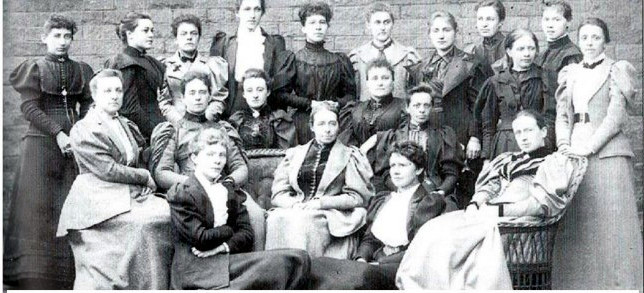
Mary Ida Stocker took over the headship at Bradford Girls’ Grammar after a scandal. Her steady leadership saw the number of pupils doubling in a decade.
It became evident that these thoroughly unpleasant governors had also taken steps to prevent her obtaining remunerative and honourable employment elsewhere, citing her frequent [career] moves as evidence that she couldn’t get on with people (when, of course, the opposite was true). Mary was invited to the headship of a private school on the Isle of Man, but the low population could not sustain the school and she was out of work again by October 1881. Happily, this was not for long as she was appointed principal at the Bedford Modern School for Girls from its opening in May 1882 until she retired in 1894 aged 58. Unlike her colleagues, Miss Buss and Miss Beale, she enjoyed ten years of retirement but was found lying on the pavement in Cadogan Square in February 1905 and died of heart failure en route to hospital.
Order your copy here.