5 Ways Medieval Nuns Misbehaved
Women’s History Month guest post from Elizabeth A Quillen.
When you think of a nun, what do you picture? Maybe you picture a young woman in her
wimple, praying the rosary or tending to her chores or quietly reading the bible. Or, perhaps, your mind flashes to an elderly nun, ruler in hand, scolding and smacking the knuckles of some inattentive or rascally student. The stereotypical image of a medieval nun is often that of a rule follower, someone devout and quiet. She might work with children in a school or tend to the ill and injured in a hospital. This was the case for many of the nuns in the medieval world, especially for those who entered their convents enthusiastically or, at least, willingly.
But what if I told you not all nuns followed the rules? Some nuns did not want to be nuns at all. For others, the convent was merely a path away from marriage or a way to pass their years as a widow. For these women, convent life was not quite the same religious routine. It was something to escape, to control, to dismantle, or to turn into a business.
Here are five ways medieval nuns bent and broke the rules of their convents.
1. Drinking on the Job
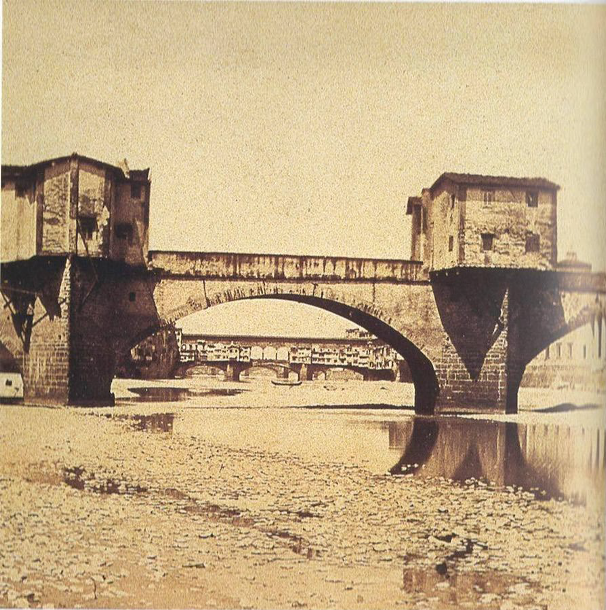
In the late fifteenth century, Le Murate, a house of nuns, was flourishing in Florence. What
had begun as a little house on a bridge over the Arno River now took up a whole city block
of interconnected buildings and gardens. The abbess, Scholastica Rondinelli (d. 1475), the
widow of a local patrician and a close friend of the de’ Medici family, had added an
apothecary, a silk workshop, a book-making workshop, and several other amenities. Rich
families, not only from Florence, but from across Europe, rushed to enter their ‘extra’
daughters into this famous and luxurious convent.
One of those daughters was Daniella Niccolini. Daniella was brought to Le Murate by her
father when she was eighteen years old. He paid the equivalent of her dowry (several
hundred florins!) and saw her settled in as the convent’s cellaress. The job of the cellaress
was to guard and maintain the inventory of the cellar. The most precious part of this
inventory was the wine. The cellaress carried the key with her at all times and she was the
only sister, besides the abbess and prioress, who was allowed to enter the cellar
unsupervised.
When Daniella first began her time in the convent, she ‘often lamented it and cried.’ But
after a little time, ‘she found some help through prayer and other means.’ Her fellow nuns
said she often visited the crucifix near the cellar stairs. Sometimes, she even stayed there
through the night and ‘Jesus’s sweet voice penetrated her viscera in a way she had never
experienced before.’
2. Dancing on Graves
The image of the strict older nun is not completely inaccurate and does not have its origins in modern Catholic schools. Toward the end of the seventh century, at a monastery in England, there was a prioress with a ‘zeal for discipline’ who rejected all criticism of her teaching and leadership. When she died, the abbess had her buried and a small tomb was constructed around her grave.
‘But this did not appease the feelings of the young nuns who hated her, and as soon as they saw the place where she was buried they reviled her cruelty and even climbed on to her tomb, as if to stamp upon her corpse, uttering bitter curses over her dead body to assuage their outraged feelings.’
When the abbess heard about this and saw the damage done to the fresh grave, she gathered the whole convent for a scolding. The young nuns confessed. As a punishment, they had to fast for three days and pray for the dead nun’s soul.
3. Escaping
One of the most serious rules for medieval nuns was enclosure. Once they had made their vows, they were not supposed to leave the confines of their convent ever again. However, this was also one of the most frequently broken rules. Nuns left their convents for several reasons: illness or death in their family, missionary work, visiting court, pilgrimages. Male clergy did a lot of hand-wringing and scolding over this, but with limited effect. Escapee and wandering nuns are all over the place in medieval chronicles, letters, charters, and satire.
So, sometimes nuns left their convents with their abbess’s permission. Other times, nuns left their convents in the dead of night, repelling down the walls with a rope made of bed sheets. And on a very rare occasion, nuns marched out the front door of their convent, trampling their bishop underfoot. This was the case in Poitiers in 589.
At the Abbey of Sainte-Croix, an illegitimate princess, Clothild, and her cousin, Basina, were furious over the results of a recent election for the abbess. Clothild had lost by a landslide to a woman named Leubovera. So, she and forty other nuns marched sixty kilometers to Tours to complain. There, they spent the summer waiting to hear from the king, one of Clothild’s and Basina’s uncles. While they waited, some of the nuns went home and others got married. In the end, Clothild led her nuns back to Poitiers to lay siege to the convent with the help of some locals.
4. Not Taking Formal Vows
Not all female religious lived in convents. Some, like the beguines, traveled from town to town or lived together in small, informal houses. Oftentimes, these houses were attached to workshops where the beguines would weave, make lace and hats, or copy books. They did not need to take any formal vows, could leave their houses whenever they pleased, and even give up the beguine lifestyle to get married.
If you’re thinking, ‘Wait, doesn’t that mean they weren’t nuns?’ Well, that was the exact criticism levelled at them by their contemporaries. Some of them, at least. Some clergymen, like Robert of Sorbon (yes, that Sorbonne), thought the beguines might even be more devout and holy than your typical nun. He argued that their ability to live in the world and avoid temptation was a pious example for everyone.
However, the beguine movement did not last. Over the course of the fourteenth century, most of the beguine houses were investigated for impropriety. Though most of them were found to be just as pious as the traditional convents, they were still ultimately required to take vows in a recognised religious order. This was, in part, a consequence of the actions of one rejected beguine, Marguerite Porete.
5. Writing Heretical Books
Marguerite Porete is a bit of a mystery. She appeared in the historical record at the beginning of the fourteenth century in legal documents summarizing her trial for heresy. Marguerite had written and produced several copies of a religious book, The Mirror of Simple Souls. Though a few clergymen, including a master at the University of Paris, had read and approved her work, the archbishop of Paris did not agree.
Marguerite had been scolded once before in a small town to the east of Paris. A copy of her book had been seized and burned. She persevered and made several more copies with an extended final chapter that attempted to explain herself in simpler terms. Marguerite wrote intensely, and sometimes confusingly, about the love of God. In The Mirror of Simple Souls, Marguerite described a sort of ecstatic transcendence where the soul is briefly reunited with the divine oneness that is God. In her own words, when this transcendence, which was always heartbreakingly temporary,
‘This Soul has no thought nor word nor work except the practice of the grace of the divine Trinity. This Soul has no anxiety about sin which she might have ever committed, nor about suffering which God might have suffered for her, nor about the sins or anxiety in which her neighbors remain… For her thought is at rest in a peaceful place, that is, in the Trinity… From this place, no one falls into sin, and any sin which was ever done… is as displeasing to her will as it is to God’s.’
In other words, a soul completely and truly dedicated to the love of God has no will to sin; virtue and piety become as natural as breathing. The Church’s response to this message, which undermined the role of the sacraments and priests, was to denounce Marguerite as insane, to label her a heretic, and to have her and her book destroyed. After a year of imprisonment, during which Marguerite refused to speak, she was burned at the stake in front of what is now the Hotel de Ville in Paris. She was the first person to be burned inside the city walls and the first ‘heretic’ to be burned alongside their books.

……………………………………………………………….
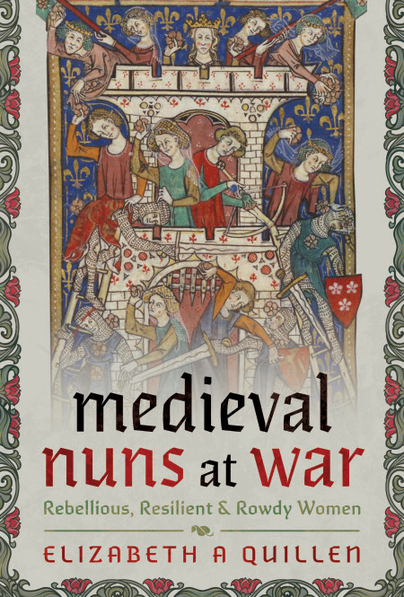
Order your copy here.