Five Things You Might Not Know About Harald Hardrada
Author guest post from James Turner.
5. He was only fourteen at the time of his first battle
Born in late 1015 or early 1016, Harald, not yet known to history as Hardrada, grew up in a world defined by the ongoing struggle for supremacy between rival Norwegian families and their Danish overlord. He was the son of a local Jarl, or petty king, Sigurd Syr and his wife Åsta Gudbrandsdatter. Sigurd Åsta had previously been married to Harald Grenske, a union which produced a son, Harald’s half-brother Olaf.
Olaf, still venerated to this day as St Olaf, claimed descent through his father from the legendary Norwegian King Harald Finehair. With the support of a coalition of local Jarls, Olaf declared himself King of Norway in 1015. Despite his early successes, Olaf was eventually defeated and driven into exile by King Cnut the Great of Denmark in 1028. When Olaf made his dramatic return to Norway in 1030, he was met by his fourteen-year-old half-brother, Harald, who had gathered a modest army of 600 men from the family’s power base in the Uplands.
Unfortunately for Harald and Olaf, the Battle of Stiklestad, fought against a coalition of dissident Norwegian nobles proved to be a complete disaster with Olaf being killed during the fighting. The teenage Harald was wounded and forced to flee, leading a small band of surviving supporters into exile in Kyiv.
4. He was a giant.
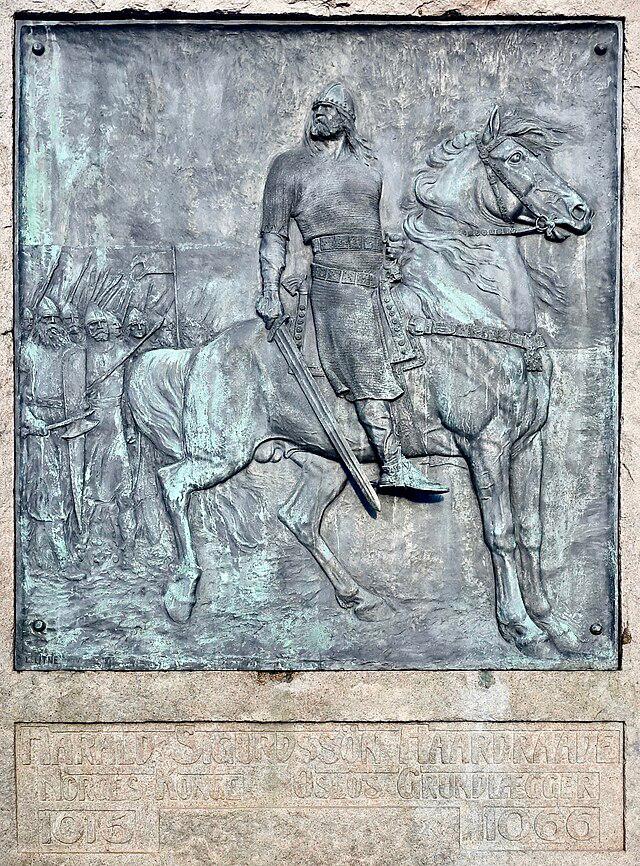
Well maybe. According to Snorri Sturluson the poet and author of the thirteenth century Icelandic saga the Heimskringla, Harald was five ells tall. That would make him seven feet and six inches or two hundred and twenty-eight centimetres tall. Other sources comment upon Harald’s great height but not excessively so.
Snorri was, of course, writing several centuries after the death of his subject. Maybe unknown to him the length of the ell changed overtime, and that the eleventh century Norwegian ell was substantially shorter than that used in thirteenth century Iceland?
Most likely Snorri’s account of Harald’s height was probably a mere heroic exaggeration meant to recast his protagonist as a literally larger than life figure. The conventions of the genre meant that contemporary audiences would have known to take any figures with a pinch of salt and that Snorri’s claim about Harald’s height could simply be taken as shorthand for very tall indeed.
Snorri also tells us that Harald was a handsome man of noble bearing with a fine head of blonde hair and a carefully tended beard and moustache. One of his eyebrows naturally rested slightly higher than its counterpart, giving him something of a roguish air.
3. Harald fought alongside and against Norman knights
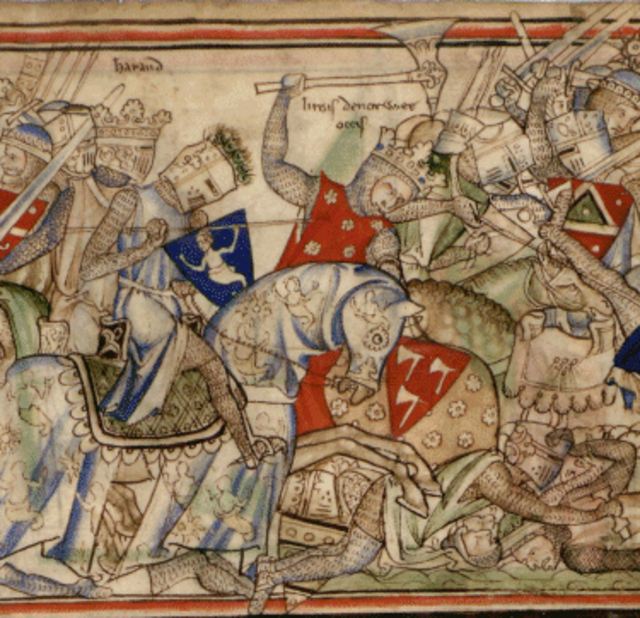
Harald Hardrada is probably best remembered within anglophone history as a runner up in the scramble for England in 1066. He was killed and his invasion of England halted by King Harold Godwinson at the Battle of Stamford Bridge. However, Harald was not the only would be conqueror of England and Godwinson had to rush back to the south of England to confront the forces of Duke William of Normandy. Had Harald been captured rather than killed, he probably could have given his erstwhile opponent some good advice, having as he did a great deal of firsthand experience with Norman cavalry.
Harald had fled to the court of Yaroslav the Wise of Kyiv Rus’ as a teenager in 1030. In 1034, Harald left at the head of a warband of five hundred Scandinavian warriors to seek employment with the Eastern Roman Empire, quickly establishing himself as a commander within the legendary Varangian Guard. During the Byzantine invasion of Sicily, Harald and his warriors served alongside another contingent of elite mercenaries, Norman knights under the leadership of William de Hauteville, who gained the nickname Iron Arm during the campaign.
In 1040, the Norman mercenaries operating in southern Italy, encouraged their Lombard employers to rebel against Byzantine overlordship, using the chaos unleashed to secure their hold on the region. Harald served as a commander in the Byzantine army sent to put down the rebellion where he and his Varangian shock troops were twice bested by their former allies.
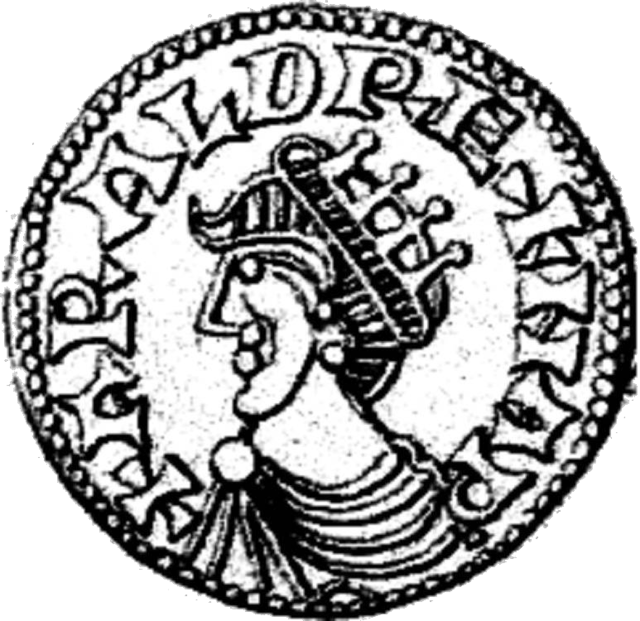
2. Harald initially ruled as co-king alongside his nephew Magnus the Good
When Harald’s half-brother Olaf II made his ill-fated return to Norway in 1030, he left his wife, daughter, son and mistress behind in Kyiv for their own safety. Magnus was the son of Olaf and one of his household slaves, an Englishwoman of possible royal descent, named Alfhild, who served his wife Queen Astrid as a handmaiden. Illegitimacy was not yet the ironclad bar to inheritance that it would become in the next century.
Following the death of Cnut the Great of Denmark in 1035, Magnus, then elven years old, was approached by an alliance of powerful Norwegian aristocrats, including many of his father’s former enemies. This group proclaimed Magnus as King of Norway, using the young man as figurehead to rally support for their war to drive out Cnut’s heirs. By 1042 this alliance had decisively secured control of Norway and a now adult Magnus was eagerly spearheading the counter invasion of Denmark.
In 1043, Harald having left Byzantine Service with his military talents honed and in possession of a vast fortune in looted treasure, made his own play for the throne of Norway. If Harald was surprised to learn that his nephew, not their family’s traditional enemies now sat on the throne of Norway, he did not hesitate long. Forming an alliance with the King of Sweden and Magnus’ remaining Danish enemies, Harald began raiding and harassing his nephew’s forces at every turn.
By 1046, Mangus had had enough and offered to share the kingship with Harald. Magnus retained seniority and gained access to a share of Harald’s treasure hoard but in practice the two kings operated separate courts and avoided one another. Magnus died suddenly the next year in rather murky circumstances. Over the next few years, the former king’s leading supporters fell foul of Harald and were eliminated one by one.
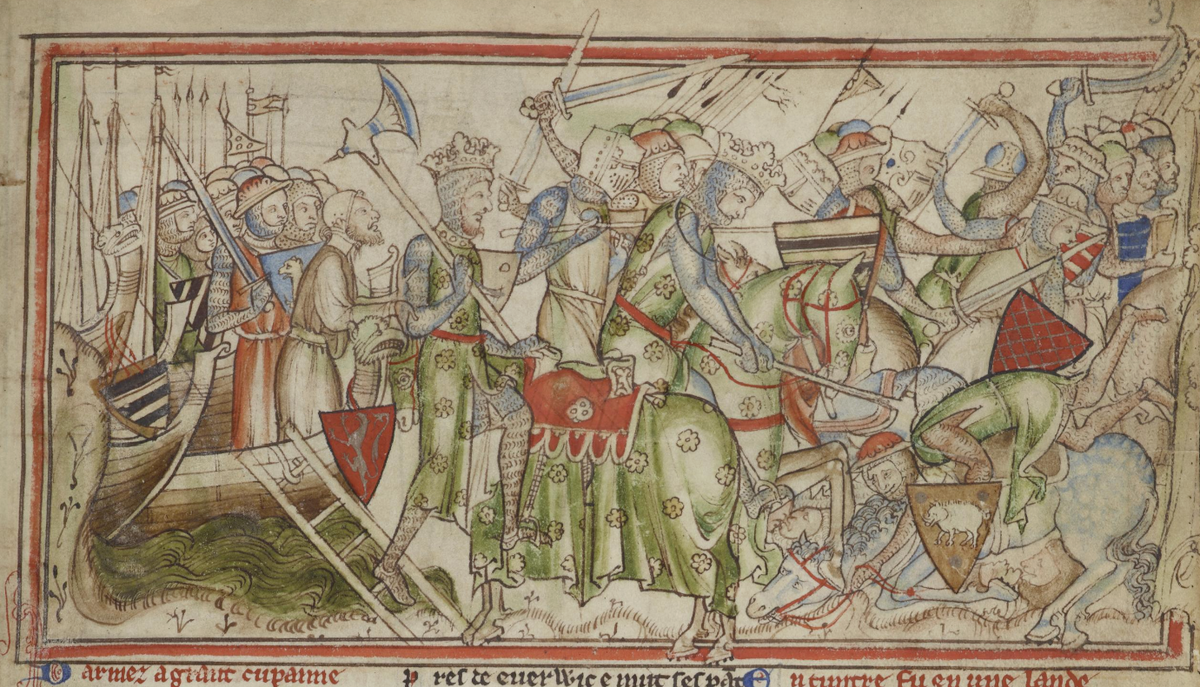
1. Harald owned a magic banner named Land-Waster
According to Snorri Sturluson and the Heimskringla, Harald’s battle standard was called Land-Waster and the mercenary commander turned King was insistent that it had magical properties. Indeed, according to Snorri, Harald’s bitter falling out with his former ally, Prince Sweyn of Denmark, was partially the result of an argument regarding Harald’s claims about the standards magical properties.
Sweyn had become so enraged and incensed by Harald’s intransigence on the matter that the two exchanged increasingly personal insults. That night, Sweyn snuck into Harald’s room and buried his axe into his slumbering form. However, suspecting such treachery, Harald had placed a tree stump in his bed, covering it with sheets, catching Sweyn red-handed.
It is certainly easy to see why Harald may have come to believe that either the standard or himself had some sort of supernatural properties. During his time as a mercenary, he fought for the Rus’ against the Poles, the Byzantines against pirates, Fatimids, Zirids, Lombards and Bulgarians. He then fought the armies of his nephew Magnus the Good to a bloody stalemate, ravaged Denmark and fought countless small wars against rebellious Norwegian nobles, binding his new kingdom together more tightly than ever before. Perhaps then Land-Waster was just having an off day at Stamford Bridge?
Order your copy here.