The arch of…?
Author guest post from Simon Turney.
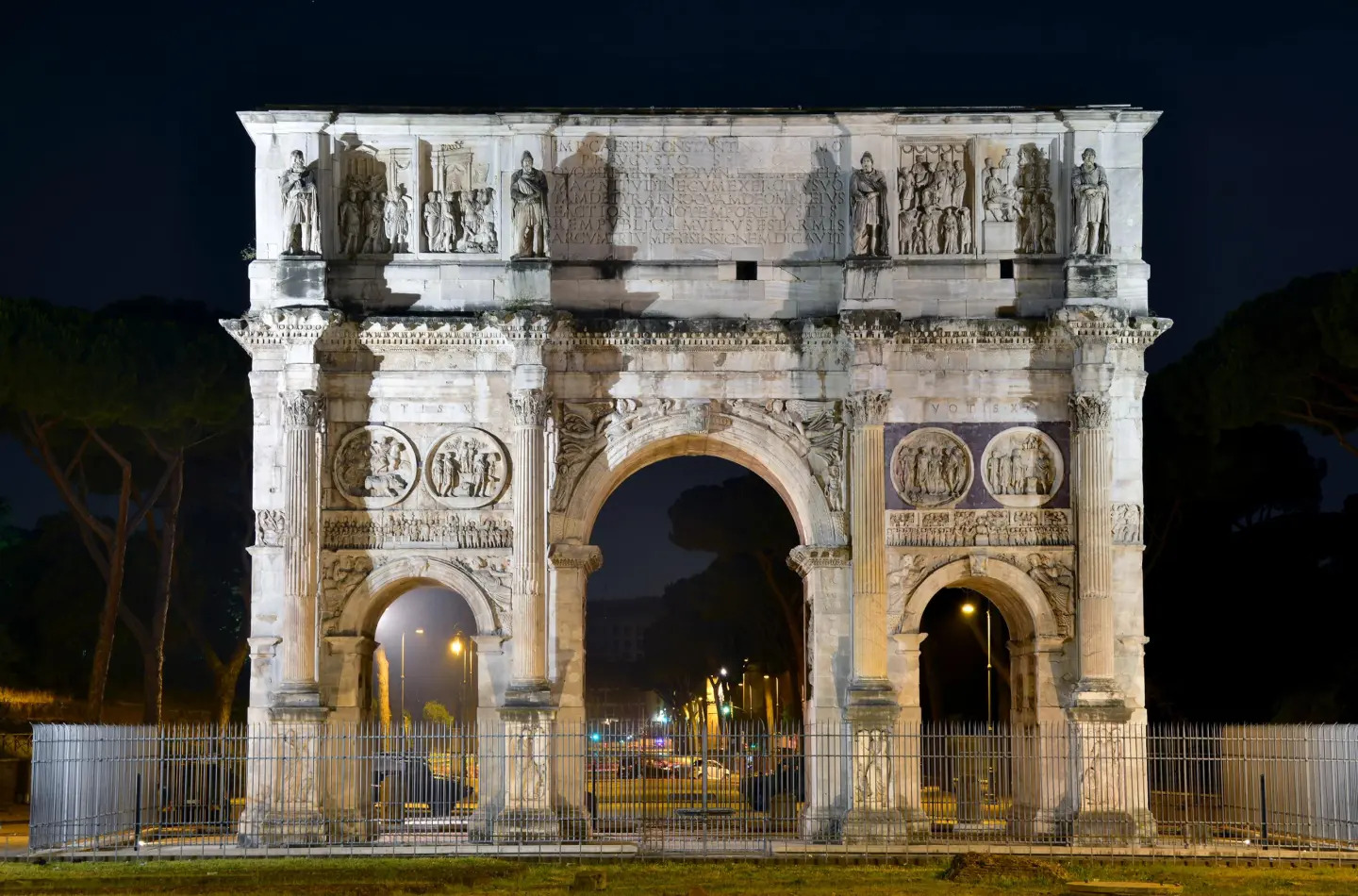
One of Rome’s most well-known and memorable sights stands close to the Colosseum. The Arch of Constantine has drawn visitors for centuries. Since the days of ancient Rome it has stood and been understood as a celebration of victory for the ‘first Christian emperor.’ Of course, we know now that Constantine was far from that, if he ever was Christian at all. Certainly he would not be the first. But interestingly, there is also the intriguing possibility that this monument is no more what it is purported to be than the man for whom it is named.
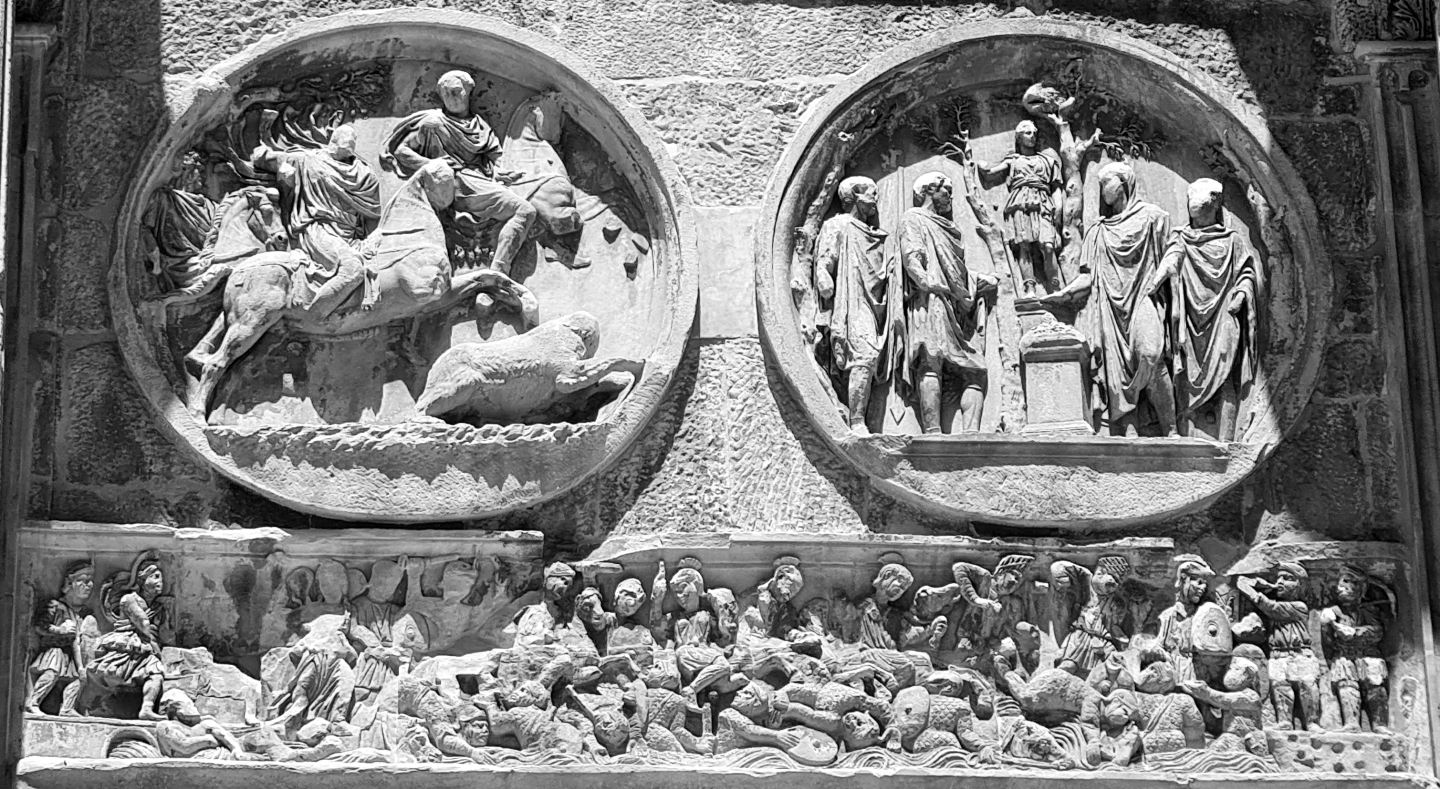
The arch is generally regarded to have been constructed in the aftermath of the events of AD 312 and dedicated in 315. It theoretically celebrates the victory of Constantine over Maxentius at the Milvian Bridge in the north of Rome. It is unique among the surviving triupmhal arches of Rome in that all others were entirely constructed and decorated for the purpose, while this particular arch was cobbled together in a short period from pieces of older monuments, with just a few new additions. This makes sense if one considers its hasty construction following the battle. It is known to bear rondels from a monument of Hadrian, showing hunting scenes, reliefs from an arch of Marcus Aurelius, Dacian statues from Trajan’s forum, as well as undoubtedly other fragments. Only a few images on the arch can be reasonably claimed to represent Constantine or his events. Indeed, even the frieze purported to represent Constantine at the Milvian Bridge has been suggested to come from an earlier arch of Diocletian, representing that emperor at the Battle of the Margus.
There are more than one theory that contradicts this traditional view. Some suggest the arch was originally Hadrian’s, reworked after the Milvian Bridge. Some believe that the arch originally dates from Domitian, and that its reuse was acceptable given his damned status. For our purposes, I will explore one other possibility.
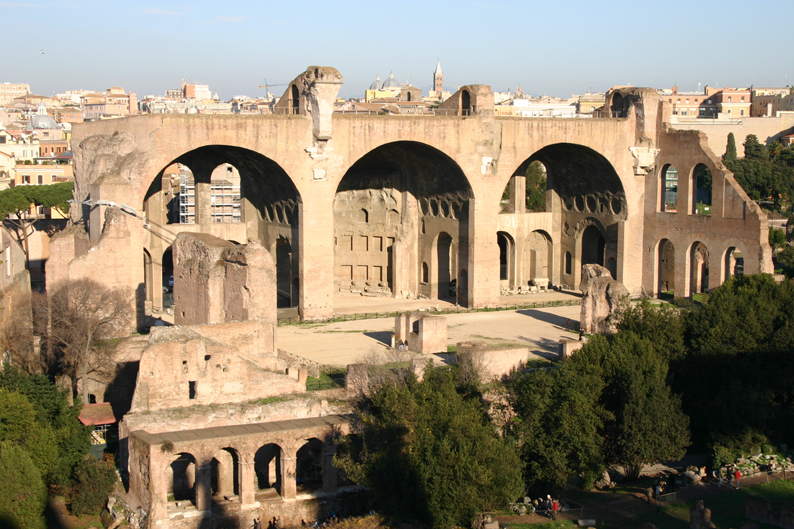
It is possible that the arch was originally begun by Maxentius, and then finished by Constantine. There is ample evidence of this happening with numerous other buildings in Rome. The Basilica Nova and the Temple of Divus Romulus in the forum, and the baths of Constantine on the Quirinal are all either confirmed or strongly believed to have been begun by the one emperor and finished by the other, and thus the same process being applied to the arch is surprisingly valid.
What could Maxentius have been celebrating to have a victory arch raised? It is unlikely he would consider raising an arch to celebrate his two victories over other Roman emperors, for to do so would be contrary to his policy of of emphasising his Romanitas. His defeat of his own father during his attempt at usurpation, however, or his reclaiming Africa from the usurping governor Alexander would both be quite reasaonable and acceptable causes for such celebration. We might perhaps then consider that the arch was begun around AD 309 by the senate, celebrating their emperor’s achievements, only to be suborned by Constantine three years later, before its completion, and altered to celebrate the victory over its original designer.
Alright then, there is as much reason to accept this as there is any other story. But given the longstanding connection of the arch with Constantine and his victory, what evidence do we have to suggest a Maxentian origin? Well, sadly, there is no actual evidence. What there is is one very tempting theory. The is sufficient evidence that the nearby colossus (which had variously portayed Nero, Sol, and Commodus to name but three) was reworked under Maxentius to portray his son. If you want details on that, you’ll have to read my new book. Hadrian also had the statue renovated, and the suggestion is that the eight Hadrianic hunting tondos were attached to the colossus then, and that they were removed during Maxentius’s own changes to the statue. That would leave eight great works untouched, and he could then use them to attach to his new arch, close by.
History presents us eternally with unsolvable questions, and the origin of the arch will probably never be known, but it remains one of the many potentially Maxentian monuments in Rome. Look out for my forthcoming biography of Rome’s most maligned emperor, coming on March 30th…
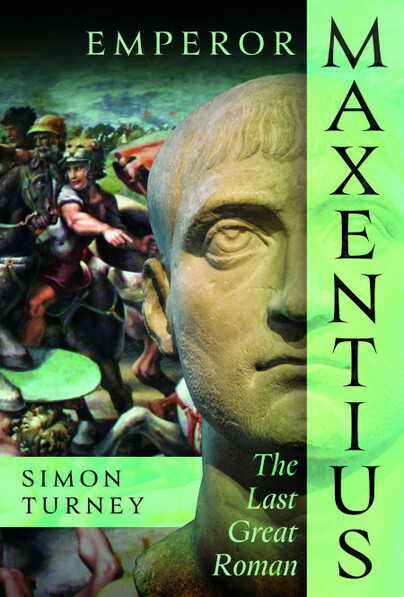
Order your copy here.