Rambo: the Billion Dollar Franchise that Nearly Wasn’t
Author guest post from Joseph Houlihan.
News that a Rambo prequel has started production marks a new frontier for a franchise estimated to have already generated more than a billion dollars.
Sylvester Stallone first appeared as the bandana-clad army veteran with a grudge against officialdom and a knack for destruction in First Blood, 1982. The film was a hit and spawned four sequels all starring Stallone, the last in 2019.
The sequels are generally written off as gratuitous schlock, but the original movie’s reputation has grown over time (it has 86% approval from both reviewers and audiences on the Rotten Tomatoes film review site). Many critics view it as a valuable portrayal of the trauma faced by US veterans of the Vietnam War when forced to readjust to normal life.
As Rambo says in the climactic scene in First Blood: ‘Back there I could fly a gunship. I could drive a tank. I was in charge of million dollar equipment. Back here I can’t even hold a job parking cars.’
With Stallone turning 80 this year, another sequel was out of the question, but Hollywood hates to give up on a successful franchise so a prequel was perhaps inevitable.
‘John Rambo’ will be directed by Jalmari Helander, the Finn who earned plaudits for his 2022 Second World War film Sisu. Noah Centineo, best known for a string of romantic comedies on Netflix, will play the young Rambo in a story centred on Rambo’s experiences in Vietnam, including as a prisoner of war.
However, there would be no spin-off movies at all if the original creative vision for First Blood had prevailed.
The film was based on a 1972 novel of the same name by Canadian-American writer David Morrell. In the story Rambo is roughed up and mistreated by small-town cops who take him to be a vagrant. He flips out, wreaks revenge on the officers and takes to the hills, where he is hunted by police and national guardsmen. He uses his elite military skills to evade capture and turns the tables on his pursuers. In the end he is killed by the Special Forces officer who trained him, apparently on the principle that the only thing you can do with a mad dog is put it down.
When the film version was under way in the Fraser Valley in British Columbia, Canada, there was heated debate about whether to follow the plot of the novel or have Rambo come out alive. Stallone was the main advocate for providing a redemption arc for his character and having him survive.
In an interview promoting the film the actor said: ‘He went in there as a normal American soldier and was trained to be a killing machine, then he was released on the streets and the only thing he really knew how to do was to commit acts of war, so whose fault is that? I felt “how does a man like that express himself? When he can’t do it verbally, he must do it through the way the country taught him to, to be a violent machine.” But he holds back. He’s violent against inanimate objects as a rule. He does fight back against other men but he doesn’t kill anyone, he stops short of that. He keeps trying to escape, he is the hunted not the hunter.’
The difference of opinion led to a furious argument with the veteran actor and movie legend Kirk Douglas, who’d been cast to play Rambo’s Special Forces boss, Colonel Trautman. When Stallone stuck to his guns, Douglas walked off the set and flew home. Richard Crenna was hastily drafted in to take the part of Trautman.
Even so, the producers hedged their bets and shot two endings: one where Rambo survives and one where he dies. In a departure from the novel, the second version had Rambo, in his anguish, snatching a weapon from Trautman and shooting himself.
This second, more depressing ending was chosen when a preview screening was held to test audience reaction. At first the producers were encouraged by the positive vibe throughout the screening, until the final scene when Rambo kills himself. At that moment the emotional energy in the room evaporated and, as the credits rolled, one audience member stood up and yelled: ‘If this director is in the audience he should be strung up from the nearest lamppost.’ Director Ted Kotcheff kept his head down.
After a panicked re-think, the film was edited to include the more upbeat ending in which Rambo survives and went on to be a box office smash, topping the charts for three weeks and eventually making $125 million on a $15 million budget.
There was an amusing encounter some years (and two sequels) later when Stallone bumped into Kirk Douglas at an industry event. Douglas told him: ‘If you listened to me you would have been politically and artistically correct, but you would have been a lot poorer.’
‘John Rambo’ is scheduled to start filming in Thailand in the first half of this year. If it turns out to be commercially successful, we can expect the franchise that almost wasn’t to run for many years to come.
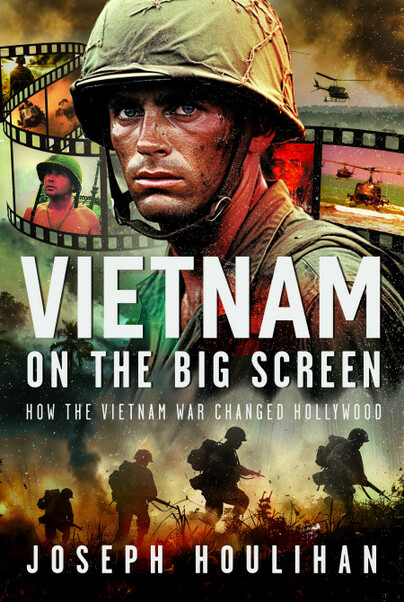
Order your copy here.