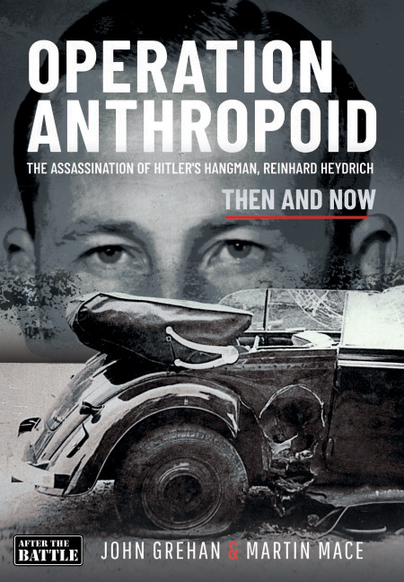
OPERATION ANTHROPOID: The Assassination of Hitler’s Hangman, Reinhard Heydrich
As part of the research for a book on Operation Anthropoid – soon to be published by After the Battle – Martin Mace was able to visit the city and streets where the daring mission took place in 1942.
We were standing outside the Saints Cyril and Methodius Cathedral. To be honest, for a cathedral it was not an overtly imposing building, yet it is one of the most visited sites in the city. On one façade, brickwork around a narrow, rectangular air vent shows signs of considerable damage. But this is not through neglect, it is through reverence. For the damage was caused by gunfire, the building witnessing the final acts in one of the most daring missions of the Second World War.
The city is Prague. In December 1942 two members of the Czech Army in exile in the UK, were parachuted back into the German-controlled Protectorate of Bohemia and Moravia region of Czechoslovakia. Trained by the British Special Operations Executive (SOE), Jozef Gabčík and Jan Kubiš had one objective – to assassinate SS-Obergruppenführer und General der Polizei, Richard Heydrich, the man considered to be the architect of the Holocaust.
As de facto ‘Protector’ of Bohemia and Moravia, Heydrich had unlimited power and had used it to all-but wipe out opposition to German rule throughout Czechoslovakia. Yet, when Gabčík and Kubiš landed in the snow at the end of 1941, courageous people took them into their homes and sheltered the two would-be assassins, knowing that if the Germans found out, sadistic torture and a horrible death would be their inevitable fate – not just for them but for their family, friends and associates. The risks they took were too terrifying to contemplate.
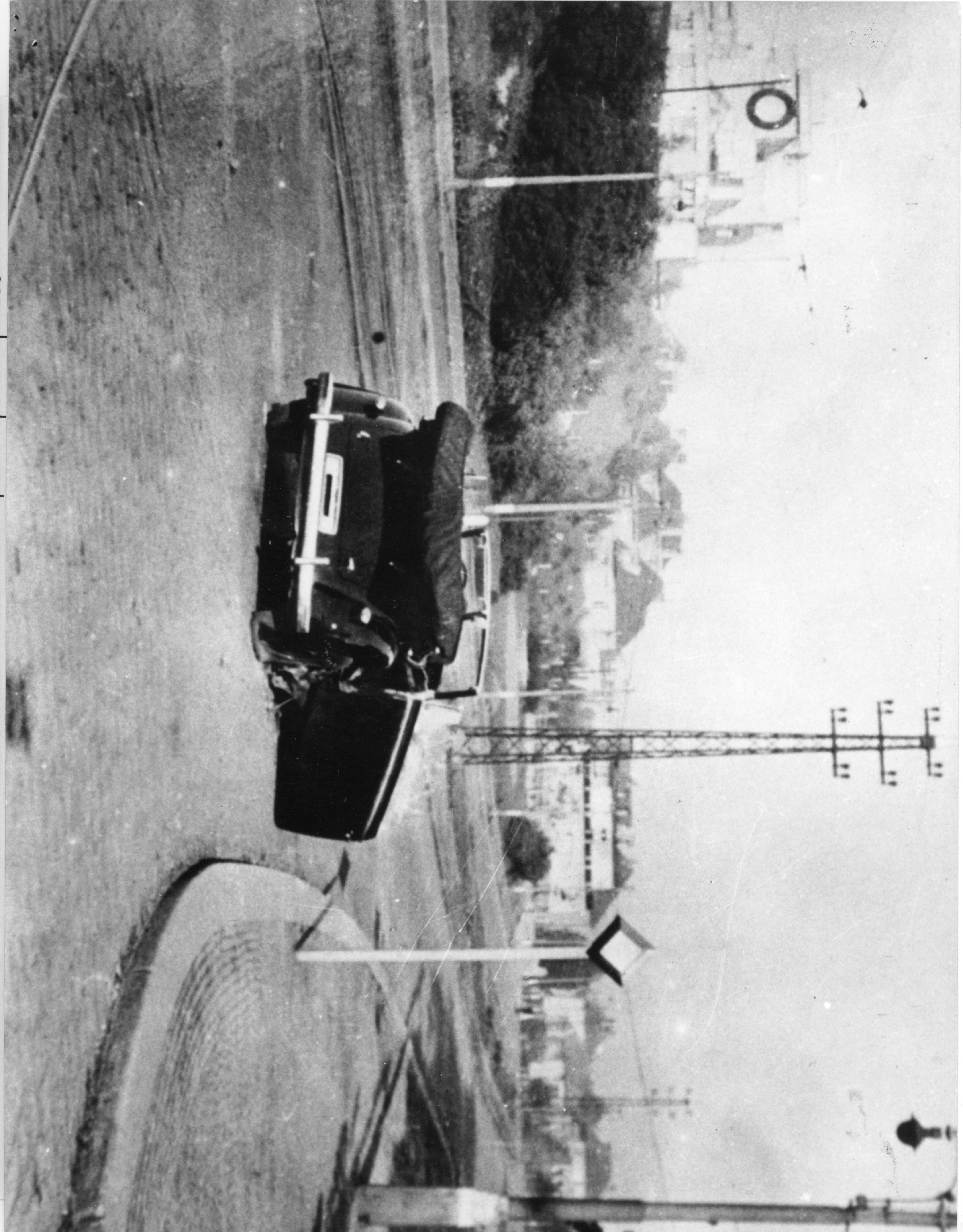
Despite all this, following much careful planning for what was called Operation Anthropoid, five months after landing in Bohemia, Gabčík and Kubiš, believed they were ready to mount the most daring of assassination attempts. They had spent their time in Prague studying Heydrich’s movements and they knew as he was driven into Prague each day in his open-top Mercedes, his driver had to slow down at a hairpin bend in one of the roads which took Heydrich to his office in Prague Castle.
With the support of another Czech soldier who had also been parachuted into the country, the assassins waited nervously on the morning of 27 May 1942 for the dark green Mercedes to appear. Heydrich was usually very punctual. But this day he was around half-an-hour late. The anxiety mounted at the bend. Had the Germans discovered their plot? Would a truck full of troops suddenly appear? Eventually, Gabčík’s and Kubiš’ fellow plotter flashed the warning signal, and moments later, the car appeared.
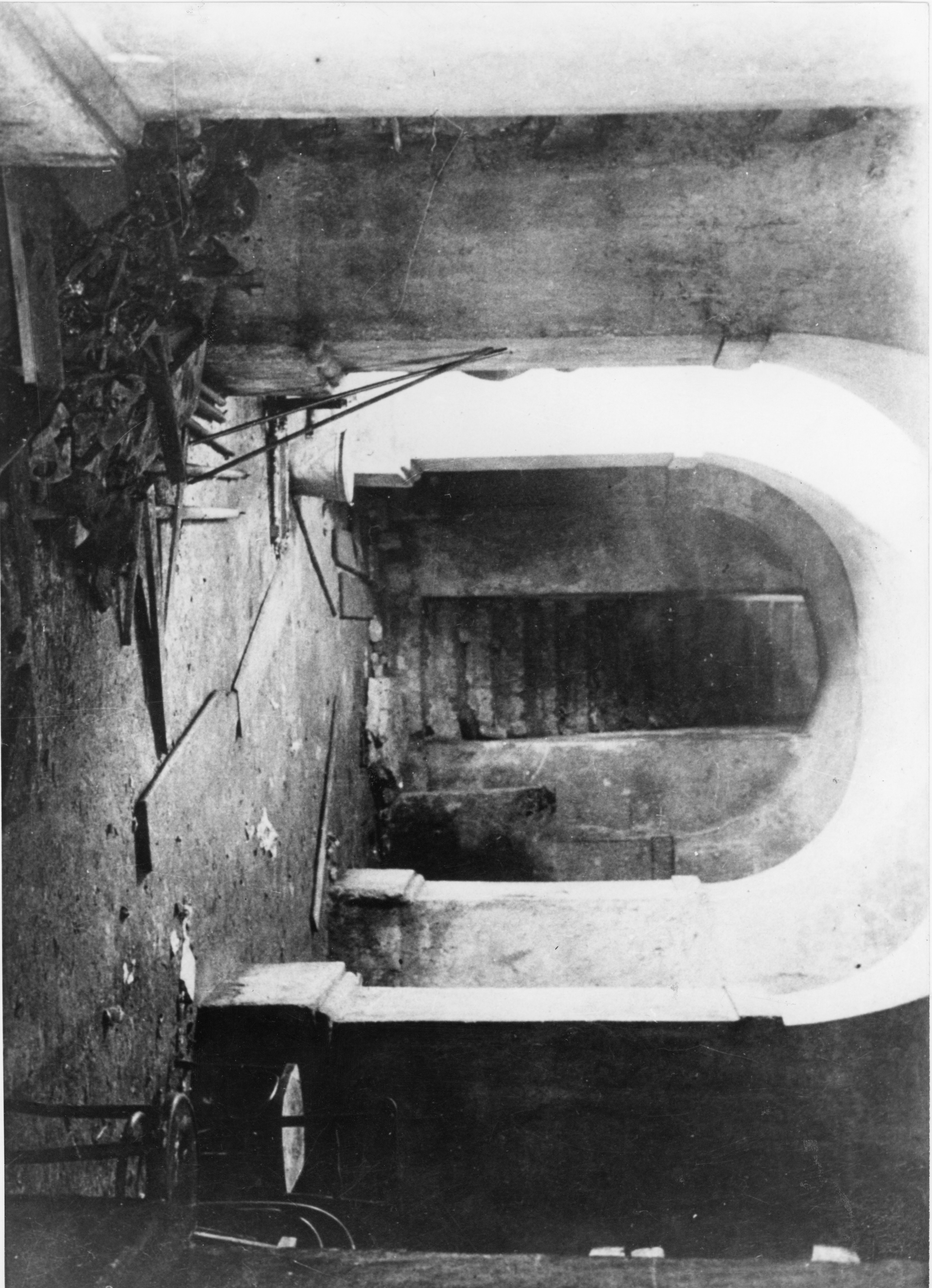
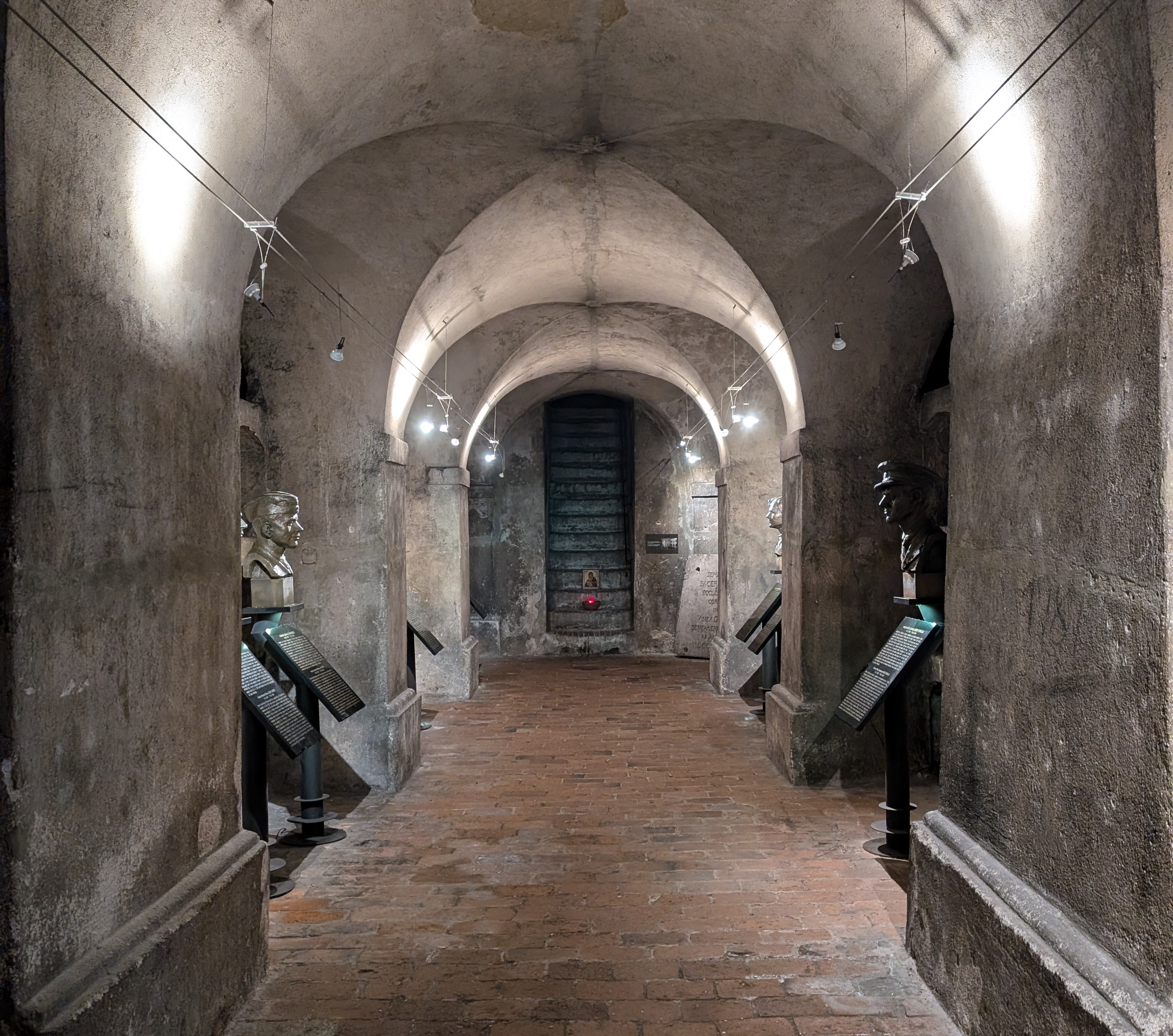
Gabčík pulled a concealed Sten gun from under his raincoat and aimed at Heydrich. Just feet away, he couldn’t miss. But the gun jammed. Instead of telling his driver to accelerate away from the danger, Heydrich pulled out his Luger pistol and ordered him to stop. It would prove a fatal mistake, for it gave Kubiš the chance to hurl a grenade into the open car. The explosion severely wounded Heydrich. In a confused melee the assassins were able to make their escape.
Heydrich died of his wounds a week later. But already a massive manhunt had seen arrests and reprisals, the most egregious of which was the complete destruction of the village of Lidice and the execution of all its adult male inhabitants.
As those who had helped the assassins were tracked down, Gabčík, Kubiš and five others who had been parachuted into the country, found refuge in the Saints Cyril and Methodius Cathedral. But their hiding place was eventually revealed to the Germans and the building was besieged.
A prolonged and bitter battle took place, that bullet damage around the air vent the enduring memorial to the courage of the men inside. They, of course, stood no chance of survival and they died in the crypt below the air vent.
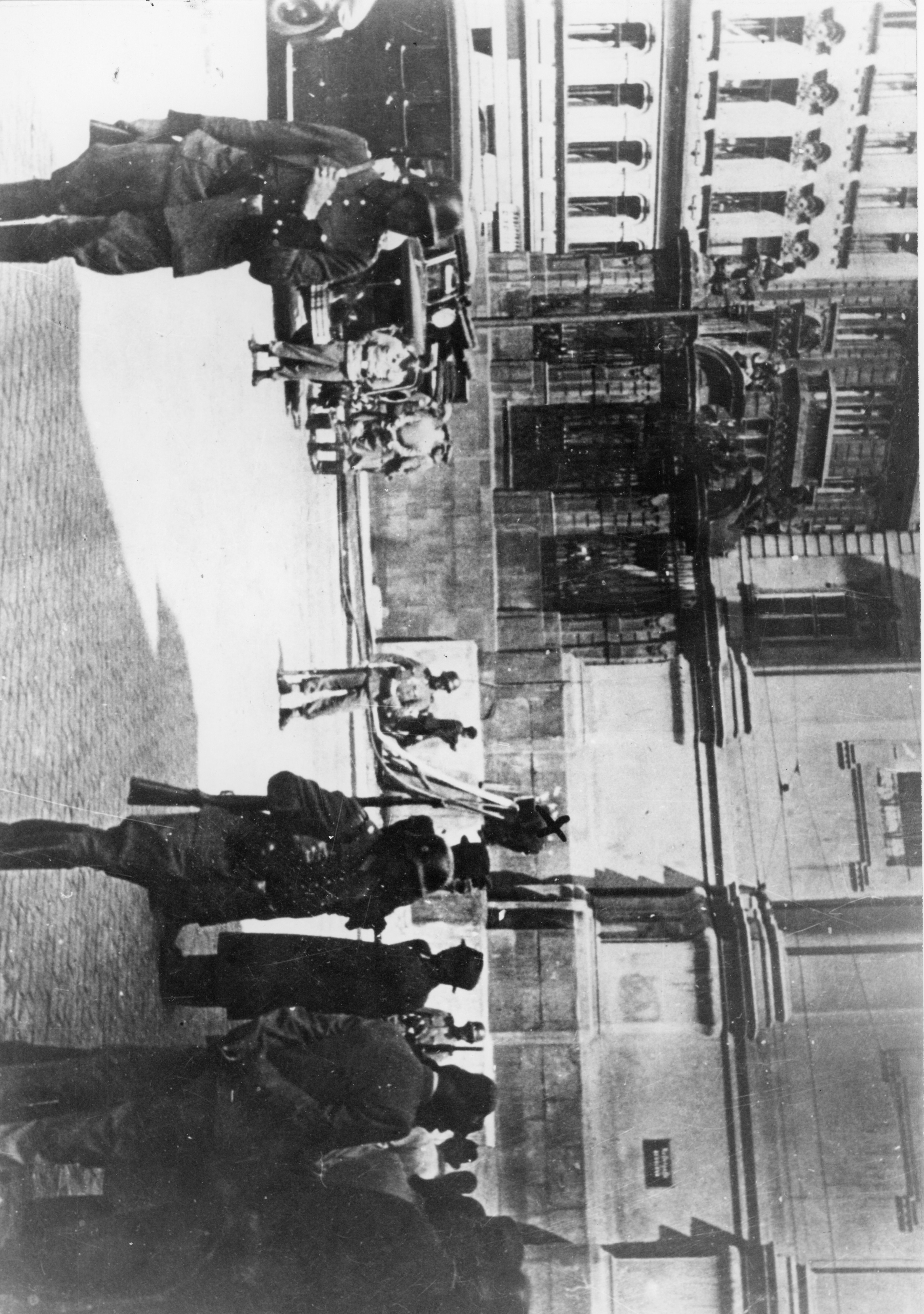
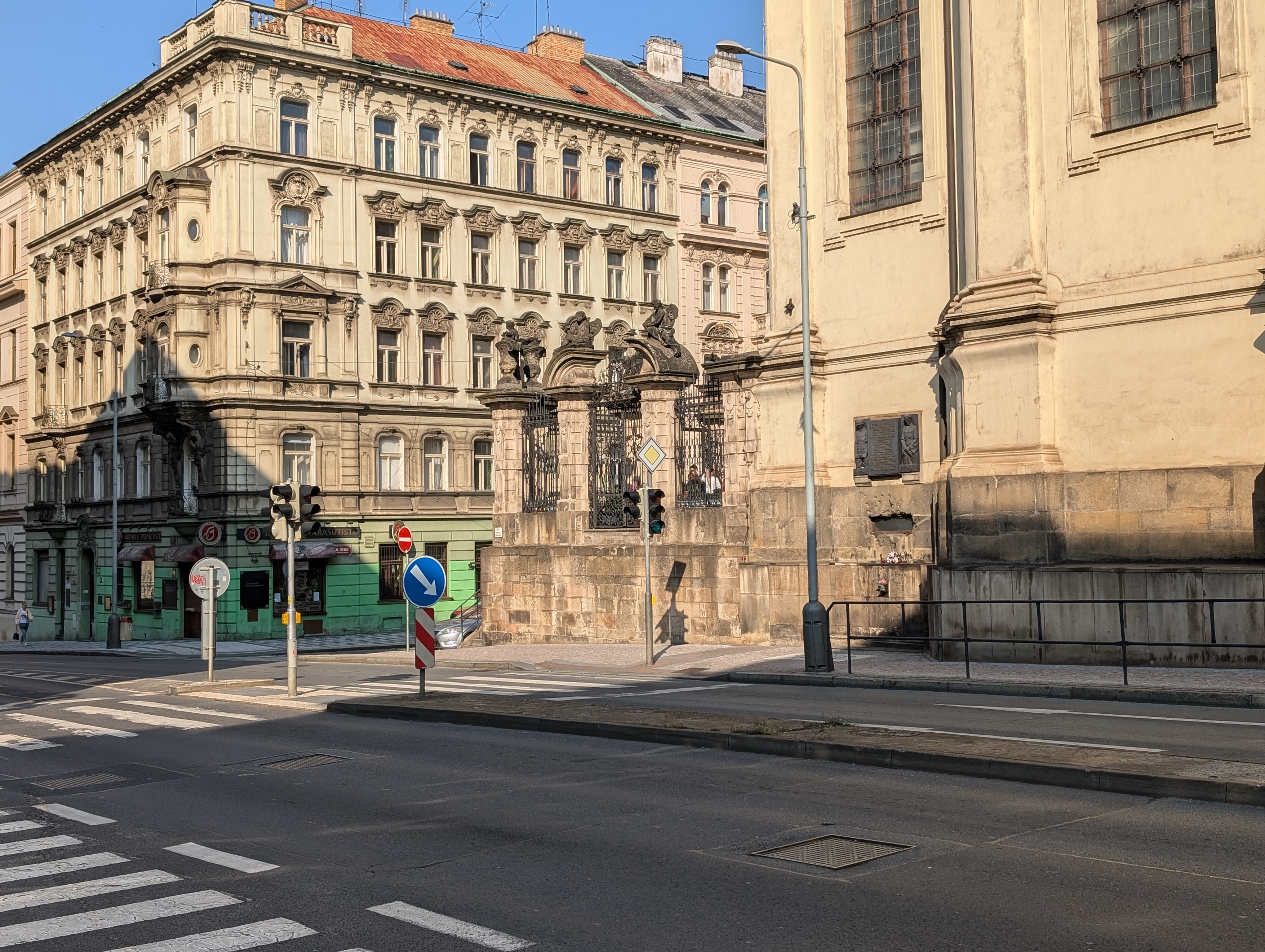
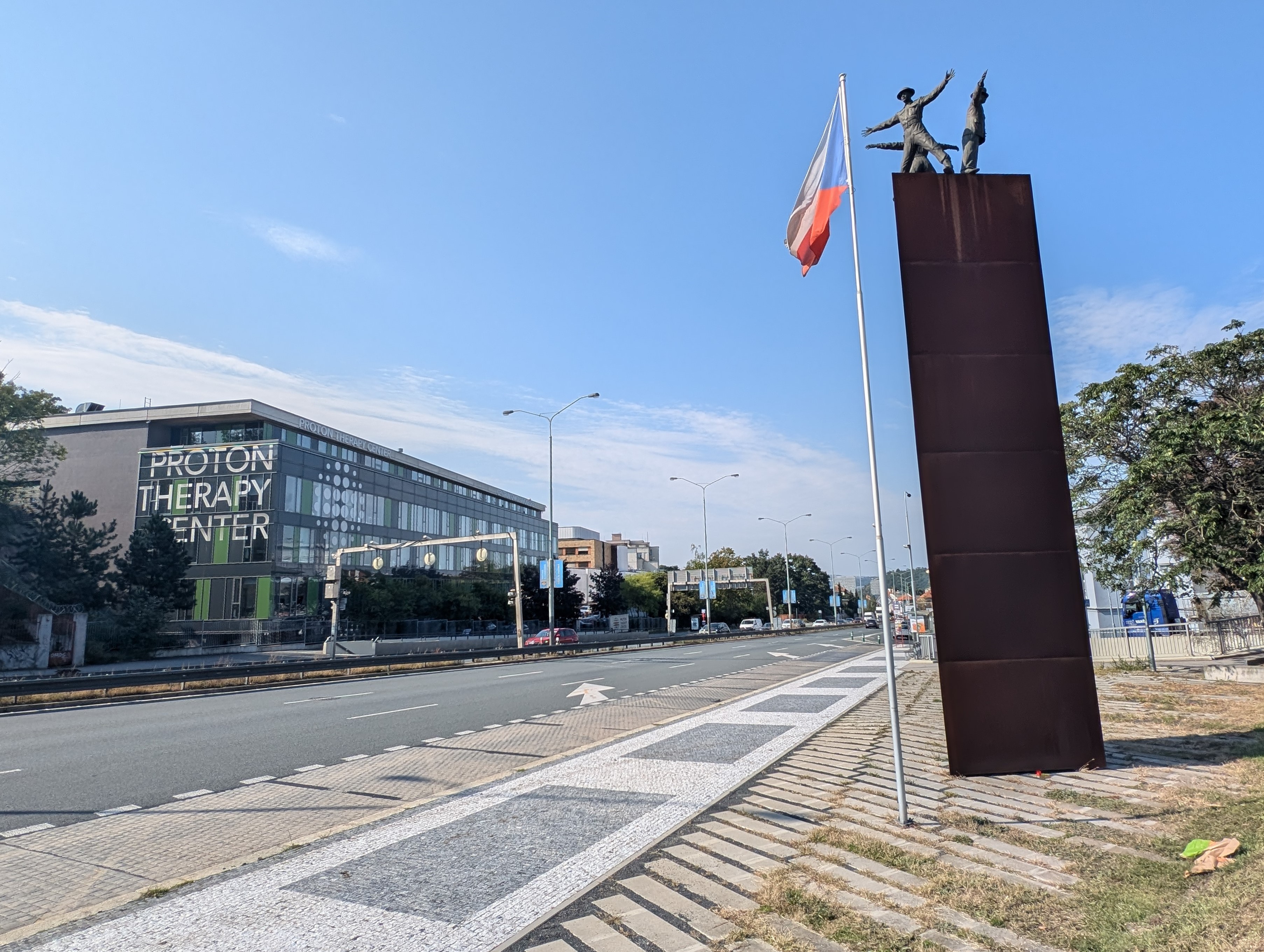
Around Prague are other memorials to Gabčík and Kubiš. We were able to find many of the apartments where they had been sheltered, most of which bear commemorative plaques. A memorial also dominates the skyline by the bend in the road where the attack took place. Most of the places being accessible by the city’s excellent tram system.
But it is around the cathedral where the crowds gather and stare at the damaged mouth of the air vent. It is hard to think of something so humble, or something so heroic. It was a privilege to be there.
Order your copy here.