FIVE INSIGHTS INTO THE UNKNOWN – FOR THE MOST PART – WORLD OF FEMALE SMUGGLERS
Women’s History Month guest post from Dee Gordon.
While many will regard the exclusion of women from the history of smuggling a positive thing, suggesting that they were not criminally inclined, this is hardly true. While not wishing to demonstrate that they were indeed capable of criminality, their reasons were very different from their male counterparts and mainly forgivable given the lives they led. While they were not as physical as the men, and therefore not responsible for hauling large containers of alcohol from boats to shore, for example, their part in this ‘industry’ was effective and often essential for survival. This book divides the female smuggler by location – a chapter for each U.K. county and country, for Europe and for the U.S.A., each of which have their own differing stories. Here is a taster:
- In the early part of the nineteenth century, in many parts of the world (not just the U.K.) coastal areas were very reliant on fishing for their diet and their income. However, the demands of the large families at the time meant that even the best fishermen could not provide all that was needed. So when the men realised how lucrative smuggling was in terms of feeding their families as well as potential profit, and despite the risks began to regard smuggling as a commonplace solution, then it is not surprising that women turned a blind eye. The ones that ended up in court were more likely to be those involved in wrecking, a more serious offence, or repeat offenders, of which a few actually achieved a level of fame from their notoriety e.g. Mother Redcap from the North of England, and Bessie Catchpole from the South.
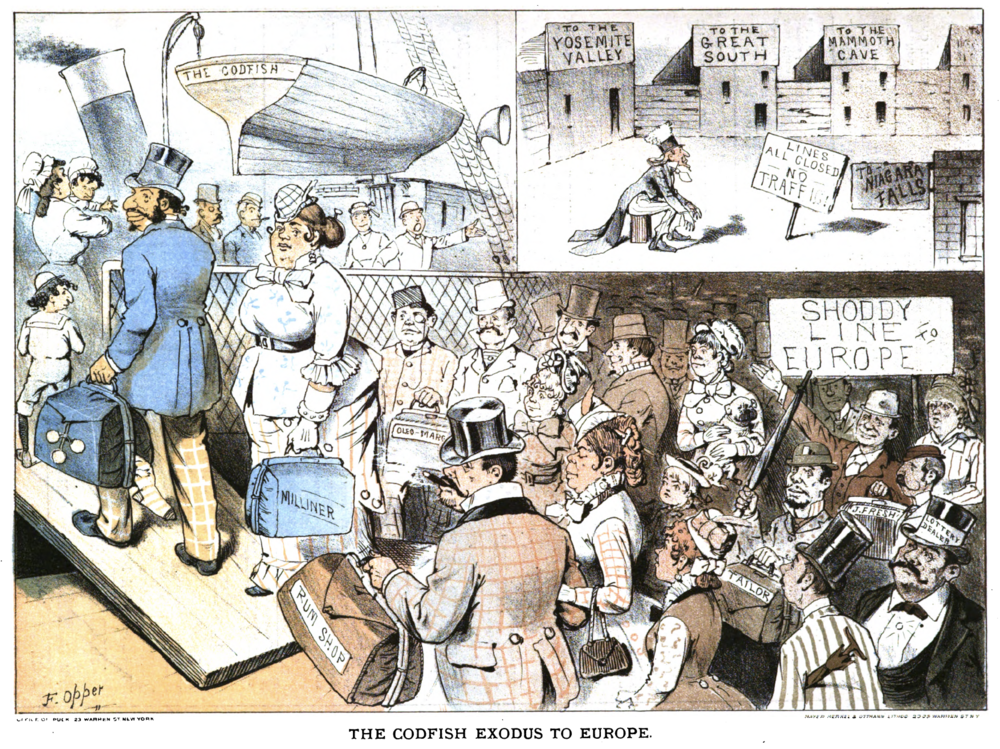
Smuggling milliner, Puck magazine May 1880 - Since the 1671 Customs Act which placed duties on goods from alcohol to lace, fruit to tea, British subjects found many items too expensive to enjoy unless they were obtained illegally. Smuggling paid well for rural communities, if compared with a farmhand’s average weekly wage, so that smuggling had become an attractive side-line not only for poor fishermen. So while smuggling is usually viewed as the work of violent criminals, it was common for entire villages, including women and children, to assist the smugglers while hampering the customs men, something at which women excelled. Charles Lamb, nineteenth century essayist, regarded smugglers as the only honest thieves who rob ‘nothing but the Revenue’ responsible for restrictions on the few luxuries of the common people. And, while we are mainly looking at women from the working classes, there were many women with more comfortable backgrounds who were not averse to discreetly buying in tea, snuff or lace with no questions asked, meaning they were peripherally involved: – everyone likes a bargain.
- Women did not just assist in moving landed goods around, in hiding them, in their distribution, but also in direct sales, especially for smaller items such as salt, with many women jailed for this offence specifically. They also provided alibis for their menfolk when Customs officers came calling, or keeping these officers ‘occupied’ so that goods could be moved literally behind their backs to a safer home. Pub landladies were particularly empathetic to the smuggling fraternity for obvious reasons… and women were even known to risk life and limb when rescuing their jailed husbands from prison, albeit with help from locals both male and female.
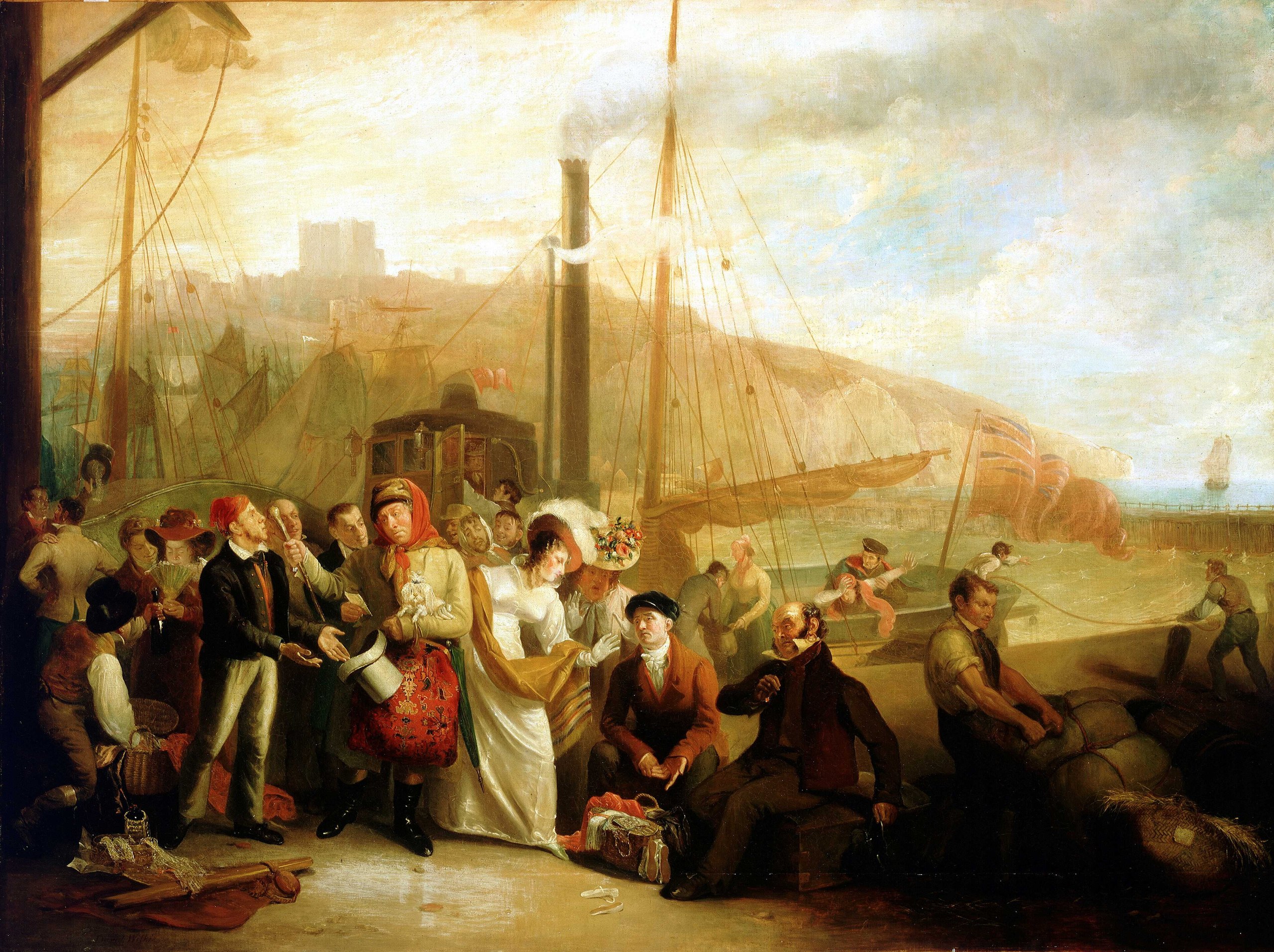
Landing at Dover from the steam packet, M.Sharp (public domain, Wikimedia Commons) - Smuggling became slowly less viable from the mid-nineteenth century onwards, as duties came down and tourism was increasing, changing smugglers from those in small boats to those as passengers on much larger vessels, giving more scope for female smugglers. By 1851 only forty-eight articles were dutiable, with an emphasis on tobacco, less bulky and more profitable than spirits when further reductions arrived after 1861, and easier to transport for any women involved. American and European women were a particularly resourceful bunch. They would hide goods in corsets, large vegetables, hollow furniture legs and even elaborate hair-dos – and their range of smuggled products included far more than the traditional liquor, tobacco and salt because of the growing profitability in fabrics, books, coffee and even looms! Women were quietly involved every step of the way in the development of, and changes to, smuggling.
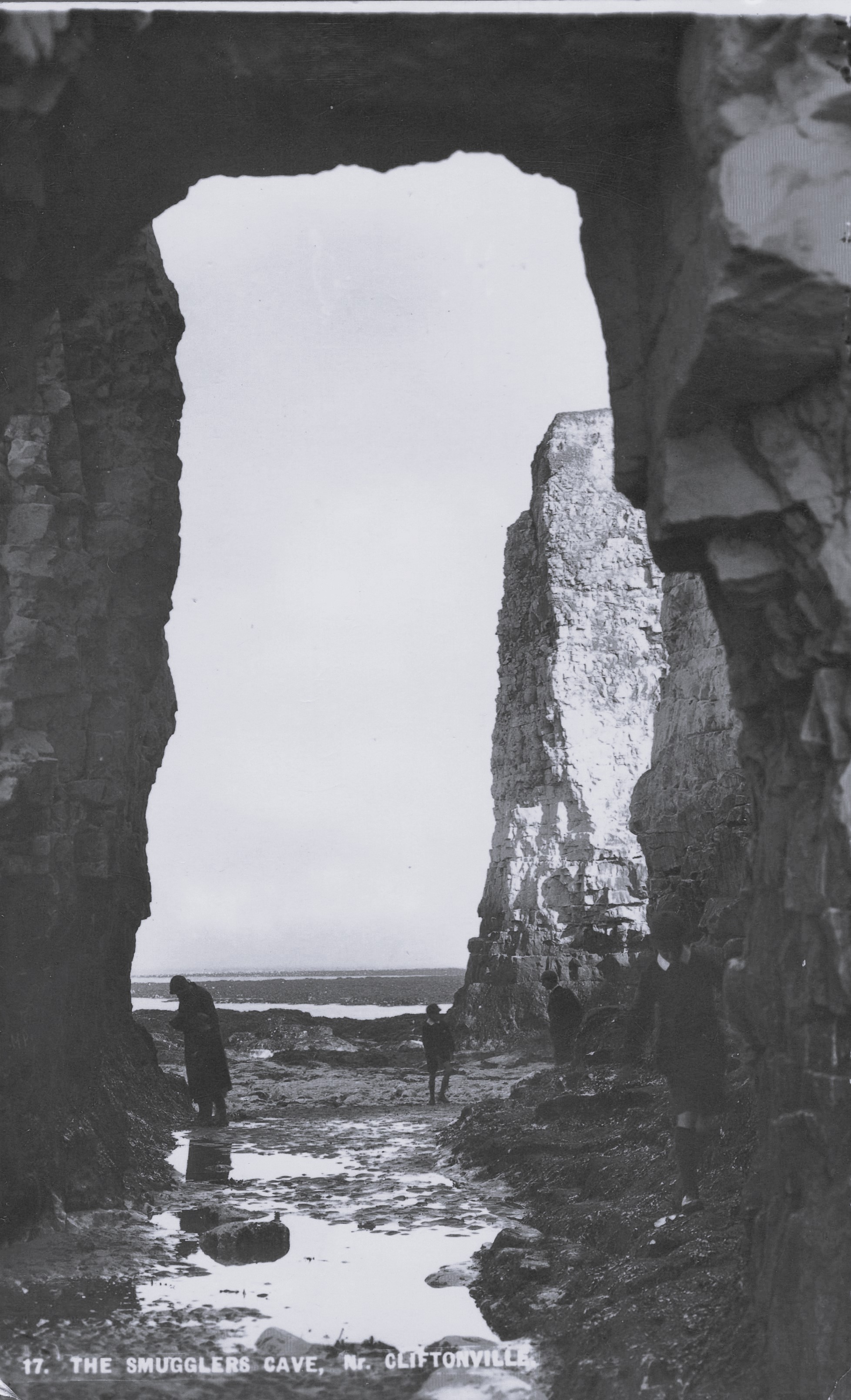
Smugglers’ cave near Cliftonville, early 20th century postcard - Foreign travel was no longer the sole privilege of the upper classes which meant that wealthier women also engaged in smuggling, though goods such as cigars and brandy were again not high on their list. Gold watches, lace, even expensive violins or clocks – nothing was off limits, thanks in part to the fashion change to voluminous skirts with their bustles and hoops. In the American chapter, there is an account of a fashionable New York dressmaker (Rose) and her travelling companion (Bessie) who brought in 10,000 dollars’ worth of ‘imported Charles Worth dresses’ without paying duties. Rose posed as Bessie’s maid, claiming that Bessie was an actress who needed the garments for performance. One investigator, however, found that some of these dresses were being sold on to high society New York women, so the remaining garments were confiscated. Fashion smuggling was booming! In an 1890 article, The Leeds Times wrote about how fashionable women would get their diamonds into America by all sorts of dodges, describing women as ‘chronic smugglers’ who, along with their menfolk, had become ‘representatives of the sea rovers of a century or two ago.’
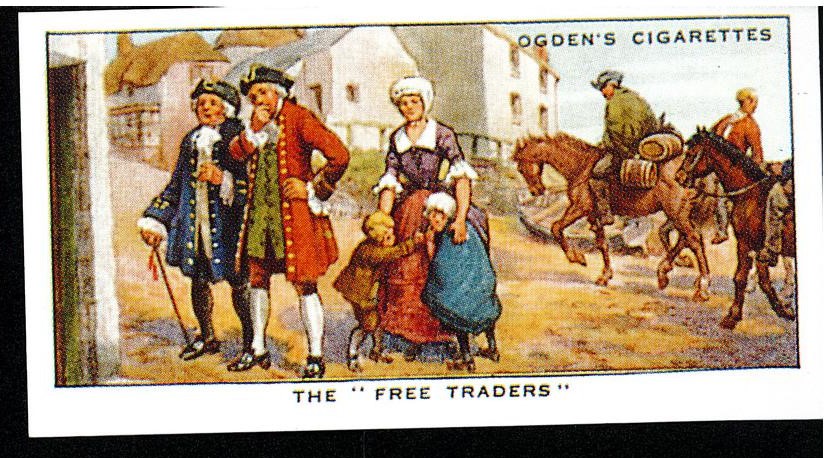
The Free Traders. Ogden’s Cigarette card c.1900
So, the female pirates of the eighteenth century had moved with the changing times, and what great stories they left behind, even it is not always easy finding them thanks to them being ignored or disregarded in the patriarchy of the nineteenth century …
Order your copy here.