The Colonial First Ladies: Carrying Their Weight
Women’s History Month guest post from Feather Schwartz Foster.
The early American First Ladies had no idea of the role they would later play. They were all born British citizens, and considered gentry, rather than wealthy, and expected and accepted their traditional roles: Helpmeet. Wife. Mother. Contributing partner in their marriage. They were strong, hard-working, literate, and prepared to shoulder their share to ensure family prosperity as well as American liberty,
Martha Washington
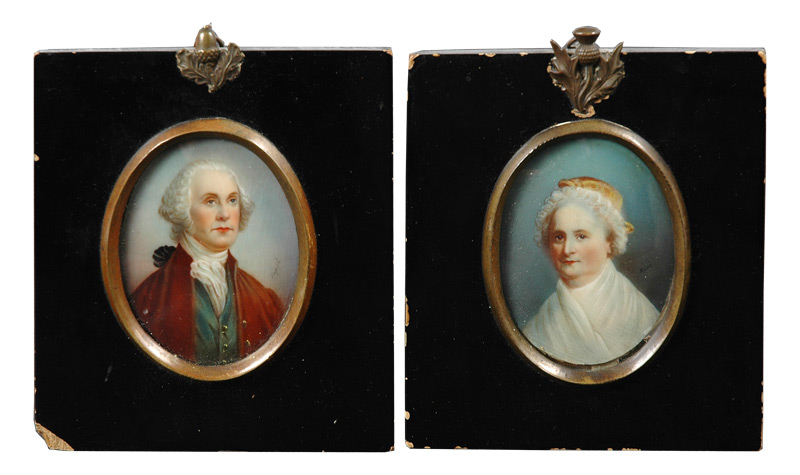
Martha Washington (nee Dandridge, married/widowed to Daniel Custis) was born in 1731 to an Englishman who settled in Virginia in his mid-teens. He did well, purchased property, and became a respected member of his community. As the eldest of a long string of siblings, five surviving to adulthood, Martha learned basic reading, writing and ciphering (arithmetic), plus the myriad duties of household management: cooking, gardening, handiwork, maintaining the household, child-care, home remedies such as they were, and gracious hospitality.
Girls matured much earlier than they do today, and by fourteen or fifteen, were considered marriageable – with sufficient skills to maintain a home. Martha was 17 when she married Daniel Custis, more than twice her age, and one of the wealthiest plantation owners in Virginia. During the eight years before Daniel’s death. She bore four children and lost two. At 27, she married George Washington, who had far more modest holdings. His background was more in keeping with the Dandridges, rather than the Custises.

But it was Martha Washington who partnered with her new husband to make their new home the showplace it eventually became. In modern terms, he did the outside, she did the inside. She may have brought the fine accoutrements and the wherewithal to acquire more, but she was up before dawn every day, apron on, ready to supervise the kitchens, the household rotation of cleaning and freshening, the gardens, the laundry, the smokehouse and regularly scheduled candle-making and soap making processes. Et cetera. Hands-on.
And she joined him in winter-quarters throughout the eight years of the American Revolution. She made everything more comfortable.
Abigail Adams
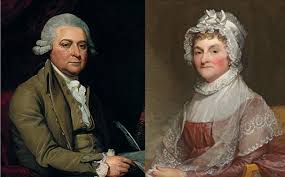
Some thirteen years younger than Martha Dandridge, Abigail Adams (nee Smith) was third generation American. Her maternal grandfather had emigrated from England, and succeeded admirably as a jurist with the finest private library in Massachusetts. Abigail was a sickly child, and reading was her lifeline to the outside world. Her home-schooling included all the domestic skills as well as her more extensive self-taught ventures into literature, poetry, science, theology, history, economics – areas considered very rare for a woman.
Denied higher education opportunities, reserved for boys only, Abigail’s resentment grew as she matured. When she married John Adams, she was 20, and he was 29, a struggling attorney of middling means. Since he traveled throughout the colony on legal business, it fell to Abigail to assume complete responsibility for their modest house, including overseeing their small farm. Plus educating the five children she bore in seven years (one dying as a toddler). But Abigail was an intellectual match for her husband, who appreciated a good mind where he found it – and if it was in the head of a woman, sobeit. He considered himself fortunate, and wasted no opportunity to discuss his court cases, his business efforts, his political activity and his growing prominence in New England with his wife.
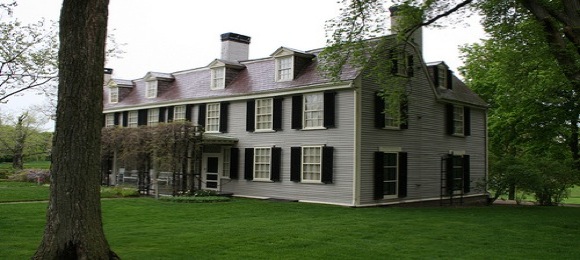
Peacefield, the Adams’ home purchased shortly before JA became Vice President
As his travels widened, so did Abigail’s responsibilities, including the surprising discovery of her hitherto unknown gift for business. Once John became aware of her good money-judgement, he was delighted to turn over much of those details to his gifted wife.
He trusted her abilities and her good sense. And she liked politics, too.
Dolley Madison
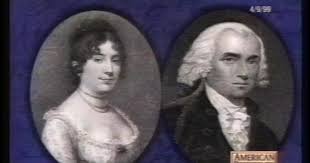
Dolley Madison (nee Payne, married/widowed to John Todd), was young enough to be the daughter of both Martha and Abigail. Born and raised to a Quaker family in rural Virginia, her family tree goes back even farther! As the eldest daughter in a family that raised 8 children to maturity, young Dolley (her real name, by the way) had a basic education at a Quaker school (which encouraged female education), and of course, the domestic skills which was learned from her mother.
The family moved to Philadelphia (a Quaker City) when Dolley was around fifteen. The American revolution was winding down by that time, and her father purchased a starch business, once he manumitted his slaves and sold his farm. But the business failed, as did her father’s health, and Dolley’s mother opened her house to boarders to make ends meet. Philadelphia, was the de facto capital of the United States under the Articles of Confederation. Important representatives from all thirteen colonies lived in Philadelphia, and the Payne boarding house was considered a mecca of good food and company. Its young hostess was attractive, personable, and willing to make her “honored guests” comfortable.
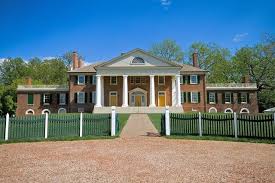
She married at 21, and her first husband died in a devastating yellow fever epidemic three years later. When Dolley married Congressman James Madison. She was 25, he was 42. She always believed that her life began then. Madison was a key advisor to now-President Washington, and their house became a socio-political center for the new country’s movers and shakers. The charismatic Mrs. Madison lost no time in proving her worth, hosting a new circle of friends, and displaying the politician’s gift for remembering names and faces and the details of personal friendship.
She came to know everyone who mattered in government, from all walks of life and political persuasion. Those who attended her seemingly effortless rounds of luncheons, receptions, dinners and regular salons always took care to mind their manners in her home. They would never wish to offend the Divine Mrs. M.
Dolley believed in “politics by people.” It takes a lot of work for something to appear effortless.
Read about these nifty old gals in THE COLONIAL FIRST LADIES.
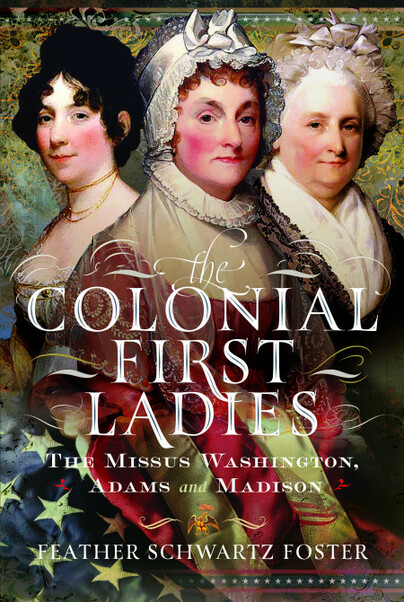
Order your copy here.