5 Things You Didn’t Know About Medieval Ideas of Women
Women’s History Month guest post from Luke Daly.
When we imagine medieval women, we tend to think in images: queens in stone keeps, nuns behind cloister walls, peasants labouring in fields. Yet beneath these familiar figures lay a more fundamental framework. Medieval society did not simply assume that men and women differed; it believed those differences were embedded in nature, demonstrable in physiology, and reflective of divine order. Medicine, theology, and law spoke to one another with striking coherence.
Here are five things you might not realise about how medieval thinkers understood women — and why they believed biology explained hierarchy.
1. Medieval Science Claimed Women Were Literally “Colder” Than Men
Medieval ideas about gender did not emerge in isolation. Thinkers such as Augustine, Isidore of Seville, and Thomas Aquinas inherited a vast body of Greek and Roman medical and philosophical literature. Central to this tradition was the assumption that humanity consisted of two sexes, male and female, defined primarily by genitalia. Apparent anomalies such as hermaphrodites or effeminate men were treated not as evidence of diversity but as deviations that reinforced the norm.
Ancient medical writers located masculinity in semen, believed to contain vitality, strength, and rational capacity. To lose semen unnecessarily was therefore to risk losing manhood itself. This belief generated extensive sexual prohibitions for men, who were urged to regulate intercourse carefully in order to preserve their physical, moral, and civic usefulness. Masculinity was thus fragile, requiring constant vigilance, discipline, and self-control.
Women, by contrast, were defined through their difference. While men were active, hot, and dry, women were cold, moist, and passive. These were not metaphors. Heat signified perfection and completion. The male body, sufficiently heated, refined matter into semen and strength. The female body, lacking this intensity, was understood as less fully perfected, its surplus expelled in menstruation. Where men generated, women discharged.
From such premises, hierarchy followed without strain. The hotter governed the colder. Authority appeared less as social arrangement than physiological inevitability. Medieval discussions of gender rarely required polemic; the argument lay, as it were, in the body itself.
2. Masculinity Was Considered Physically Fragile
If women were colder, men were not therefore secure. Medieval writers were acutely conscious of the fragility of masculine vitality. Semen was widely believed to contain strength, even something of rational essence. Its excessive loss entailed depletion.
Sexual discipline thus carried medical significance. To preserve authority required preservation of bodily integrity. Masculinity demanded management.
This assumption helps explain the persistent anxiety surrounding female sexuality. If male vitality could be dissipated, and women were thought capable of provoking that dissipation, then female allure acquired a physiological threat. Suspicion of women was reinforced not only by theology, but by humoral theory.
3. Women Were Thought to Be Both Passive and Sexually Powerful
Medieval discussions of women oscillate between describing them as subordinate and as dangerously desirous. Social hierarchy cast women as receptive and governed; sexual metaphor mirrored political order.
Yet medical and moral authorities frequently insisted that women possessed stronger appetites than men. Because women were colder, they were thought to require greater stimulation. Because they were moist, they were deemed more susceptible to desire.
The apparent contradiction was resolved by physiology: appetite signified weakness. Female sexuality was both subordinate and destabilising. This theme was reinforced by scriptural narratives of temptation.
4. Menstruation Was Seen as Necessary and Potentially Dangerous
Menstruation encapsulated medieval ambivalence. It was necessary: the expulsion of excess matter in bodies insufficiently heated to refine it. Yet it was also treated with caution. Some texts attributed to menstrual blood harmful properties, capable of spoiling crops or harming men.
At the same time, that same blood was believed to nourish the foetus and later to become milk. Female physiology was thus indispensable to life and yet marked as unstable.
Such assumptions lent medical weight to social boundaries. Restrictions surrounding purity, marriage, and sexuality were grounded not simply in custom but in explanation.
5. Even Female Saints Were Praised for Transcending Biology
Christian teaching affirmed the equality of souls, yet it did not dissolve bodily hierarchy. Thinkers such as Augustine and Aquinas absorbed classical natural philosophy into Christian theology rather than rejecting it.
Women could become saints. Some did so spectacularly. Yet female holiness was frequently framed as mastery over bodily inclination. Chastity neutralised perceived danger and asceticism subdued appetite.
Exceptional women were admirable not because they overturned the system, but because they appeared to rise above it.
Biology as Explanation
What gives medieval gender theory its force is not simply its harshness but its coherence. Medicine described difference; theology moralised it; law institutionalised it. The system reinforced itself.
For medieval thinkers, hierarchy was not prejudice. It was nature. And nature reflected divine design.
To modern readers, such reasoning may appear circular. Yet it possessed internal logic and explanatory power. Recognising this framework does not require endorsement, but it does demand historical empathy. Only by understanding how deeply biological determinism structured medieval thought can we fully appreciate both the constraints faced by ordinary women and the extraordinary nature of those who managed, however temporarily, to transcend them.
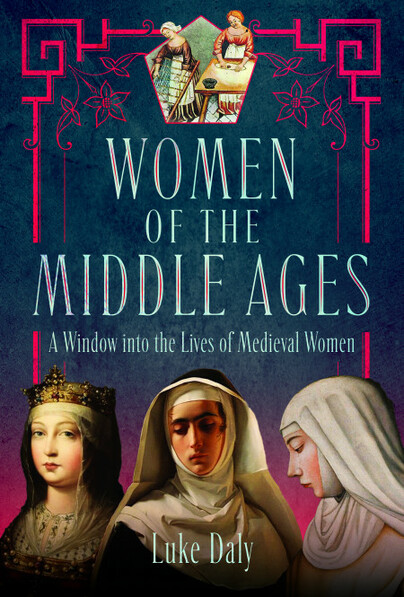
Order your copy here.