Napoleon’s Paris – a Historian’s Paradise
Author guest post from David Buttery.
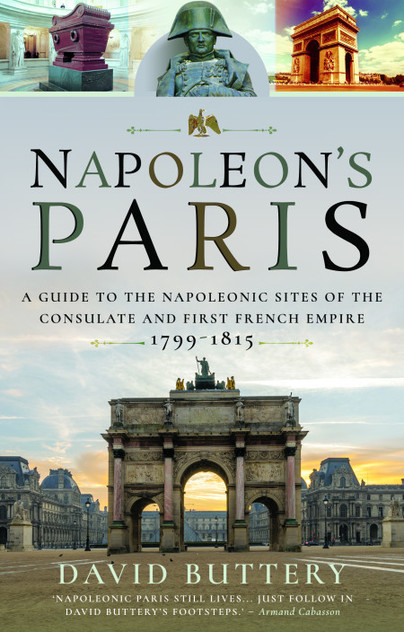
I recently led a tour of the French capital in March 2026 for The Cultural Experience Tour Company, largely on the strength of my ‘Napoleon’s Paris’ guidebook published by Pen & Sword Ltd. Everyone should see Paris, which is one of those locations that lives up to its great reputation as a centre of art, fashion, history, fine food and wine. The city’s origins date back to Julius Caesar’s AD358 campaign and it has been at the centre of European events ever since. It boasts a stunning array of historical sites and museums and I consider it to be a ‘historian’s paradise.’
Napoleon I Emperor of the French carried out extensive work on Paris intending it to become a civic template for France and throughout his First French Empire. Napoleon’s actions as a lawmaker, builder, civil planner, statesman and visionary are often overshadowed by his deservedly great military reputation and I try to address this in my writing and tours. He built monuments, quays, markets, roads, bridges, sewers, pavements, parks, fountains and canals along with founding the Bourse (stock exchange) and the Banque de France among other institutions. Indeed, there are so many Parisian locations linked with him that a five day tour cannot hope to cover everything despite its packed itinerary.
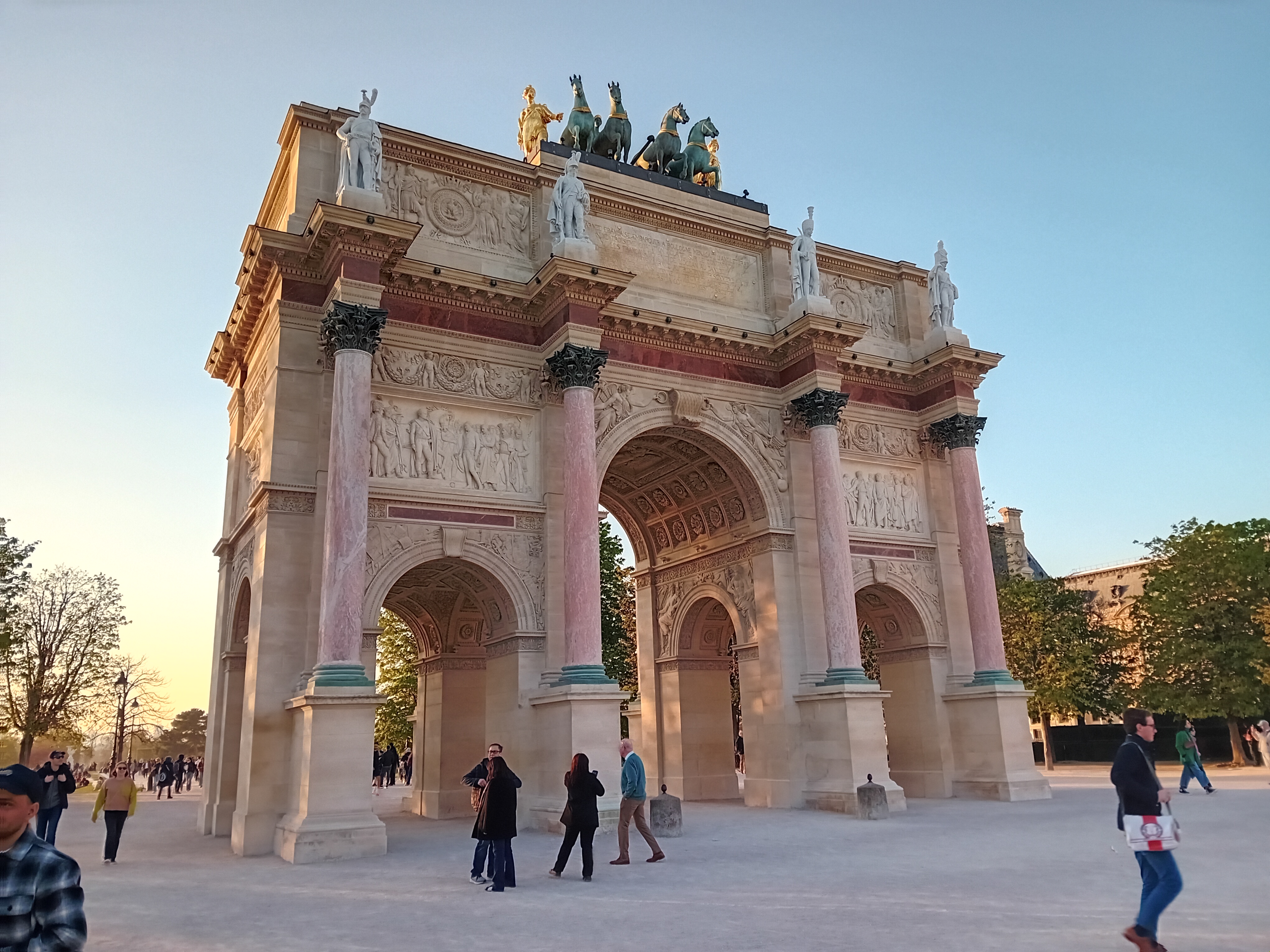
We began by looking at locations connected with the French Revolution including the Place du Concorde where the infamous guillotine carried out its grim work and the Church of St Roche, focal point of the Royalist uprising that General Bonaparte put down with a ‘Whiff of Grapeshot’ at the start of his rise to power. This was followed by seeing the Vendôme Column, Palais Royale and Arc du Carrousel, which is the smaller triumphal arch that once stood before the Tuileries Palace (destroyed by the Communards 1871).
A visit to Chateau Malmaison on the edge of Paris provided guests with a glimpse of Napoleon and Josephine’s private life as this house was where they preferred to stay rather than stately but uncomfortable palaces. It was more Josephine’s house that her husband’s and, after viewing Malmaison and her famous rose gardens, we saw the Empress’s tomb in the church nearby. This was followed by a visit to the Musée de Legion d’Honneur on the banks of the Seine that houses many awards bestowed by Napoleon to soldiers and civilians in honour of their achievements and includes spectacular exhibits owned by the Emperor himself.
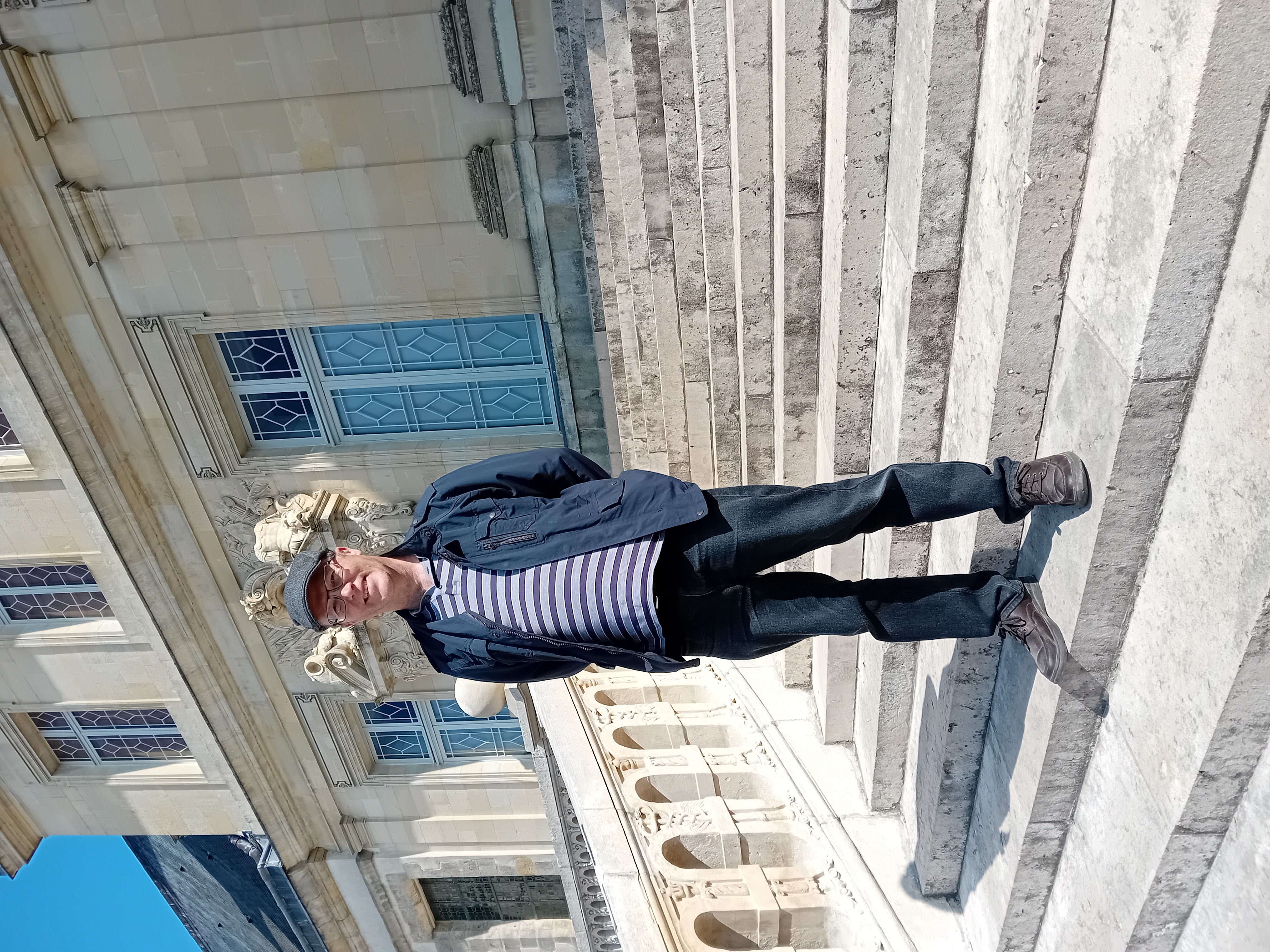
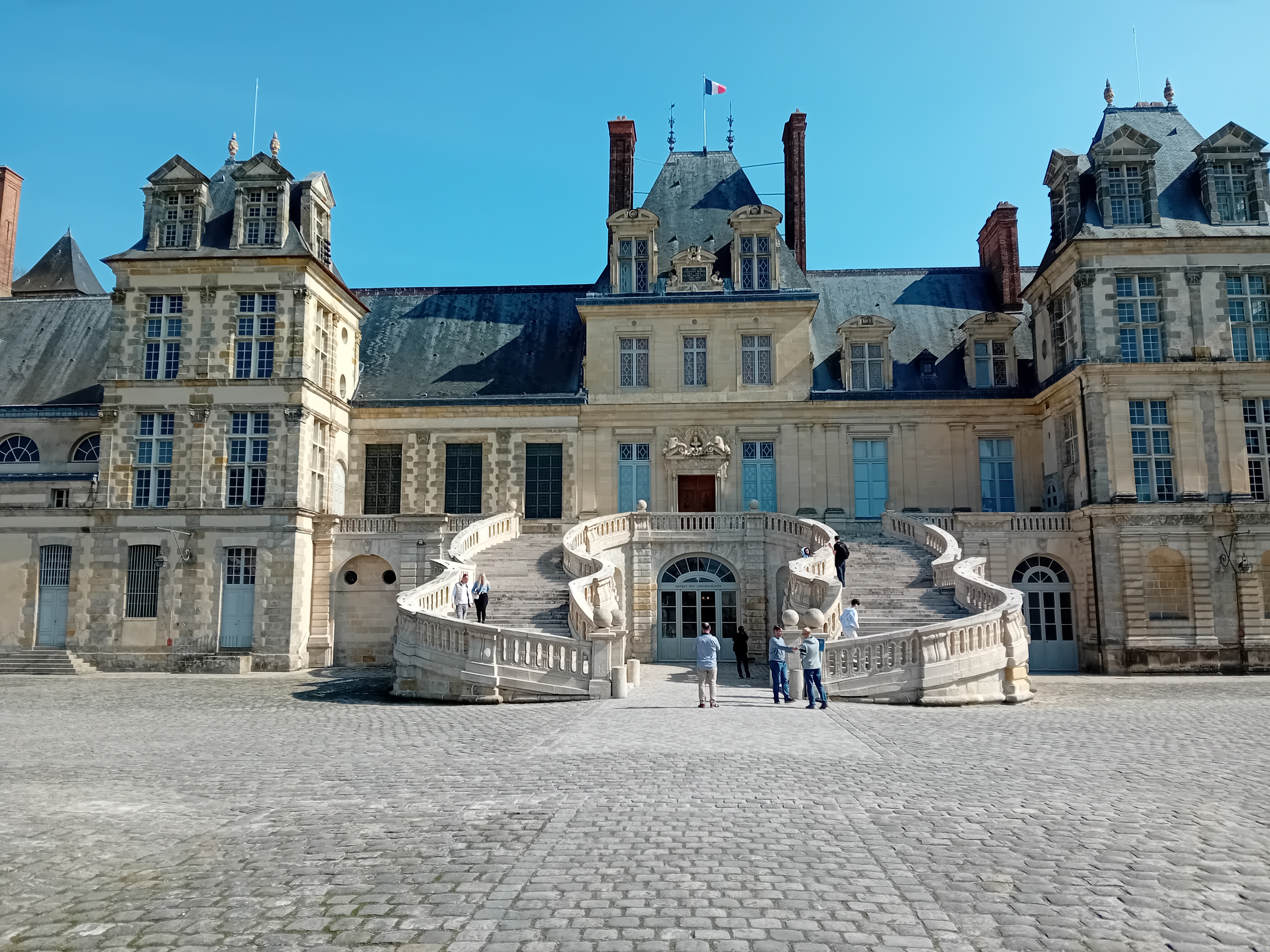
Chateau de Fontainebleau lies 40 miles from Paris and is an incredible multi-period location. It was here that Napoleon was forced to abdicate on 6 April 1814 and guests saw the table he wrote and signed his first abdication upon, his impressive throne room and the famous horseshoe staircase where he addressed the Imperial Guard before descending the steps and travelling into exile on Elba. Napoleon hosted Pope Pius VII here in 1804 but sent the Pope back here as a prisoner in 1812-14. The palace dates back to the early medieval period and has sumptuously decorated rooms and passageways that have to be seen to be believed along with extensive grounds and a huge carp lake. Several guests remarked that they could see why there was a Revolution after seeing this ostentatious splendour and Napoleon called it ‘The true abode of kings and the palace of the ages.’
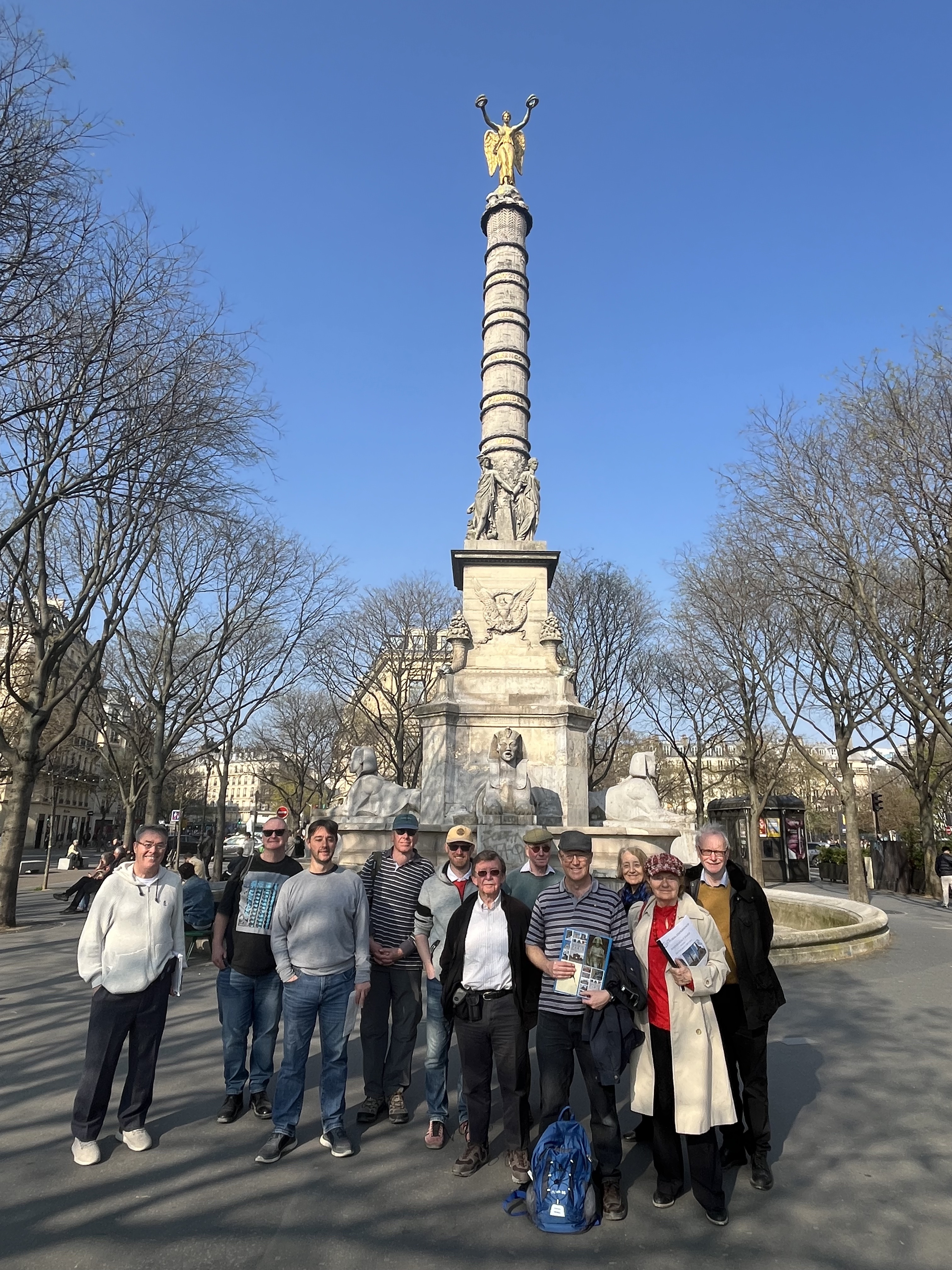
Returning to Paris we saw Marshal Ney’s famous statue, the Hotel de Ville and the Fontaine du Palmier. Napoleon’s fifteen large fountains and extensive Ourcq Canal brought badly needed drinking water into the capital at a time when most people lacked piped water, performing a practical function rather than simply being decorative. We walked by the Luxembourg Palace and the Pantheon before visiting Notre Dame Cathedral where Napoleon’s Coronation took place in 1804. The cathedral burned down in 2019 but has been restored to its former glory in a stunningly successful restoration project.
We saw the Musée de la Marine recording French maritime achievements followed by the Arc de Triomphe, which is an iconic French monument and Napoleon’s way of commemorating those who fought during the Napoleon Wars with the names of numerous campaigns, battles and soldiers inscribed upon it. It contains the tomb of France’s Unknown Soldier along with monuments to later wars and some of us climbed the 284 steps to its summit where stunning views of the city can be seen.
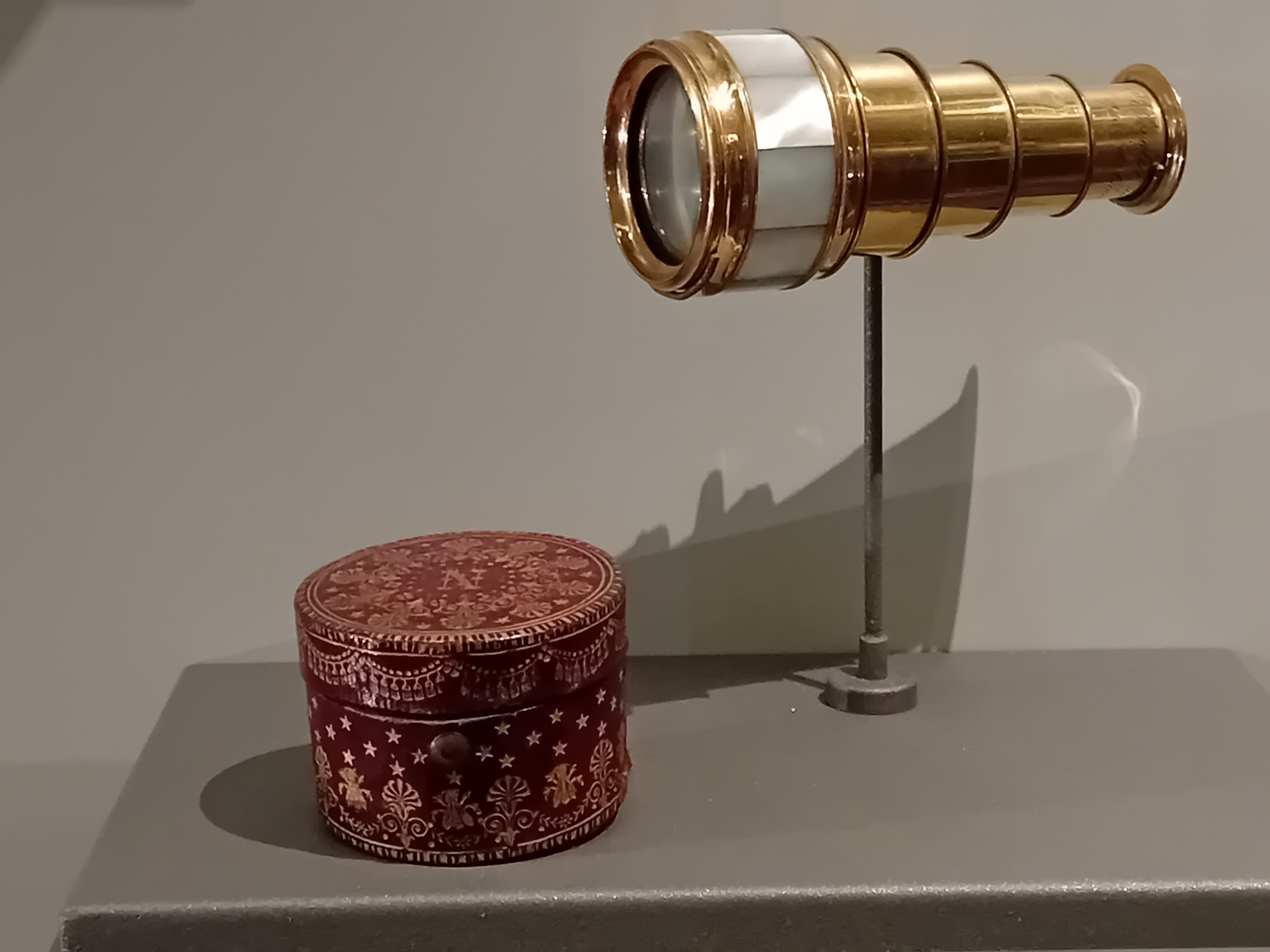
The Hôtel des Invalides was the highlight of the tour, boasting the Musée de l’Armee. As a military historian I have seen numerous military museums but there are items exhibited here that cannot be seen anywhere else including hats, coats, cases, tents, swords and telescopes personally owned by the Emperor along with a host of Napoleonic weaponry, paintings, standards and armour. Les Invalides contains two churches and remains an active military hospital even though it was founded in 1671.
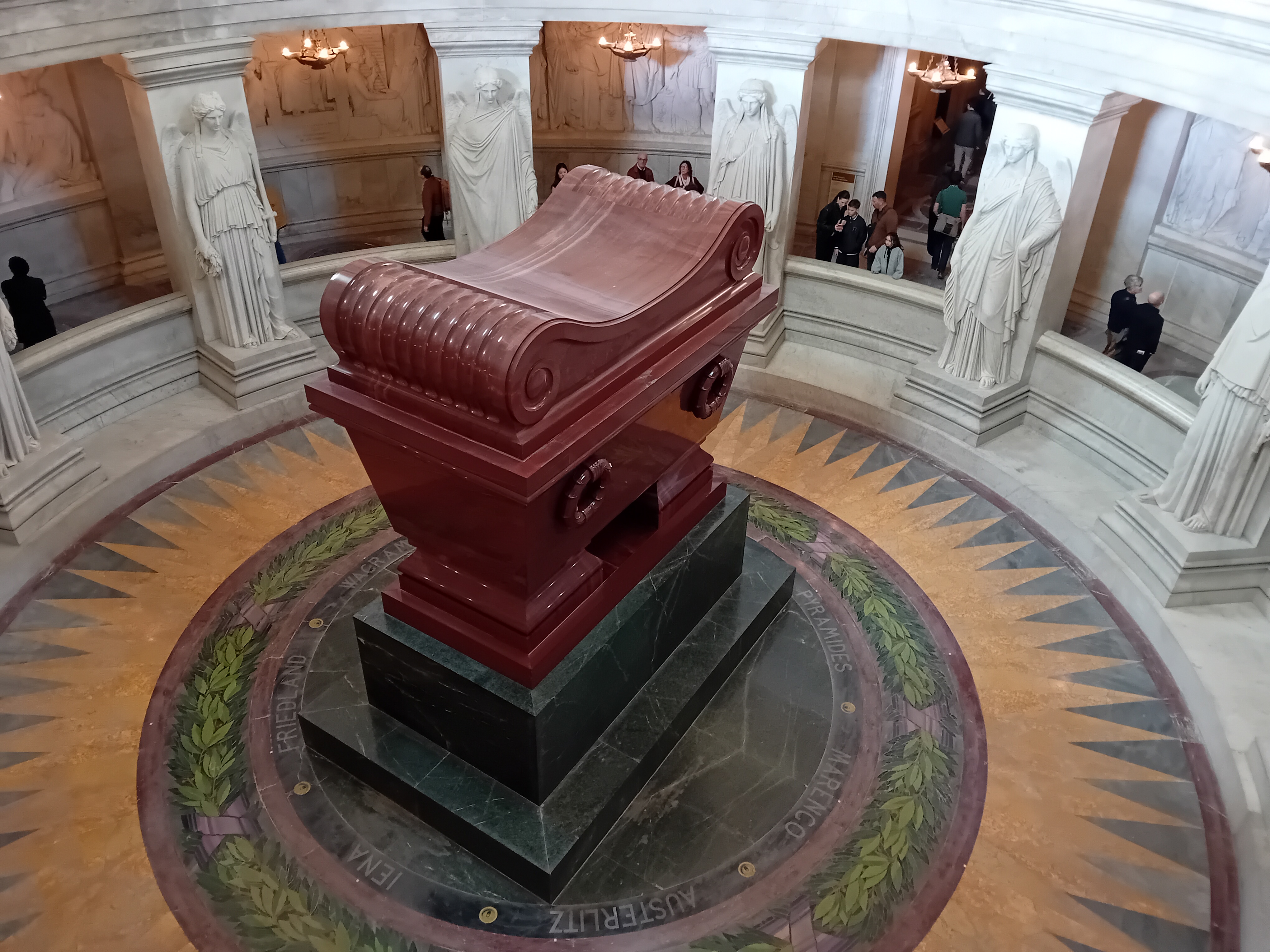
Napoleon’s Tomb is located at Les Invalides and his vast red quartzite sarcophagus is awe inspiring along with the statues surrounding it and the names of his greatest victories carved into the marble floor. People are interested in Napoleon for many reasons but even guests who dislike what he stood for are usually impressed by this sight. I make a particular point of indicating the marble bas reliefs around the tomb’s viewing gallery recording Napoleon’s civil achievements including the arts, finance, commerce, religion and law. The Emperor often said that he would be remembered for his Civil Code, which re-wrote the entire French legal system, and this proved to be true as many European legal systems are based upon it.
The last location we visited was Pѐre Lachaise Cemetery where no less that fourteen of Napoleon’s twenty-six Marshals of Empire are commemorated along with numerous other figures of that era. It is also known as the final resting place of Abelard and Heloise, Oscar Wilde, Jim Morrison and many other famous personalities and is the most visited cemetery in the world.
On the final night we dined at Le Procope, which is one of the oldest restaurants in Paris built in 1686. Frequented by Napoleon, Josephine, Rousseau, Robespierre, Benjamin Franklin and many others with historical artefacts displayed on its walls, it was the ideal venue to finish at. Napoleon’s Paris 2026 was a stunningly successful tour, drawing some very favourable feedback from guests, and my Napoleon’s Paris guidebook can be ordered here. If you are interested in going on a similar tour see https://www.theculturalexperience.com