The 5 transformations of Eva Perón
Women’s History Month guest post from Victoria Haddock.
Daughter. Actress. Political mistress. First Lady. Saint. Eva Perón’s life was made up of a number of different acts that saw an illegitimate girl escape rural poverty to travel to the big city with dreams of becoming an actress. She would eventually meet a presidential hopeful and scale the heights of Argentine society to be known worldwide by the diminutive nickname ‘Evita’. Each of these acts required a suitable image, and it was through her clothing, jewellery and hairstyle choices that Eva was able to transform herself from Eva Duarte to Eva Perón. While Eva’s political career and life have been explored in multiple biographies, the significant role that Eva’s personal dress played in her ‘Cinderella’ transformation in the public and political landscape has been largely overlooked. In my biography, I identified five key moments in Eva’s life that saw an evolution in her image.
- Childhood
María Eva Duarte was born in 1919, the youngest daughter of Juana Ibarguren and her already married partner, Juan Duarte. Eva was only 7 when her father died and her family’s fortunes fell to her mother. Juana undertook a dressmaking course and turned to sewing to provide for her family. Her daughters remembered hearing the repetitive clack of the pedal of the Singer sewing machine as Juana sat hunched over her machine for hours on end. Juana’s passion for sewing was transferred to her daughters, who sometimes assisted their mother and made costumes for carnival. The importance of the sewing machine in Eva’s life later led to her giving away thousands of the machines through the Eva Perón Foundation, illustrating the transformative nature the sewing machine could have.
From her childhood, Eva had been aware of the messages that clothes could communicate. Even though her mother could provide clean smocks for her children to attend school, she couldn’t afford the leather brogues and ‘Mary Jane’ shoes worn by the wealthier pupils. Eva and her siblings instead wore canvas alpargatas (roped sole espadrilles), that marked them out as different and made them aware, from an early age, of their illegitimate and poor origins.
- Actress
A new stage in the evolution of Eva’s style also began upon her arrival in Argentina’s ‘Big Apple’. She slowly started to change the way she dressed, purchasing suits and blouses second-hand in her favoured exaggerated feminine style, befitting of an aspiring actress trying to get her big break. By 18, she was acting simultaneously on stage, in film and on the radio. She understood the importance a photograph could have in disseminating her image and was photographed by some of the leading photographers in Argentina at the time. Her publicity shots taken in this period alternated between modest portraits presenting her as a typical starlet, playfully posing wearing the latest fashions, and the risqué half-nude pin-up photographs.
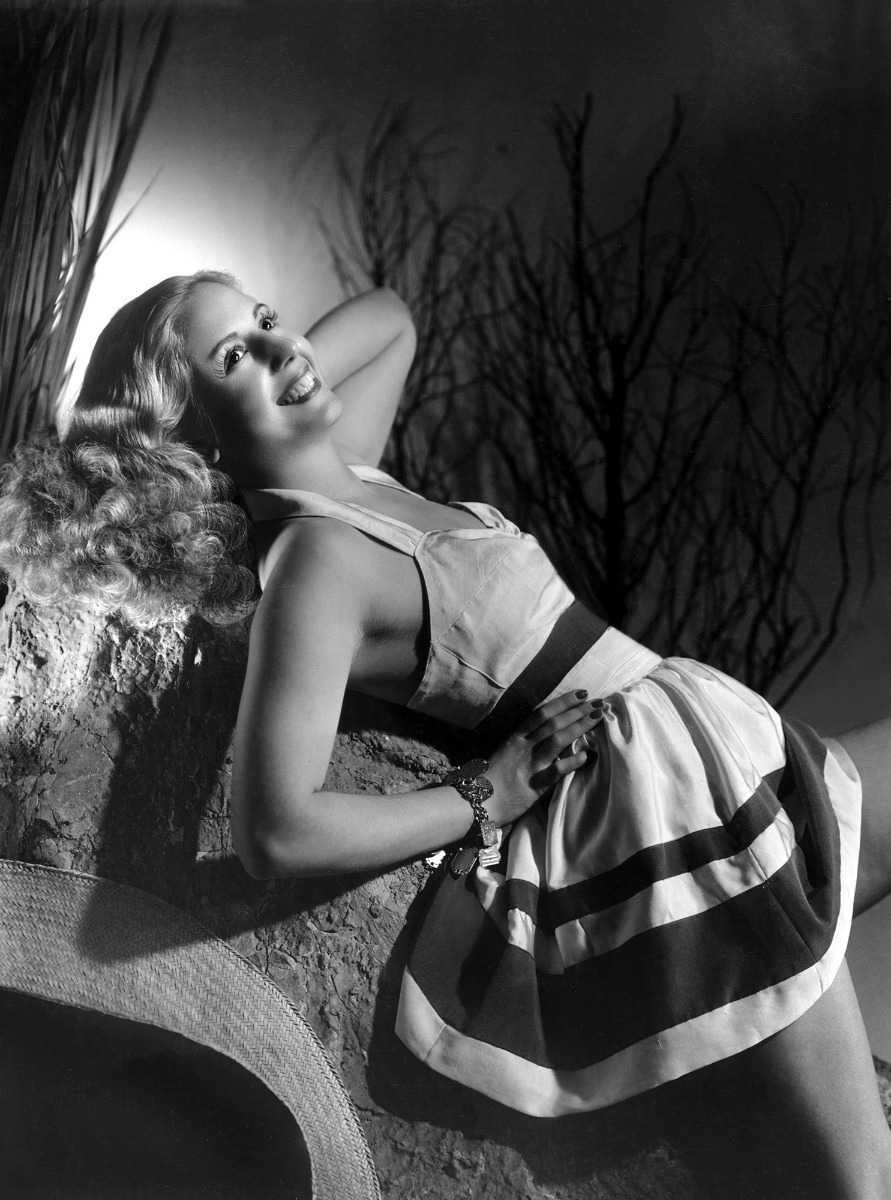
Following her success, Eva was advised by studio hairdresser Julio Alcaraz to bleach her naturally dark hair blonde. Whether or not she was inspired by the glamour of American actresses such as Lana Turner, this makeover created an image that Eva would maintain for the rest of her life – and which would distinguish her from her peers, transforming the girl from the pampas into the image of the Hollywood actresses she loved.
- Political mistress
The evolution from Eva Duarte the actress to Eva Perón the political spouse began from the moment she sat next to Colonel Juan Perón at a benefit gala for victims of the San Juan earthquake in 1944. Both must have been aware that this meeting wasn’t by chance, but Perón was fascinated by the confident, glamorous woman at his side. It was then that Eva Duarte decided to create some legitimacy to her new public position as political mistress, by using fashion to cultivate a more sophisticated image, with the help of Paco Jamandreu, her first couturier.
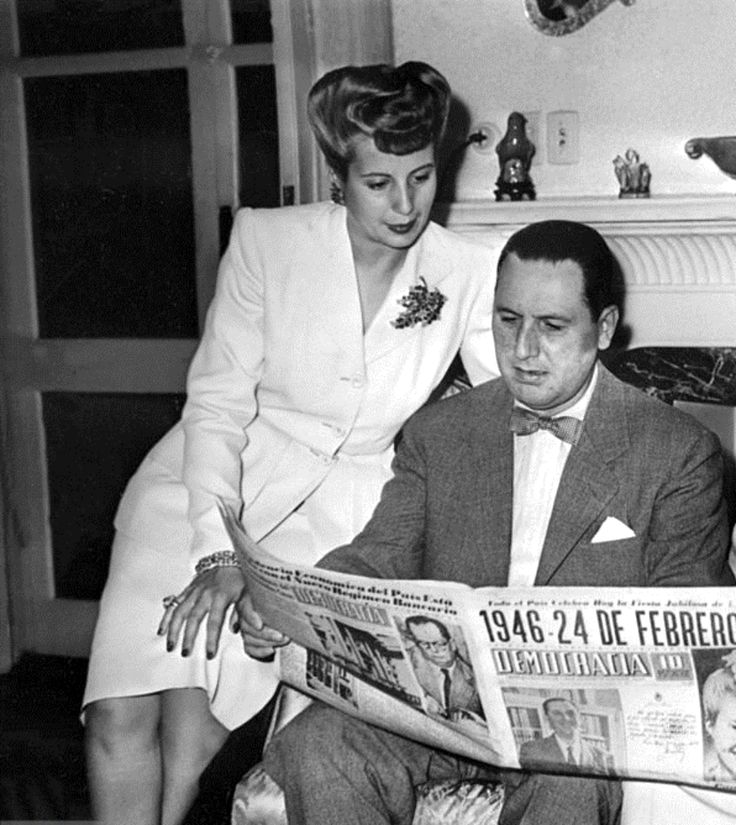
Upon her marriage and entry into the world of politics, a number of transformations took place to shape the new Eva Perón into the perfect political candidate’s wife. Firstly, Eva removed all traces of her acting career to allow her to construct the new image she needed to support her husband. Secondly, the garish colours and revealing silhouettes of her life as an actress were replaced with the beginnings of an aesthetic uniform that she would adopt in various guises until her death. Taking inspiration from Perón’s military uniform and the wartime fashions of the 1940s, she started to incorporate more suits into her wardrobe, which she combined with feminine details such as peplums, prints and lace.
- First Lady
The Rainbow Tour of Europe that Eva undertook in 1947 can be seen as major turning point in her image. After being feted like royalty throughout Europe, Eva had grown in confidence in her ability to represent Argentina as their First Lady. This self-assurance therefore needed to be displayed with the use of European haute couture designers that she had been introduced to on her trip. A contradiction clearly existed between the dual personality of the glamorous and feminine Eva and the powerful, political Evita. While the couture gowns from Jacques Fath and Christian Dior represented Eva Perón and the luxurious side of the Peronist State, for her long workdays when she was Evita, she progressively adopted a pared back image of a tailored skirt suit that better reflected her firm desire to be recognised as a social reformer.
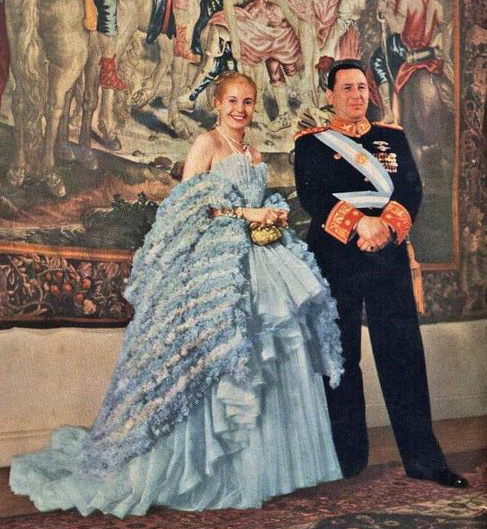
The most iconic change that Eva undertook at this time was to her hair. She permanently adopted the braided chignon that she had first worn in Europe. The bun at the nape of Eva’s neck became symbolic of her authority, with the silhouette giving the illusion of a fist, while also presenting Eva as a woman of purpose who felt self-assured to wear the same, simple hairstyle day after day.
- Sancta Evita
Following her death from cancer at only 33, Eva Perón’s transformation into a popular culture icon could be viewed as the final step in her Cinderella metamorphosis. From the little girl poring over photographs of her favourite actresses, her image now looms large over Buenos Aires in the form of two steel images of her that adorn the former Ministry of Public Works.
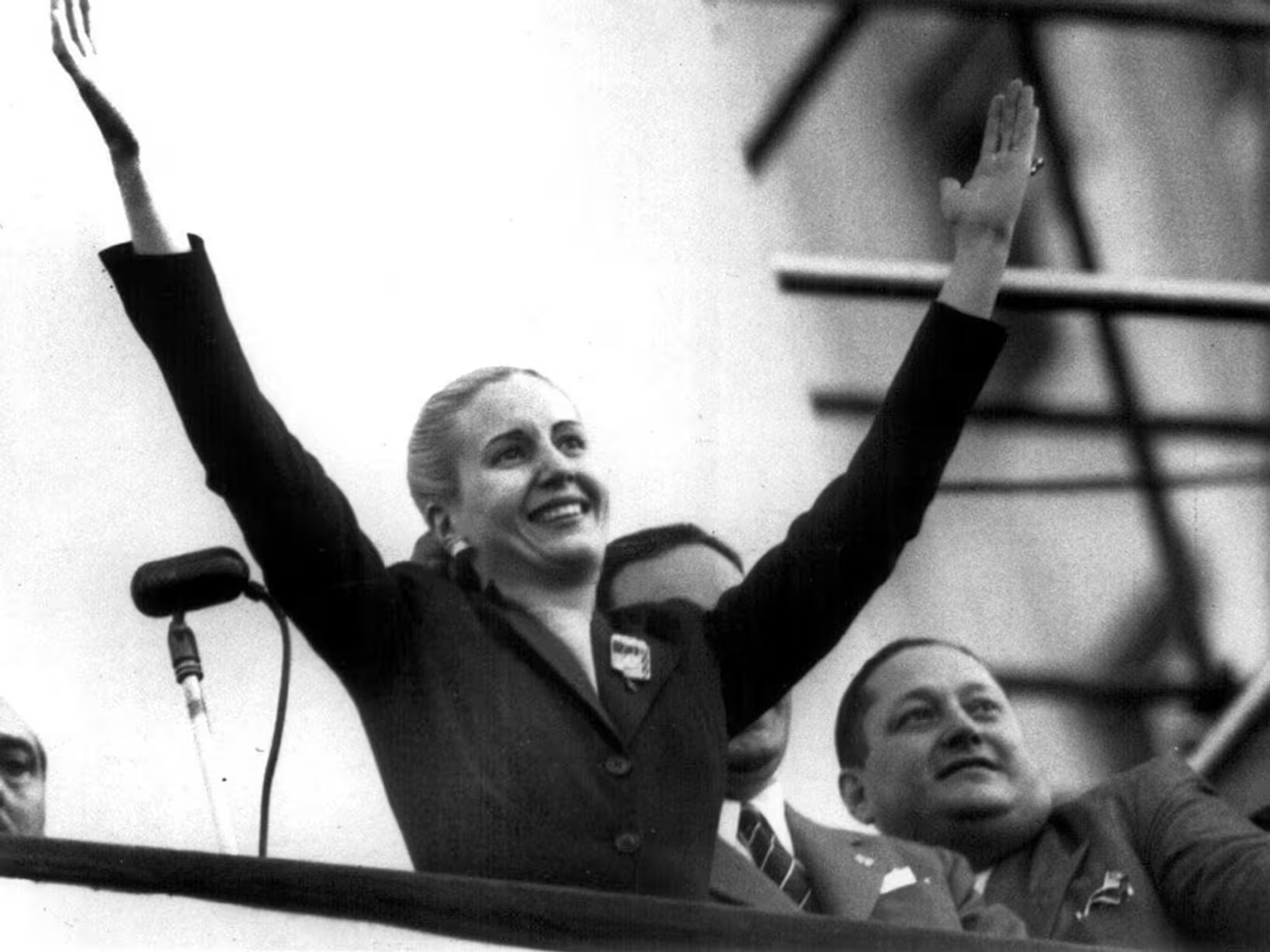
Although there has long been an accepted image of Eva Perón, her ambiguous persona has undergone a significant evolution in the seventy years since her death. Evita’s legacy has ricocheted between that of saint and sinner, yet she can be viewed as the perfect example of a popular culture icon because she was ahead of her time. Eva created her own brand of celebrity culture alongside her political role, which saw Argentine citizens – and the wider world – focus on what this glamorous young woman was wearing, saying and doing.
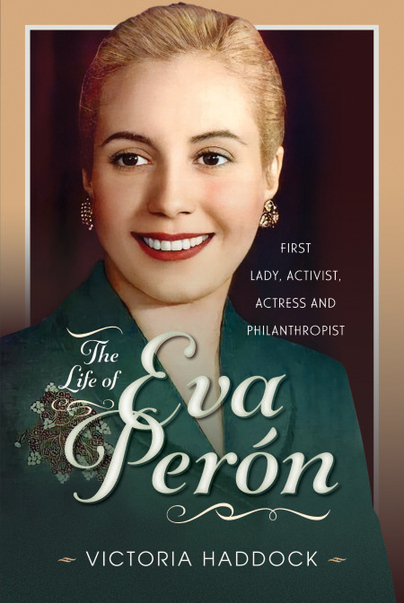
Order your copy here.