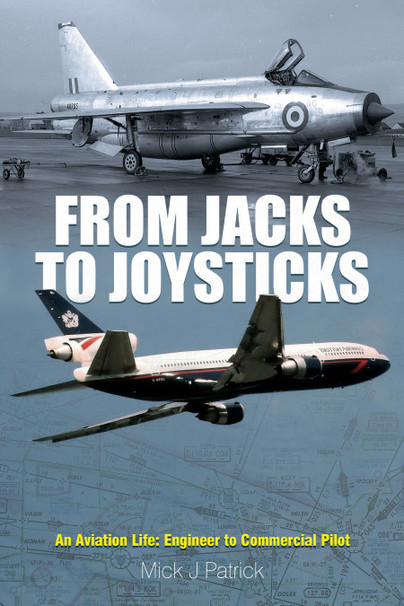
FROM JACKS TO JOYSTICKS – An Aviation Life: Engineer to Commercial Pilot
Author guest post from Michael J Patrick.
There was no grand plan. No burning ambition to become a pilot. What actually happened was that as soon as I got comfortable in one aspect of aviation, opportunities arose to do something new so I grasped them as they came along. Educationally close to the breadline and afflicted by a kind of stammer in childhood, I could not have assumed lofty career ambitions with any degree of confidence. But as time went on, I clawed my way out of a sense of settling for what I could get, to demanding much more of myself. This story – or more correctly, journey – is one that has taken me around most of the world. It has moved me out of the hangar and into the cockpit.
I come from a family of individuals where if you want something, you are expected to get it yourself. Despite little or no advice on what to do in life, it was obvious that I needed to qualify in a good ‘trade’, as what was in those days called a ‘profession’ was not on my radar.
The RAF took me on, as it had done for both my parents before me. My Halton Apprenticeship as a Trenchard Brat began in 1960 and I struggled through to graduation in `62. The posting to RAF St. Mawgan gave me a grounding in air force life and was followed by RAF Seletar in Singapore for the Indonesian confrontation. This front line service was a life I enjoyed to the full, volunteering for anything that came along and spending quite a bit of time up in Borneo. Returning to the UK was an anti-climax and after another couple of years I left early.
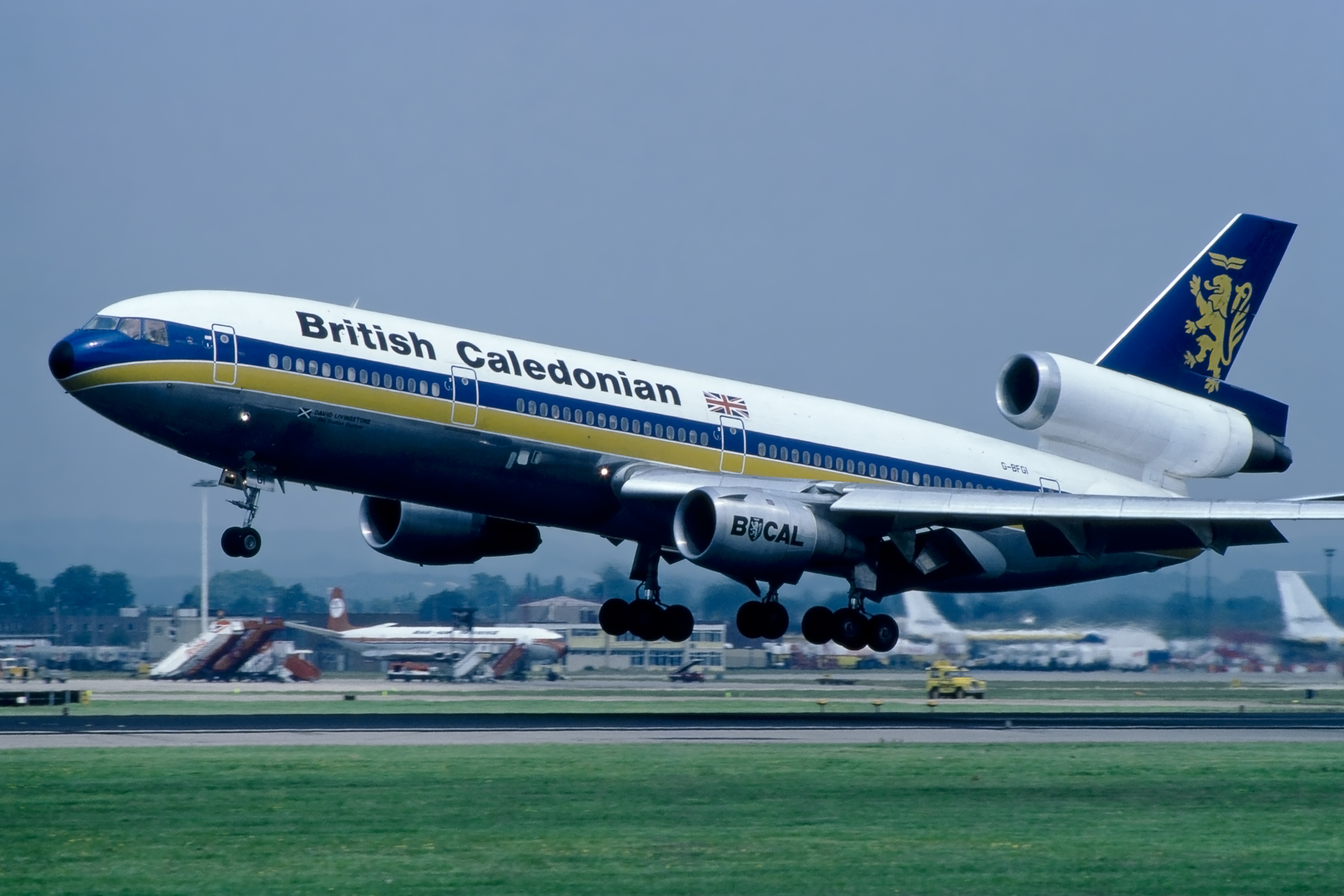
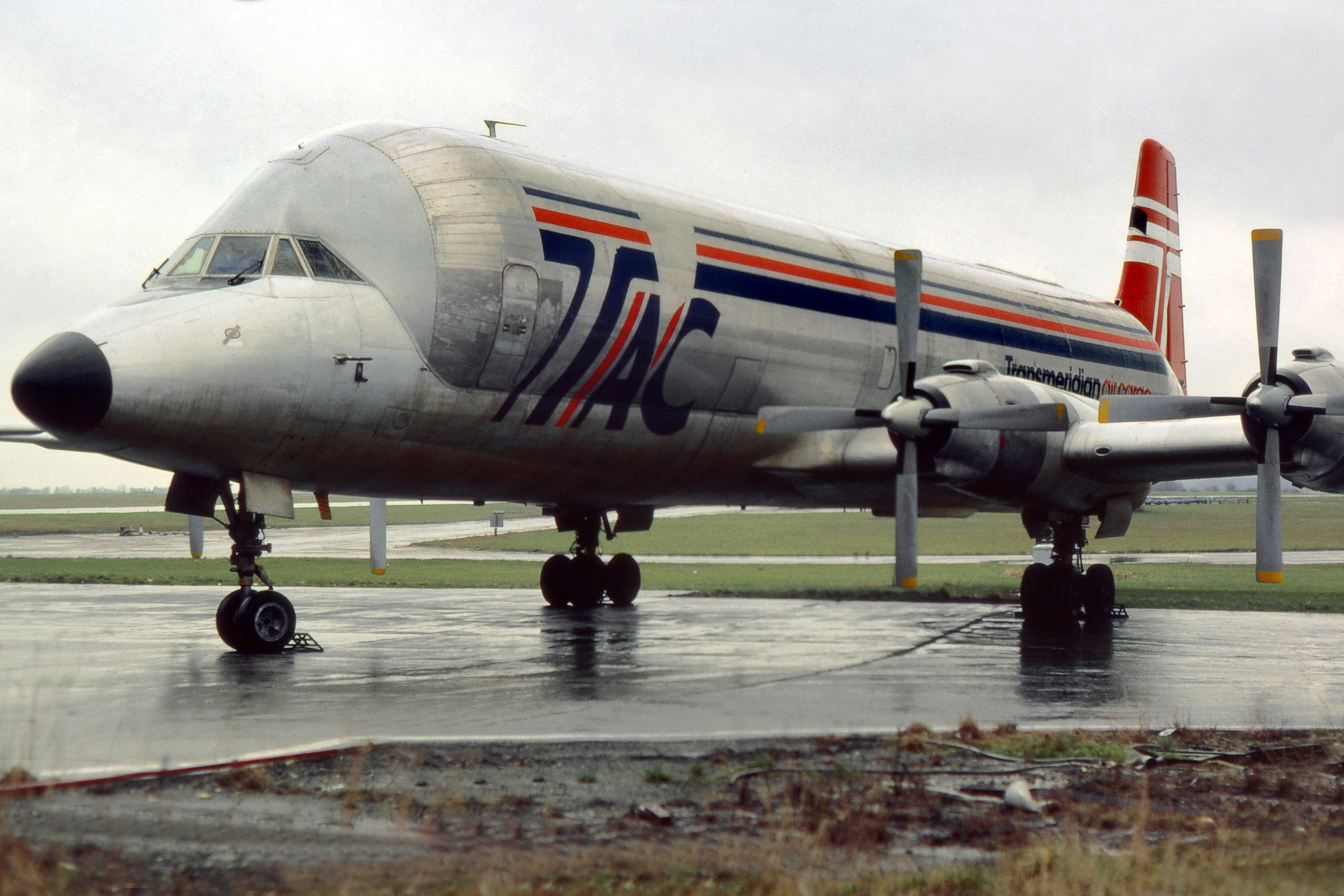
Another seven years of ground engineering followed, during which I gained a civil licence working on large four engine turbo-props and jets. In 1976, after a casual and totally unplanned interview, I became a Flight Engineer (F/E) for Transmeridian Air Cargo. That career continued, working for Cyprus Airways, British Caledonian and British Airways, for the next 21 years. I became a training engineer and examiner for three of those airlines. During this period, there were a couple of occasions when we almost came to grief and it cost me a few nights sleep. Some of my colleagues were not so lucky: we lost some in a fatal accident in Hong Kong whilst in Cyprus our aircraft crashed with the undercarriage not locked down. Happily no-one was injured on the latter occasion. Following that accident I was assigned to work with the Accident Investigator, a task complicated by an RAF aircraft crashing near our wreck a few days later.
In the early days, the aircraft I flew on did not have the level of reliability which we now take for granted. I had several engine shut-downs, fire warnings and lightning strikes. My routes took me to Africa and through the Gulf to Hong Kong. In the freighting days, if there was a load to be hauled we did it. If the aircraft went unserviceable, it was to the F/E that the company turned to and many times we found ourselves, shirts off, covered in oil and grease.
Later, when I moved on from cargo to passenger flights in more prestigious airlines there were new routes to fly and a new social life to explore. Now I had the luxury of engineering support on a defined route structure. As I grew in age, weight and confidence, my speech impediment slowly went away. With the passage of time, I was able to project myself into responsibilities and communications that I never thought possible. Sitting behind two pilots in a three man cockpit I was privileged to see some fine airmanship and occasionally some that did not belong in that category. Slowly, I came to realise that possibly there was a place for me in the front seat of a cockpit with the other guys. It did not seem so impossible and, just maybe, I could cut the mustard as well as they could. When I took my first flying lesson in Dallas, Texas, I was hooked. The obsession began.
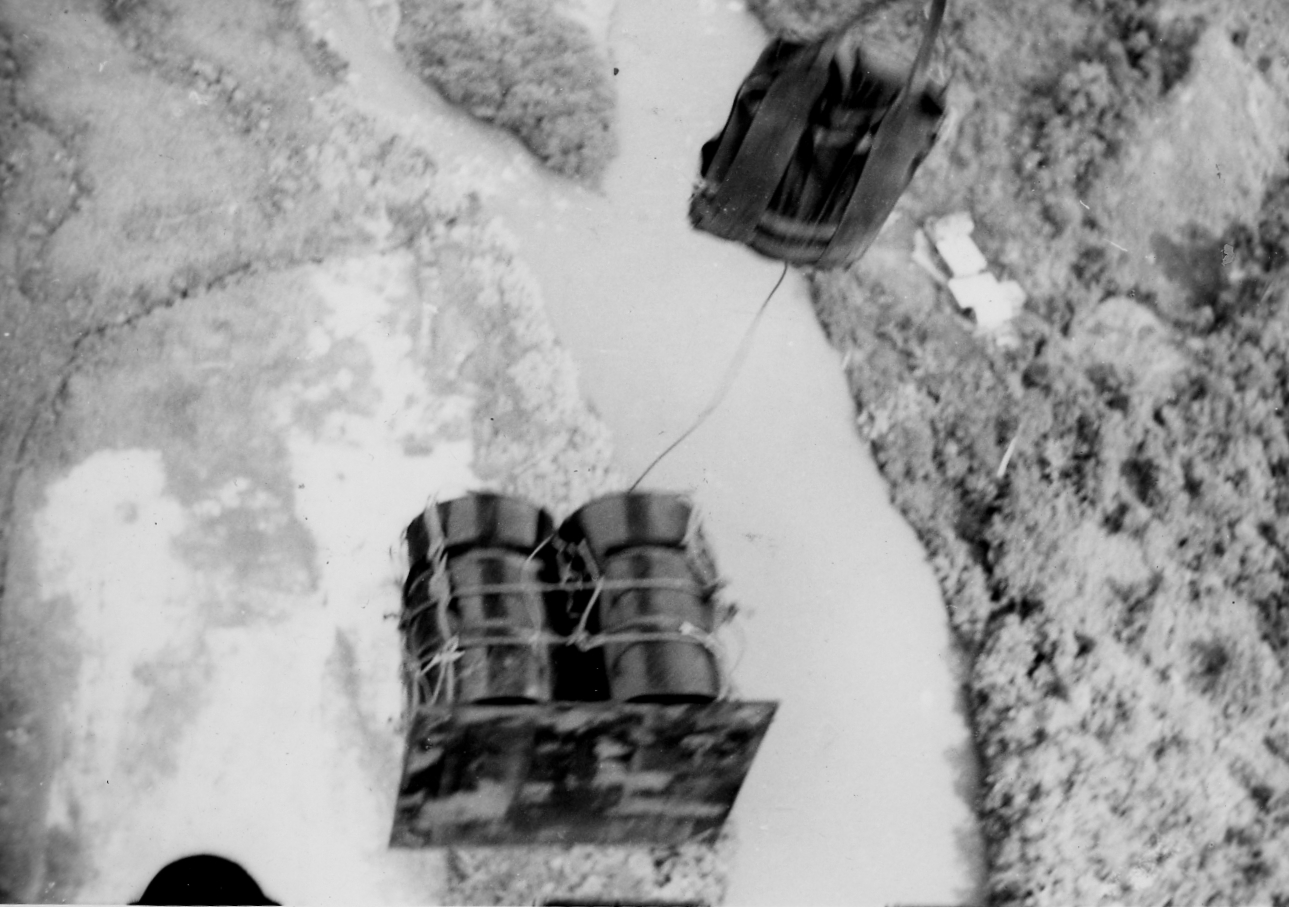
Over a period of ten years, I gained my Commercial Pilot licences on both sides of the Atlantic. Using my F/E job, by now with British Airways, to get me to the USA, I could rent aircraft cheaply. Time at home was used to prepare for the next exam and the preparation for my next flight. I flew from Atlanta, Dallas, Houston, Los Angeles and Phoenix. Once the licences were obtained, I took other crew members out to local tourist spots like the Grand Canyon. Thanks to their contributions, I could afford to build up hours. In Texas, I did a float rating. Landing in rough water, we came close to crashing when I almost tore a float off the aircraft.
The pilots I flew with in the airline helped by coming out and operating as safety pilots for me, keeping an eye out of the window while I practised flight on instruments. I have to thank those guys for that and for their encouragement. I did my UK commercial pilot licence at the age of 48 and passed my instrument rating at 51. Back at home, over a period of time I had four shares of light aircraft, eventually buying my own aircraft, a 1946 Cessna 140. I later sold that to buy a Grumman AA5. On retirement from BA and with an incredible dose of luck, I went straight into an air ambulance job flying Beech King Air 200`s. The brat had finally got into the front of the cockpit and was quickly moved into the left seat. My learning curve was very steep and I slowly built up a comprehensive knowledge of Europe’s airports. I enjoyed another seven years of varied flying, operating out of uncontrolled airports into the mighty Heathrow and other challenges. My time as an F/E had provided me with experience that other pilots did not have. It was almost as if my F/E career had been the apprenticeship for captaincy. Decision making came all the easier because at some time in the preceding 14000 hours in the F/E seat, I had occasionally been in difficult situations and thanks to the lessons I had learned from those pilots in front of me, I could operate more wisely and safely.
Working with two medics, usually a doctor and a nurse on the crew, brought a new side to aviation and to my personal life as well. My flight calculations could be affected by how many more heavy bottles of oxygen we needed or, if the patient had to be carried with a sea level cabin pressure, how I was going to plan fuel stops to get us to our destination. Not all the patients made it home with us. The medics would do what they could, but through no fault of their own, it was sometimes not meant to be.
Through this period there was a need to perform Crew Resource Management, Aviation Security and Dangerous Goods training for the company. As I had been an instructor in the airlines, I offered and was accepted to conduct those subjects in ground training. Not content with that, the company needed an auditor, so my hand went up again. Taking a Quality Management and Auditor course, I added Flight Operations and Maintenance auditing to my CV. Unwittingly, I had now created another career move which later, provided me with work after I stopped commercial flying. As the end of my flying career hove into sight, I requalified as a simulator instructor and armed with all these strings to my bow, began business as a self-employed instructor and auditor. The simulator work introduced me to the crews of the KC10`s of the Royal Netherlands Air Force, who at the end of the contract showed us at first-hand how they refuelled their F16 fighters.
Shortly afterwards another opportunity arose to audit for a company on behalf of the International Air Transport Association. Just when I thought I had flown to most parts of the globe, this job was to take me to places that I otherwise might never have seen. The airlines we audited varied from the great and good to the small and downright dodgy.
Lack of confidence had held me back until I was in my early thirties, but emboldened by success, I went completely over the top, doing more than I ever thought likely.
It has been a hell of a ride. Sadly, beginners starting out in aviation today are encumbered by the cost of qualifications. It seems that the self-improver route is slowly being strangled out of existence yet those of that category were some of the most enthusiastic and gifted pilots with whom I ever had the pleasure of sharing the flight deck. Hopefully there will still be a route into the cockpit, whatever your starting point. Even if the objective seems too difficult, have a crack at it anyway. Either way the journey will be life enhancing. Enjoy the ride and happy landings.
Order your copy here.