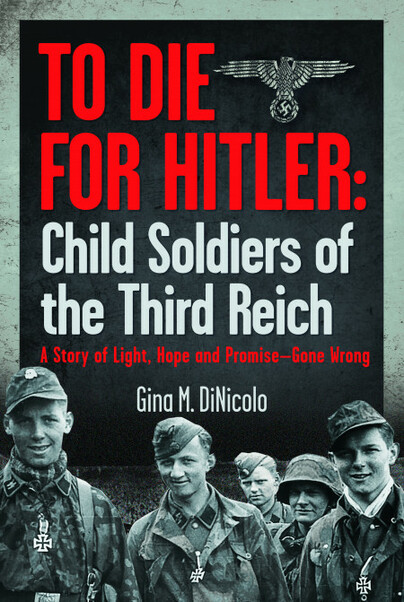
Origins of To Die for Hitler: Child Soldiers of the Third Reich. A story of Light, Hope and Promise–Gone Wrong
Author guest post from Gina M DiNicolo.
Around 2007, I learned that my future husband’s father had fought for Germany during the Second World War at age sixteen. I was intrigued and pitched the story idea of World War II German child soldiers to a magazine I wrote for at the time. The response from the military-themed publication: ‘They may have killed Americans. We can’t have that.’
Of course I pursued the topic further. I wanted to know more. When overt inquiries during visits to Rudi Schulz’s San Francisco Bay area home revealed little, I employed a more subtle approach and enlisted my husband’s assistance. With his help, I stalked the former teen combatant over more than a decade, piecing together a story–albeit one full of holes and tangents to nowhere. What I heard most often from Mr. Schulz was, ‘Ach! We were just a bunch of crazy kids.’ The visual was his signature hand wave.
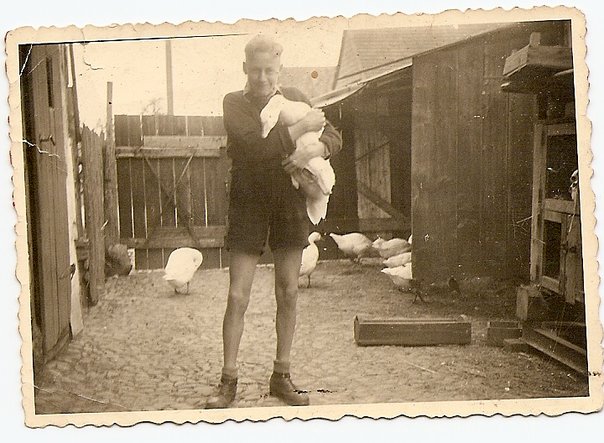
Over the years that followed, I could not reconcile this man with the boy who fought for Germany. I sensed no connection. I asked about others who served and fought like him, still with little idea of how he served and if he, in fact, fought. (This is not the sort of thing you just ask people.) He told me he knew of no one else. My wide-net casting calls also turned up nothing. My efforts and story were stymied.
Given health challenges, my husband’s father spent 2021 as our prisoner in Virginia, as is often the case in elder care. It seemed an ideal opportunity to nail down facts about this child soldier. Though lucid, he only spoke in his characteristic cryptic clichés. Following sporadic hospital stays, we checked him into a rehabilitation facility to help ensure this reasonably healthy and independent nonagenarian could get around his apartment in our rambling pre-Civil War home.
Enter what we Americans call The Pandemic. His doctor told us he tested positive for the baffling condition called COVID. The facility placed him in immediate quarantine. We had no idea if this diagnosis was accurate, and it seemed there was little we could do to break him out as we stood in sub-freezing temperatures staring at him through the glass of his window-to-freedom like a zoo animal.
What we soon witnessed was unconscionable. A man, 93, bordering on legally blind and deaf though clear-minded – alone, wearing only a flimsy hospital gown, running around, frantic, in tears asking what he had done wrong, begging to be released. While it was a horrifying sight, after years of looking for Rudi Schulz the child soldier, I knew I met him during those heart-wrenching moments.
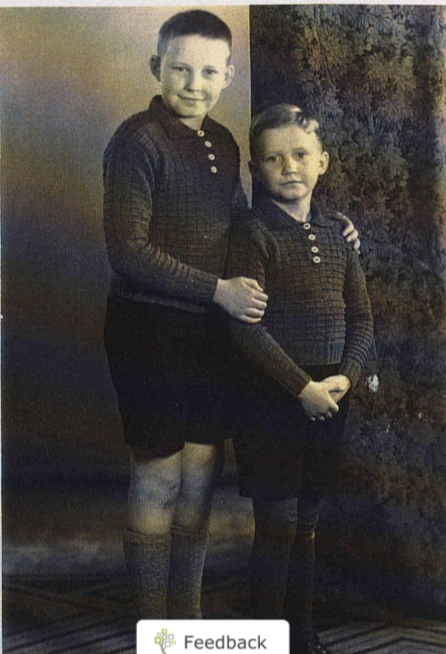
He left the facility clinically catatonic and never really came back to us. It seemed he had kept his duty to Germany locked away as many veterans do. Much to my surprise after his death in 2022, the world of Adolf Hitler’s child soldiers revealed itself. I learned that many, including neighbors and his closest friend in Redwood City, Calif., shared a similar history of service as well as one of stupefying loss.
After a little more thought and research, I conducted man-on-the-street interviews asking people’s impressions of Germany’s child soldiers. Without exception, respondents referred to the youth as “Nazis,” a derogatory term used during the period to slight members of Adolf Hitler’s National Socialist party, and later his government and supporters, that has become the preferred default term. Many stated that these children, “should have known better.” While this was not my take on this generation of German youth, I found their perspective informative and energizing. I moved into the next phase of my research.
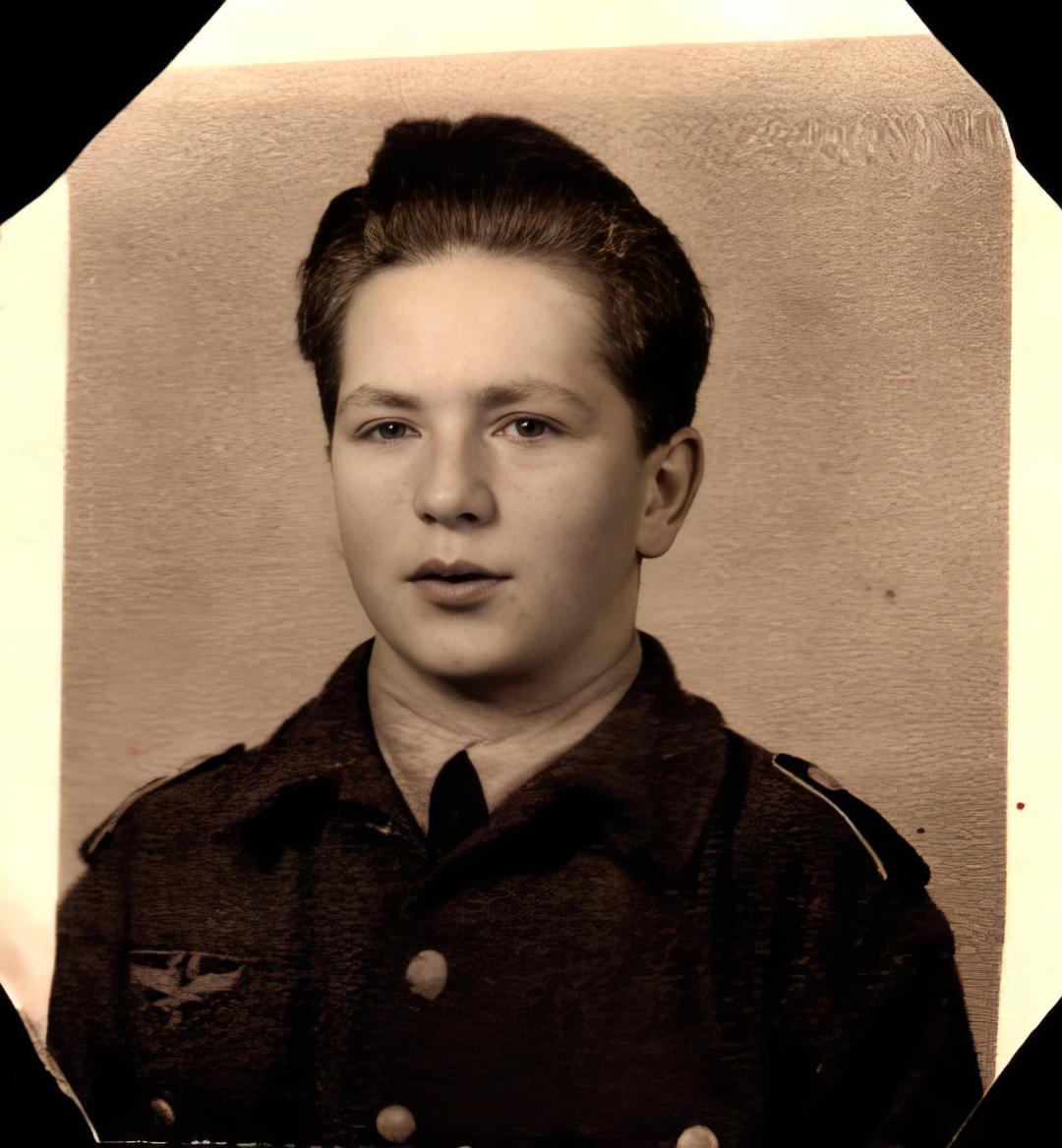
I focused on the heart of the story–the children. After reading the family history by child soldier Gerhard Wolf, (It is a detailed memoir juxtaposed with parallel, real-word events of the period that I found as accurate as it is honest.) and talking at length with Luftwaffe Helper Robert Ullrich, it was clear that as boys they believed it a privilege not just to fight for the Reich, but to give their lives in the service of Adolf Hitler, their father, the man who loved them more than their families and who never lied to them. (The last point seemed especially important to Robert.) I found this a common thread. Given the prevalence of this view by youth of the period, I added “To Die for Hitler” before “Child Soldiers of the Third Reich.”
I determined through further primary source research as well as what I gleaned from my talks with Robert; Gerhard’s younger brother, Herbert; and a hodge podge of years of assorted notes and recordings made of Rudi Schulz without his knowledge (these tight-lipped Germans clam up all the more when they know you are recording them) that for these youth, their stories, their lives, their Germany was one of light, hope and promise. They did not just believe in the greater Germany Hitler promised, they were certain of it. Losing was never an option, and I don’t believe they ever came to terms with the unimaginable loss of all they knew and for which they fought. This showed me that theirs is a story that went terribly wrong. For a generation-plus of German youth theirs was a certain and bright future that (without warning–from their perspective) went off the rails.
Order your copy here.