To Die for Hitler: Child Soldiers of the Third Reich
Author guest post from Gina DiNicolo.
In my first article-as-blog-entry for Pen and Sword, I discussed the origins of my latest work, To Die for Hitler: Child Soldiers of the Third Reich. A Story of Light, Hope and Promise – Gone Wrong, as well as the sources for the book’s title. Here, in what closely parallels the second part of the volume’s introduction, I discuss the indoctrination and training of a generation-plus and give my observations after completion of the book. (Are such pursuits every really finished?)
Former German Chancellor Franz von Papen aptly noted in Memoirs:
The period I am now about to describe [Germany, 1930–32] has been much misrepresented by historians. The Western Allies have preferred to regard National Socialism as a sudden manifestation, rather than as the result of years of development. My own Chancellorship has been described as a mere stepping-stone to the domination of Hitler, and the sequence of events has been so over-simplified that the current impression will be difficult to counter.
Similarly, the German child soldiers, as we may term them, of the Second World War, in many ways, have been misrepresented, oversimplified, misunderstood and often seen as a sudden manifestation of Adolf Hitler. Many post-war, Allied characterizations are just that. Even observations of outsiders from 1930 through war’s end in 1945 do not grasp the crucial perspective of these youth and those who molded them. Few seem to comprehend the magnitude of the loss this generation suffered with the abrupt end of the lifelong promise of the greater Germany.
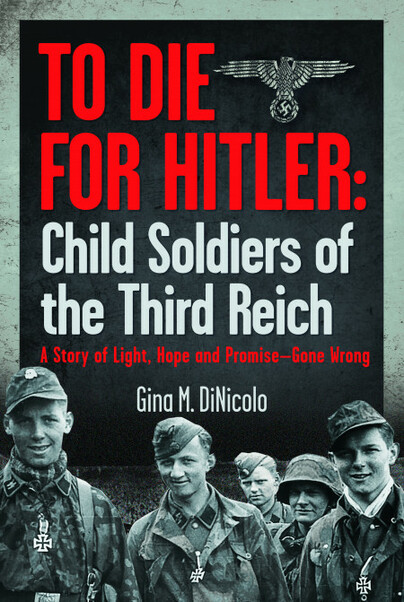
To Die for Hitler: Child Soldiers of the Third Reich. A Story of Light, Hope and Promise – Gone Wrong is the story of a generation-plus who grew up believing in the greater Germany promised by their father, Adolf Hitler, to whom they pledged their lives and their loyalty. It takes a walk-the-dog approach from the roots of the turn-of-the-nineteenth-into-the-twentieth-century German Youth Movement, through the meticulous development of millions to serve the Reich and finally to the last battles for a nation on the verge of annihilation fought by boys who remained certain of German victory.
The First World War not only bled out the early twentieth-century Romanticism of its idealistic German youth who rushed to the front to serve, it left Germany chaotic and rudderless four agonizing years later on the eve of the Armistice. Men like Adolf Hitler and parties like the National Socialists soon offered order and hope and a scapegoat for the pain of a nation. Baldur von Schirach, one such believer, descended from German nobility and American aristocracy, took a whisper of a youth enterprise and created a juggernaut of millions of single-minded German youth and groomed them for service and sacrifice. National Socialism’s Svengali, Josef Goebbels, crafted a culture and fashioned the air these children breathed, the water they drank and the pathways they walked. Countless others made it their mission to mold the legions demanded. It was a glorious undertaking for all involved.
The systematic, years-long development of millions loyal to and ready to die for one man is arguably one of the greatest grand-scale efforts in modern history. Yet, a German boy of sixteen in 1944 does not seem much different from patriots or nationalists in other nations or true (some may say fanatical) believers in a cause, movement or organization present, past or possibly future. These young men (and women) were influenced by what surrounded them and were passionate about their belief in their Führer and the future of Germany. For most, it was all they knew.
National Socialism made indoctrination, education and training an almost lifelong, all-encompassing pursuit, though admittedly its success came at a staggering cost. Often the Reich supplanted the traditional German family, and many children were infantilized and (unintentionally) denied the right to mature as those of other nations and other periods. The inability to comprehend defeat when so many unexpectedly experienced sudden and tremendous loss on multiple levels proved its own ticking time bomb.
Some may use the term ‘brainwashed’ when referring to German youth of the period, and that is a reasonable perspective. The story of the German child soldier in many ways comes down to perspective. With the concepts of loss, surrender and failure absent from the lexicon, the fashioning of more than a generation succeeded in ways that possibly only German youth and Reich leadership could comprehend – as this author has been reminded many times by more than one such young person of the period. This is not a book on politics or patriotism. It is the story of the creation of a promise and the hope held by average boys born in 1928 who fought for Germany in what many may view as its darkest days. Where we may see inevitable capitulation, these boys saw only victory.
This is a story of light, promise and hope – gone unexpectedly and terribly wrong.
Order your copy here.