Virginia Woolf and the Bloomsbury Group 100 Years Ago
Women’s History Month guest post from Kathleen Dixon Donnelly.
In 1926, 44-year-old English novelist Virginia Woolf was building a strong literary reputation.
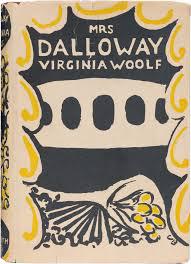
The year before she had published her fourth novel, Mrs Dalloway, to great acclaim. She and her husband Leonard, 45, had been operating their own publishing company, the Hogarth Press, out of their home for the past nine years. By this time they were publishing all of Virginia’s work—which were their best sellers—as well as books by their friends. For Virginia, this meant she no longer had to be dependent on Gerald Duckworth and Company, owned and operated by one of the two stepbrothers who had sexually molested her and her sister when they were young.
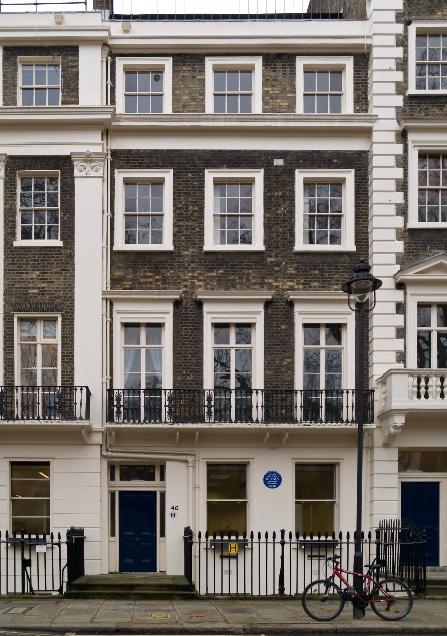
This year the Woolfs moved the Hogarth Press from their home, Hogarth House, in the Richmond section of London, to Tavistock Square in the Bohemian Bloomsbury neighborhood.
Virginia, her sister Vanessa and their brothers, Thoby and Adrian, had first moved to Bloomsbury after their parents died. Here they held evening salons with their brothers’ friends from Cambridge University who became well-known as ‘the Bloomsbury Group.’
The Group was broken up by the ‘Great War,’ which lasted from 1914 to 1918. By the 1920s the ‘Bloomsberries’ were all still friends, now dividing their time between townhouses in London and country homes in East Sussex.
In December of the previous year, 1925, Virginia had become lovers with writer Vita Sackville-West, 34, who had an open marriage with her husband, Harold Nicholson, 39. At the beginning of 1926, Vanessa was off in the south of France, and Vita was on a four-month trip to visit Harold in Tehran, Iran, where he had been posted as a charges des affaires to the British Embassy there. Virginia was left alone with just letters.
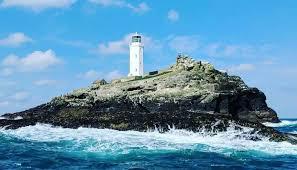
Virginia was working on what would be her most personal novel, To the Lighthouse. Although the story is set off the coast of Scotland, the location and characters are based on Virginia’s summer family holidays in St. Ives, Cornwall, where they could see the Godrevy Lighthouse in the bay from their cottage.
Despite bouts of depression, Virginia worked on the novel throughout the year and by mid-September had finished the first draft.
A lot of her writing that year was done at Monk’s House near Rodmell in Sussex which she and Leonard had bought at auction shortly after the War. They often entertained weekend guests there and would spend their evenings smoking cigarettes they rolled themselves and listening to classical music on the gramophone.
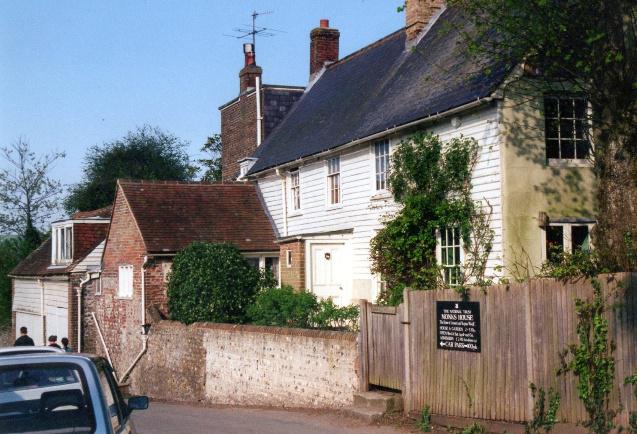
In the 1920s Virginia’s sister Vanessa, a 47-year-old painter and interior designer. still lived in Bloomsbury’s Gordon Square. But she was spending more time in Sussex in Charleston Farmhouse with her husband, art critic Clive Bell, 45 (when he wasn’t conducting romantic affairs back in London); their two teenage sons; Vanessa’s partner, both in art and life, painter Duncan Grant, 41, and her 6-year-old daughter with Duncan, Angelica.
Also welcome in this exquisitely blended household were Vanessa’s friends from their Bloomsbury days, including economist John Maynard Keynes, 43. After the War he had spent time up in his Charleston bedroom writing The Economic Consequences of the Peace. He warned Europe that treating Germany badly by demanding high reparations would only sow the seeds for a later dictatorship. Few listened.
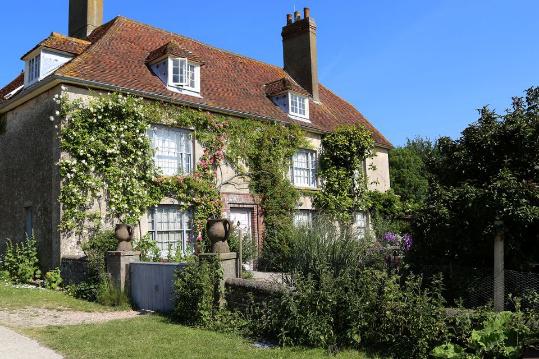
Keynes, who had had homosexual relationships with Duncan and many of his Cambridge associates, surprised all his Bloomsbury friends in 1925 by marrying a Russian ballerina, Lydia Lopokova, then 33. In 1926 the newlyweds took a long-term lease on Tilton, a country home just a short walk down the path from Charleston.
Vanessa was dubious about having the Keynes as neighbors. She was still fond of Maynard and had always felt that Lydia would take him away from the Bloomsberries. Vanessa and the others, whose friends were mostly writers and artists, weren’t comfortable with Lydia’s fellow dancers from Serge Diaghilev’s Ballet Russes, a huge hit on the London stage at the time.
As Lydia slid into the role of country house hostess, and she and Maynard conducted major renovations to Tilton, Vanessa began to resign herself to having her former confidant Maynard and his new wife living so close by.
That spring, Vanessa, Duncan and Maynard were all involved in launching the London Artists’ Association (LAA) which guaranteed income for member painters. Their initial exhibit garnered good reviews, particularly for Vanessa and Duncan’s work. Her sister Virginia wrote to her, ‘As you have the children, the fame by rights belongs to me … People will say, What a gifted couple! Well, it would have been nicer had they said: Virginia had all the gifts: dear old Nessa was a domestic character—alas, alas, they’ll never say that now!’
The other personal project that Virginia worked on that year while she was writing To the Lighthouse was a photo album of family pictures taken by her maternal great aunt Julia Cameron, a nineteenth century pioneer in the field. Virginia collected photos from her sister, but neither of them felt the need to contact their hated stepbrothers, Gerald and George Duckworth. The result was Victorian Photographs of Famous Men and Fair Women, published that October, with an introduction by Virginia.
Virginia was well enough that summer to do some traveling with Leonard. In late July they took a day trip to Dorchester to have tea with novelist Thomas Hardy. Virginia’s father, Leslie Stephen, had helped to publish one of Hardy’s early novels, Far from the Madding Crowd, back in 1874. On the train from London, Virginia read Hardy’s The Mayor of Casterbridge (1886) and was just as impressed with his writing as her father had been.
Hardy was welcoming, but Virginia found that he didn’t really want to talk about his own or anyone’s novels. He told Virginia, ‘They’ve changed everything now … We used to think there was a beginning and a middle and an end … Now one of those stories came to an end with a woman going out of the room,’ referring to her own Mrs Dalloway. Before the Woolfs left, Hardy gave Virginia a copy of his short story collection, Life’s Little Ironies, inscribed to ‘Virginia Wolff.’
As the winter rolled in, Virginia was able to start the rewriting phase of To the Lighthouse. At the end of November, when she was revising at the rate of six pages each day, she wrote to Vita that her own death is ‘the one experience I shall never describe.’
By the end of the year, the Hogarth Press was doing well. Virginia’s Mrs Dalloway was competing for sales with Vita’s novel Seducers in Ecuador, which they had also brought out last year.
An analysis of the publishing industry which came out that year, Stanley Unwin’s The Truth about Publishing, declared that no small publisher could last longer than seven years unless the owner had a lot of previous management experience or an infusion of capital. Heading into its tenth year of business, with two inexperienced founders and no outside investment, Hogarth was beating the odds, mostly thanks to Virginia’s novels.
………………………………………………………………..
Order your copy here.