The Churchill Crocodile: 141 Regiment RAC (The Buffs)
By Tim Saunders and Richard Hone
As well as covering the design and development of the Churchill Crocodile and its flame equipment, this book is a comprehensive story of 141 Regiment RAC’s fighting in Normandy, including maps, rare photographs and many personal accounts.
The book features an in-depth description of the Churchill tank, highlighting its many advantages. These included extremely thick armour, rivalling that of the legendary Tiger. Its excellent cross-country performance is described along with having a much lower chance of catching fire than other AFVs.
We give a full description of the Flame Projector along with the other weapons carried, including the effective QF 75mm gun, BESA MMG, Air Defence Bren and personal crew weapons. Detailed information on crew tasks and training, clothing, food and daily life. Also covered is the radio equipment and infantry telephone.
This is a taster of what is to be found in the book.
The use of flame in war is as old as war itself, with one remarkable, still not fully understood technology, Greek Fire, being used across the ancient world. For example, during the siege of Constantinople of 1453, the Ottoman army’s use of the weapon was highly successful. Early in the twentieth century, during the First World War, with trenches at close quarters flame throwers were again in use but they were never widely used or decisive. Late 1930s developments of a flamethrowing tank were put aside when Britain stood alone in 1940, but flame was in places deployed as a measure against invasion. It was, however, RAF airfield ground defence that continued to update flamethrower design, but the resulting system was very large and mounted on a truck and lacked serious utility.
Following the failure of the OKE flamethrowers, mounted in early versions of the Churchill tank, to come into action during the 1942 Dieppe Raid, flame warfare was on the back burner as far as development was concerned. It was saved from the sidelines by General Sir Alan Brooke, who saw its potential during a demonstration of secret weapons at Orford Ness in 1943. He ordered the prioritisation of the development of what became known as the Crocodile Flamethrower.
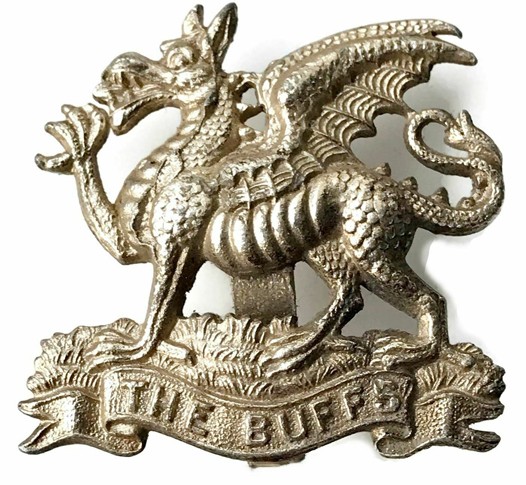
Time was short to develop a battlefield system for the invasion of North West Europe. In anticipation of the Crocodile’s issue, the Churchill tank equipped 141 Regiment Royal Armoured Corps was extracted from 31 Tank Brigade and established at Eastwell Park near Ashford in great secrecy. The newest Churchill Mark VII tanks began to arrive and amidst continuing secrecy Lieutenant Wilson commented that
During routine maintenance, we notice quite a few fittings, drilled and tapped holes that seemed to have no reason for being there. Questions always draw black. No one seemed to know the answer. Various ones where suggested none seem to fit as it turned out none of us were correct.
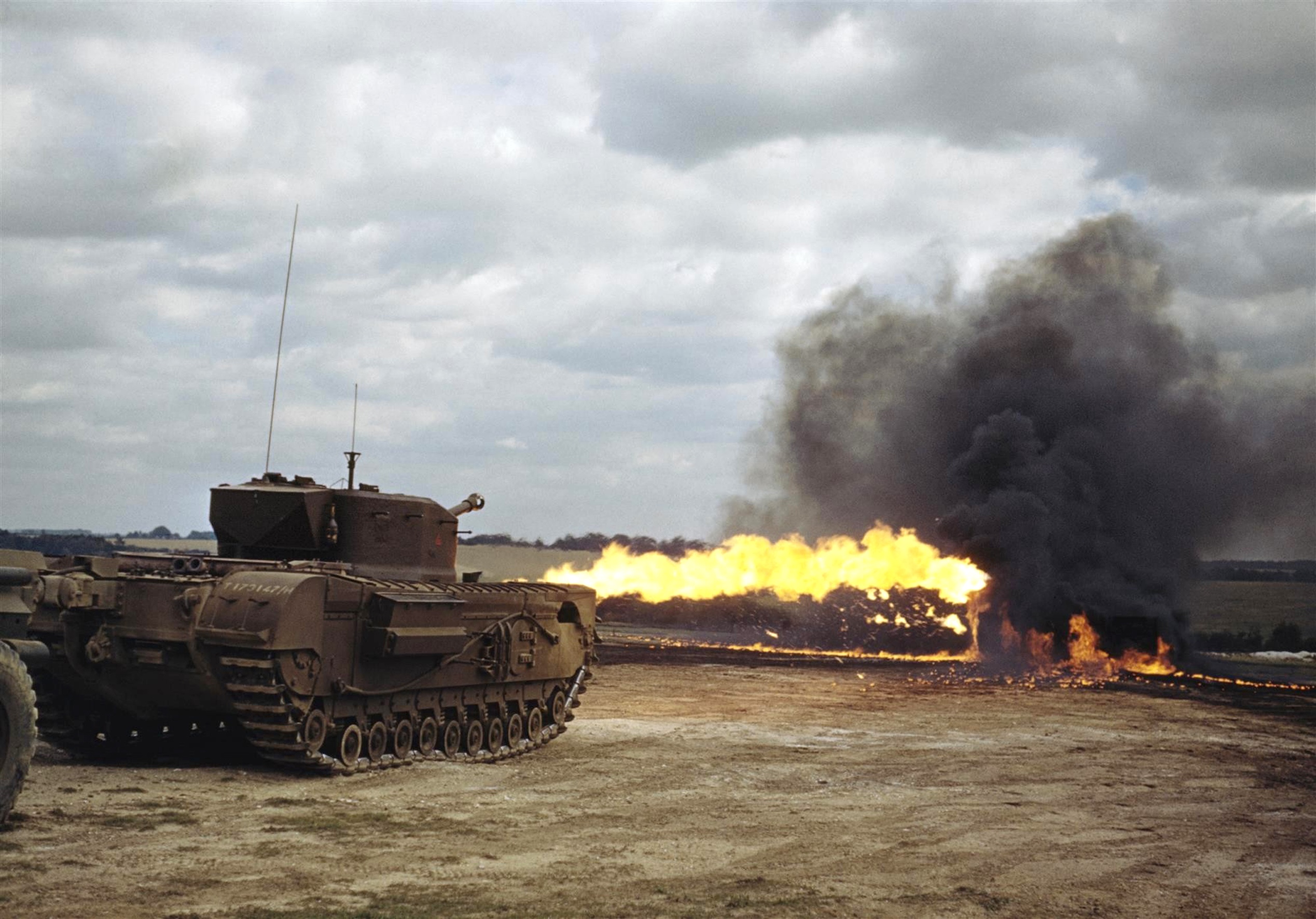
The key element of the Crocodile system was the 400-gallons of flame fuel, known as ‘FRAS’ (Fuel Research Aluminium Stearate) was a secret mixture of petrol, aluminium stearate and other chemicals, allowing the gel mixture to burn continuously and stick to any surface attacked. A trailer full provided enough fuel for bursts totalling eighty seconds of flaming.
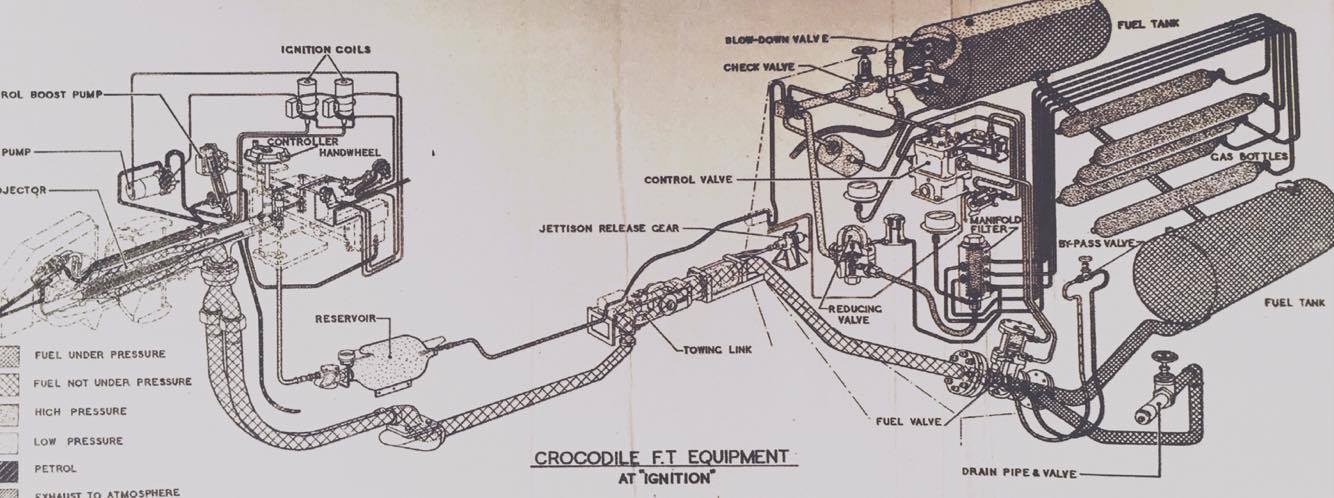
The main part of the Crocodile Conversion Kit was the FRAS flame fuel trailer was pressurised by five large gas cylinders, and it took about thirty minutes, to bring the system into action, after which pressure fell steadily.
The Crocodile’s trailer was connected to the tank by an ingenious attachment known as the towing link. This allowed the tank to turn in any direction without overturning or interrupting the flow of gas and fuel. The flame fuel was carried from the trailer by a steel pipe that ran beneath the belly plate and into the hull through an opening originally designed for spent cartridge cases beneath the hull gunner’s position.
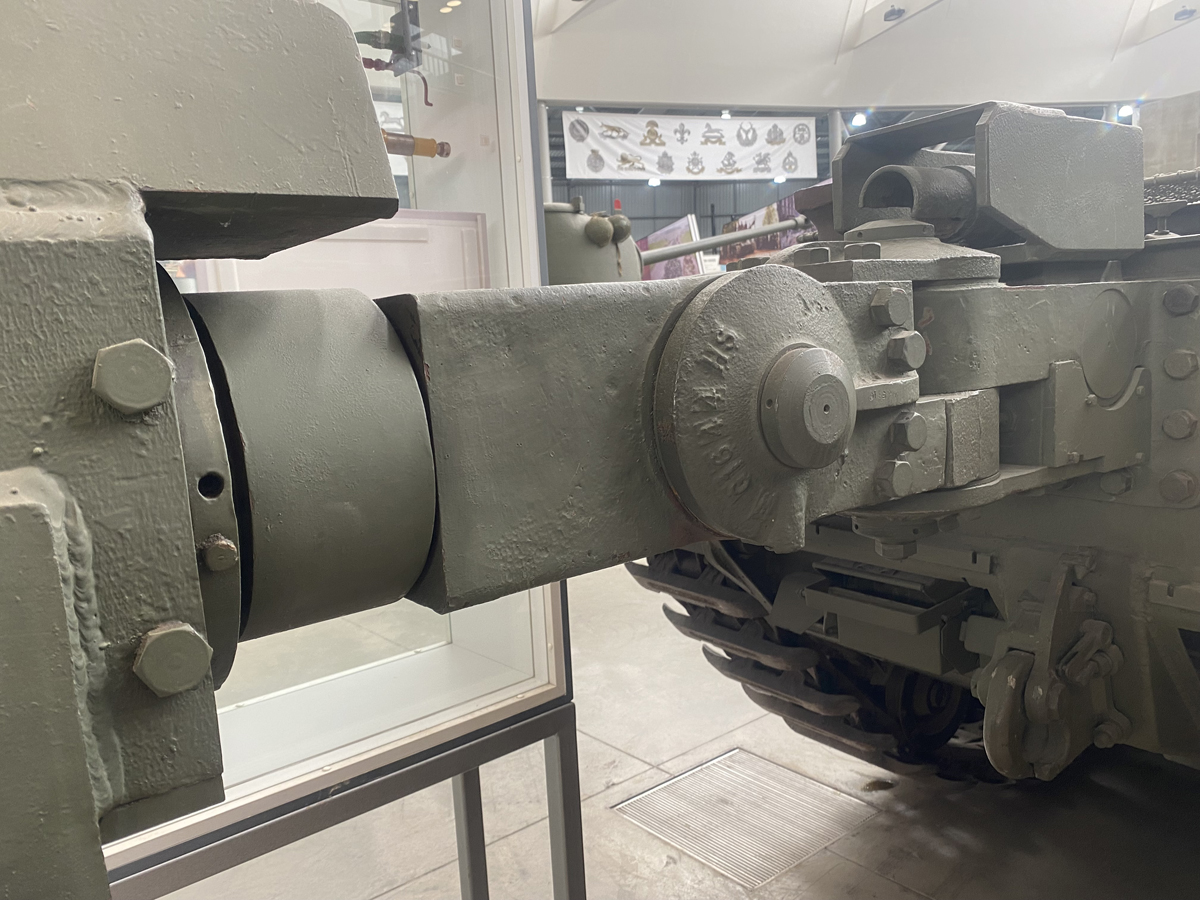
Some 800 Crocodile conversion kits and trailers were produced; of these several regiments worth were supplied to units in Italy and Burma during the autumn of 1944. A further 250 were held back in the UK for the invasion of Japan.
By May 1944, only C Squadron was ready for action as D Day approached. Assault plans were already fully developed and finding space for an unknown and untried weapon system in shipping was a big ask. Eventually, XXX Corps was able to take half a Squadron and load the Crocodiles onto Landing Craft Tank at Lepe on the Solent coast of the New Forest. A troop each was to land on GOLD Beach, KING and JIG sectors in support of the 50th Division. On 6 June, no doubt with the lack of amphibious training contributing, only two Crocodiles out of six successfully got ashore and across the beach. Not only that but by the time they had de-waterproofed the pressure in the flame system had been dropped and with the battalions knowing little of the Crocodile, the battle had advanced inland without the two Crocodiles.
As a result of the difficulties on D Day, first Crocodile flame action was on D+1 against the Vera Battery inland from KING and Ver sur Mer. The result was a demonstration of the capability of flame that in virtually all cases saw the enemy taking to his heels in the face of what they regarded as an ‘un-British weapon’.
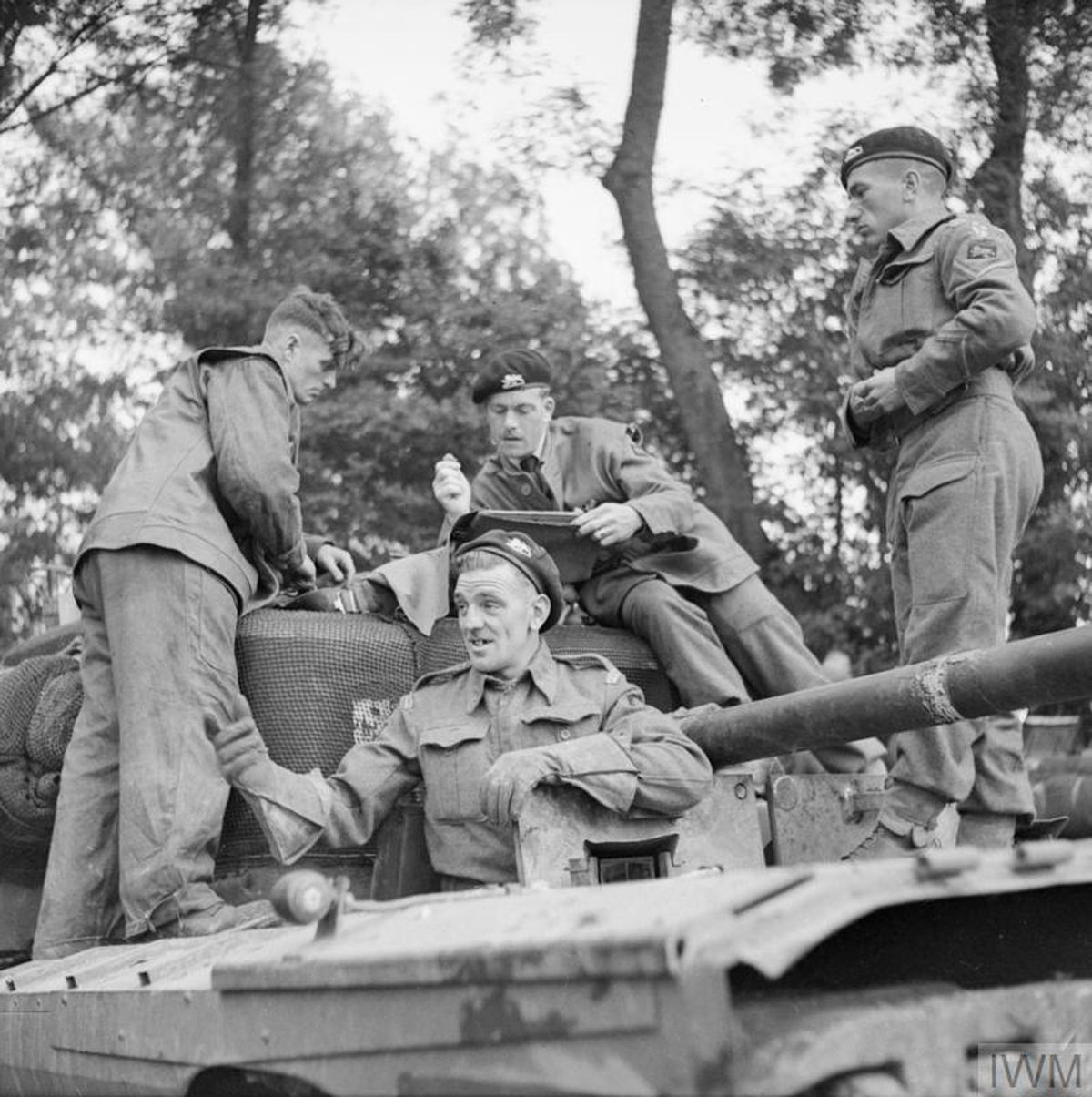
The introduction of any new weapon system is always followed by a period of tactical development but that for the Crocodile was a particularly painful process. In the time available before D Day, other than 141 RAC developing its own low level tactical procedures, there had been little opportunity to consider the Crocodile’s integration into all arms tactics. Consequently, those allocated Crocodiles on the Normandy battlefield had little idea how to use them, as this example from C Squadron’s war diary exemplifies.
By 11 Jul the Sqn was once more scattered over the front for Operations MAORI II (a drive on HOTTOT). 14 and 12 Tps were u/c 231 Bde and sub allotted to 1 Hamps and 2 Devons respectively. During the day they were not required. By the evening the infantry after an advance of several hundred yards, were on the outskirts of HOTTOT. They had no intention of advancing further. Even so it was seriously suggested that the Crocodiles rush madly down the streets of HOTTOT (known to be infested by German Tanks) flaming the whole way (of course anyone should know they a Crocodiles can only flame almost straight ahead). The C.O. was fortunately present and on very obvious grounds managed to avoid this senseless gesture by appeal to 30 Corps, who subsequently issued a directive on the use of Crocodiles. This was typical of the many fantasies designed for Crocodiles in their early history by Crocodiles ‘know-alls’.
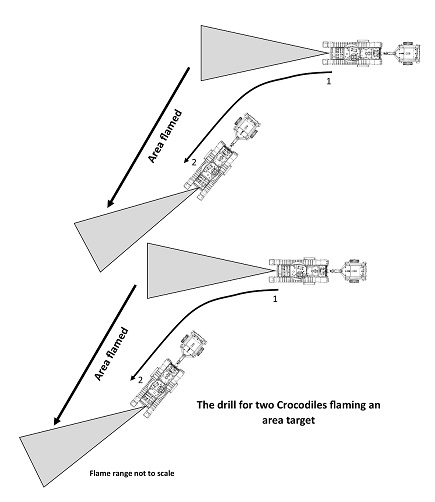
The situation only slowly improved but the turning point was the deployment of 79th Armoured Division’s advisors to formations that were to have Hobart’s Funnies grouped with them, including the Crocodile. This scotched commander’s more fanciful ideas during planning and put forward the growing body of knowledge of how to use the Crocodile to best effect. In that respect, an effective and successful tactical doctrine was developed by the mid-point in the campaign but none the less, 141 RAC were involved in some very hard and costly fighting as explained in the book.
Even though the use of flame was not regarded as moral by everyone, resistance to its use crumbled as the reality and cost of battling German divisions that would not give way easily, came home to roost. One Essex Regiment Company commander who protested about the Crocodile changed his tune when the Germans used flame against him. By the end of the Normandy Campaign, so effective was flame in the attack and such was the demand for 141 RAC’s support, moves were afoot to convert a second regiment to Crocodiles and eventually a third. Even so, Trooper Smith in his book on his service as a Crocodile crewman failed to mention a single flame action of the many his troop were involved in.
Order your copy here.