Byzantine successor states, 1204–1261
Author guest post from Juho Wilskman.
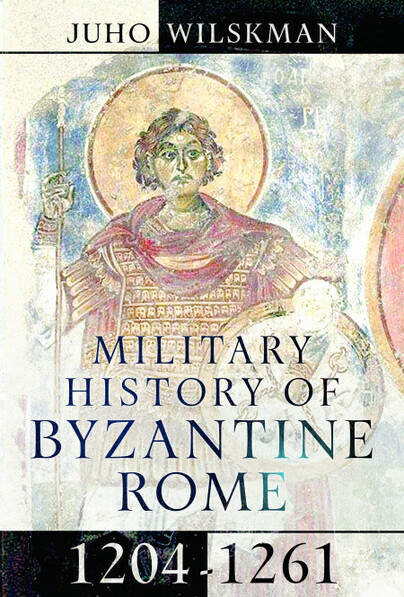
My book Military History of Byzantine Rome, 1204–1261 originated from the initiative of my compatriot and colleague Ilkka Syvänne. Ilkka had written several books on Late Roman warfare for Pen and Sword and wanted to continue the series until the very fall of the Eastern Roman Empire. The late period after the Latin conquest of Constantinople in 1204 was, however, less familiar to him, as it is to a large part of scholars dealing with Byzantine military history. I had completed my PhD thesis, Comparing Military Cultures: Warfare in the Aegean region from the Fourth Crusade to the Early Fifteenth Century (University of Helsinki, 2021), in which I compared the armed forces and warfare of Byzantines, Latins, and Turks. Thus, Ilkka asked me to write about the period after 1204. I agreed to write three volumes for Pen and Sword covering the years 1204–1261, 1261–1328, and 1328–1461.
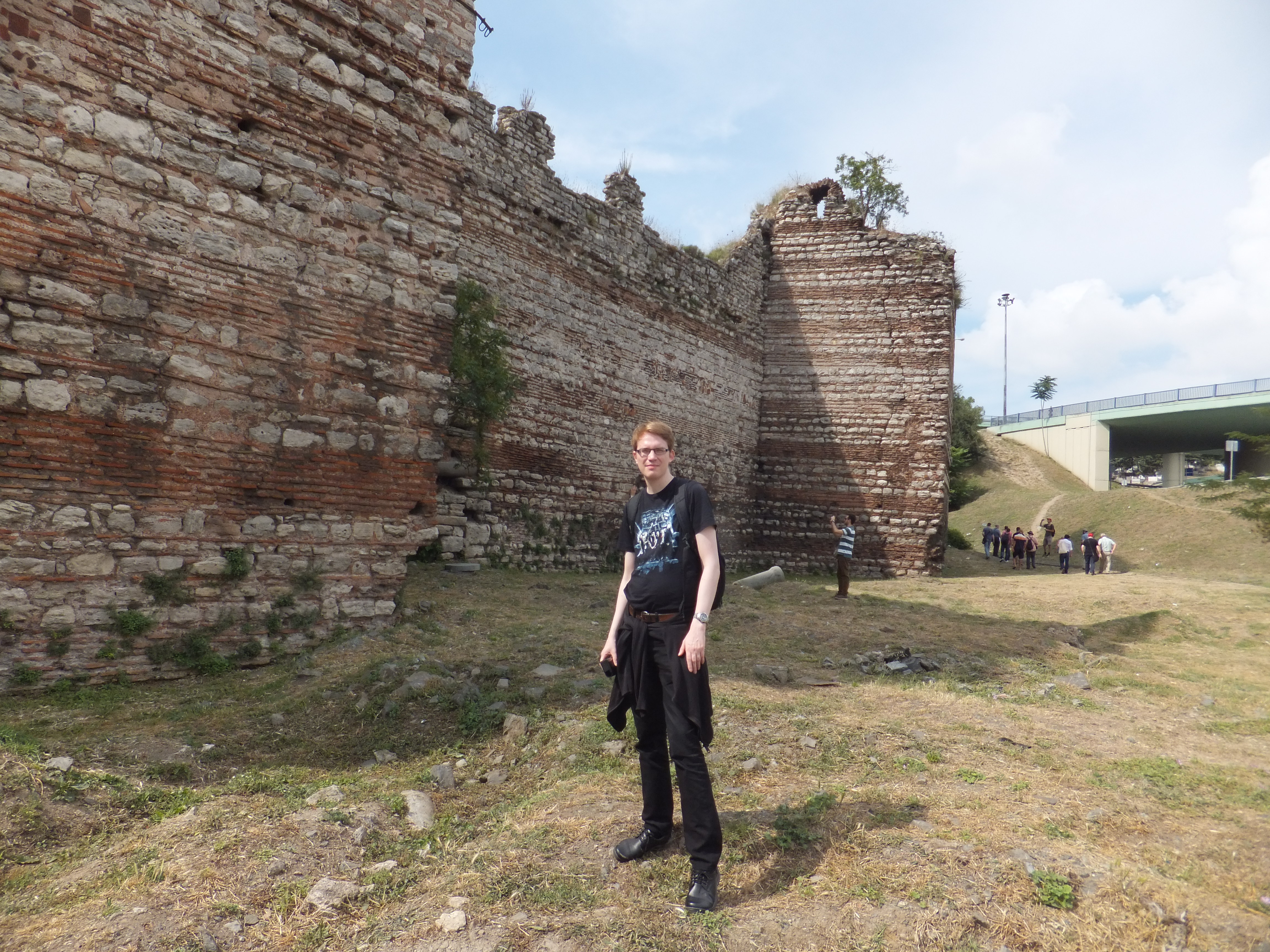
I thought it would be easy due to the research I had already done, but writing narrative history, which is often looked down upon in modern scholarship, has its challenges. For example, when writing my PhD, it was often enough for me to note at a general level that there was a siege or battle, its context, and its result. For the current series, I had to consider more carefully what actually happened in each case and what the precise chronology was. Various individuals, etc., gained a more prominent role than in my analytical thesis.
The first volume, covering the years 1204–1261, is now at hand, and deals with the period of the so-called successor states of Byzantium. During the Fourth Crusade, the largely French crusaders and Venetians conquered Constantinople and established the Latin Empire. However, resistance against the invaders continued in the provinces. It was not unified: several leaders rose and fell. Ultimately, three realms were established – the so-called Empire of Nicaea, Empire of Trebizond, and Despotate of Epiros. It was Nicaea that took Constantinople from the Latins in 1261 and re-established the Byzantine Empire.
I find it noteworthy to remember that although Late Byzantium is often characterised as a period of decline, the Latin Empire was overcome. Even in this late period, the Byzantines achieved military successes, and one may also note that the Byzantine successor states held their frontiers well against the Turks, who already controlled central and eastern Anatolia.
All the names of the realms I mentioned are, in some ways, anachronistic. The Byzantines called themselves Romans and their realm the Empire of the Romans. Their ruler was the emperor of the Romans. There has been debate among scholars as to whether the very term Byzantium/Byzantine should be abandoned. It was introduced in the early modern era to make a distinction between the “proper” Roman Empire and the later Constantinopolitan realm, although the inhabitants themselves did not make such a distinction. The western half of the Roman Empire simply fell, but the eastern half did not. In the title of this book, we speak of Byzantine Rome.
Personally, I feel confident continuing to use the term Byzantine. I find that we should not overlook the fact that the city of Rome itself had been outside the realm since the eighth century, and that the language was no longer Latin but Greek. In fact, the term Latin was reserved for Roman Catholics, who were viewed as alien by the Greek Orthodox Christians. It should, however, be noted that the rift between the Greek and Roman Churches became firmly established in this period. Greeks under Latin rule had to decide whether they would accept the clergy who followed the rites, customs, and theology set by the pope of Rome.
In 1204–1261, much of the fighting concerned was the legitimate ruler of the Romans/Byzantines. The terms Latin, Nicaean, etc. empires are more a way of distinguishing various claimants from one another. The rule of the Latin emperor was accepted by many. For the sake of scope and focus, however, my book concentrates on polities founded by former Byzantine aristocrats. The Latin Empire of Constantinople is treated as their enemy (and occasionally as an ally).
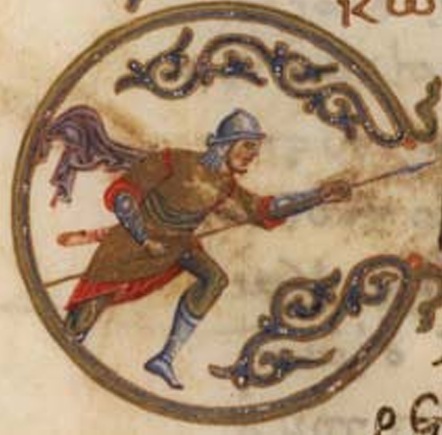
The so-called Nicaean Empire was the one that emerged victorious. Our main sources, particularly the history written by George Akropolites, reflect the Nicaean perspective. It is easy to fall into a deterministic narrative in which the Nicaean emperors appear as heroic and self-evident successors of Byzantium, and in which restoring the empire and saving it from foreign rule seems inevitable. I tried to avoid that, but the reader may judge how well I have succeeded. A historian is always, more or less, tied to his sources, if he wishes to stick to the facts.
For a scholar who has been dedicated to Byzantine history, the restoration of Byzantine Empire can easily appear desirable. Nevertheless, when writing the book, I could not help wondering what would have happened if Constantinople had not been taken by Nicaea in 1261. Would the Orthodox successor states and the Latin Empire have fallen into the hands of the Turks, or other invaders, faster than Byzantium did, or would they have created something fresh and perhaps more durable? There were interesting processes going on in the region. The Nicaean Empire was more successful against the Turks than Byzantium was after 1261, and the Empire of Trebizond in north-east Anatolia fell only after Constantinople. These stories are, nevertheless, for the later volumes.