The Real Shakespeare – Q&A
As part of our Women’s History Month blog takeover, we spoke to commissioning editor Amy Jordan about The Real Shakespeare.
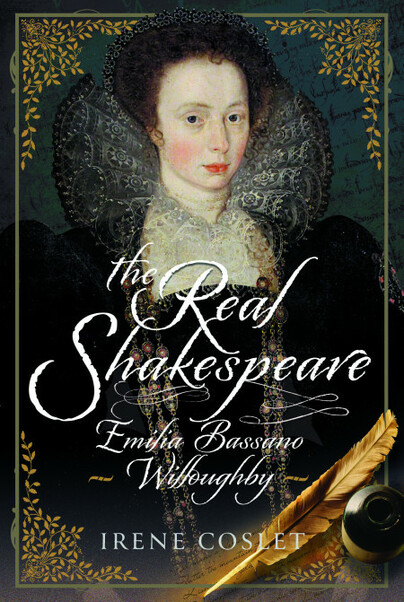
We are going to talk about, The Real Shakespeare, a book published this month about a lady called Emilia Bassano Willoughby, which is causing a bit of a stir. It sounds like the book is suggesting that Shakespeare was a Woman?
The authorship question is often said to have begun while William Shakespeare was still alive, but it gained particular interest in the 19th century and remains today. Some historians argue that no actual records exist that link William Shakespeare to writing: no letters remain that were written by him, no records of patronage or payment for writing exist, which is an absence considered unusual for the period. For them, this gap is enough to cast doubt on whether the man from Stratford was the true author of the Shakespeare Canon. For others, it comes down to a discrepancy between the lived experiences and knowledge of the man from Stratford and the content of the Works. Would he have known about life at Court in such detail? About things like the law, astronomy, languages and Italy?
Of course it comes as no surprise that, with a theory so old, other potential authors come forwards, each with their own links, but it wasn’t until recently, in 2013, that Emilia Bassano was posed as a candidate.
Shakespeare’s writing is quite feminist, does that further support the theory outlined in the book?
Absolutely. The Tudor period saw an increased presence and influence of women in positions in power, and this extended beyond the Crown. The noblewomen within the Courts of Henry VIII and Elizabeth were well-read and often highly-educated. Emilia Bassano was part of this circle of women.
The book places a heavy focus on the feminist themes, considering Shakespeare’s interest in gender issues, and putting these into the context of the time. It explores how the Canon can be read in the defence of women, and also in support of Queen Elizabeth’s leadership, someone who favoured Bassano greatly. This argument is broken down into several aspects of her reign, looking at discourse on female leadership and forced marriage, for example. Discussion then moves to the defining traits of heroines within the Canon, as well as the anti-heroines, and courtly love.
Lastly it considers autobiographical allegories within the texts, which relates back to the point of scholars being unable to see real-life influences in the canon, but suggesting these elements may be understood in relation to Bassano herself.
You’ve read the book and the arguments that the Author has made, what do you think is the probability that Emilia Bassano was the Real Shakespeare?
I’m always glad to see a healthy debate, especially where history is concerned. I’ll admit I had never previously questioned the authorship, but it has been incredibly interesting to engage with Shakespeare’s works from a different perspective, particularly a female one, and to learn more about Emilia Bassano herself.
As a highly-educated writer and a trusted advisor to Queen Elizabeth I, she was a remarkable figure, especially when considered within the context of her time. The literary analysis will appeal to any reader of Shakespeare’s canon, and the proposed biographical links create an intrigued argument. Ultimately, of course, readers will have to make up their own minds.
Order your copy here.