Motorsport’s Military Heroes
Author guest post from Bryan Lightbody.
Hello Pen and Sword world! Apologies for being absent with leave, professional demands and a change in front line operations required an absence from writing, blogging and general SM interaction. I thought I’d top up the content so far with a brief HR type profile of one of my book’s subject: David Purley GM.
If you want to know much more than just a personnel brief about David Purley and so many more motorsport icons with military service, then grab a copy of Motorsport’s Military Heroes.
Full name
David Charles Purley
Date and place of birth
Bognor Regis, West Sussex, 26 January 1945
Formative years
Charles (father) changed his name from Puxley to Purley (a family dis-association I believe). Charles, who had no formal education, was the founder of LEC refrigeration.
David was educated at Seaford College (Sussex), from which he was expelled for persistent lateness (he claimed his alarm clock failed to go off ). After that he went to Dartington School, Devon
Military service
David signed up for a three-year stint with the Coldstream guards whilst working for a demolition company in London (Mother was not pleased).
Brief service as an enlisted man, after which he accepted a commission and completed his officer training at Sandhurst. He was subsequently posted to First Battalion, The Parachute Regiment, as a second lieutenant and was posted to Aden.
Purley was like cat with nine lives. His first was used up parachute training when his chute became entangled with that of an instructor. The two men descended at speed below what was left of the instructor’s canopy. They plummeted for around a minute and a half to ‘a heavy landing’, but they survived.
In Aden, Purley may have used up another life or two as British forces faced regular mortar, grenade and machine gun attacks. Purley survived several near misses.
It was during his final year in the army, 1969, that he became drawn to motorsport, inspired by his friend Derek Bell.
Entry into motorsport
After army service he shared an AC Cobra with his cousin Derek Ridler. David admitted he was a ‘pretty hairy driver’ and wrote the car off at brands hatch. But motorsport had got into his blood and the following year he was out in a Chevron B8 sports car.
1969 he set up his own formula three team with two mechanics, fully entering the racing world of single seaters in 1970. He beat James Hunt at the ‘grand prix des frontières’ at Chimay in Belgium.
He qualified for formula one later 1973, and in the Monaco grand prix he was the quickest March team driver until he crashed. He was the second quickest March driver behind James Hunt at the British grand prix at Silverstone, then came Zandvoort, Holland and his career defining moment captured on live TV.
At the Dutch grand prix, fellow British driver Roger Williamson crashed and was trapped in his overturned and burning car. Purley abandoned his own race and attempted to save Williamson. As he arrived at the scene he heard Williamson crying for help. Purley’s efforts to right the car and extinguish the flames were in vain. He received no help from nearby track marshals or emergency workers. Other passing drivers also failed to come to his aid.
Purley was recognised for his courageous actions by being awarded the George medal.
July 14 1977 still competing in F1, Purley had a near fatal accident sustaining life changing injuries.
2 years later, Purley climbed into his second LEC sponsored formula one car in August 1979 at Goodwood motor circuit. His left leg was one and a half inches shorter than his right. Had he come close to his previous best time it would have been an incredible achievement. As it was, within thirty-six laps he had bettered his previous best. As soon as he saw the pit board he braked and called the session to a halt. David Purley never raced a single seater again after 1979.
Achievements/legacy
In 1981 he bought a Pitts special biplane and became a familiar sight over the south coast of England. Initially he hoped to become part of the British aerobatics team, but although he was a competent pilot, capable of doing all the stunts seen at air displays and flying competitions, his routines were not tight and disciplined.
Ironically, he maintained that aerobatics was less dangerous than motor racing, despite surviving two crash landings. When he crashed into the sea off Bognor Regis on 2 July 1985 motor racing lost one of its most popular drivers.
He had recently entered his second marriage and he and his wife Gail had a daughter.
A memorial was erected in 2017 close to the site of the former LEC factory in Bognor Regis.
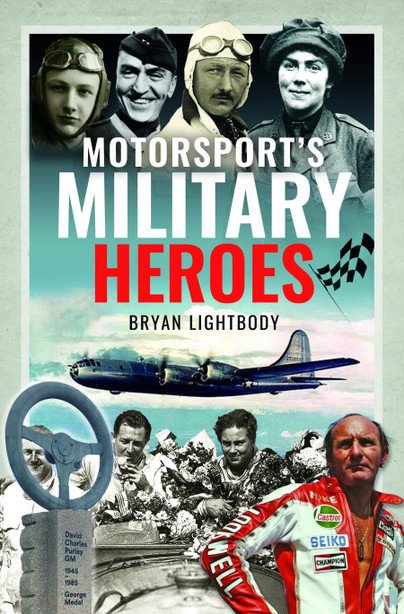
Order your copy here.