The year we tried to give up the British bases on Cyprus
Author guest post from Andrew Southam.
On 2nd March, an Iranian Shahed drone struck an aircraft hangar at RAF Akrotiri causing minor damage. The Iranian regime has identified Akrotiri besides its sister RAF station Dhekelia and a host of other scattered facilities across the island, which are British sovereign territory granted under the independence arrangements of 1960, as a military risk. They are right. Our bases have proved a crucial asset in nearly every post-Second World War British operation, which our allies and enemies alike have long regarded as forming an unsinkable aircraft carrier.
Yet fifty-one years ago, the Labour government of Harold Wilson nearly abandoned our Cyprus bases when surrendering other military posts across the world in the 1975 defence review, called the Mason review after then defence secretary Roy Mason. What on earth was he and his cabinet thinking?
Labour was scarred by the previous year’s events, which continue to make Cyprus a divided island today. On Monday 15th July 1974, Greek junta leader Dimitrios Ioannidis sponsored the Greek-led Cypriot Guard coup to murder the island’s president, Archbishop Makarios III, and take over the island’s government. They missed him by minutes. One of the coupists’ tank in the assault broke down and caused a bottleneck, allowing Makarios and his bodyguards time to flag down a car and flee to Paphos. Here, the RAF rescued him, again with minutes to spare as the national guard started surrounded his location, and flew him first by helicopter to RAF Akrotiri and then, using the private plane of the overall British forces commander, to London via Malta.
Bloodshed flowed between Makarios’s supporters and the Athens sponsored coupists, who eventually won the day. They installed a thug called Nicos Sampson as the new Cypriot president.
Turkey’s democratically elected prime minister Bulent Ecevit, a journalist-cum-poet prime minister who had translated TS Eliot into Turkish, and his generals watched with two concerns. They feared ethnic violence against Turkish Cypriots, roughly a third of the island’s population. Second, they worried that Greece, which despite being a Nato ally they regarded for historical reasons as a potential aggressor, might unite Cyprus with the homeland and install a military base on the island with the potential to threaten Turkey. This Ecevit could not allow. Six days later on Saturday 21st July, Turkey launched a risky air and sea intervention creating the first conflict in Europe since the Second World War.
This intervention jeopardised the whole of Nato by risking war between two alliance members (Turkish and Greek commandoes actually fought each other); threatened stability in the Mediterranean which was the alliance’s most vulnerable theatre to growing Soviet encroachment; and jeopardised the fragile security of the nearby Middle East in the Cold War.
Labour’s foreign secretary James Callaghan had additional considerations. Three thousand servicemen and their families, many living in quarters off base, were caught in the cross fighting as were thousands of tourists and expatriates. The conflict threatened the security of British facilities, which included nuclear armed planes at Akrotiri and intelligence facilities, one operated by the Americans. Worse, Britain, like Turkey, was on paper responsible for guaranteeing the island’s sovereignty and stability since independence in 1960. This imposed a moral imperative to get involved, which could not be done without risk to British families.
One of America’s most intellectually capable and powerful secretaries of state, Henry Kssinger, did not have those concerns. His interest was the big picture of the collapse of the balance of power that might let the Soviets gain facilities in the Middle East, the Mediterranean and North Africa, if not Cyprus itself. But he didn’t have time to think. President Richard Nixon was resigning over the Watergate scandal creating a political trauma in America not seen since the assassination of former Democratic president John F Kennedy, a decade earlier. Completely pre-occupied with managing world affairs besides the fading administration as Nixon mentally collapsed, Kissinger had limited capacity for Cyprus and left Britain take the lead – a decision he regretted.
Callaghan tried but didn’t have the power and differences with Kissinger emerged over the drama that followed – and he took against Turkey. A peace conference broke down, Turkey intervened for a second time, three thousand people died in the overall fighting, thousands were displaced, Britain carried out the then largest civilian airlift since 1948, Turkey sank its own ships, the Greek Cypriot guard shot down their own aircraft, Kissinger described Callaghan ‘as acting like a madman’ and the foreign secretary accused Washington of failing to tell him what was going on.
After the fighting died down, with the island now divided – as it remain today, the Greek junta was replaced by an elder statesman, former Greek prime minister Konstantinos Karamanlis. Massive protests broke out against British and American embassies in Greece and Cyprus, an American ambassador was assassinated in Nicosia and the United States’ widely respected CIA station chief was murdered in Athens the following year, 1975.
Burnt and jaded by the whole episode, prime minister Harold Wilson, Callaghan and British diplomats sought out. Their opportunity was the 1975 Defence review which was shrinking British commitments worldwide in the face of economic challenges. We were pulling out of the Indian Ocean, Southeast Asia and the Mediterranean, with large cuts to Royal Navy ships and RAF plane orders. Individual service chiefs, preoccupied with protecting their own turf, and Treasury officials, thinking the Cypriot bases expensive and anachronistic, agreed an initial recommendation to leave the island. Diplomats concurred: a vein of thinking in the foreign and commonwealth office had been for relinquishing them over the Great Lie, the story mischievously created by Egypt that Britain had secretly used its Mediterranean facilities to help Israel’s victory in the Arab-Israeli war of 1967.
Nato could not believe what they were hearing; unilateral defence cuts by a leading alliance country when the Soviet Union was outspending the alliance on arms and Washington was demanding that West Europeans provide a greater share for their own defence. While reluctantly accepting the main decisions to cut the armed forces and withdraw from the rest of the world, Washinton could not countenance Wilson leaving Cyprus. Britain’s bases mattered in the Cold War Eastern Mediterranean, mattered in intelligence and mattered for stability in the Middle East.
A spitting US defence secretary James Schlesinger, America’s intelligence community, Henry Kissinger’s state department and president Gerald Ford, who had replaced Nixon, said ‘no’ in brutal fashion. Wilson’s government retreated, though not without churlishly withdrawing all the operational air units leaving only a permanently stationed helicopter squadron and as little manpower as possible, arrangements which have now changed.
Thank heavens for the Americans. They turned around Wilson’s decision, we stayed and the bases have been used in every overseas military operation, small and large, in Britain’s national interest as well as that of our allies since then.
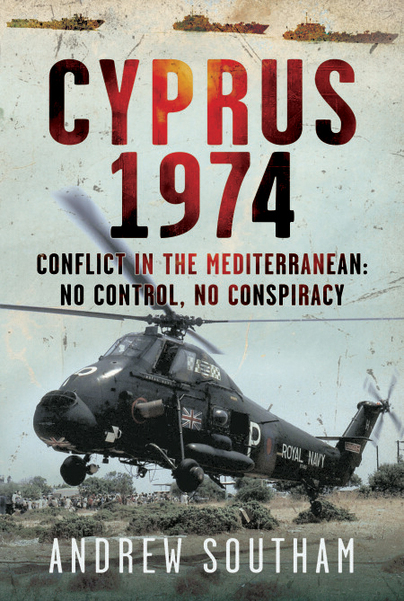
Order your copy here.