BATTLE OF BRITAIN PILOT’S GOGGLES DISCOVERED
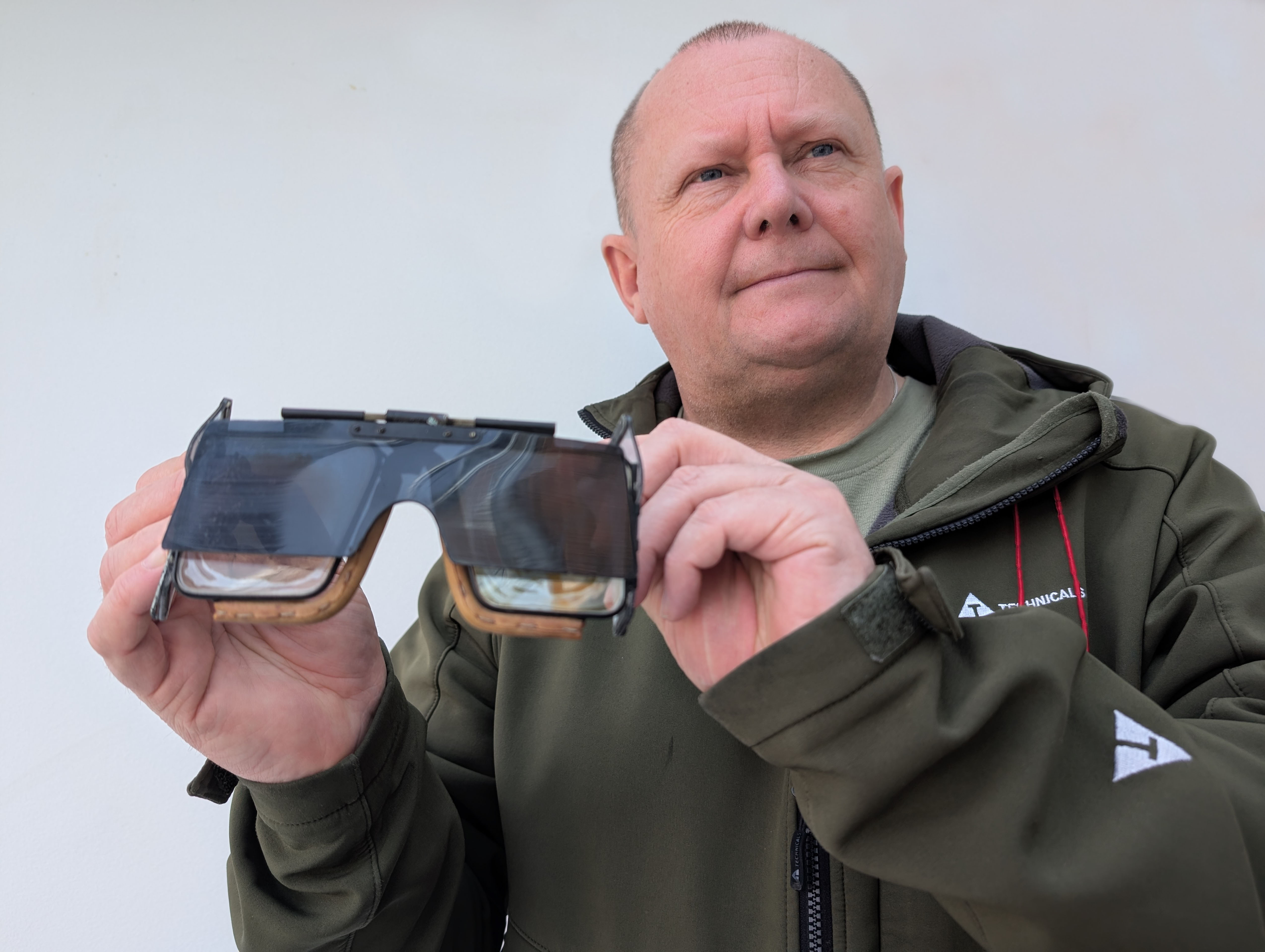
In his ongoing research into RAF flying clothing and equipment, aviation historian Mark Hillier, author of The RAF Battle Of Britain Fighter Pilots’ Kitbag, has come across what is believed to be a pair of goggles worn by one of ‘The Few’.
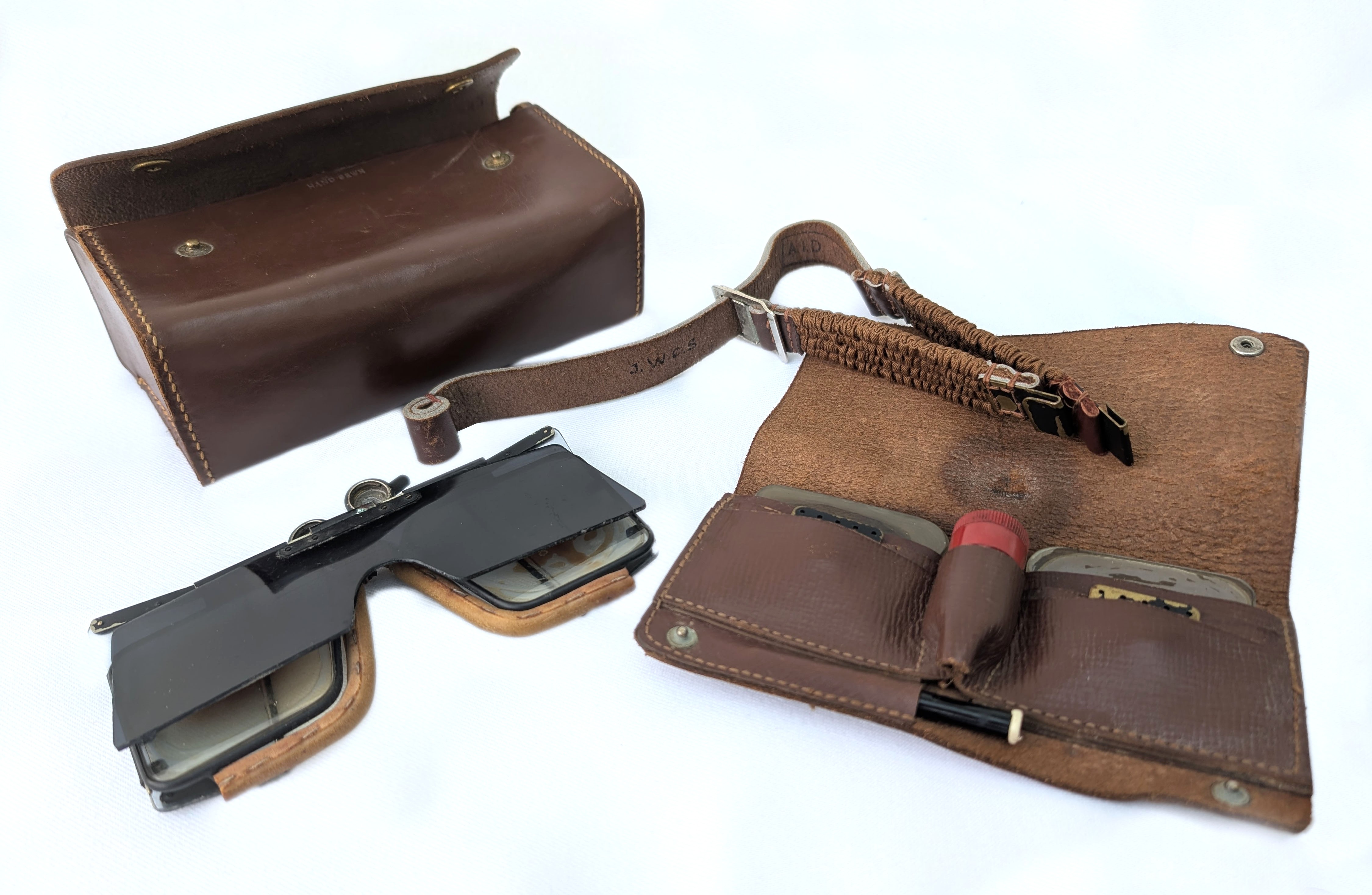
Despite being among the rarest of the types of flying goggles issued to RAF aircrew in the Second World War, what makes the pair of Mk.VA goggles seen here so special is their apparent link to a Battle of Britain pilot and ace, Wing Commander John William Charles Simpson DFC and Bar.
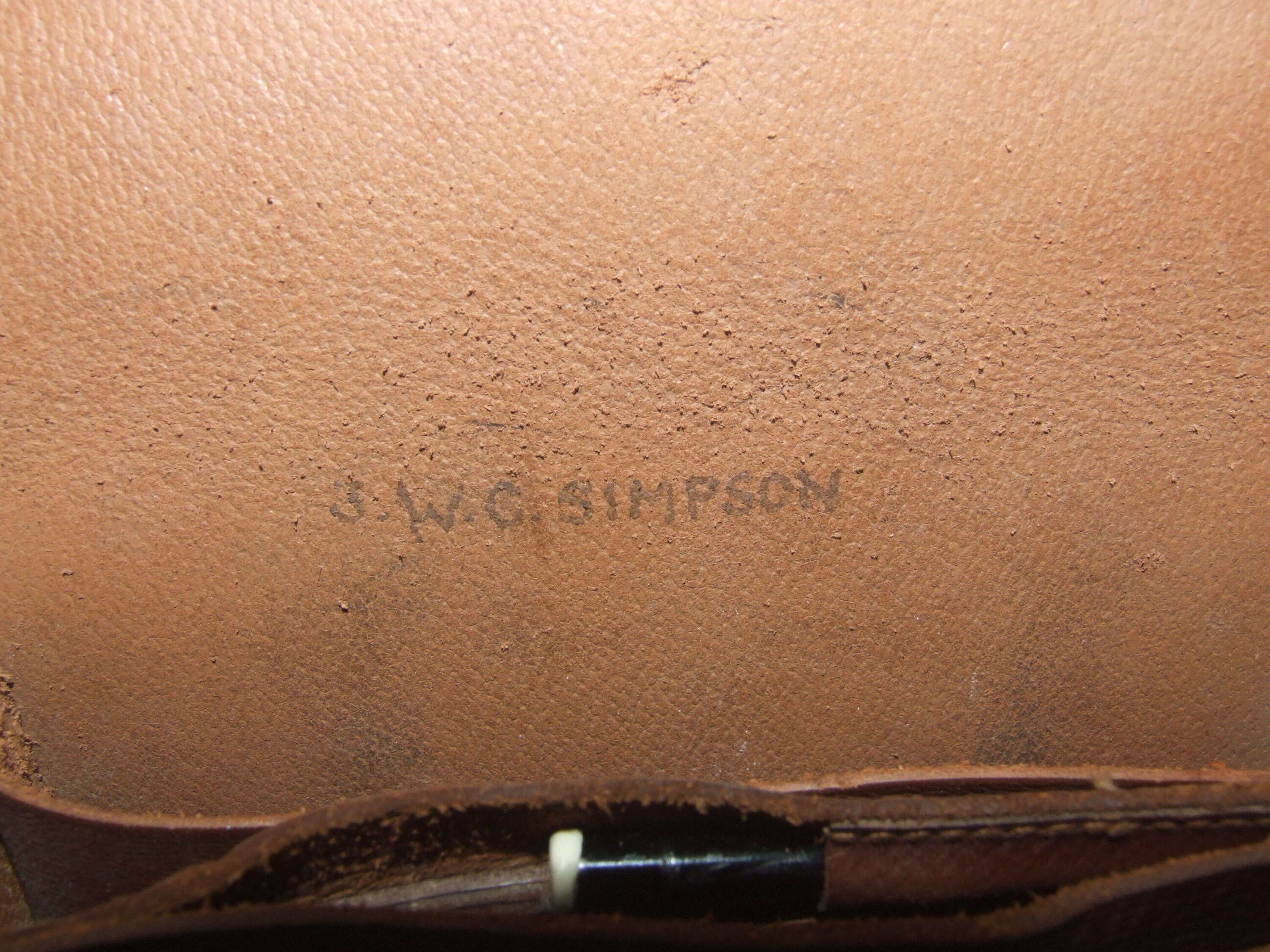
It was not until the ‘spectacles’, as they were officially referred to, were offered for sale by The Militaria Dealers that their significance was fully realised. While being examined, it was noted that the initials J.W.C.S. had been written on a strap and on the inside of the accessory pouch, while the name J.W.C. Simpson was inscribed on the inside of the case in now faded ink. It was then that Mark was called in.
After viewing Simpson’s combat reports, although they only featured his signature, Mark noted convincing similarities in the way some letters were formed and was left in no doubt they were by the same hand. The goggles themselves have the original sun visor in place and are in overall very good condition.
John William Charles Simpson was born at Ramsay St Mary’s, Huntingdonshire, on 14 March 1913. He joined the RAF on a short service commission in January 1936, and, after training, was posted to 43 Squadron at Tangmere in October the same year.
His first combat victory came on 3 February 1940, when he claimed a share in a Heinkel He 111 probably destroyed. On 9 May, the same day he was appointed a Flight Commander, he shared in the destruction of a Dornier Do 17. Further victories followed, including a Messerschmitt Bf 109 destroyed over Dunkirk on 1 June during Operation Dynamo. For these victories, and others, Simpson was awarded the DFC, this being gazetted on 25 June 1940.
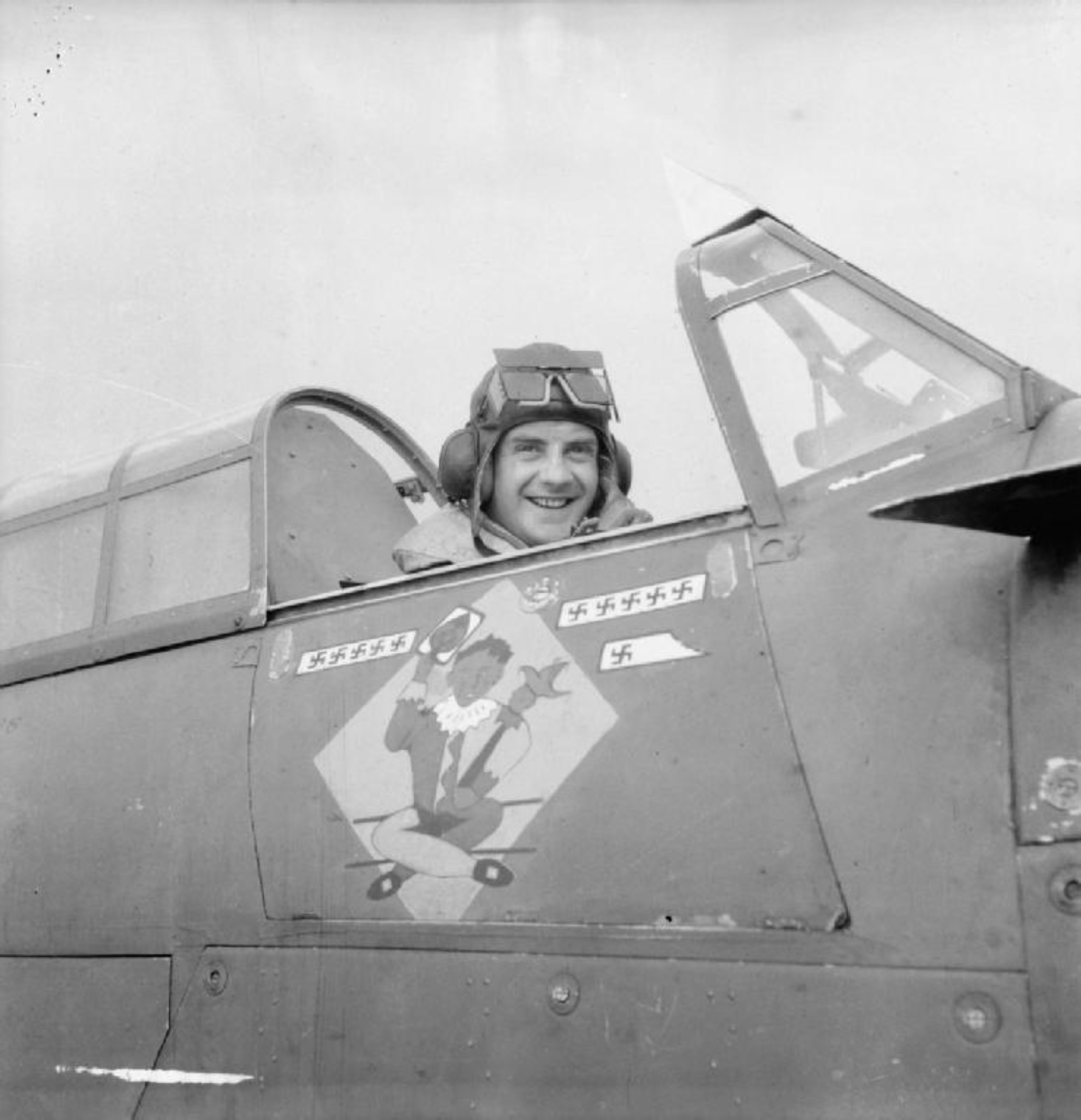
In December 1940 Simpson was given command of 245 Squadron at RAF Aldergrove. It was whilst there that he was photographed in the cockpit of his Hurricane wearing what might well be the goggles described here. On the night of 8/9 April 1941 he destroyed a He 111 at night over Belfast; this was the first German aircraft to fall on Northern Ireland. This and yet more victories resulted in the award of a Bar to his DFC in May 1941.
In mid-June 1941 Simpson was posted away to a staff job. In November 1942 he was in Gibraltar, as a Wing Commander, and in January 1943 he was in North Africa as a Group Captain.
Still serving in the RAF, Simpson died from a self-inflicted shot on 12 August 1949. The inquest held at the time heard evidence that Simpson had suffered ill health since 1945 and about a month before his death had been badly injured in a car accident. He had been concussed and headaches continued. He appeared to have become concerned that his flying career might be over.
In recording a verdict that Wing Commander Simpson had taken ‘his life whilst the balance of his mind was disturbed’, the coroner justifiably described him as ‘a gallant officer with a fine war record’. He is buried in St Andrew’s churchyard, Tangmere.
Order your copy here.