Crime in the Victorian Black Country
Author guest post from Tracey Blundell.
Halloween has become a time for ghost stories and dressing up and treats, back in the late Victorian Black Country there was little time for such distractions.
There are lots of assumptions made about the Victorian Era, yet the crimes committed were little different from today – robbery, theft, assault and the one which fascinates people most – murder
The twenty years researched for this book reflect the crimes which actually took place and murder, thankfully, is the one crime which was a rarity – there were acts of brutality, carried out by men and women, a reflection of the brutality of the lives they endured. My book does not dwell too much on the crime of murder but being Halloween, perhaps some of those mentioned in passing should be explained further…
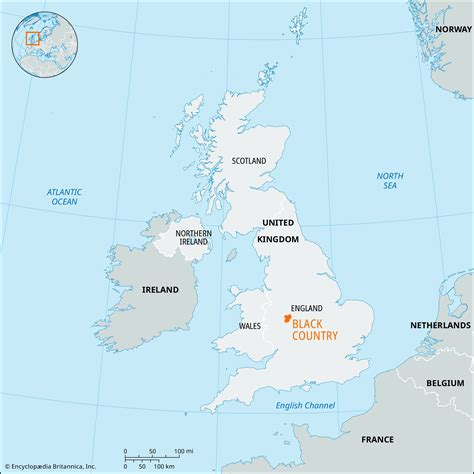
Murder was one of the few crimes which was reported to the police and was at the time a capital crime and of course the sentence was death; however, judges were generally reluctant to pronounce the sentence – especially on women, and juries would often make recommend mercy. Surprisingly, from 1843, only 13.3% of women sentenced to death for murder in England and Wales were executed, the rest were reprieved by the Home Secretary of the time.
The majority of the murders taking place during the 1870s and 1880s in the Black Country were those of husbands murdering their wives; such as Patrick Jennings in April 1870, who was found guilty despite (unusually) giving evidence in his own defence that his wife had drunk herself to death.
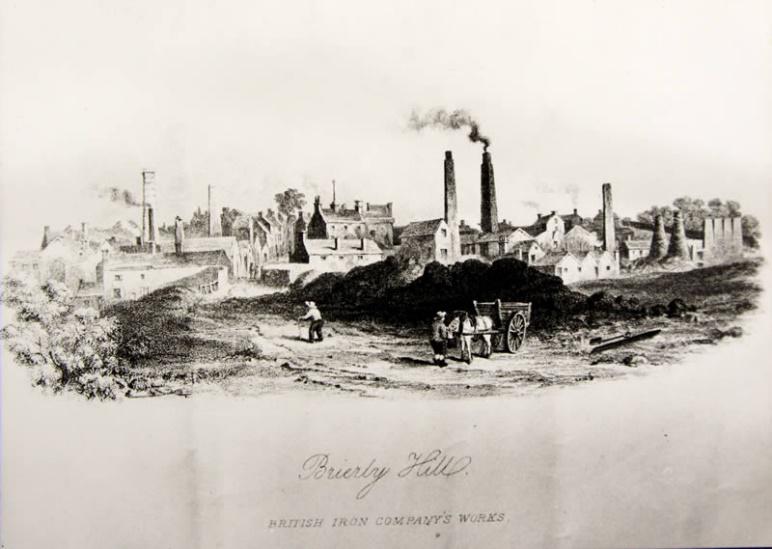
The most notable murder from the 1870s was the case in 1878, at the end of a three-year trade slump, where a wages snatch went badly wrong: Alfred Meredith, who worked for Hill and Smith Ironworks of Brierley Hill, had gone to collect the wages from the bank; he was followed by the defendant Enoch Whiston, who shot him in the face with a pistol. The money was recovered from Whiston’s home and he was found guilty. 21-year-old Whiston was executed on the 10th of February 1879 for the robbery murder of Alfred Meredith on the 6th of December 1878.
Interestingly, Whiston had a co-defendant, Mary Terry, who was charged with receiving money she knew had been stolen, but she was discharged once the money had been recovered.
The case of Charles Hindelang in February 1882 was described as ‘a shocking crime’.
Hinderlang (18), was the son of Emil Hinderlang, a clock and watch maker, in Dudley. Mrs. Hinderlang stated that her son Charles had a complaint affecting his head, and that at about five o’clock he enticed his two brothers, Lewis (9) and Francis (7), away, saying he was going to Tipton for some music for his father, who is an organist and they could go with him. Charles went to the police station at about a quarter past six, and stated that he had just discovered the two boys in the Park Lane Canal, behind the Guest Hospital. He knew they were drowned. He volunteered another statement that he had not been altogether right lately, and had made up his mind to drown his three brothers, but Alfred would not go with him, even after being offered sweets as an inducement. Sergeant Dutton detained him in custody, and dragged the canal for the bodies, which were recovered and removed to Tipton mortuary. Charles and the two boys had been seen near the Guest Hospital by a witness named Thomas Drury. Charles stood by his statement and expressed no remorse, speaking of ‘the subject with the utmost coolness.’
He appeared at Tipton Police Court, and was charged with the wilful murder of his two brothers. Police-sergeant Dutton stated that the prisoner came to him and stated that he had drowned his two brothers in the Birmingham Canal near to the Guest Hospital, and asked that he be locked up. The canal was dragged, and shortly after ten o’clock the bodies of the two boys were found. Charles ‘appeared to be the most unconcerned person in court’ and was remanded in custody. When Charles passed through Dudley Port and Tipton on his way to prison, people shouted that he deserved hanging, and he turned round and told them to ‘dry up.’
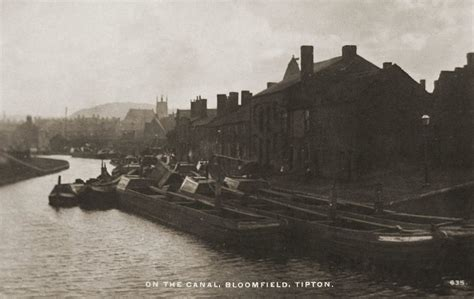
The inquest of the boys was held at the BEEHIVE INN, Tipton. Mr. Tinsley appeared for the prisoner, and Superintendent Holland and Inspector Harrison attended on behalf of the police – showing the seriousness of the case. Dr. Underhill stated that there were no external marks of violence on either of the bodies. The cause of death was suffocation from drowning. The inquest jury returned a verdict of Wilful Murder.
In May 1882 Eddowes Journal reported that “At the Staffordshire Assizes, … Emil Charles Hindelang, charged with the wilful murder of his two brothers, by throwing them into the canal, was found by the jury to be incapable of pleading, and was ordered to be detained in a lunatic asylum during her Majesty’s pleasure.”
For the whole period only one case of murder appears to have been committed by one Black Country woman on another – the case of Sarah Proctor, who murdered Charlotte Whale in April 1888; The two were friends and had travelled to Isleworth, Middlesex to take part in fruit picking at the market gardens – a common Black Country practice during the season –Sarah, a nailmaker, Charlotte, a chainmaker; were sharing a room in lodgings at 1 Mitchell’s Cottages.
The landlady found Charlotte lying on the bed on her left side in a pool of blood, her brain protruding from the right side. She informed Proctor of her discovery, who admitted having inflicted a blow on the head of the deceased with a hand jug, causing her death.
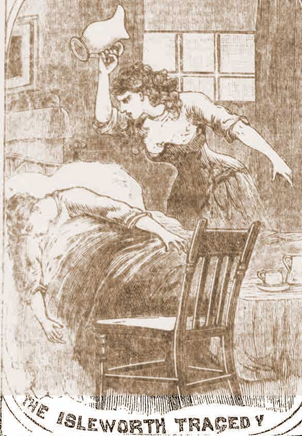
Sarah Proctor was arrested, and taken before the Brentford magistrates. She was charged with wilfully and feloniously causing the death of Charlotte Whale by striking her on the head with a hand jug at No. 1, Mitchell’s Cottages. When charged, Proctor said that she ‘owed the deceased a grudge’ for having struck her on the head with a nail bag four years ago, which she was still suffering the effects of and she had not been in her right senses since.
James Whale, a soldier, identified the deceased as his sister. He had met Charlotte and Proctor at Brentford railway station on Sunday night; Whale stated that Charlotte and Proctor quarrelled about four years ago, but had been friendly since. Charlotte had a child by Proctor’s brother, and he had never heard Proctor say anything which would lead him to think that she would murder his sister.
Proctor was tried at the Old Bailey on 31st May, 1888, when called upon to plead, she replied: “I did kill her.” Justice Stephen told her to plead “not guilty,” which she did. Justice Stephen stated that the facts of the case justified the belief that the accused was in such a condition of mind at the time as to have rendered her not criminally responsible. This was confirmed by medical testimony. Satisfied with the medical evidence, the jury found; – “The prisoner committed the murder, but that she was insane at the time and not responsible for her actions.’ The usual order was made that she should be detained in safe custody during her Majesty’s pleasure.
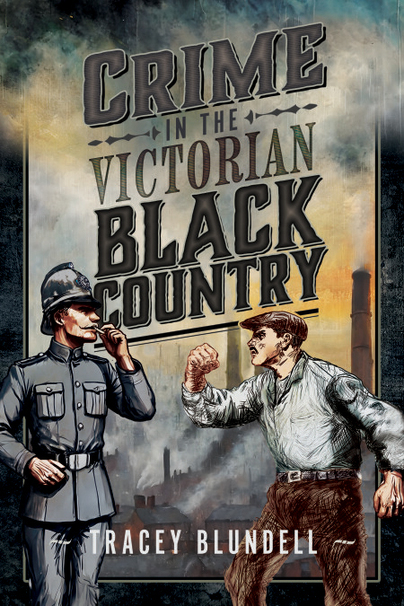
Order your copy here.