The Battle of Tewkesbury, 4 May 1471: ‘A Right Evil Place’
Author guest post from Dilip Sarkar MBE FRHistS FRAeS.
Tewkesbury in north-west Gloucestershire, overlooked by Worcestershire’s imposing Malvern Hills and situated at the confluence of the river Severn and the Warwickshire Avon, was an unlikely place for a battle – especially such a significant one. Off the beaten track though it is, the battle fought there on 4 May 1471, during the Machiavellian Wars of the Roses, the dynastic struggle for the throne of England between the houses of York and Lancaster, brought peace for fourteen years – and saw the eclipse of Lancaster. Indeed, this was the real Game of Thrones, and this battle, and the events leading up to it, have all the ingredients and characters necessary for high drama – as we will explore.
After his defeat at Towton in 1461, the Lancastrian King Henry VI was imprisoned in the Tower of London, his Queen, Margaret of Anjou – the ‘She Wolf of France’ – and son, Edward of Westminster, fled to France and exile. For now, the throne of the Yorkist King Edward IV was secure – but a problem arose when ‘Ned’ fell out with his all-powerful elder cousin, Richard Neville, Earl of Warwick – better known in popular history as the ‘Kingmaker’. This estrangement arose because Edward secretly wed Elizabeth Woodville, widow of a common knight, thereby scuppering Warwick’s efforts to secure a diplomatic match with a more suitably born French bride. Accused of treason, Warwick, and that fickle, turncoat, younger brother of the King, George, Duke of Clarence, sought refuge across the Channel – and there, beyond imagination, Warwick entered into an unholy alliance with Margaret – his sworn enemy – to depose Edward IV and restore Henry to the throne of England. Indeed, this came to pass, forcing Edward, along with his youngest brother, Richard, Duke of Gloucester (later King Richard III) into a Flemish exile. The matter, though, was not to end there.
Having received aid from the powerful Duke of Burgundy, Edward raised an army, returned to England, and defeated Warwick at the Battle of Barnet on 14 April 1471, where, in dense fog the Kingmaker was slain in a ‘friendly fire’ incident – and this, in truth, was the undoing of Queen Margaret and the House of Lancaster.
On the fateful day of Warwick’s demise, Margaret and Prince Edward, had landed with an army at Weymouth, intending to march north, combine with Warwick and other Lancastrian forces to march on London. Edward IV – a warrior king – however, mobilised his army and set off in pursuit of the Lancastrian usurpers.
Margaret’s plan, having gone awry due to Warwick’s death, was to cross the Severn and link up with Jasper Tudor in South Wales – but the gates of Gloucester were loyal to York, and remained firmly closed, thereby denying the Lancastrian army an essential crossing. Instead, Margaret had no choice but to wearily march north along the Severn’s east bank to the next bridge, at Upton-upon-Severn in Worcestershire. Edward, however, wasted no time, and after a breathless forced-march across the Cotswolds caught Margaret half way to Upton, at Tewkesbury – which is how this small and picturesque town became the site of this bloody battle.
There could not, really, have been many places worse than Tewkesbury for such a clash of arms, criss-crossed as it is by so many rivers, streams, ditches and dykes, all of which inhibit freedom of movement, especially for men in armour. This, for sure, is why the anonymous member of Edward’s household who wrote the famous chronicle known as the Historie of the Arrivall of King Edward IV in England described the landscape as being full of ‘foul lanes and deep dykes and many hedges with hills and valleys’ – a ‘right evil place’. Be all that as it may, events, rather than strategy, therefore, had chosen Tewkesbury as the site of this battle between the (numerically superior) Lancastrians and their Yorkist foe.
As if the events leading up to the Battle of Tewkesbury were not dramatic enough, the story of the actual battle is just as extraordinary.
The Lancastrians occupied a position immediately south of Tewkesbury town, the army divided into three ‘battles’: the centre commanded by the 17-year-old Prince Edward, supported by Sir John Langstrother, Prior of the Order of St John, and Sir John, Lord Wenlock, with Sir Edmund Beaufort, Duke of Somerset, to his right, and Sir John Courtney, Earl of Devonshire, on the Prince’s left. Opposing the Lancastrian’s were the Yorkists’ three battles, commanded, from left to right, by the King’s brother, the 19-year-old Richard, Duke of Gloucester, King Edward himself, and William, Lord Hastings, the King’s Chamberlain and close friend. Craftily, Edward, ever the skilled tactician, who never lost a battle, hid 200 mounted knights in the woodland of the adjacent Tewkesbury Park, there to await an opportunity to ambush the Lancastrian flank. Thus the scene was set for slaughter.
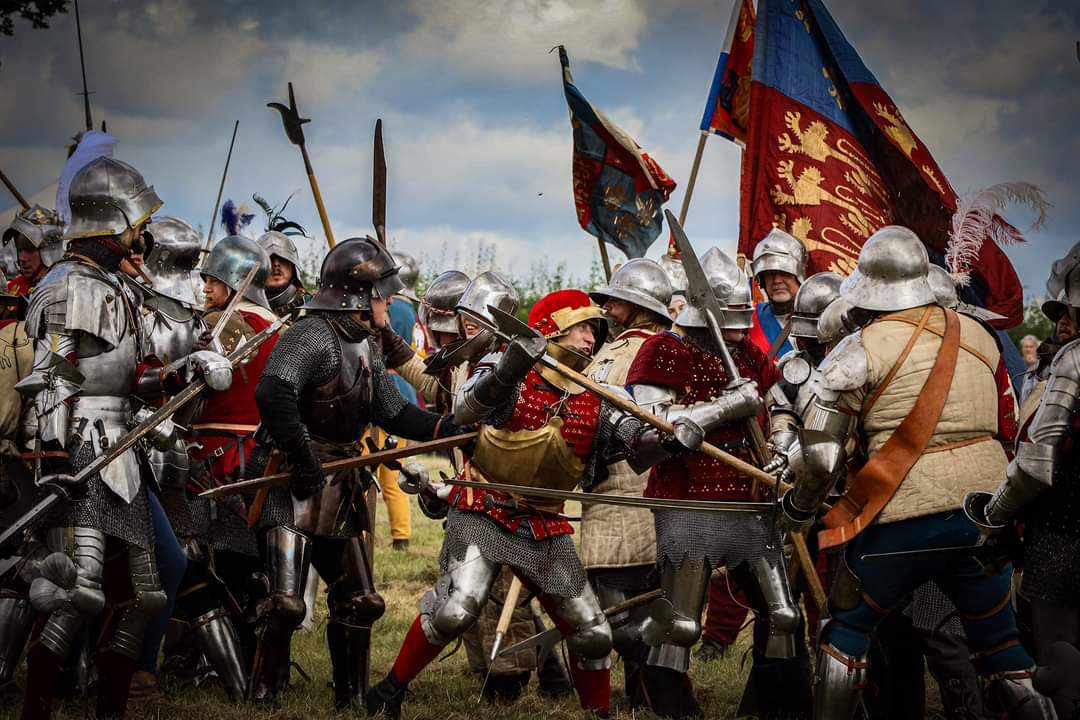
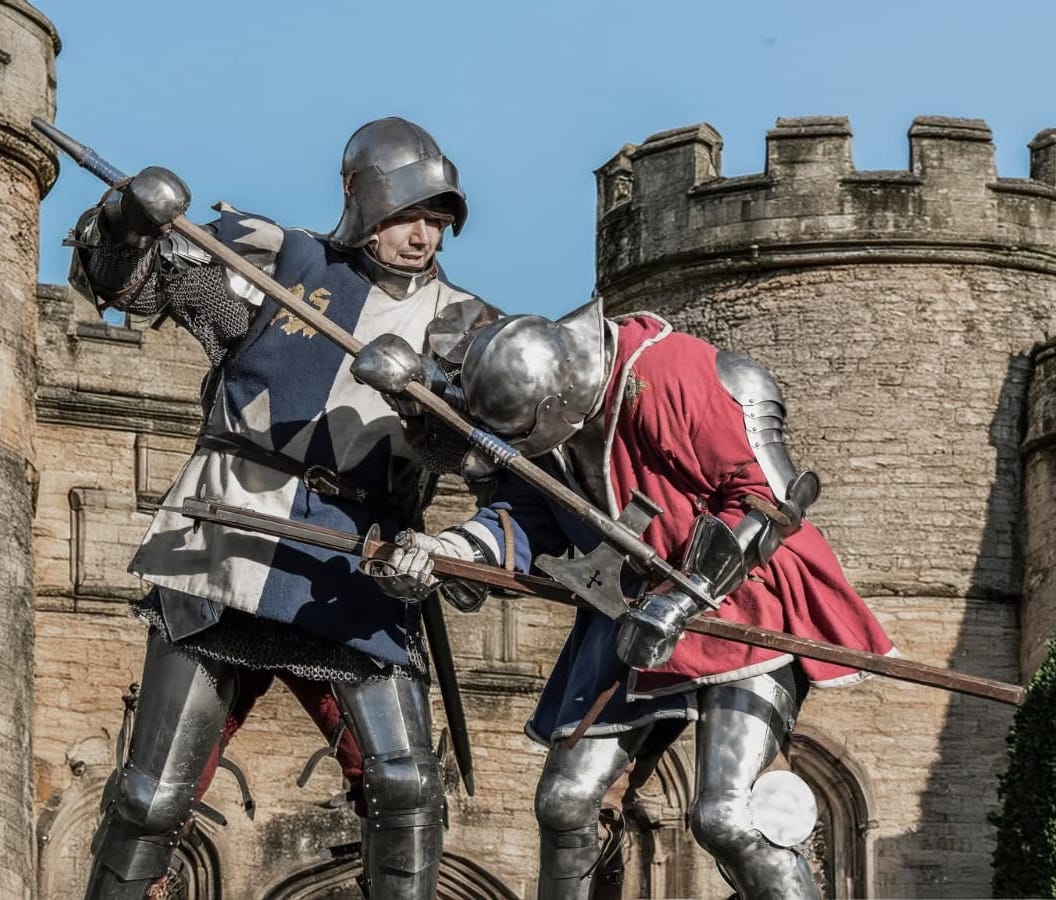
Although romantic literary works by the likes of Tennyson and Mallory relate tales of knightly chivalry, the reality of a medieval battle was very different. Most of the fighting was done on foot, knights and men-at-arms hacking, slashing, bashing and stabbing each other in barbaric and bloody carnage. Lethal arrows rained down before the press, piercing even the best plate armour, and we know from documentary and archaeological evidence that early guns and cannon were also used at Tewkesbury.
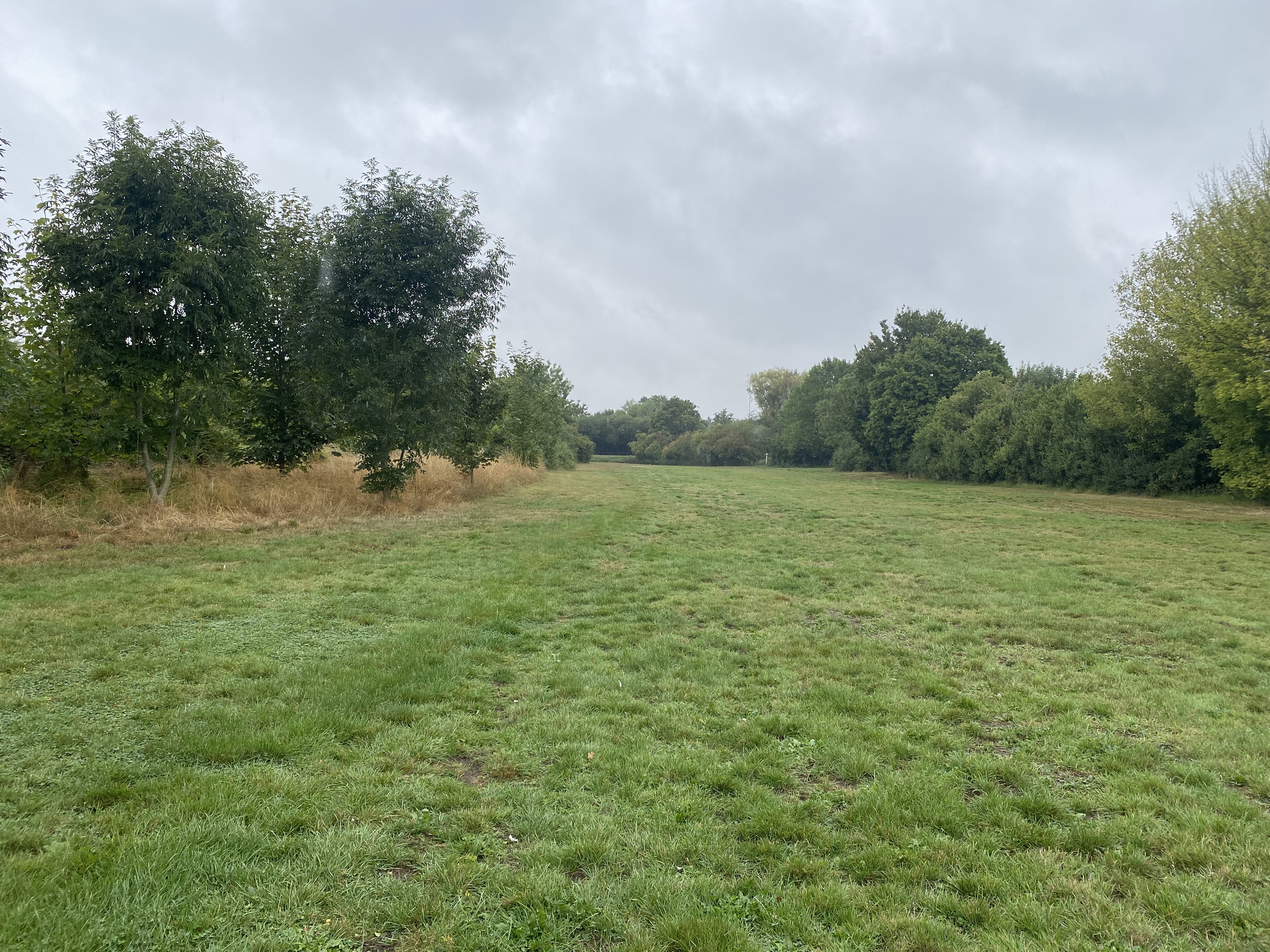
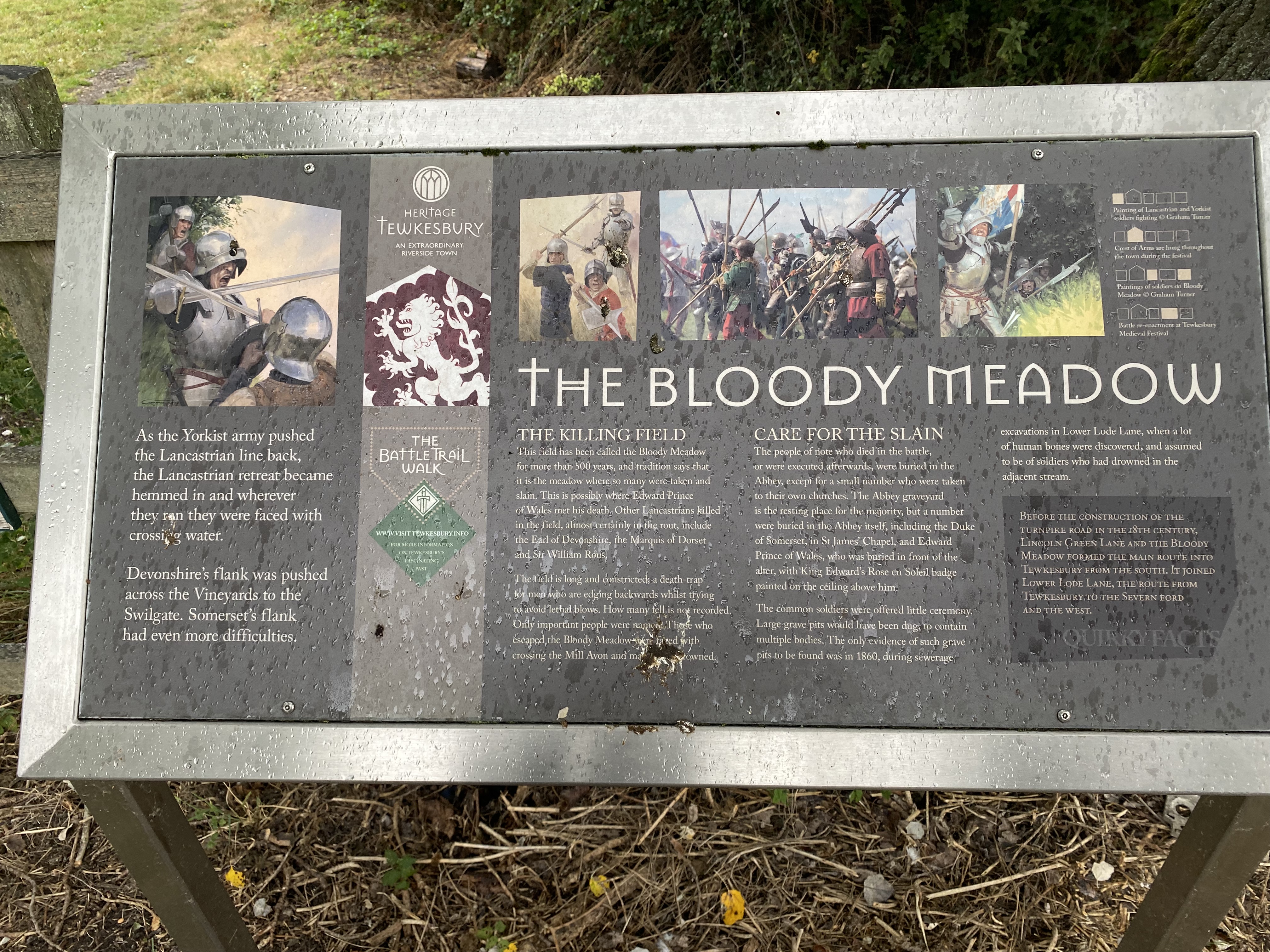
As the battle ebbed and flowed, there was more high drama: but no spoilers here; suffice it to say here that at one point in the fighting, because Wenlock failed to support Somerset’s advance against Gloucester’s division, Somerset, according to the contemporary chronicler Edward Hall, found Wenlock, ‘reviled him and called him traitor, with his axe he struck the brains out of his head’. Whether this is actually true remains the subject of debate – but Wenlock was certainly killed in the battle. Somerset’s brief advance, though, into which slammed Edward’s hidden ‘200 spears’, was the Lancastrians’ only offensive effort, after which the initiative passed entirely to the Yorkists. It was then that King Edward’s billmen attacked, backed up by men-at-arms, fighting through the hedgerows which had hitherto served as defensive positions for Lancaster. The Yorkist push was unstoppable, and with the river Severn and Swilgate at their backs, there was no escape for the Lancastrians, who were routed and, in their panic, mercilessly slain – not least in the meadow off Lower Lode Lane forever known as the ‘Bloody Meadow’.
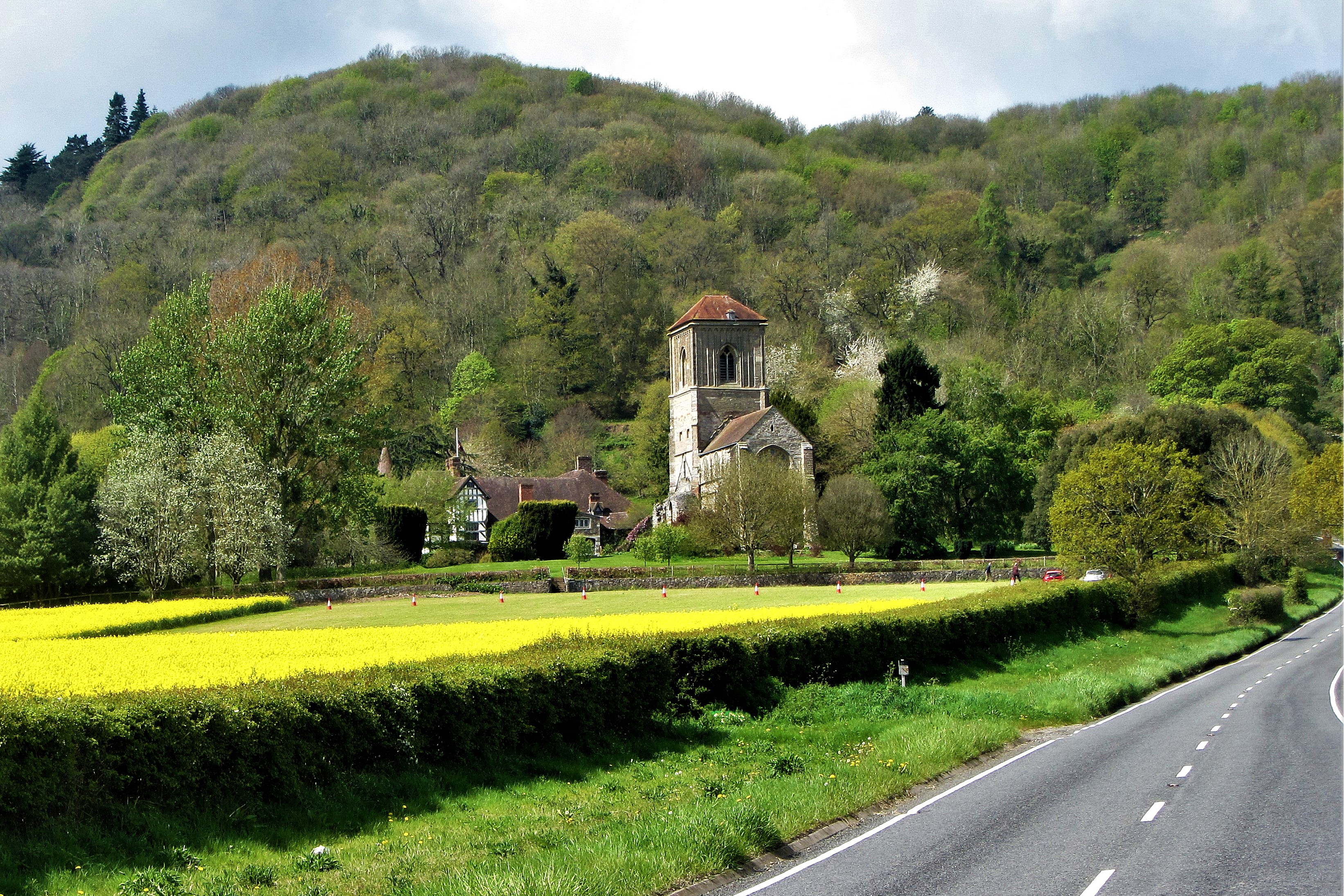
At some stage during the rout, the last Lancastrian hope, Prince Edward, was killed. Where and by whom remains a matter of conjecture, although Sir James Ramsey, writing in 1892, using the Arrivall as his primary source, suggested that the Prince was captured fleeing towards the town, then slain. Closer to the violent events in question, Edward Hall, in The Union of the Two Noble and Illustre Families of Lancastre and Yorke, published in 1548 claimed that it was the Yorkist knight Sir Richard Croft, of Herefordshire’s Croft Castle, who captured both Queen Margaret and Prince Edward after the battle; if that is so, Prince Edward must surely have been executed deliberately after being taken into his custody. Other accounts, though, have the defeated and broken-hearted Queen and mother escaping across the Severn at Lower Lode before being captured by the infamous Stanley brothers at a ‘poor religious place’, believed on balance to have been Little Malvern Priory, on the western slopes of the Malvern Hills.
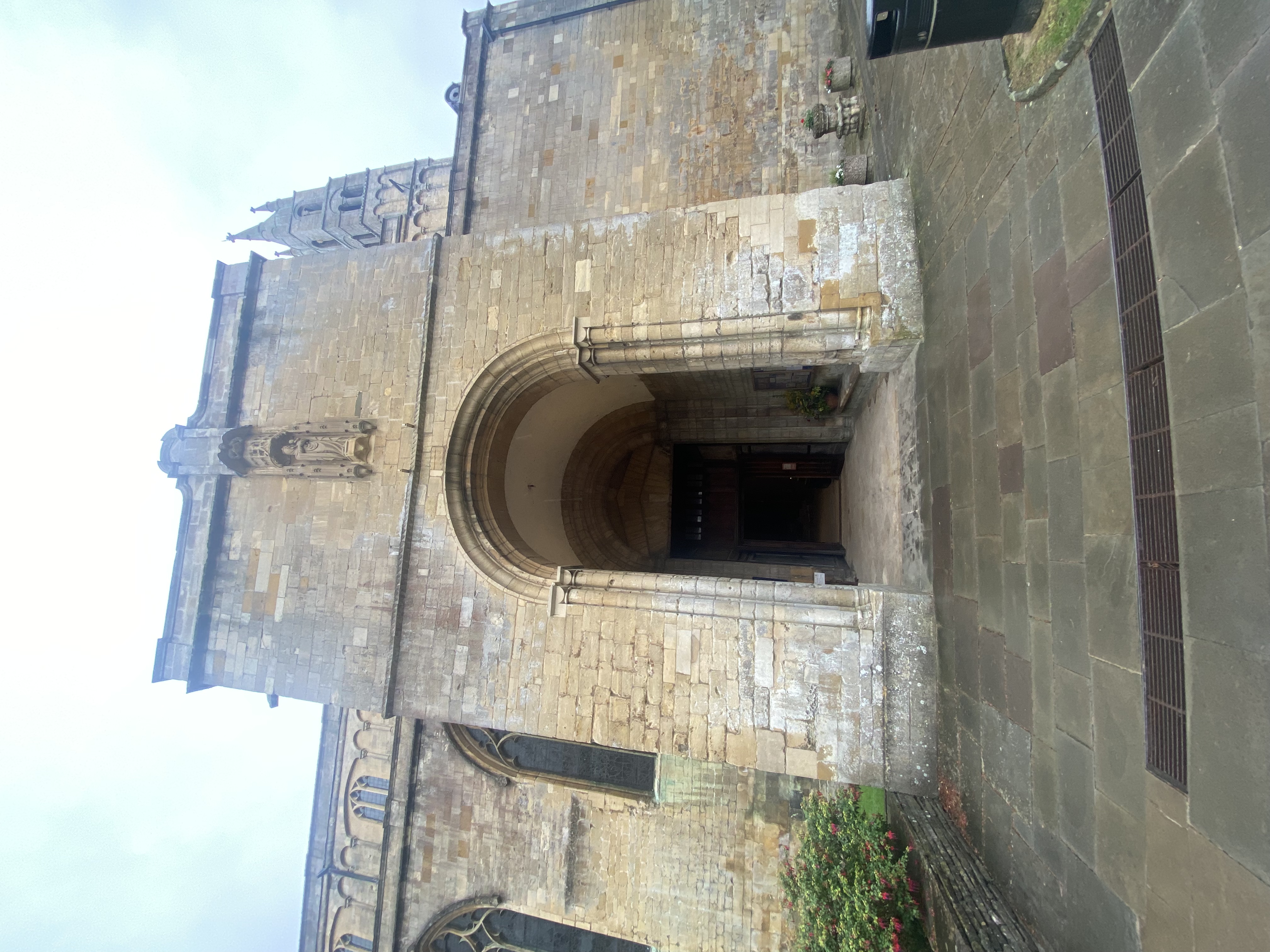
Some Lancastrians escaped the slaughter and sought sanctuary in Tewkesbury Abbey. Accounts differ as to the events then occurring. With this decisive victory, Edward’s kingship was confirmed; in law, the church’s protection could not be given traitors – which the defeated Lancastrians arguably now were. The King demanded prisoners; Abbot Strensham insisted that the killing stopped, but could not argue against the laws of sanctuary. According to the Yorkist account, the King was merciful, providing pardons, and even agreeing for those of high status, including Prince Edward, to be buried in the Abbey. Another account, however, believed to have been written by a monk and eye-witness, is probably more accurate, describing the killing in the Abbey and churchyard, as the result of which ‘deed the church was so polluted … that neither Mass nor any divine office might be performed there for almost a month’ (the Abbey and churchyard was reconsecrated by the Bishop of Worcester on 30 May 1471). Whatever happened, the King took prisoners from the Abbey, and more were rounded up from wherever they could be found; others were ridden down and killed, most infamously at Didbrook Church, ten miles away, which was so defiled that Abbot Hailes had it demolished and re-built.
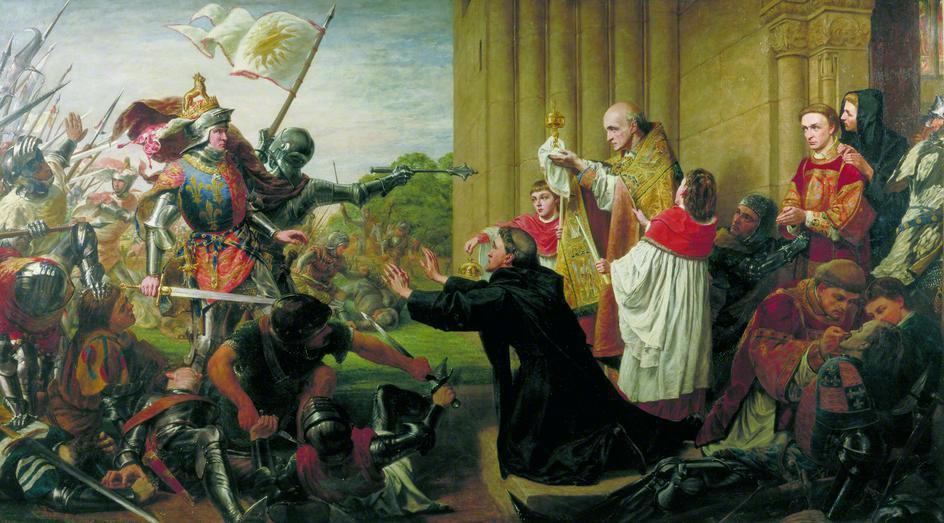
Certainly, though, King Edward did pardon some of his enemies. Ordinary soldiers were sent back to their homes, but on 6 May 1471, up to seventeen Lancastrians were tried at a court established in Tewkesbury by the King: all were found guilty, and all but one, Sir William Grimsby, were executed. Although after the earlier Battle of Wakefield the bodies of King Edward’s father and brother, Richard, Duke of York and Edmund of Rutland respectively, were mutilated and displayed, surprisingly at Tewkesbury the guilty were beheaded and not subjected to this indignity. Those losing their heads included the Lancastrian commanders Somerset and Langstrother, and with Edward of Westminster dead and the ‘She Wolf’ a broken-hearted prisoner – Edward IV now ruthlessly purged the House of Lancaster, preventing it ever rising again. Indeed, the final threat, Henry VI, a prisoner in the Tower, died, some say, of ‘melancholy’, on 21 May 1471 – others, more cynical, believed that the Lancastrian King was murdered on the orders of King Edward. So it was that the House of York was ascendant, Edward’s reign confirmed – and a peace achieved lasting fourteen years.
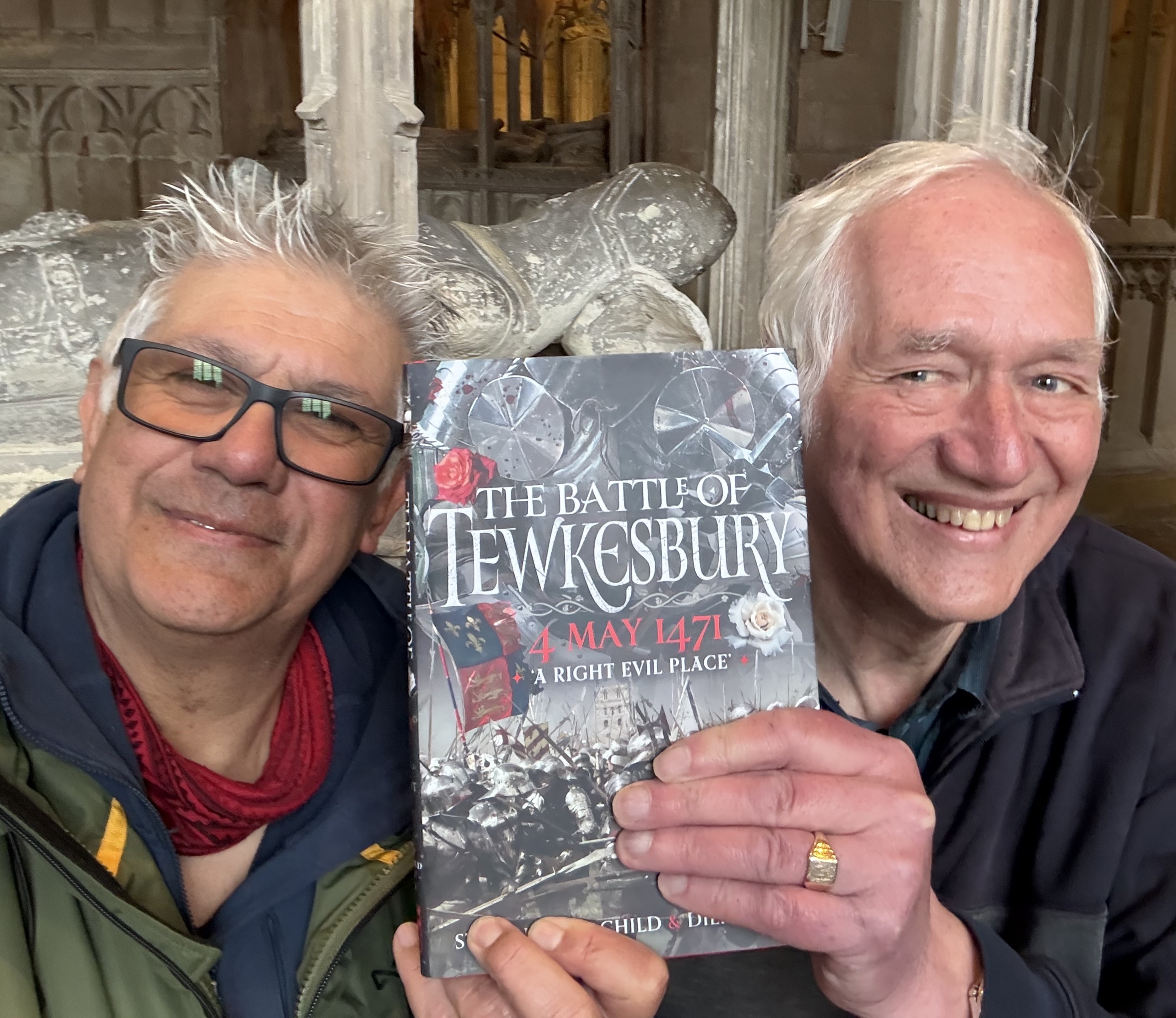
This new book, The Battle of Tewkesbury 1471: A Right Evil Place, is a publication I have long wanted to see, updating story of the battle, historical interpretations, and providing a comprehensive battlefield guide. The bulk of the work has been contributed by my old friend Steve Goodchild, the oracle on the battle, so far as I am concerned, and an enormously knowledgeable local historian. This book is, I have no doubt, the definitive account of the subject and an important contribution, therefore, to the Wars of the Roses’ bibliography. Having first learned of and been inspired by the Battle of Tewkesbury story when taken on a visit to the famous Abbey aged five, it gives me great pleasure to see this book in print, and it has been a pleasure to work with Steve and Pen & Sword on it.
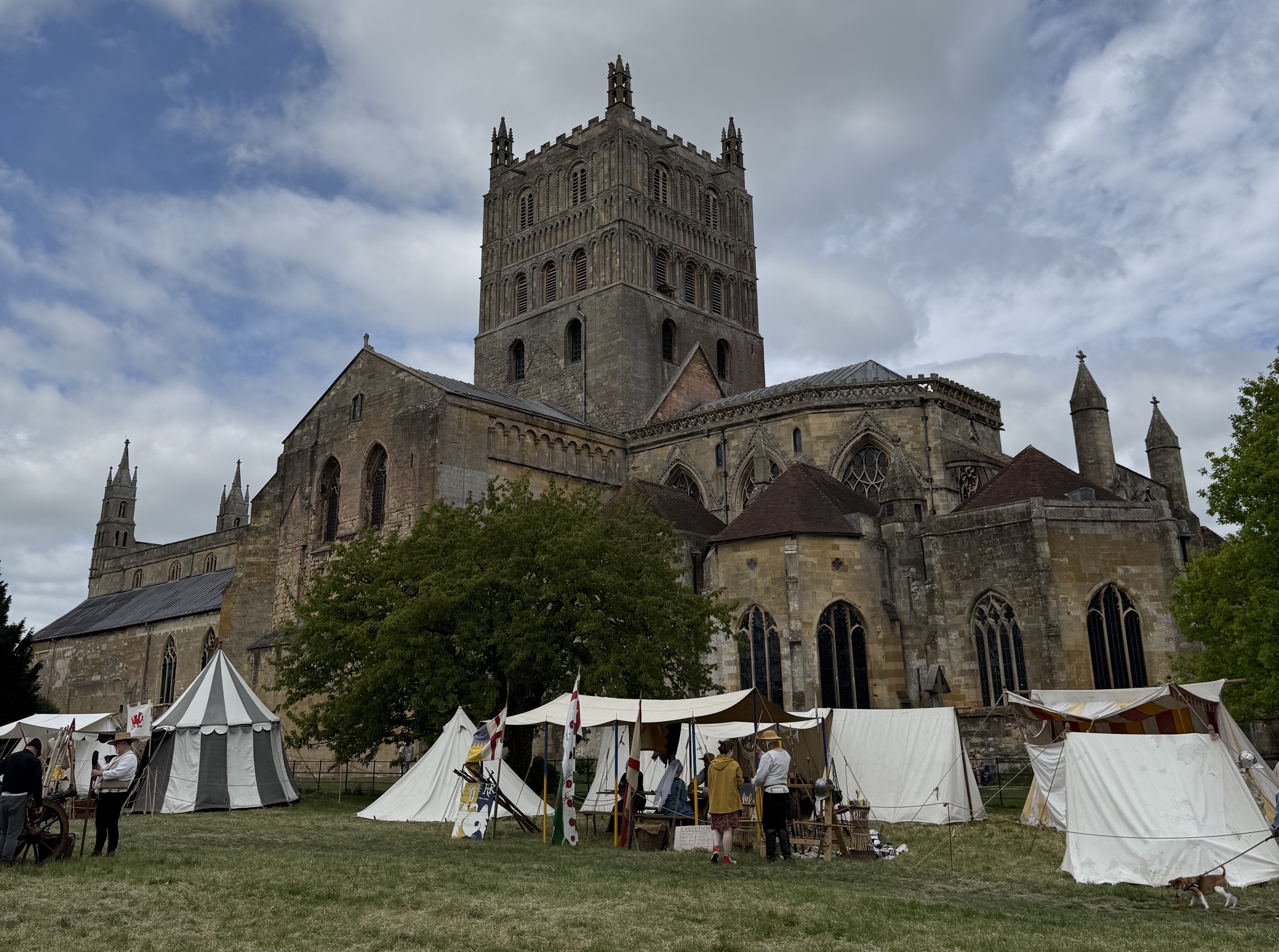
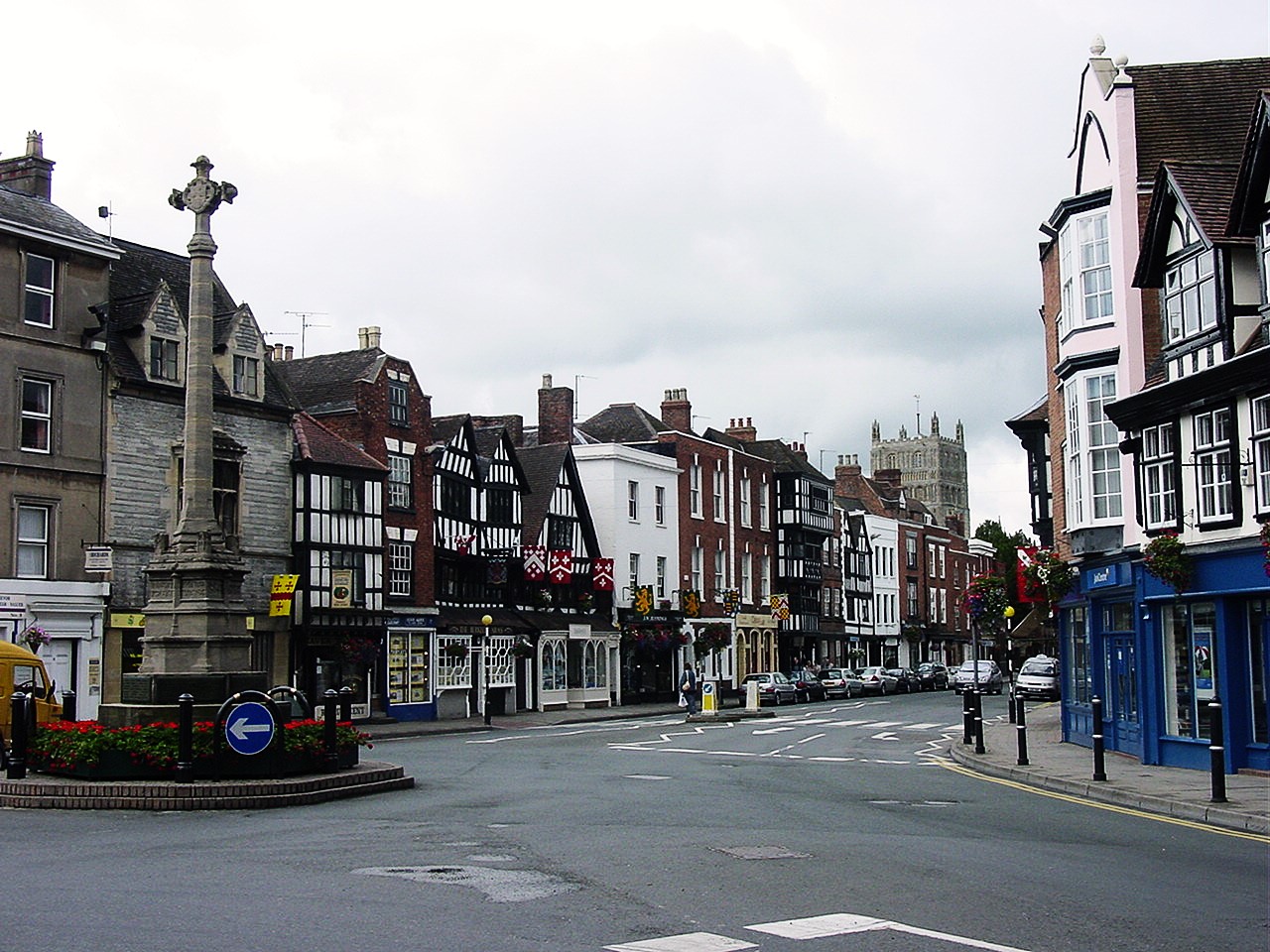
In truth, like many places where such violent and dramatic places have taken place, the decisive battle on 4 May 1471 remains the most significant historic event to have occurred in this Gloucestershire riverside town – which has embraced and commemorated the past in various significant ways. Since 1984, for example, the town has hosted the astonishing Tewkesbury Medieval Festival, believed to be the biggest of its kind in Europe, probably the world, featuring living history camps, displays, traders, entertainment, and a huge battle re-enactment, sometimes featuring as many as 500 on each side, providing a colourful and impressive spectacle. This wonderful event is free, always held on the second weekend in July annually – and is not to be missed.
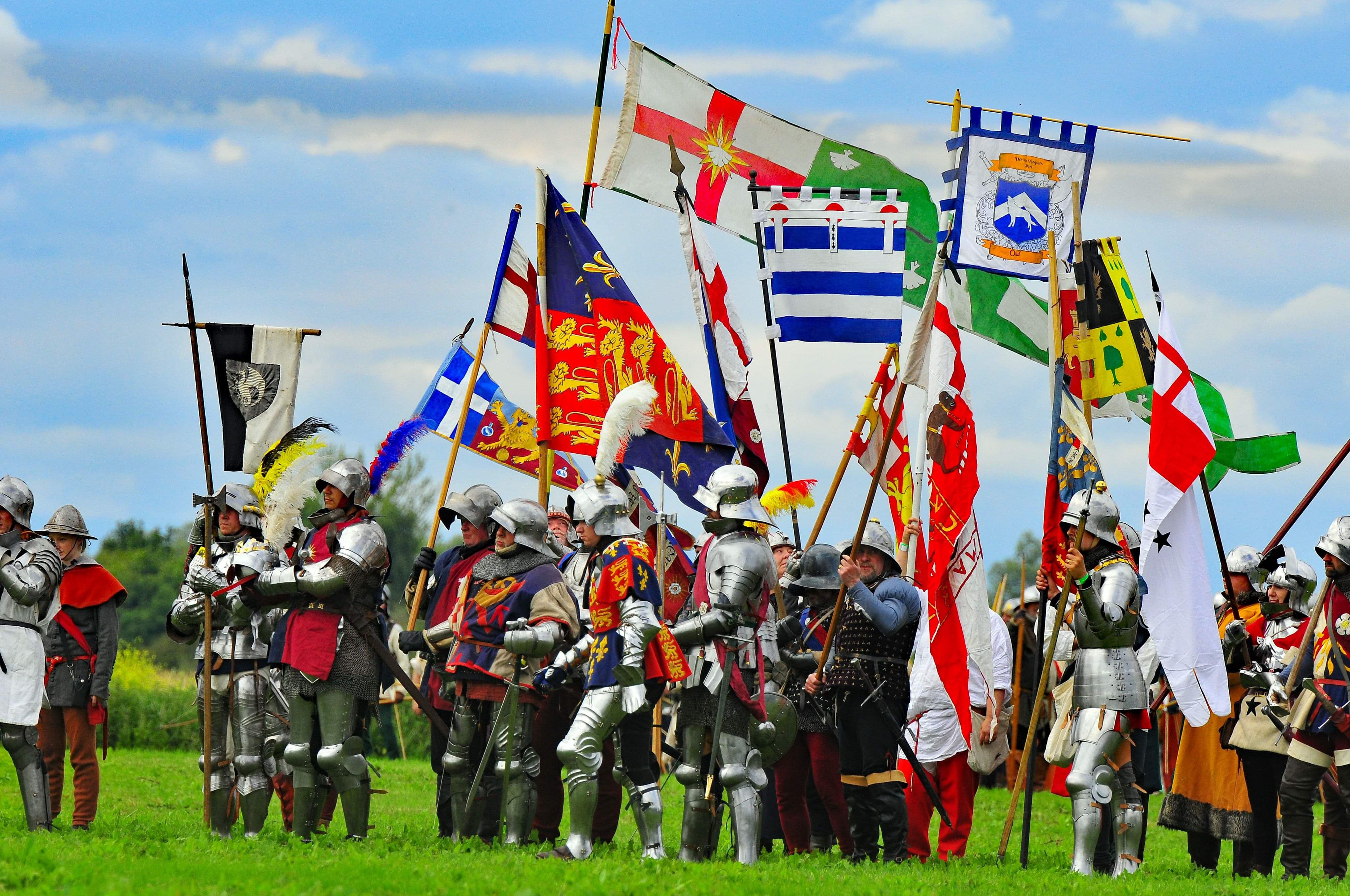
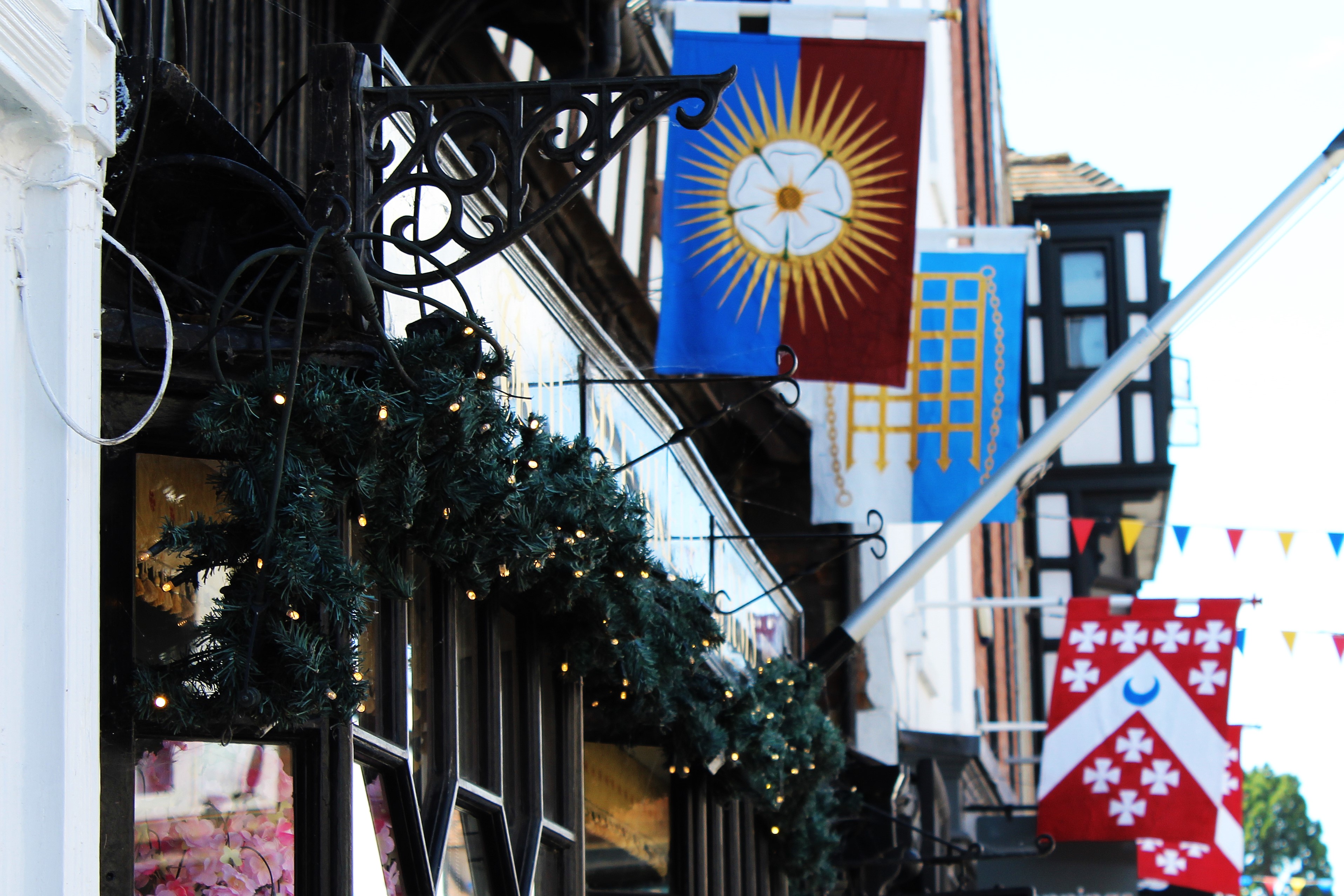
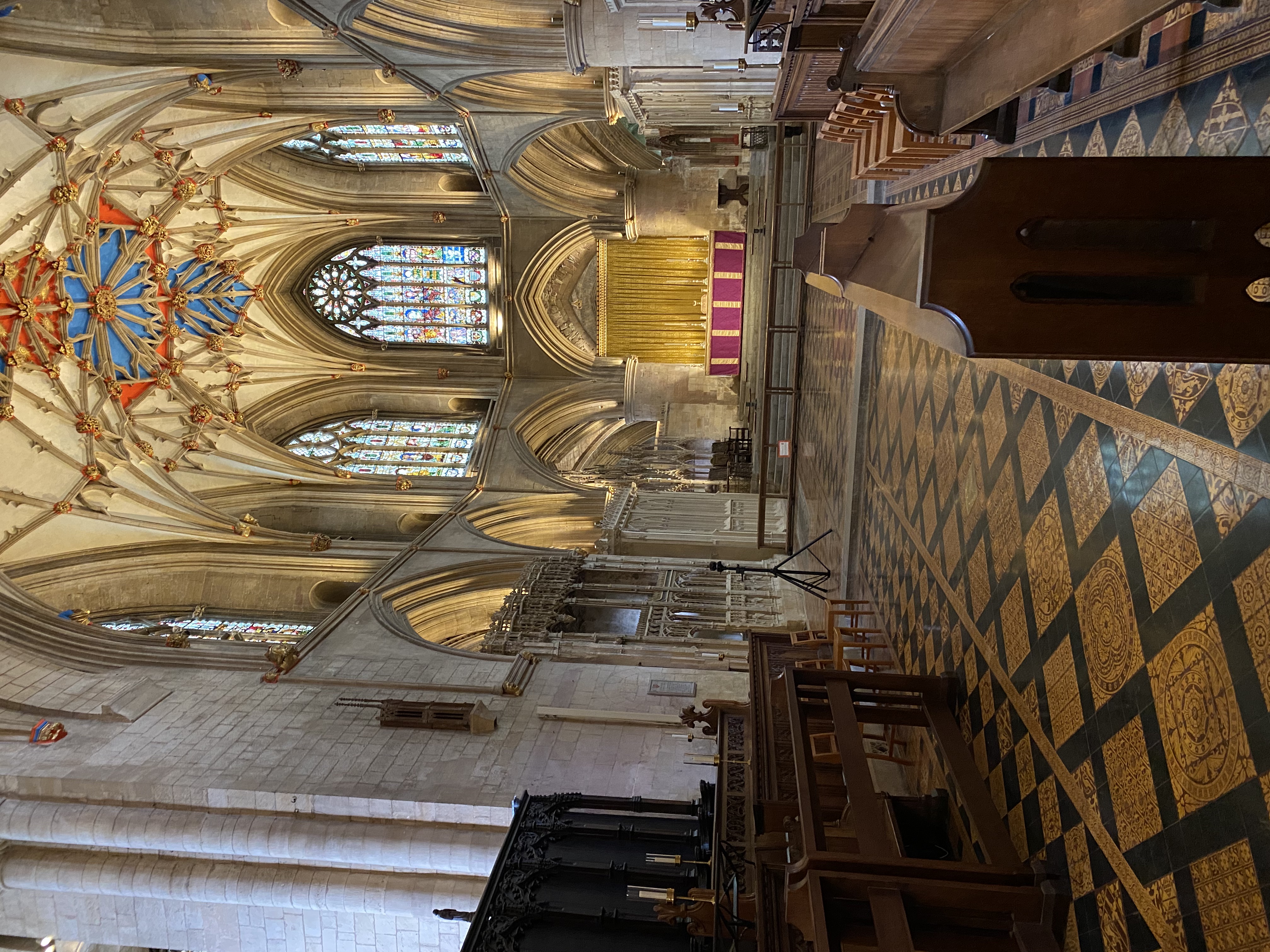
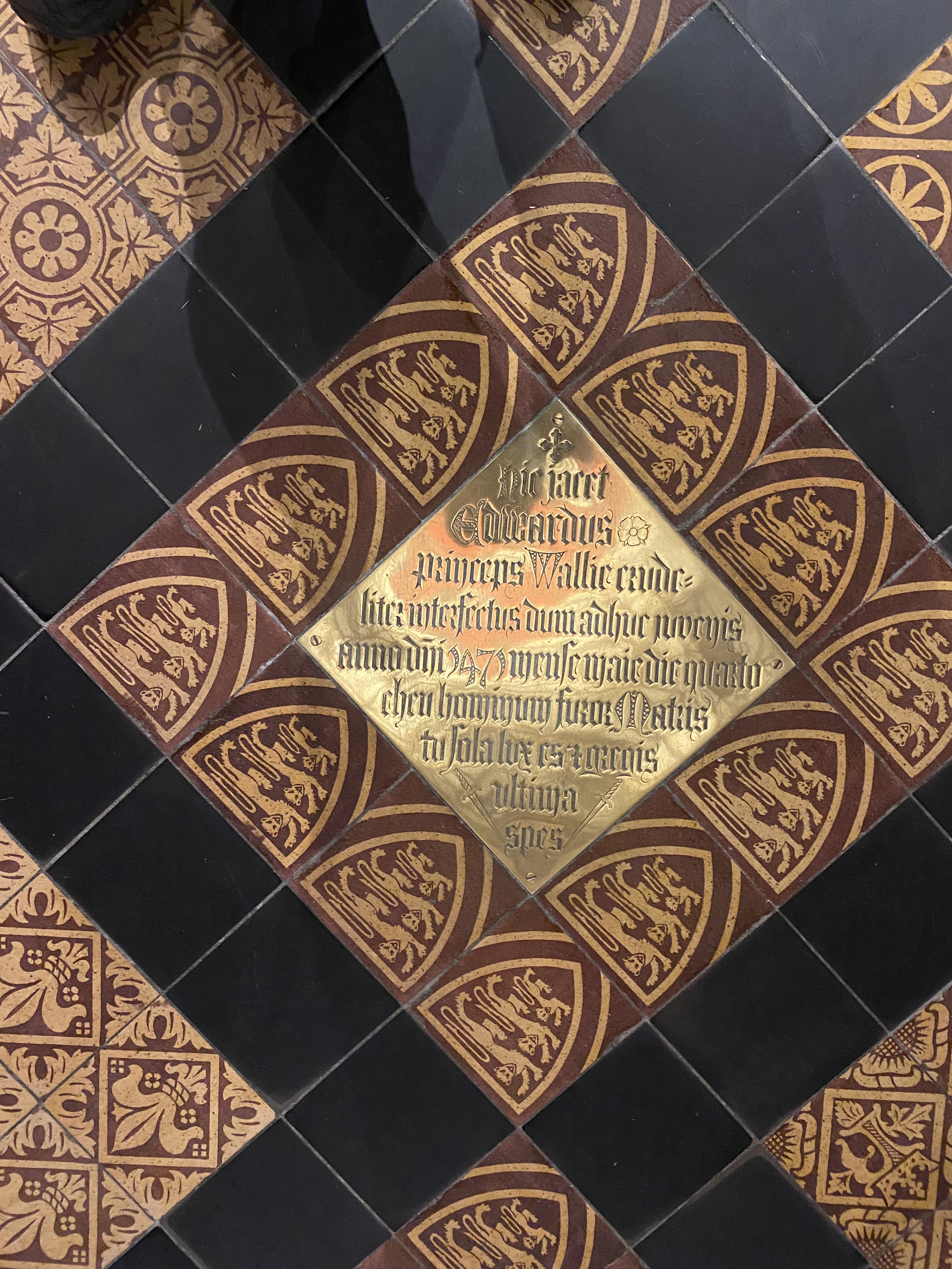
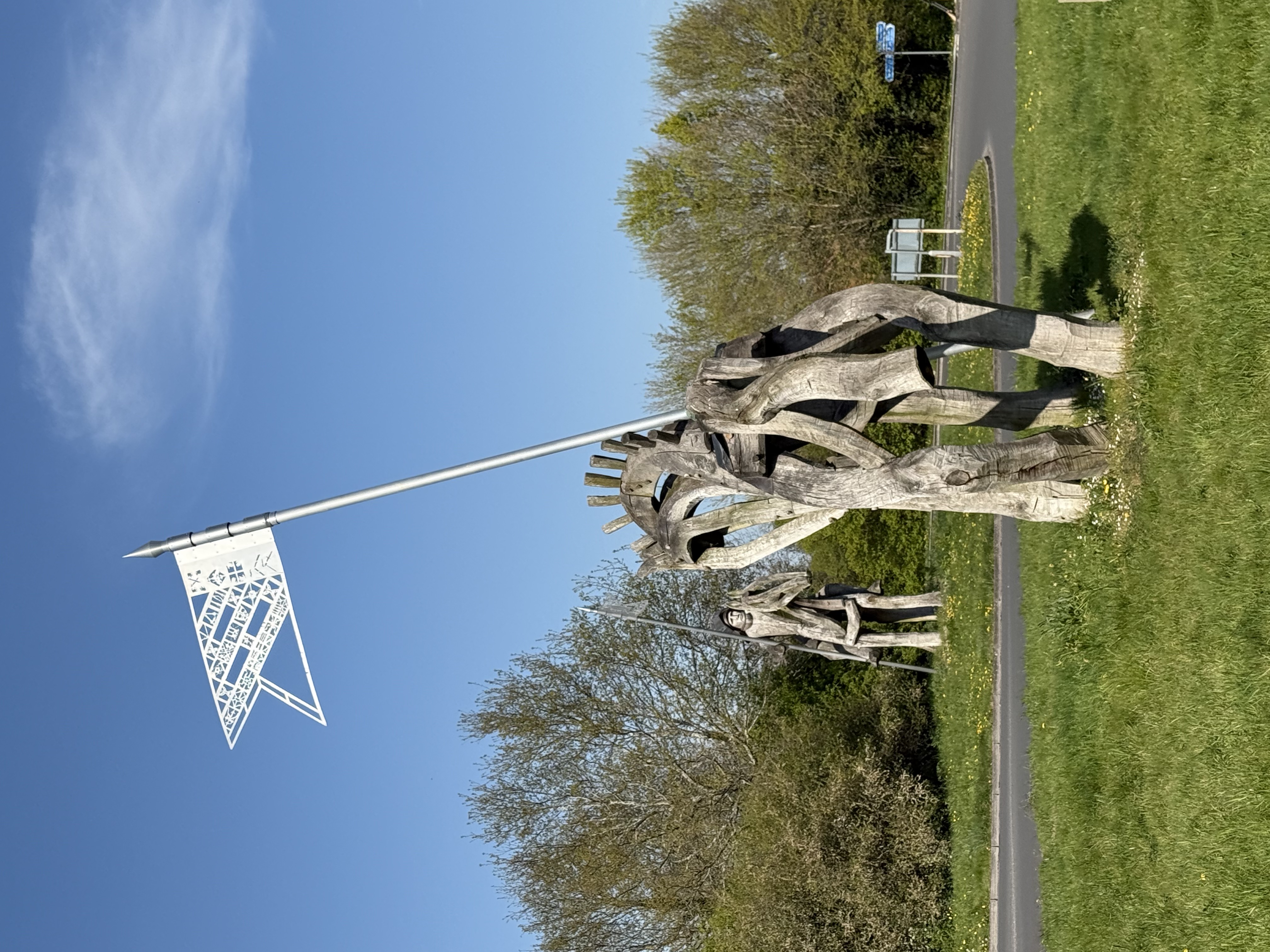
Furthermore, because the details of many nobles and households who fought at Tewkesbury are recorded, every winter sees a community project recreating the heraldic banners of those involved – which, throughout the spring and summer, are flown throughout the town. Over the years, the Battle of Tewkesbury Society has been instrumental in preserving parts of the battlefield, furthering research, providing battlefield walks, encouraging debate and arranging the huge commemorative sculpture ‘The Arrivall: Victor and Vanquished’ – and is now fund-raising for a statue of the defeated and broken Queen Margaret. Within the Abbey, of course, are various reminders of the battle, not least the grave of and memorial to Prince Edward, ‘The last hope of thine race’, set in the floor beneath a ceiling commissioned by King Edward to commemorate his great victory. For any visitor, for sure, there is plenty to see and discover in and around Tewkesbury concerning 4 May 1471.
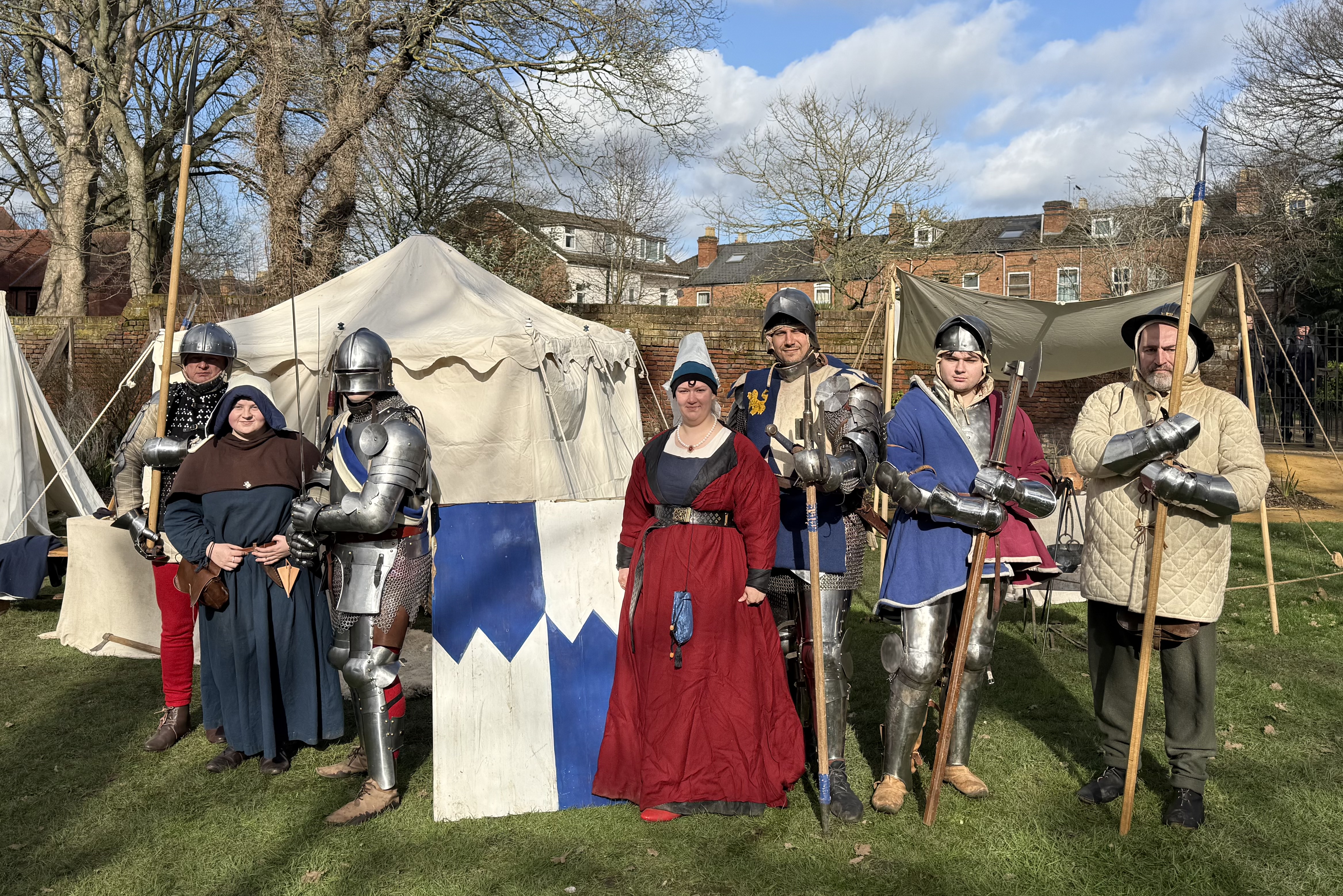
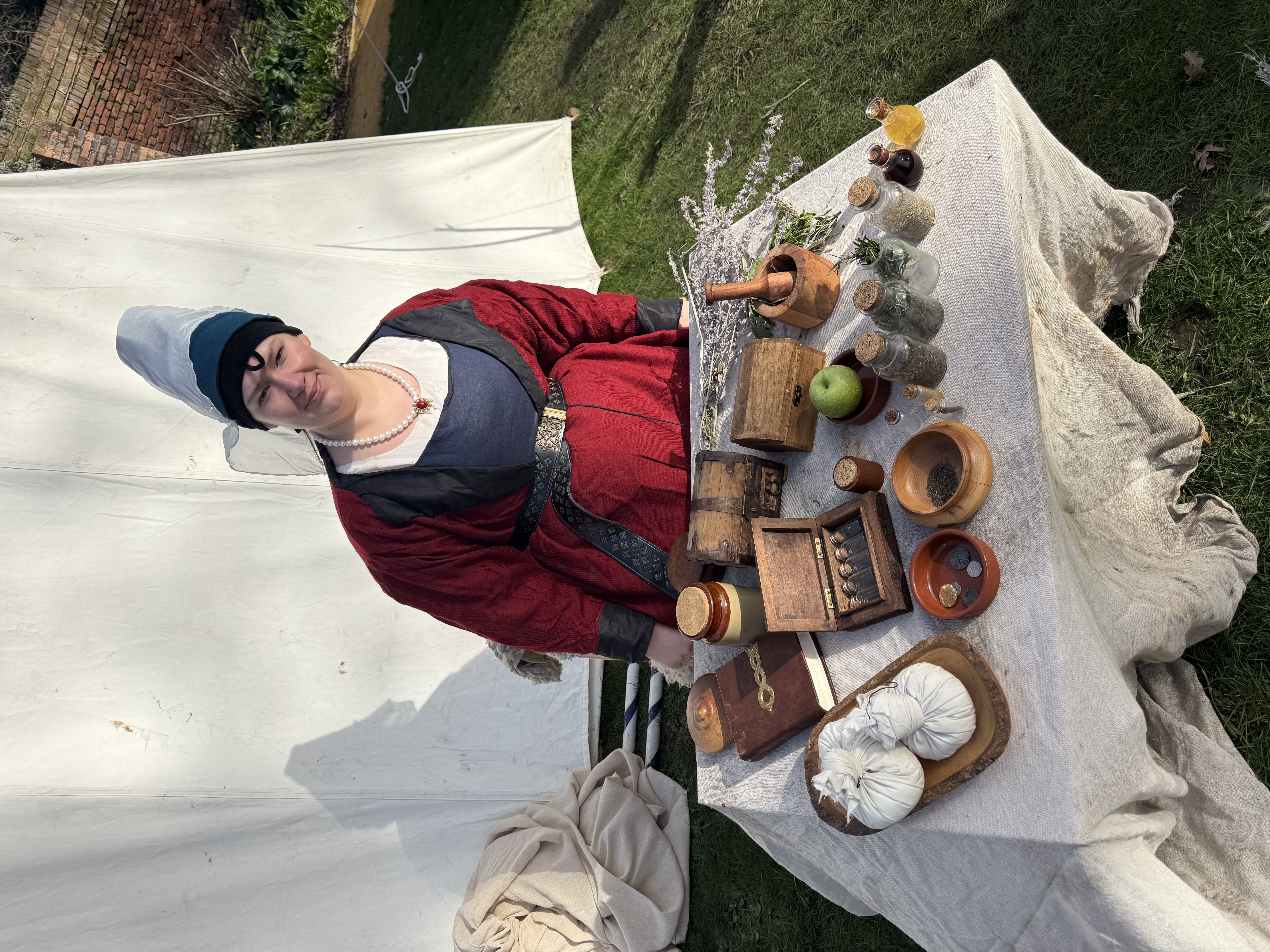
Tewkesbury also now has its very own living history group, the Croft Household, founded in 2025. The group is inclusive and portrays aspects of life during the Wars of the Roses, from ‘Sir Richard Croft’ himself and his men-at-arms to civilians, male and female, including a healer. Now nineteen members strong, the group is a member of the Wars of the Roses Federation, fully insured, holds regular training days, and attends events nationwide. Naturally, the group participates in the Tewkesbury Medieval Festival, which is really the highlight of every Wars of the Roses re-enactors’ diary – those wanting to get more involved please contact [email protected].
Dilip Sarkar MBE FRHistS, 16 April 2026
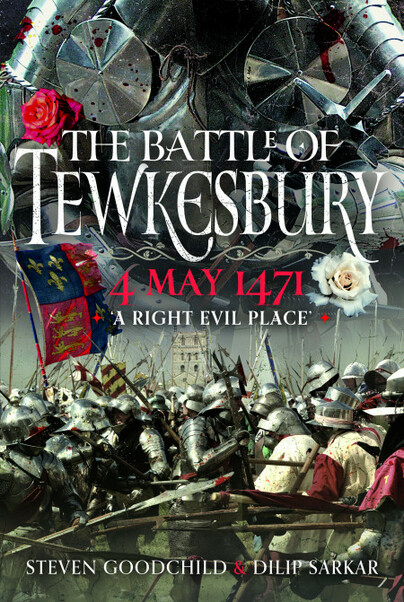
Order your copy here.