The Queen and the Pomegranate
Author guest post from Carol-Ann Johnston.
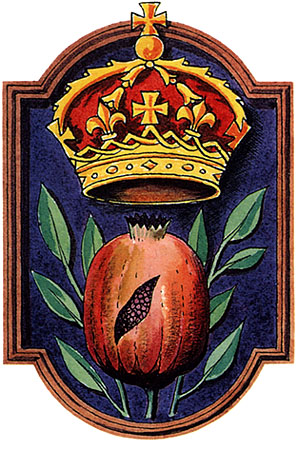
Each of Henrys six Queens had a personal badge, a symbol that was immediately identifiable with them and their Queenship. Anne Boleyn was represented by a crowned white Falcon, Jane Seymour a crowned Phoenix rising from a fire and castle surrounded by Tudor roses, Anne of Cleves a crowned golden Escarbuncle, Catherine Howard a crowned Tudor rose and Catherine Parr a crowned maiden rising from a Tudor rose.
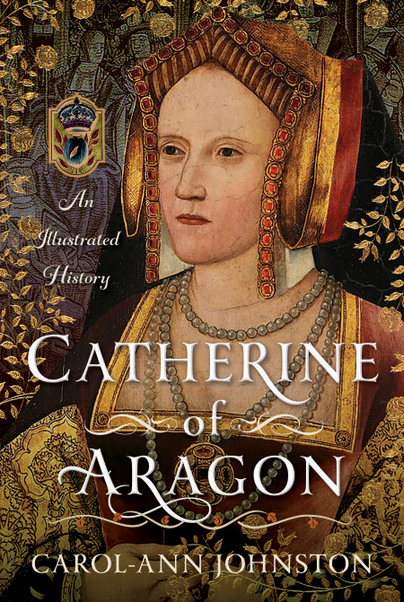
Catherine of Aragon personal symbol as Queen was a crowned Pomegranate.
She was the only one of Henrys Queens to choose a fruit as her personal symbol, why was this?
The pomegranate was a very suitable symbol for the new Queen she was in 1509 as the Pomegranate has a variety of meanings and representations. It is a recognized symbol of good health and life, appears in various faiths and church’s and perhaps importantly for Catherine, it represents fertility. Catherine knew that one of her primary roles as Queen was to be the mother of the next King of England and in a time where symbols and imagery were the primary ways of communication, the Pomegranate would have been an easily recognized symbol of this.
But equally importantly for Catherine it was also a symbol of her history and her family, a family that she took great pride in. Her mother and father, Isabella of Castile and Ferdinand II of Aragon, were the most powerful monarchs of their time and during their reign one of their most notable achievements was to complete the reconquest (Reconquista) of Spain. The Reconquista was a centuries long struggle between the Christians and the Muslims that saw Christian forces reclaim land lost previously to Muslim rule. In 1492 Isabella, Ferdinand and their armies were able to take back Granada, the last stronghold held by the Muslims, finally uniting all of Spain under one faith and one rule, an action that helped earn them the title ‘Catholic Kings’ from a very grateful Pope Alexander VI.
Interestingly Granada in Spanish means Pomegranate.
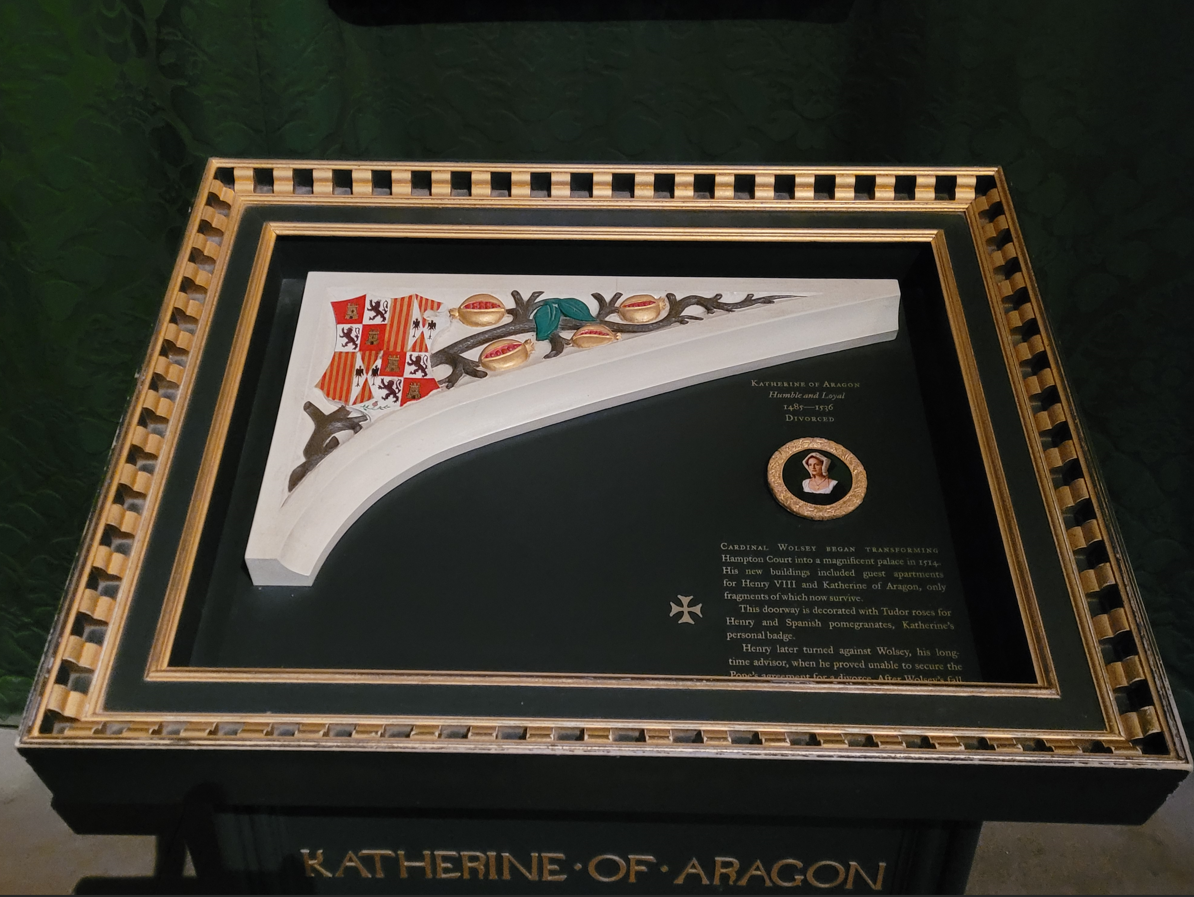
If you are ever fortunate enough to travel to Granada today you will find the symbol of the Pomegranate everywhere, not just on the flag and coat of arms but on tiles, a part of mosaics and more unusually on manhole covers and fire hydrants but it was so synonymous with Granada in the 15th century as well that Isabella and Ferdinand incorporated into their own arms and badges going forward.
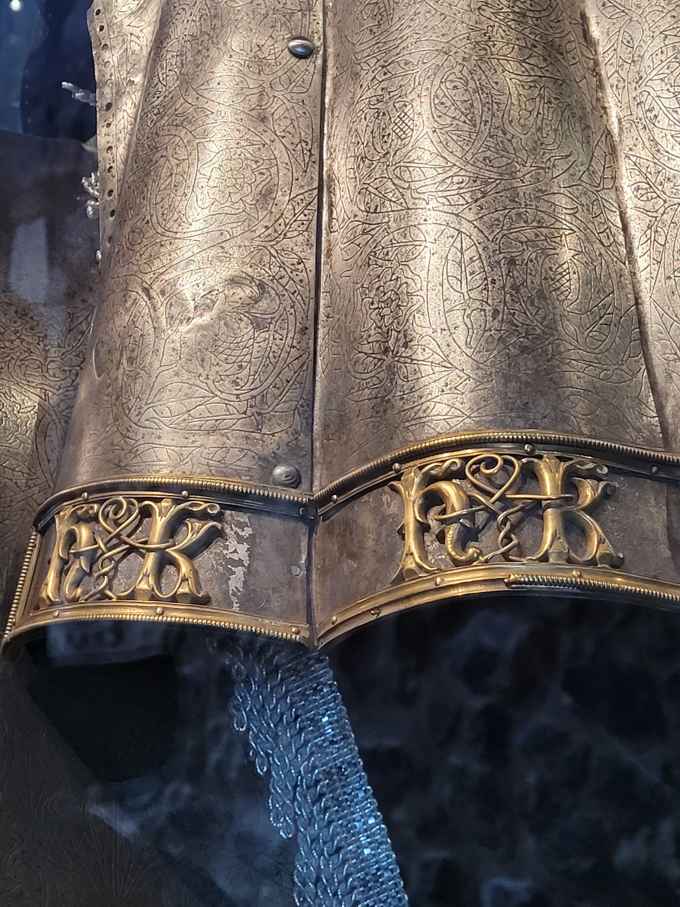
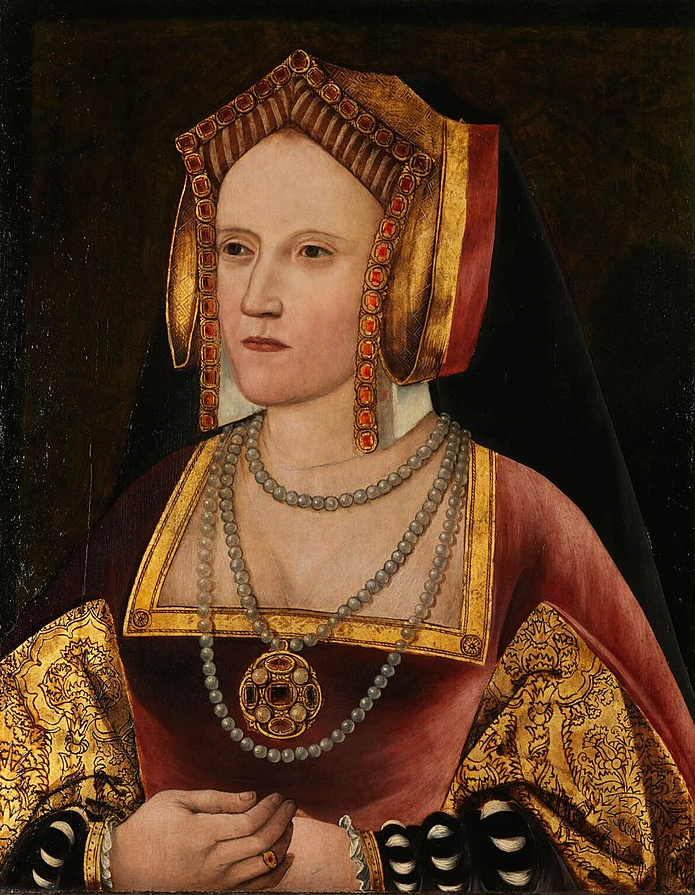
Catherine owned clothing and jewellery with Pomegranates incorporated into their design, a fantastic example of this was the gold heart shaped pendant discovered in Warwickshire in 2019. Whilst we don’t know who owned it the quality of the design and the materials used mean it can only have belonged to someone of higher status. The Pomegranate could also be found on some of her household items such as candlesticks, cups and spoons which were engraved with them. It was not just Catherine who used the symbol, Henry also had it incorporated in his suits of armour, one of which still survives and can be seen in the Tower of London today.
As I mentioned earlier the Pomegranate also appears in various faiths around the world. For Christians (and Catherine) it is a symbol of the Church and the pomegranates many seeds (hundreds, sometimes more) represent unity in faith and a community of believers. It also represents the resurrection of Christ and the promise of eternal life.
Sadly, the Pomegranate did not live up to its promise of fertility for Catherine, she did become pregnant numerous times but only had one child that lived to adulthood, her beloved daughter Mary.
However, it did act as an important and powerful symbol of the family and country she left behind to come to England and be its Queen. A symbol so easily identified with Catherine that those who visit her grave to pay their respects today often leave a Pomegranate in her memory nearly 500 years after her death.
Order your copy here.