Wartime London’s Dark Side: Sex, Crime, and the Cleft Chin Murder
Author guest post from Prash Ganendran and Melissa Ganendran.
London during the Second World War was a city in the dark, in more ways than one. Streetlights were extinguished, curtains drawn tight, and bomb craters yawned open in unlit, debris-strewn streets. In the blackout, road accidents rose by as much as 45%, and thousands of pedestrians, cyclists, and drivers were injured in the enforced darkness before a single bomb was dropped. But accidents were not the only thing on the increase.
Between 1939 and 1945, recorded crime in Britain rose by around 50%. Blackout conditions allowed offenders to melt away unseen, police forces were depleted as officers joined the armed services, and millions of people, particularly young men and women, found themselves far from home, family, and traditional social constraints. While air raid sirens wailed overhead, another wartime reality thrived beneath: a shadow economy of sex, spivs, black market deals, deserters, and “good time girls”, especially in the West End districts of Soho and Piccadilly.
Strip clubs, all-night cafés, and Lyons Corner Houses did brisk business with British civilians and visiting American servicemen alike. Sexually transmitted infections soared, Military Police raided dance halls in search of AWOL soldiers, and the blackout made it remarkably easy to disappear. Yet the nation’s resilient spirit was buoyed by humour in the face of destruction. Outside one bombed-out police station, a sign warned passers-by, “Be good. We’re still open!”
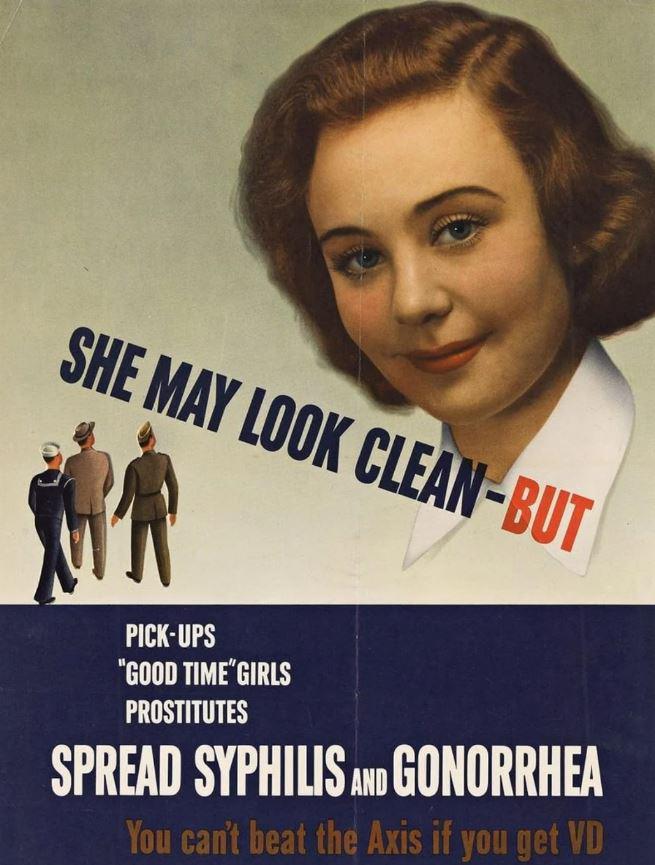
Most everyday violence passed with little comment, overshadowed by war news. But murder still shocked the public, particularly at a time when people were making enormous personal sacrifices and coming together as a community with a shared commitment to victory.
In October 1944, one case forced the nation to confront the uncomfortable underside of life on the Home Front. 18-year-old Betty Jones, a Welsh dancer escaping an abusive marriage, and 22-year-old Karl Hulten, a married American serviceman who had deserted his unit, embarked on a reckless six-day crime spree that culminated in the fatal shooting of private car hire driver George Edward Heath. Known as the Cleft Chin Murder, the case caused a sensation on both sides of the Atlantic.
As barrister C.E. Bechhofer Roberts wrote at the time, “Not for many years had any trial at the Old Bailey, or any other British court for that matter, created so much interest among the public. The combination of supposed Chicago gunman and a striptease dancer, not to speak of the dead man’s inky fingers, cleft chin, and alleged connection with the black market – all this and more had the country agog.”
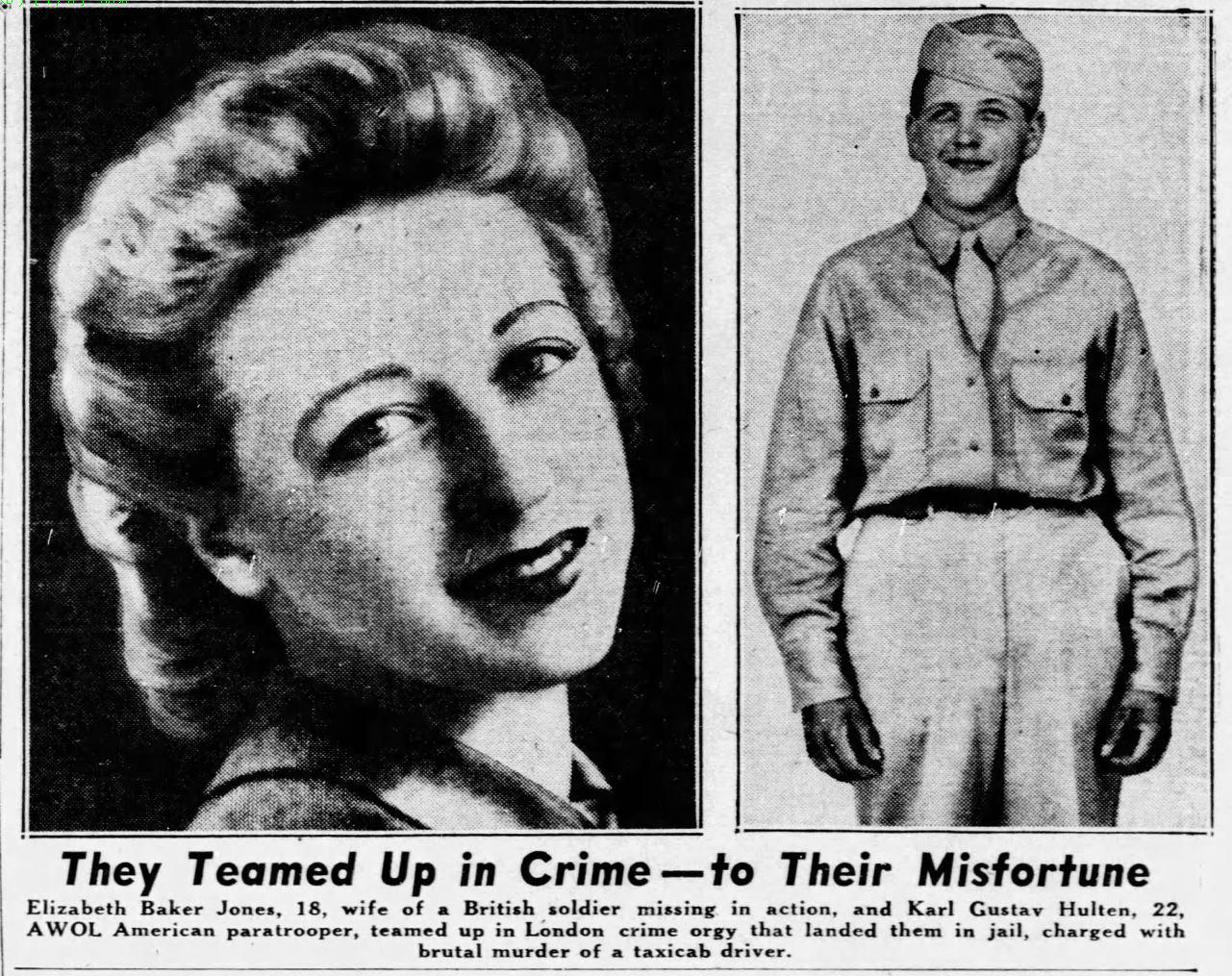
Yet despite the media frenzy, the case was quickly forgotten as Britain emerged from the war and looked ahead rather than back.
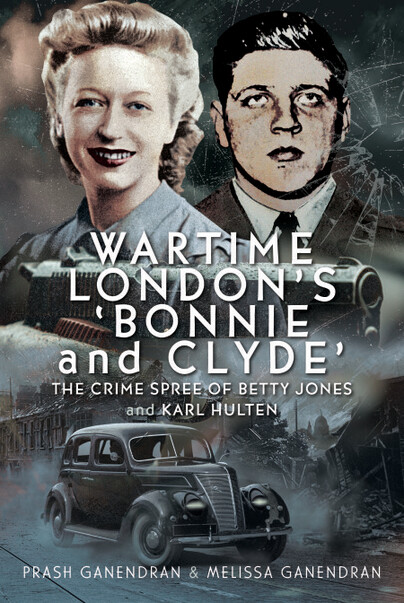
Our book, Wartime London’s “Bonnie and Clyde”: The Crime Spree of Betty Jones and Karl Hulten, grew out of a desire to revisit this case with fresh eyes. We dug into previously unexamined archives, including military, court, school and prison records, genealogical documents, personal letters and witness statements, to reconstruct the story in full for the first time.
What drew us in was not simply the violence, but the human complexity behind it. Betty and Karl were young, impulsive, and shaped by a society under immense strain. Betty had survived a troubled childhood, institutionalisation, a teenage marriage, and a precarious existence amid London’s illicit nightlife. Karl, despite styling himself as a battle-hardened gangster, was a restless young man inducted into the United States Army just a week before the birth of his daughter. He had never seen combat, deserted his post, and drifted into crime while boasting to his family back home of imagined exploits.
The subsequent Old Bailey trial in January 1945 marked the first and only time an American serviceman was tried for murder in a British court, and one of the earliest appearances of a female barrister in a major murder trial. Public opinion was fiercely divided. At a time when men were dying overseas and civilians were enduring bombing and rationing, many viewed the pair’s hedonistic pursuit of excitement as an unforgivable moral failure.
Both were convicted and sentenced to death. Karl Hulten was executed at Pentonville Prison in March 1945, aged just 23. Betty Jones was reprieved with less than 36 hours to spare and served nine years in prison; a decision that provoked outrage and debate across the country.
What happened next is where our research breaks new ground.
For decades, it was widely believed that Betty Jones lived an obscure, unhappy life after her release and died sometime in the 1980s. Some claimed she joined a nunnery; others that she died alone and destitute. None of this was true. Through extensive archival research, we have been able to trace what became of Betty after prison, including her new identity, emigration, marriage, and the second chance at life she carved out for herself. We also traced and contacted her surviving daughter, who generously shared memories of her mother’s later life. We also shed light on the families left behind by the crime, including Karl Hulten’s. His widow, Rita, lived to the age of 100, dying only in 2025, and their daughter June is still alive today.
This is not a story of simple villains and victims, but an exploration of how war and circumstances shape behaviour, place ordinary people in extraordinary – and sometimes catastrophic – situations. As one American newspaper reflected in the aftermath, “Perhaps there is a moral to this story. Perhaps the moral is that children far from home sometimes get lost and never find their way again.”
Wartime London was undoubtedly a city of courage and endurance, but also of desperation, excess, and crime. By returning to this long-forgotten case, we hope to illuminate that shadowed side of the Home Front, and to ask whether justice, as it was delivered in 1945, truly told the whole story.
Prash Ganendran and Melissa Ganendran
January 2026
Order your copy here.