Important Female Influences and Relationships in Catherine of Aragon’s life
Women’s History Month guest post from Carol-Ann Johnston.
‘Nature wronged her in not making her a man. But for her sex, she would have surpassed all the heroes of history’- Thomas Cromwell
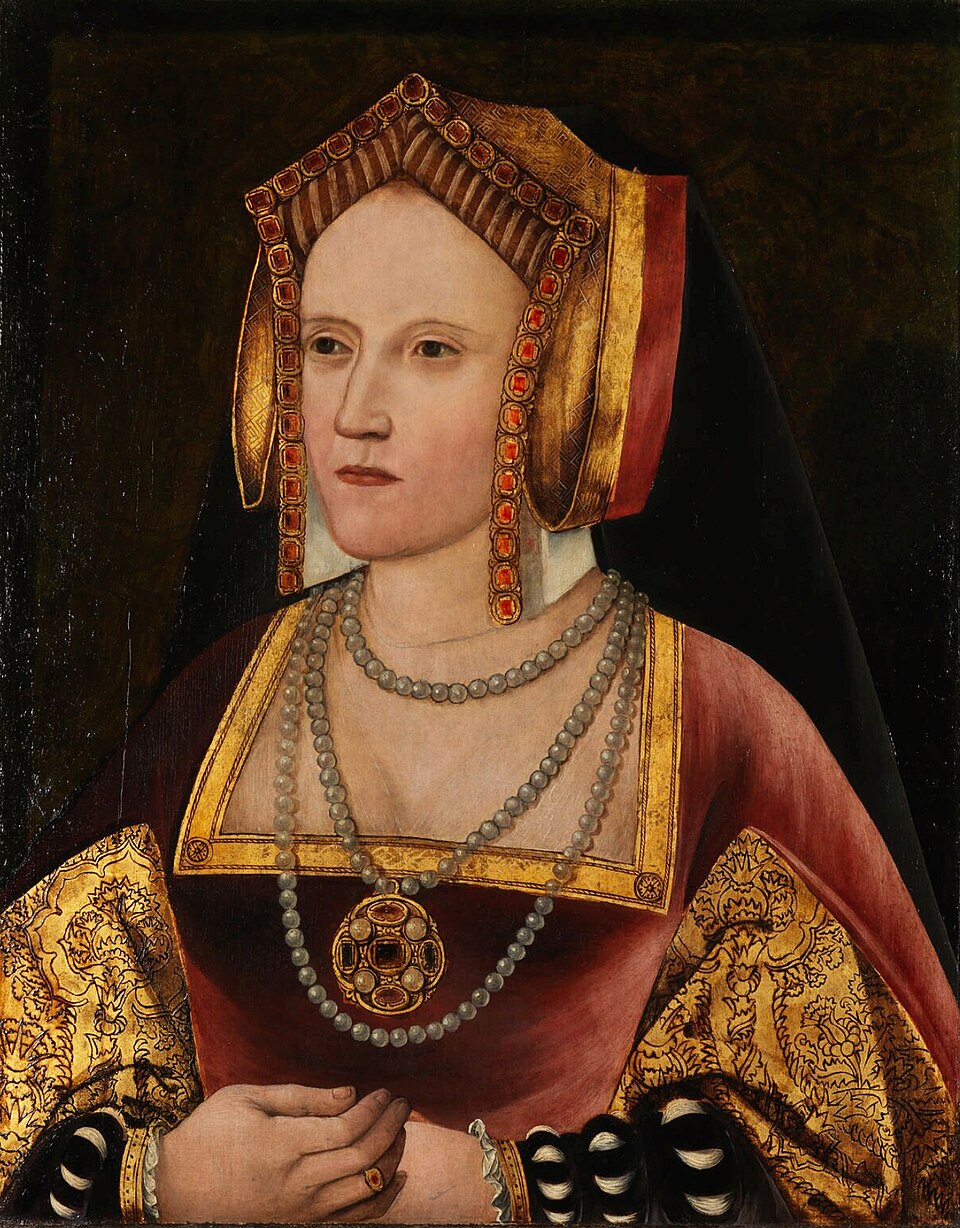
Catherine of Aragon was an incredible woman, but she was surrounded by some incredible women as well. These women cared for, loved and influenced her but she influenced some of them in return:
Her Mother- Isabella of Castile
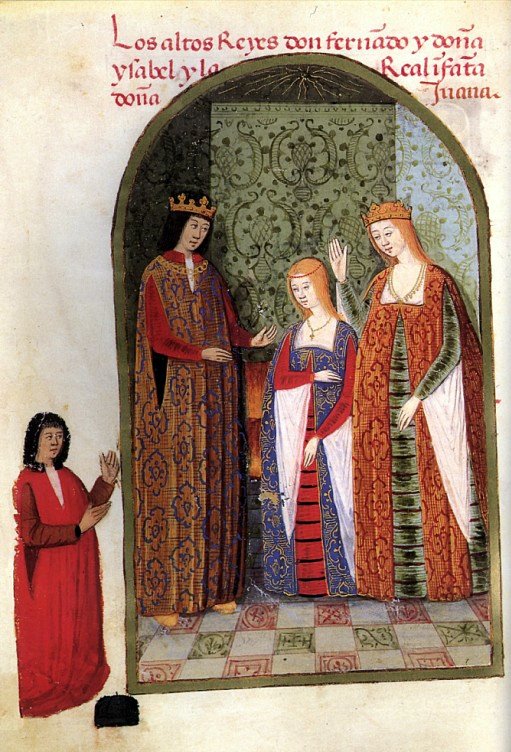
As her mother Isabella was quite naturally the first and perhaps most important influence in Catherine’s life. Isabella was an affectionate mother, a surviving report from an English ambassador state that he witnessed Isabella hold the young Catherine up so that she could better see some tournaments taking place and saw them talking warmly together. Catherine was Isabellas last child and in the years to come Isabella was noticeably reluctant to let her leave her side, putting off her departure for England several times. This was after her family had faced several losses that blighted Isabellas later years, including her only son, eldest daughter and grandson but prior to that Isabella had been one half of a very successful marriage and partnership that united the kingdoms of Castile and Aragon and laid the foundations for modern Spain. They also completed the Reconquisita of Spain when Granada fell in 1492 earning them the title ‘Los Reyes Católicos’ or the Catholic Monarchs from a grateful Pope. Isabella had inherited a weak crown and was one of two claimants to it but her tenacity, hard work and faith paid off. She was a devout Catholic something she passed onto her daughter, in fact, it was said that in personality Catherine was the child most like her mother. Both women were hard working, dutiful and willing to take a stand for what they believed was just.
Her sisters- Isabella, Juana and Maria
Catherine was fortunate to have a close relationship with her sisters and parents as they continually moved around whilst Isabella and Ferdinand worked to establish full control of their kingdoms and complete the Reconquista. Isabella ensured her daughters were educated to the highest degree to prepare them for their future roles as Duchesses, Queens or Empresses. As with most princesses, or Infantas as Catherine and her sisters were known, they were raised to do their duty by their country
There was a fifteen-year age gap between Catherine and her eldest sister Isabella, six between herself and Juana and three between herself and Maria. There were two instances when Catherine was able to reunite with her siblings in unexpected circumstances, sadly both tragedies. Her elder sister Isabella was widowed unexpectedly in 1491 and returned home to her family, and Juana arrived in England in 1506 when her ship was blown off course by a storm. She was on her way to Castile to claim their mother’s throne with her husband.
Interestingly the most evidence we have for a close sisterly relationship is with her second oldest sister. We have surviving letters the two wrote to and about each other showing a caring relationship between them despite the distance each of their lives would take them from each other. When Catherine died in 1536, Juana had to be told of her death carefully so as not exasperate her preexisting health conditions, though there is some debate as to how serious these were. Juana was naturally sad to hear the news and withdrew from her household, not speaking to anyone around her for some time. When she spoke again, she refused to believe Catherine had died but when she was eventually convinced of the truth, she ordered Masses to be sung and retired to spend her time in prayer, she again refused to speak and even refused food. Juana would outlive all her siblings, passing away in 1555. In her possessions after her death were found portraits of her mother and youngest sister alongside books and devotional items, there is no mention of portraits of her other siblings though that’s not to say there were never any at one time.
Her sisters-in-law- Margaret of Austria and Mary Tudor Queen of France
Margaret of Austria
Margaret held a special place in Catherine’s heart as the wife to her only brother Prince Juan. Whilst her marriage to Catherine’s brother did not last long, ending with his unexpected death in 1497, their relationship survived for the rest of Margarets life, though from a distance. Margaret helped Catherine prepare for her future role in England by practicing French with her and as a veteran of three courts was able to answer most questions Catherine would have had about living in a foreign country. Margaret and Catherine did reunite in 1520 shortly after the Field of the Cloth of Gold alongside their shared nephew Emperor Charles V but at one point there was a possibility Margaret could have been her former sister-in-law mother-in-law as well when a marriage proposal between the widowed Henry VII and Margaret was suggested by Margarets brother Philip. Margaret acted as a one of the godparents of Catherines short lived son Prince Henry and even wrote to her offering advice during the Kings Great Matter.
Mary Tudor, Queen of France
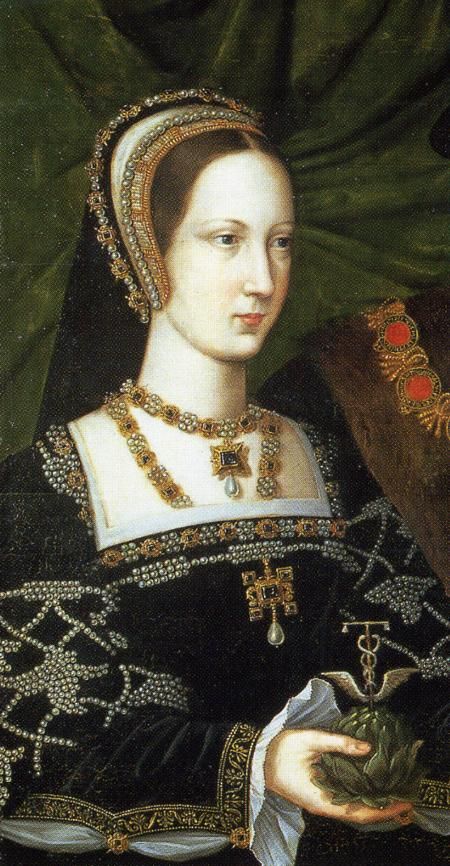
Mary was the youngest surviving child of Henry VII and Elizabeth of York and she was believed to be her brother Henry VIII’s favourite sister. Catherine and Mary would become close as they spent more time together than Catherine and Margaret Tudor who departed England for Scotland in 1503. They were briefly parted when Mary left for France to marry King Louis XII but her time as Queen was short, he died 3 months after their marriage and Mary returned to England in 1515. Mary was by Catherines side at the Field of the Cloth of Gold acting as a hostess alongside her sister-in-law and giving out prizes at the tournaments. Mary even sided with Catherine against Henry when the Kings Great Matter began, and she was not discrete in her support refusing to recognise Anne Boleyn as Queen. Mary had not been as prominent at her brother’s court following her own second marriage and her refusal to acknowledge Anne led to a cooling of their relationship but she maintained her stance and did not change her position before her own death in June 1533. If Mary had lived longer, she could have been a powerful ally to Catherine or at least advocated for her.
Her friends- Margaret Pole, Countess of Salisbury and Maria de Salinas
Margaret Pole, Countess of Salisbury
Catherine met Margaret whilst she was married to her first husband Prince Arthur, Margaret was the wife of the prince’s chamberlain Sir Richard Pole but seems to have made a lasting impression on the young princess as she would go on to be a close friend and confidante. When Catherine became Queen, she arranged for the widowed Margaret who had fallen on hard times to receive an annuity of £100 a year and when her daughter Mary was born Margaret was her sponsor. She would go onto become Mary’s governess and later when Marys household was disbanded, she offered to serve and follow her at her own expense, proving her love and loyalty to her charge.
Maria de Salinas
It’s unclear if Maria arrived in England at the same time as Catherine or shortly after, what is certain is that she remained a devoted friend and servant for the rest of Catherines life. She married William Willoughby, 11th Baron Willoughby de Eresby and the two had a daughter they named Catherine likely in honour of the Queen. Maria would serve in Catherines household for most of her reign only leaving her side in 1532 shortly before the annulment of Catherines marriage but her most touching display of loyalty came when Catherine lay dying at Kimbolton Castle in early 1536. Maria arrived covered in mud claiming to have fallen from her horse, her papers which gave her permission to see Catherine had been in lost in the fall and she said a servant was looking for them. The men in Catherines household chivalrously let her in and she quickly disappeared into Catherine’s chambers and did not come out again. The papers never appeared and in a rarity for Henrys reign she was never punished for her actions.
Her daughter- Mary
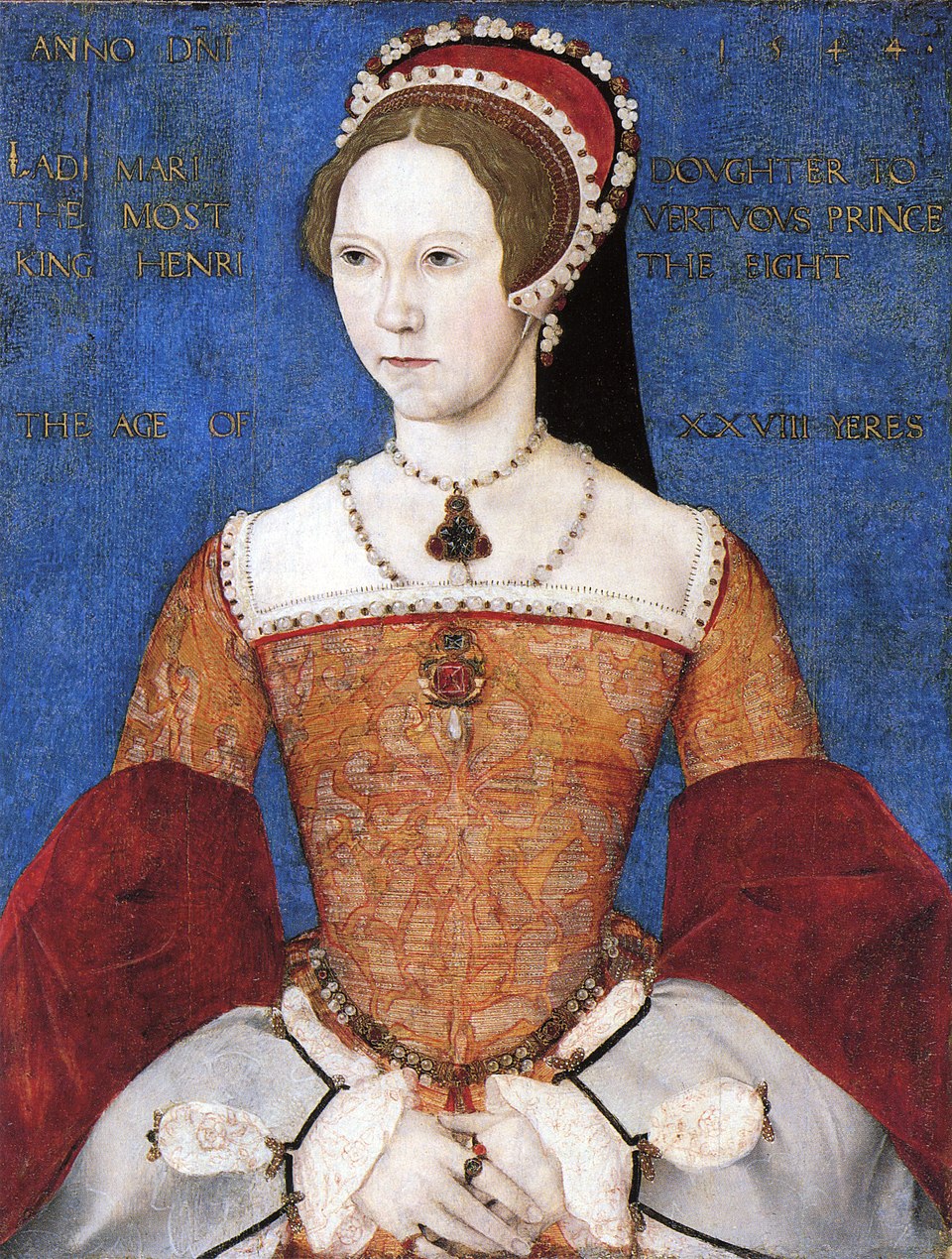
Mary was Catherines only other child to survive childbirth but unlike her brother, the short-lived Prince Henry, Duke of Cornwall, Mary would be the only child of Catherine of Aragon and Henry VIII to survive into adulthood. She was much adored by both her parents who doted on her but when her father fell in love with Anne Boleyn, Mary would side firmly with her mother, something that involved great personal risk even in a time before Henrys paranoia and suspicions led him to lash out at once close friends and even family members.
Mary would finally achieve her mothers long held belief and ambition for her when she succeeded to the throne in 1553 after the death of her half-brother Edward VI. An attempt was made to deny her the throne, but she proved herself her mother’s daughter by courageously fighting for her rights and ascended on a tidal wave of public support and through the first bloodless coup of the Tudor dynasty but sadly, her reign would be short and end in heartbreak. She returned England to Rome, attempted to reestablish the Church of her childhood and married a Spanish prince but her actions were unpopular with some of her fellow Englishmen and women believing they would simply be a satellite of Spain and lose their independence.
Mary died in 1558, in her will she asked that her mother’s remains be moved from Peterborough to lie alongside her own in Westminster Abbey, reuniting mother and daughter in death as they hadn’t been in life, but her half-sister and successor Elizabeth did not honour the request.
Bonus- Successor- Jane Seymour
Janes mother Margery had served Catherine in the early years of her reign and whilst not a prominent figure at court this would have acted as enough of a recommendation for her daughter to secure a place in her household. Jane joined Catherines household around the beginning of the Kings Great Matter, she was able to witness firsthand Catherine’s composure, determination and even her loyalty to the man she loved as he tried to end their marriage. After her death Catherines supporters would turn to Jane and support her rise to power when it became clear Henry had fallen out of love with Anne Boleyn.
Henry VIII’s third wife and Queen served both of her predecessors but it is clear that she developed a deep respect for Catherine and her daughter, so much so that when she became Queen herself she advocated for Mary and was partially responsible for her return to court and her father’s good graces. She would strike up a close relationship with elder stepdaughter and upon her tragically early death in 1537 Mary was noticeably distraught.
Order your copy here.